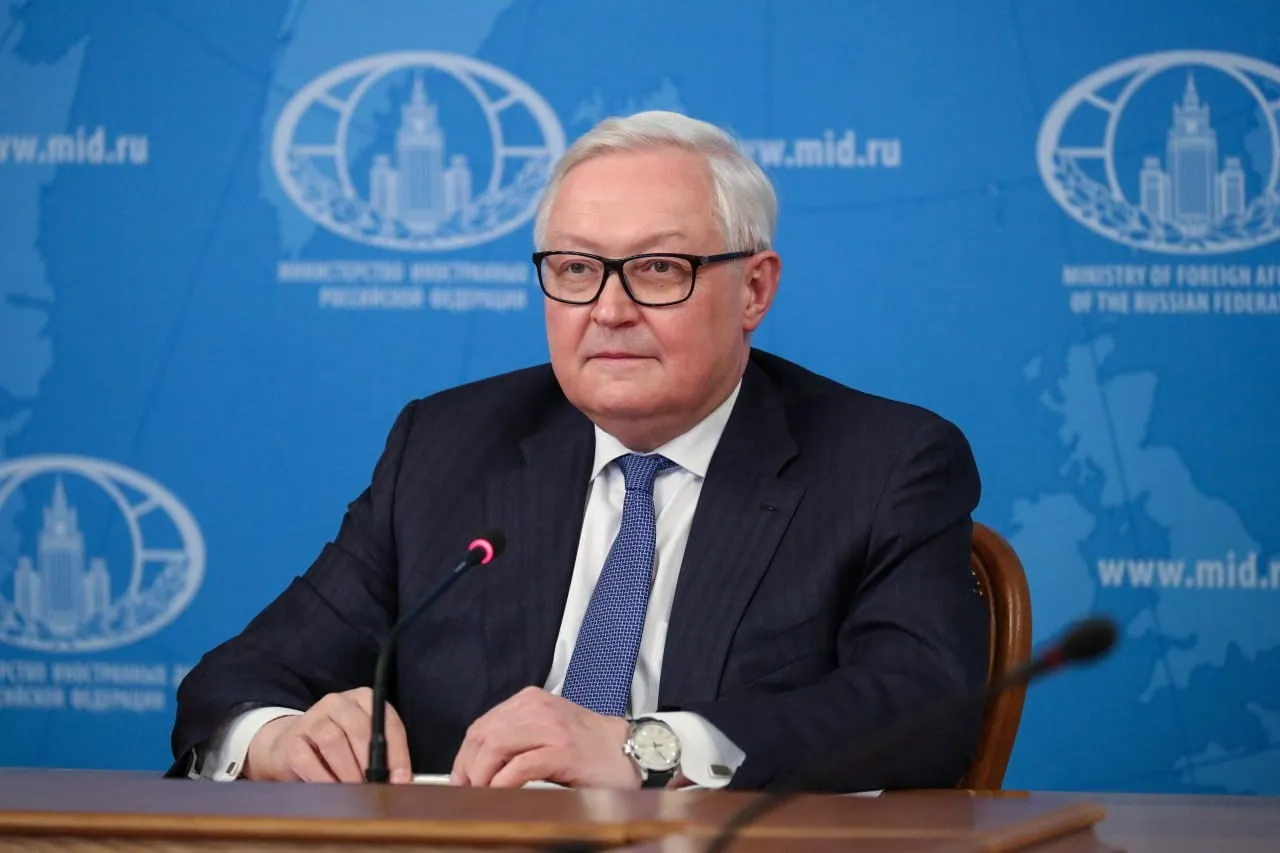
Russia’s Deputy Foreign Minister Sergey Ryabkov was in Beijing meeting with China’s Deputy Foreign Minister Liu Bin on Feb. 3, co-chairing a new round of China-Russia strategic stability consultations, occurring two days before the New START Treaty runs out. Russia has proposed maintaining the limits mandated by START for another year if the U.S. agrees to do the same. So far, Russia has received no official response to its request.
Commenting on this failure to the Russian press, Ryabkov said that Russia was prepared for a new reality if no agreement occurs after the expiration of the treaty. He insisted, however, that the U.S. failure to respond would not lead to a new arms race. “If some ‘hotheads’ are under the illusion that we will waver, that we will succumb to provocations, that we will plunge into some kind of arms race, I assure you, this will not happen,” he told reporters. He spoke to them from the Russian Embassy in Beijing.
“We have significant resources to guarantee our security in the form of the systems already created and deployed. The modernization of the Russian nuclear triad is at an extremely advanced stage. New systems have also emerged that did not exist when the [Strategic Arms Reduction Treaty] was signed. All of this is common knowledge. In other words, our security is guaranteed on all fronts. No one can have any doubts in this area,” he said.
Ryabkov was even more specific with regard to Trump’s proposed “Golden Dome” defense project. “If they take the path of pumping this region with some kind of systems, if they begin to introduce elements of their ‘Golden Dome’ concept there [in Greenland], this will already be a situation requiring military-technical compensatory measures, and our specialists will be fully prepared for this.”
What about U.S.-Russia relations? Ryabkov scored the lack of a dialogue on strategic stability between the U.S. and Russia. According to TASS, he said that it would be impossible to revive the strategic security dialogue between Russia and the United States unless Washington embraces a radical change to its foreign policy course toward Moscow. “There are currently no preconditions for resuming a meaningful dialogue with the U.S. on strategic stability,” he said. “Significant reforms are required: improvements in the U.S.’ overall approach to its relations with us.”
Russia will not initiate any démarches to the U.S. ahead of the expiration of the New Strategic Arms Reduction Treaty (New START): “We completed everything necessary in a timely manner, and they had ample time to consider it. The lack of a response is also a response,” Ryabkov argued.
Furthermore, “We agree with our Chinese friends that the main reason for this situation—the dilapidation of the previous [strategic security] situation and the absence of a replacement—lies in unilateral actions by the United States,” the diplomat said.
Ryabkov also scored the role Europe has been playing, leading an anti-Russian war party, with the U.K. and France in the lead. RIA Novosti quotes him on Feb. 3, “Both of these countries are pursuing a pronounced anti-Russian course,” currently setting the tone for confrontation politics in Western, Central and partly Eastern Europe. Ryabkov emphasized that Paris and London are obsessed with the idea of increasing their capabilities, not only in nuclear, but also in other areas affecting strategic stability