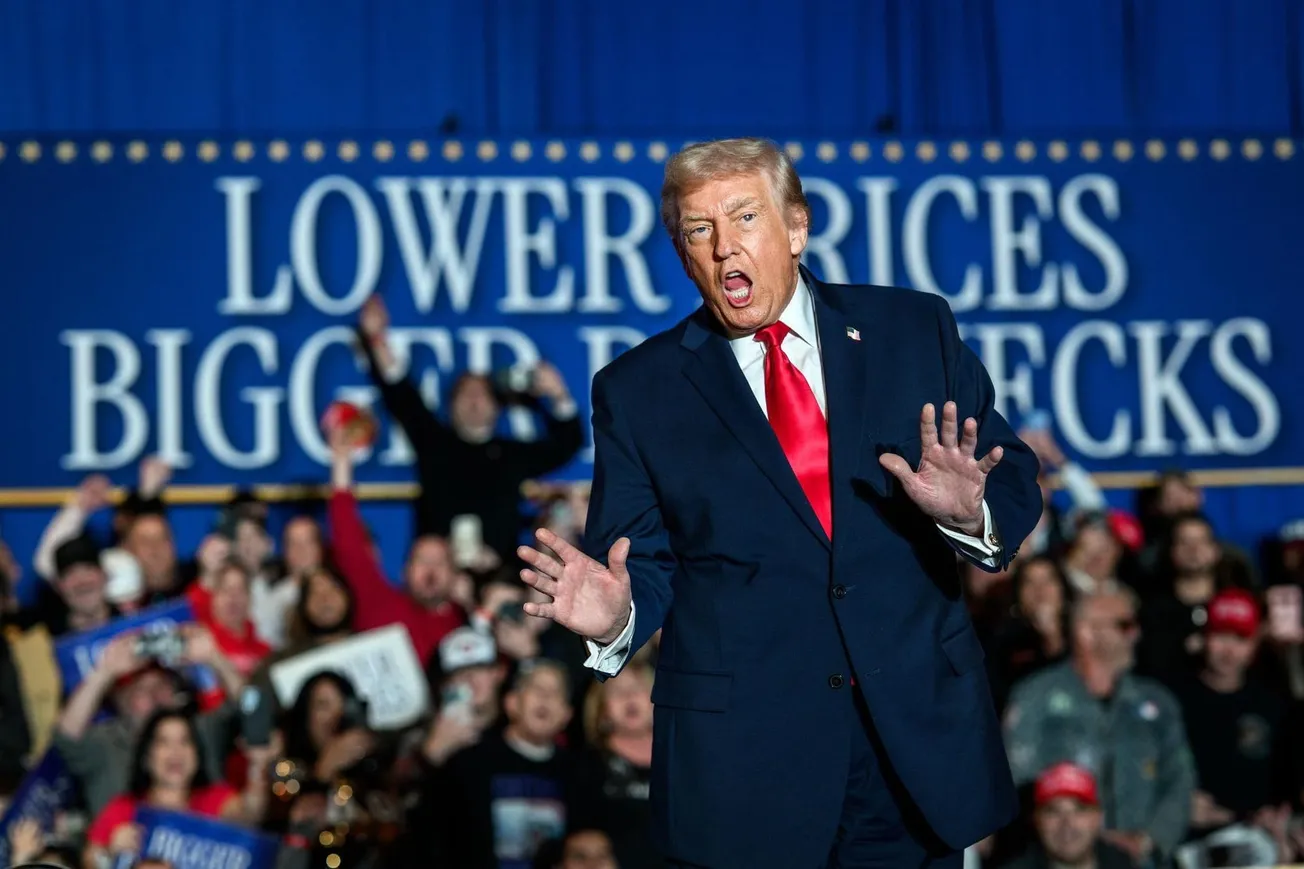
President Donald Trump has reshaped the U.S. economy in the first year of his second term. He has striven to create a billionaires’ economy dominated by stock plays and speculations, looting of other nations’ resources through a threatening imperialism, and unconstitutional tariffs as a substitute for taxes.
Though it was said that the Sun never set on the British Empire, the Sun is now beginning to set on Trump’s economic “experiment,” which was supposed to turn the United States into a manufacturing superpower once again, leading the world in technology, weaponry, and computer power. Manufacturing employment is steadily withering away, while overall employment growth is one-quarter of what it was in recent years. Housing and healthcare are unaffordable for tens of millions of American households. Tariff revenue has peaked at much lower levels than expected by the administration. Inflation is on the rebound. China leads in many, if not most areas of technological advance. And interest rates for mortgages, and business and auto loans, have resisted attempts to lower them because of immense bubbles of unpayable debt in the stock markets, and more importantly in the Treasury market. Another global financial crisis originating in the American economy can be foreseen.
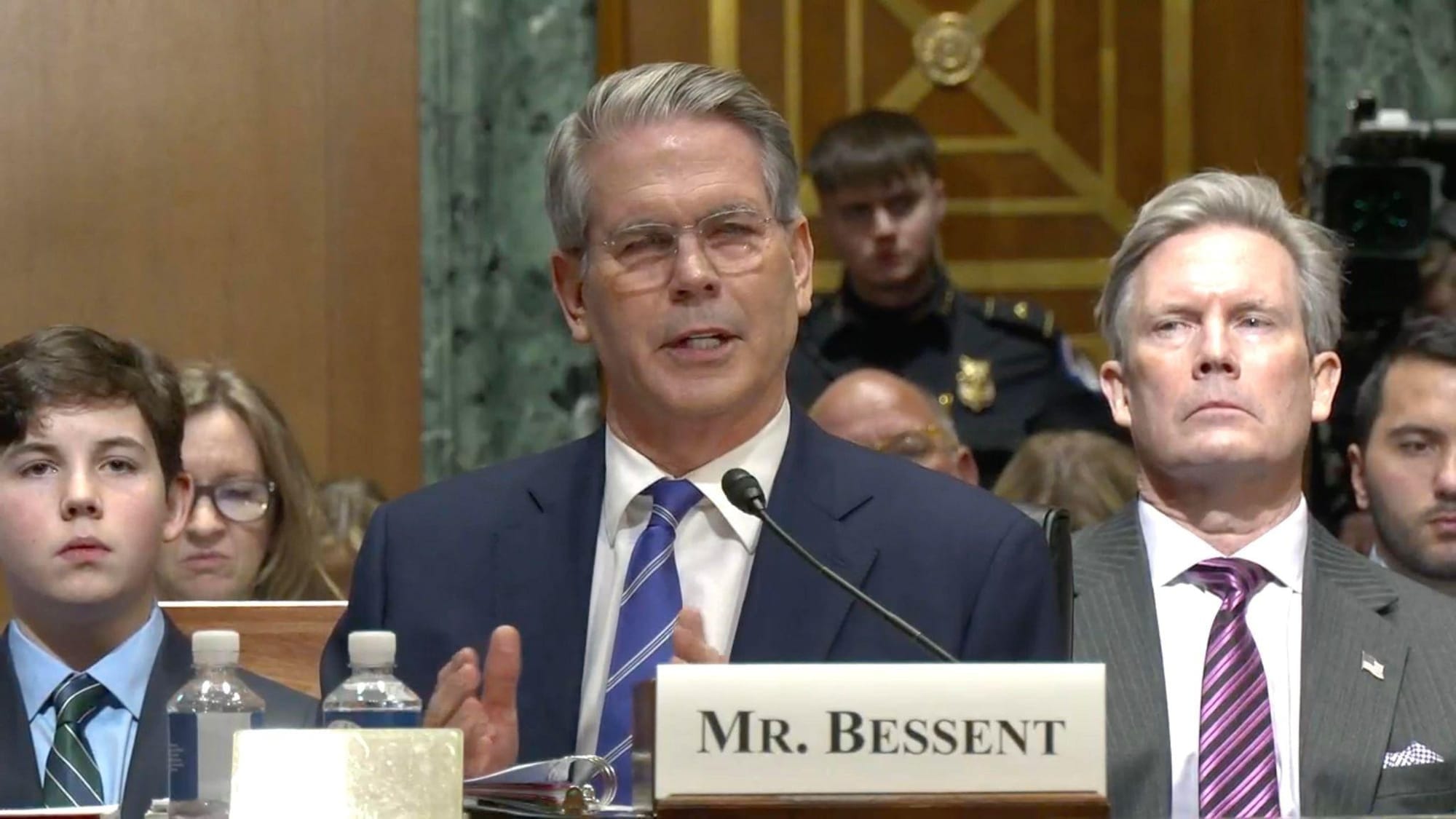
The U.S. Federal debt, soon to cross $39 trillion, is now being played by Treasury Secretary Scott Bessent like the hedge fund speculator he is, trying without success to lower the interest burden on that debt, which is now over $1 trillion/year in the $7 trillion U.S. budget. The unrepayable debt is being rolled over for shorter and shorter maturities, while it grows by $1.5-2 trillion/year.
Hedge funds now have 27% of U.S. Treasury holdings. Foreign holders, who had 50% in 2015, hold only 30% now. There is roughly $4 trillion every day in Treasury repurchase agreement—or repo—financing for derivatives speculations.
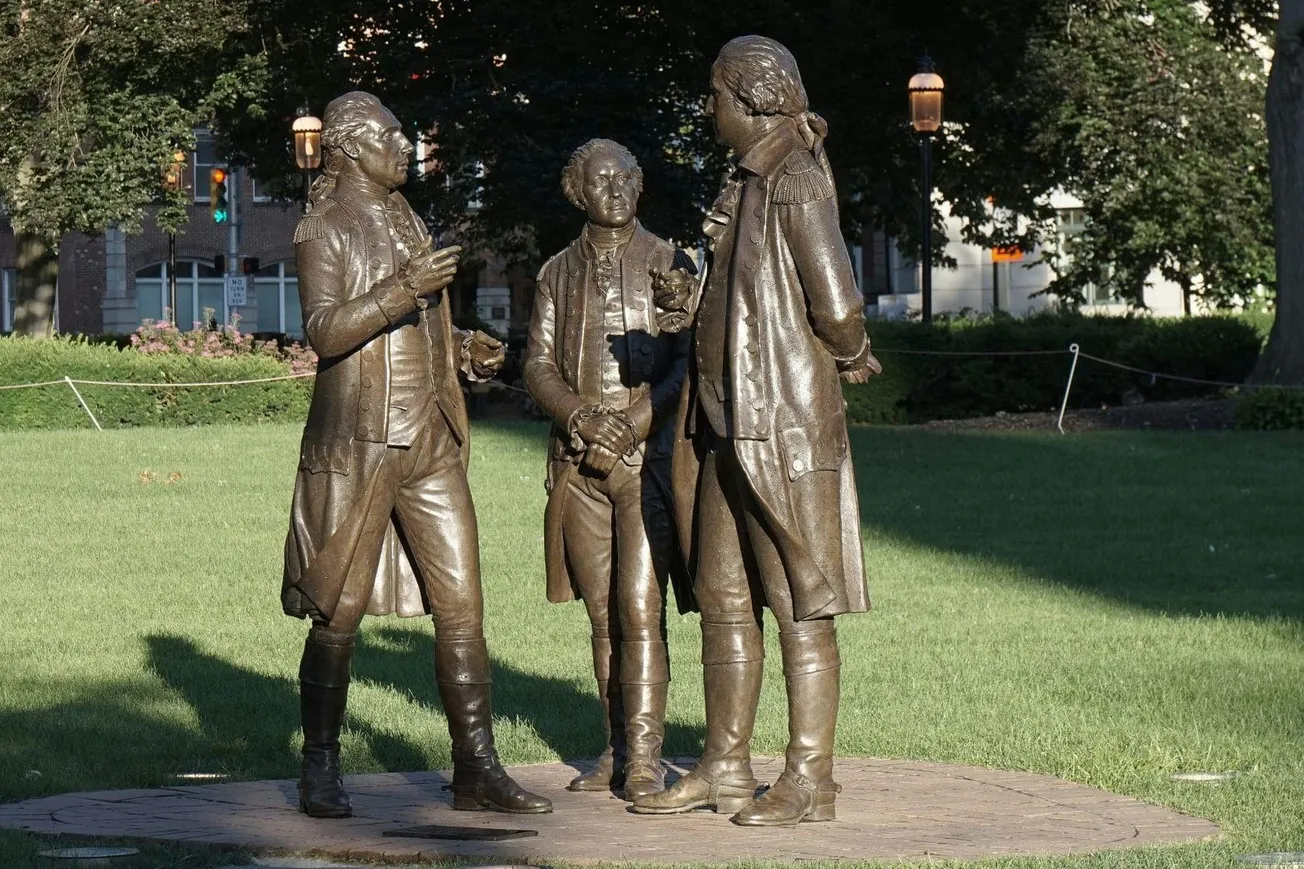
The Federal debt is in dire need of the stunning reorganization presented to Congress in 1791 by Treasury Secretary Alexander Hamilton, which transformed that debt into a national bank of credit for infrastructure and manufactures. The same can and should be done today.
Tariffs Producing Neither ‘Trillions,’ Nor Exports
The President claimed that Bessent’s Treasury would be bailed out by “trillions” in new revenue flowing in from the rest of the world under his tariffs. But the actual total collected during Trump’s first year in office was $264 billion, according to the Congressional Budget Office, and was declining after hitting a high of $31.35 billion in October. The yearly total was much higher than prior years, but constituted less than one percent of the Federal debt.
Moreover, many Americans will be surprised to know that none of this tariff money “flowed in from countries around the world.” A thorough study just published Jan. 19, 2026 by the Kiel (Germany) Institute for the World Economy, found that 96% of that $264 billion in tariff taxes was paid to the Treasury not by foreigners, but by American importers—wholesalers, retailers, manufacturers importing parts and systems, and consumers—more than cancelling out Trump’s business tax cuts. The other 4%, the Institute estimated, was not payments, but losses of exporters in other countries who had to lower their prices to “get in under” the tariffs. For the most part, those other nations worked to redirect some exports away from the United States to avoid the high tariffs.
Neither did the tariffs decrease the U.S. trade deficit. On a year-over-year basis, the overall trade deficit through November stood at $839.5 billion, or about 4% higher than the same period in 2024. The U.S. trade deficit in manufactured goods doubled from October to November, from $30 billion to $60 billion and rose again in December, finishing the year 2025 with roughly $3.15 trillion in goods imports and $2.15 trillion in goods exports, for a $1 trillion goods-trade deficit.
The tariffs are a flat-out unconstitutional seizure by the White House of the Congress’s power to tax. None of the various national emergency presidential exception laws on the books could apply to the impulsive and haphazard way that Trump has thrown tariff weapons against other countries, or in other cases withdrawn them just as quickly. If the Supreme Court does not act, the Congress will have to do so forcefully to take its tariff authority back and deny it to the President.
Job Killer
President Trump’s policies have shown extraordinary power to kill jobs. The President fired the head of the Labor Department’s statistics bureau in the middle of the year, because the bureau wasn’t reporting enough job growth. Still, at year-end it reported just 584,000 net new jobs for 2025 in a labor force of 165 million workers; the net job growth for 2024 had been triple that, 1.6 million. The Bureau’s Quarterly Census of Employment and Wages, which is published with a delay and based on much firmer payroll tax data, estimated an even lower job creation rate, just 210,000 for the first six months of Trump’s term, including the April 1 “Liberation Day” tariff announcements.
As for manufacturing jobs, the Wall Street Journal reported on Feb. 2, “The manufacturing boom President Trump promised … is going in reverse.” Continuing a trend that resumed under Joe Biden’s Presidency, 200,000 manufacturing jobs have disappeared since 2023; manufacturing employment has dropped in every month of President Trump’s second term thus far. The Institute for Supply Management’s factory activity index shrank in 26 consecutive months through December 2025.
The Journal added that
An index of factory activity tracked by the Institute for Supply Management shrunk [sic] in 26 straight months through December….
The Trump tariffs are clearly a major job-killing factor for the U.S. economy, as productive businesses (nearly all of which have their supply chains influenced or even dominated by imported parts and systems) are unable to estimate their future costs or demand for their products amid the kaleidoscope of tariffs and tariff threats.
This collapse in employment is getting worse. The Federal Reserve publishes a monthly report on Job Openings and Labor Turnover, and in the reports for November and December combined, the number of job openings in the U.S. labor market fell by more than 900,000 (out of 7 million) and there were nearly 1 million fewer job openings in the country than unemployed workers looking for work. In January, the total of recorded firings/layoffs in the national economy was twice what it had been the January before.
The Disappearance of Infrastructure
Building new economic infrastructure, an issue which appeared to preoccupy Donald Trump in his first term to the extent of multiple, largely ineffectual “White House infrastructure weeks,” has disappeared entirely in his second term. U.S. Federal infrastructure spending in 2025 was projected by the American Society of Civil Engineers at less than one-half percent of GDP, a low level historically and by comparison with other developed nations.
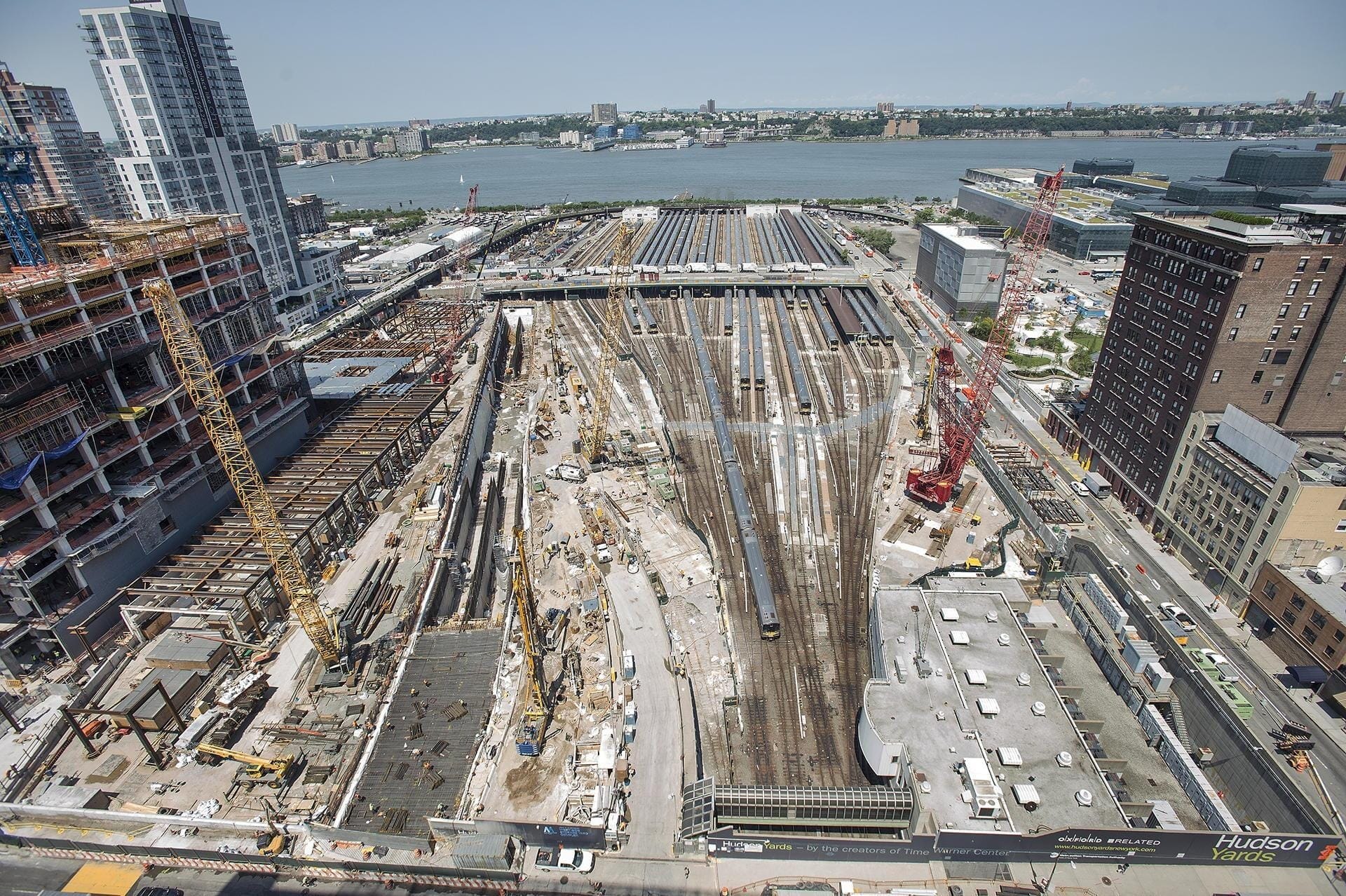
Most notable has been the fate of the Gateway Project, including the building of two new tunnels for electrified rail under the Hudson River between New Jersey and New York, and the replacement of a motor vehicle tunnel badly damaged in Superstorm Sandy back in 2012. In 2017, the Gateway appeared on Trump White House lists as one of the three most important new infrastructure projects nationwide. But on Sept. 30, 2025, the President announced his decision that the project, now at the engineering stage, would be terminated.
At the recent annual Davos, Switzerland World Economic Conference of the global elite, Trump Administration Trade Representative Jamieson Greer gave a much-noted speech promoting the return of “the American System” of Alexander Hamilton, Henry Clay, Abraham Lincoln and his chief economic advisor, Henry C. Carey, et al. But Greer consistently described the policies of the American System as tariffs, trade, and more tariffs, combined with “investment in industry.”
Lincoln in 1832 famously described what Clay called the American System this way:
My policies are short and sweet…. I am in favor of a National Bank, I am in favor of the internal improvement system, and a high protective tariff.
But Greer’s scholarly speech on American policy at Davos made no mention of a national bank, nor of new economic infrastructure (what Lincoln meant by “the internal improvement system”). His implication was that revenue from tariffs, private investment, and investment “deals” commanded from other nations would carry out whatever industrial investment America needed.
Tariff revenue falls very far short of even the federal debt reduction mission that Trump wanted to give it, not to mention truly important projects of new infrastructure. The redevelopment of nuclear power plants across the country, now generally recognized as urgently necessary to meet electricity demand growth and build out the electricity grid, is simply not happening despite constant talk about it by the “tech giants,” bankers, and others. Private investment cannot carry out such missions. Promised hundred-billion-dollar “investment deals” compelled from other countries, when they haven’t fallen through entirely, have been directed to buying government shares in tech-AI or strategic metals companies.
Joint “great projects” of new infrastructure, including in developing countries, require the credit that national banks—not “reserve banks”—can provide. And that, again, requires the assertion of Congressional authority, to charter such a national bank for infrastructure and manufacturing for the United States.
The Donald J. Trump Wall Street Crash?
With the American physical economy, productive employment, and funding of scientific and medical research so reduced, there must be a fundamental change in national economic policy, or another financial crash will wipe out many trillions in dubious “value.” At least three bubbles of unrepayable debt are growing rapidly: the circular debt of “big tech” companies, also called the “AI bubble”; the “private credit” sector, or what used to be called subprime industrial lending; and the Treasury market itself, the largest financial market in the world and now invaded and “supported” by crypto stablecoins. Not far behind is the commercial mortgage-backed securities sector, where the nation-wide office building mortgage delinquency rate has reached 12%, much worse than the 2007-08 financial crisis peak.
While Bloomberg News’s entire editorial board warned on Dec. 5 that “Private Credit Woes Should Put Banks on Alert” and “Regulators should batten down the hatches,” reports were out that same day: “U.S. Regulators Ease Post-Crisis Curbs on Leveraged Lending.”
When bank regulation invites a crash, the crash will happen.
President Trump has implemented his most negatively impactful policies by seizing authorities from the Congress—from war, to taxation, to treaties; from budgets, to creating government corporations, to regulation of banks; from elections, to coinage, to naturalization of citizens—or from the courts. Now his most blatant attempt, to set aside the Constitution and make states into mere “agents for the Federal government in elections,” has met opposition in Congress, including from the Senate Majority Leader.
If Congress were to get on its hind legs and take some of these powers back, a recovery could be organized. The American people as a whole, and all their elected representatives, must take a stand. The President himself might be relieved at the result.