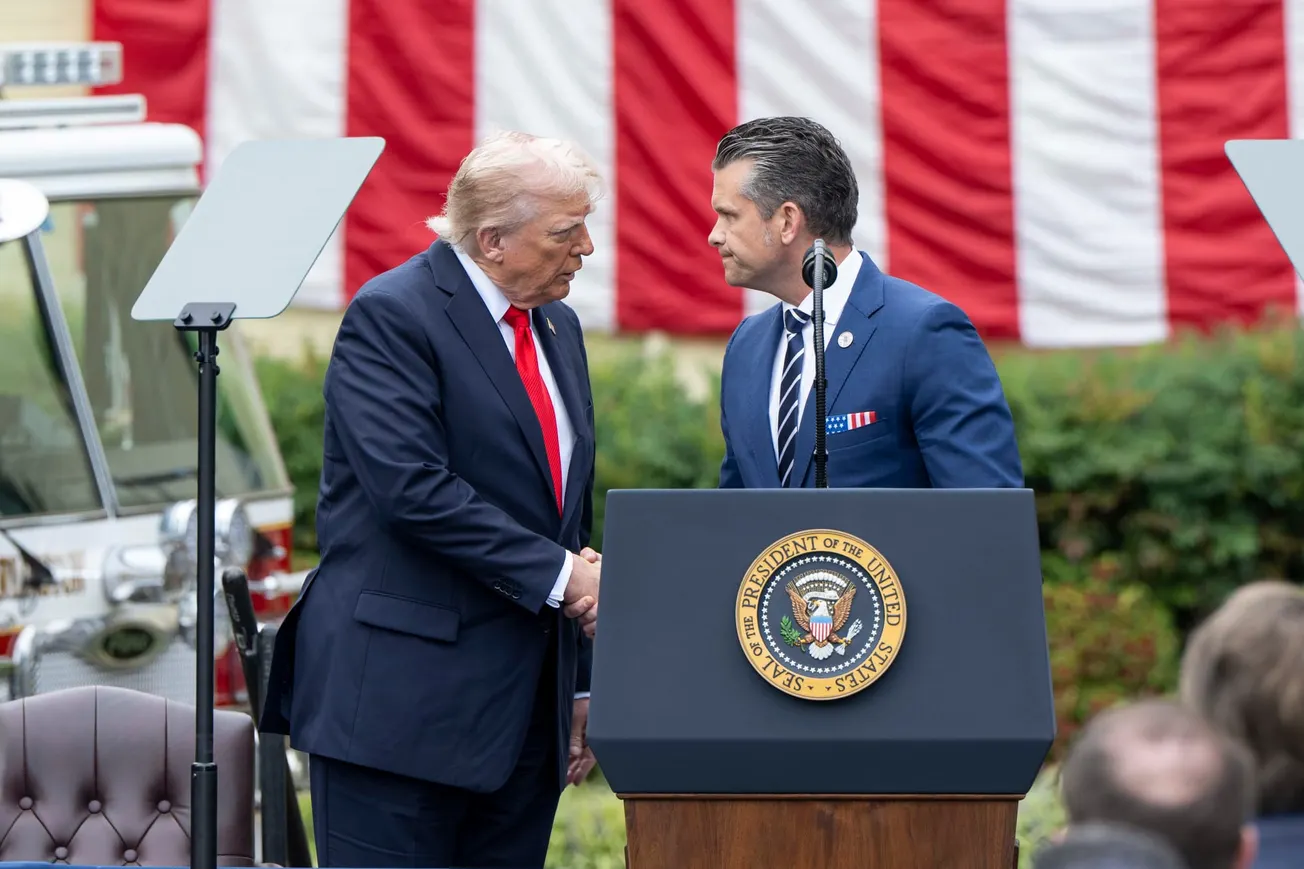
U.S. President Donald Trump and team are scrambling to continue their speculative, “everything for the billionaires!” economic policy in the wake of Feb. 20 Supreme Court ruling that the majority of the administration’s tariffs were unconstitutional. So far, they have only succeeded in digging themselves into an even deeper economic and political hole.
Economically: In response, in order to keep tariff revenue coming in while “new and legally permissible tariffs” are developed, President Trump announced the imposition of an across-the-board 10% tariff on imports coming into the United States, which he hiked the next day, by means of a Truth Social post, to 15%.
The Feb. 20 Proclamation which justifies the global tariff, however, is explosive. The administration has taken resort to Section 122 of the 1974 Trade Act as the grounds for this stopgap measure, which requires admitting reality: the U.S. economy is bankrupt. Readers of EIR magazine and its daily EIR News Service will know this. For the U.S. government to officially announce it, in the midst of the ongoing disintegration of the speculative financial system, could be a bombshell.
The proclamation argues that under Section 122, should the United States face “fundamental international payments problems,” problems which “can, among other things, endanger the ability of the United States to finance its spending, erode investor confidence in the economy, and distress the financial markets,” the President may impose “special import measures” for up to 150 days, up to a maximum of 15%.
The President proclaimed that the U.S. faces that level of crisis, based on information and recommendations provided to him by senior officials. The proclamation lays out how the United States faces “fundamental international payments problems,” in fact, “a large and serious deficit,” even a “large, persistent and serious government trade deficit.” The humongous $1.2 trillion trade deficit in physical goods in 2025 is cited; add to that the negative flow of “primary income” (which covers returns on cross-border investments and compensation), and the U.S. faces a “staggering … the biggest annual current account deficit since 2008.” The U.S. capital account ("the net international-investment position") is also negative; in fact, it is “one of the most negative net international-investment positions of any developed country,” it admits. And so on.