The answer is still out on this one, with more questions than answers as of this evening. Review the timeline:
According to the El Paso Herald, at approximately 08:32 PM (local time) on Feb. 10, the U.S. Federal Aviation Authority (FAA) issued a sudden Notice to Airmen (NOTAM) advising that no aircraft would be allowed to take off, land or approach the El Paso International Airport within a ten-mile radius for a period of 10 days for unspecified “special security reasons.” Aircraft flying over the airport at altitudes of 18,000 or above were not affected, meaning cross-country flights proceeded as normal.
El Paso, located on the U.S.-Mexican border, is a city of 700,000 people, and its airport is an important regional hub. Neither the city’s mayor nor the area’s members of Congress were notified. The closure order was lifted Wednesday morning, Feb. 11.
Transportation Secretary Sean Duffy claimed on X that the closure was provoked because a Mexican cartel drone was heading towards El Paso. Normal flights could now resume, he said, after the FAA and the Defense Department had “acted swiftly to address a cartel drone incursion. The threat has been neutralized and there is no danger to commercial travel in the region.”
This story has been dismissed by multiple sources. Mexican President Claudia Sheinbaum reported the American administration had given her government no information, nor recommended that Mexican air space immediately across the border be closed.
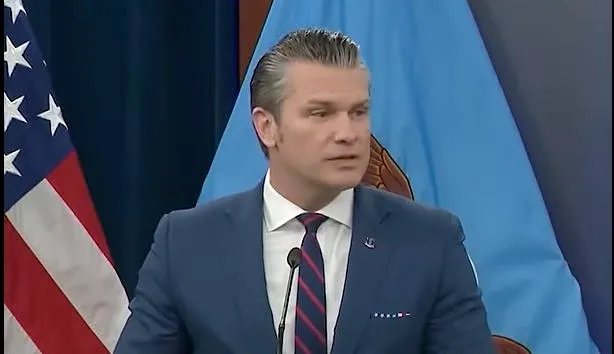
Attention is now zeroing in on the Pentagon and Secretary of “War” Pete Hegseth.
According to multiple (unnamed) sources speaking to multiple news agencies, local and national, the closure order was issued because the FAA feared nearby “military testing of anti-drone and anti-laser” weapons for use against cartel drones threatened civilian flights. No cartel drones were involved.
The El Paso airport is some three miles away from Fort Bliss and its drone and helicopter base at Biggs Army Airfield. A second NOTAM issued at the same time over Santa Teresa, New Mexico, also near Fort Bliss, is reportedly still in effect.
El Paso Mayor Renard Johnson told reporters today: “You cannot restrict air space over a major city without coordinating with the city, the airport, the hospitals, the community leadership… That failure to communicate is unacceptable.” Of course, in the case of an actual emergency, air space can be restricted, but it is far from clear that it made sense in this context.