
The Lead
How Does a War Without an Endgame End?
by Jason Ross (EIRNS) — Mar. 12, 2026
There is a question that nobody in the American chain of command seems to be able to answer: What does winning look like? Not the theological answer—the destruction of Israel’s enemies, the fire of Armageddon, the Second Coming—but the strategic one. What political arrangement, what postwar Iran, what regional order is the United States fighting toward?
No coherent answer indicates the nature of the problem.
The intelligence was clear before the first bomb fell. A classified National Intelligence Council report, completed a week before February 28, concluded that even large-scale assault would not produce regime change in Iran—that the clerical and military establishment had succession protocols for exactly this scenario, and that the opposition taking power was “unlikely.” Iran’s new Supreme Leader has now confirmed the assessment from the other side: The blockade of Hormuz continues, new fronts are being studied, reparations are demanded, and the vengeance file remains open.
The religious motivation for the war cannot deliver a peace, because it does not seek one. And here the divergence between Washington and Tel Aviv becomes decisive. While Trump may in some sense want a stable postwar Iran he can do business with, Israel seeks a failed state. These are irreconcilable war aims. One side wants an exit; the other wants an ongoing ruin. And considering the role of Israel as a “breakaway ally,” forcing Washington’s hand by threatening to take unilateral action, the question of whether peace is possible may not be Trump’s to answer.
Into this strategic void, Pete Hegseth has inserted something worse than a strategy: a temperament. His “Epic Fury”—the very name connotes retribution without object, rage without destination—dispenses with the moral language once used to justify past American wars. Military psychologists warn that this is not merely a rhetorical choice. Moral frameworks, however imperfect, give soldiers a reason for what they are being asked to do and to become. Strip them away and you do not produce more effective killers; you produce men and women left to carry, alone, the weight of what they did and why. Military veteran and novelist Elliot Ackerman puts it plainly: “You’re asking people to die for the ambitions of a president and a moral calculus that’s no greater than might makes right.” The question of what happens to the troops of “Epic Fury” when the shooting stops is one this administration has shown no interest in asking, much like its indifference to the lives and future of the people of Iran.
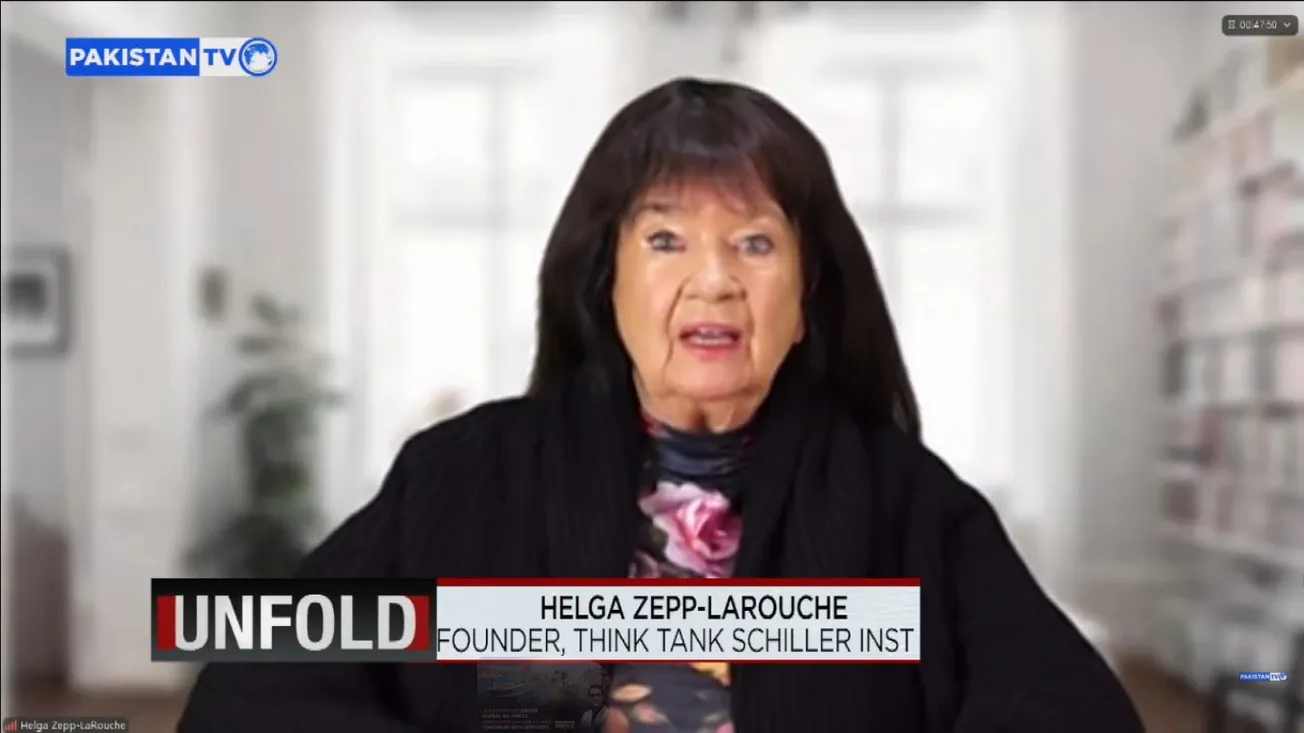
Helga Zepp-LaRouche, speaking on March 11 with Harley Schlanger in a Schiller Institute weekly dialogue, identified the deeper logic of the impasse: When eschatological thinking enters the chain of command, the mechanisms by which wars normally end—negotiation, off-ramps, face-saving formulas—no longer function. You cannot offer an exit to someone who believes they are fulfilling prophecy. You cannot negotiate with a war aim that is the end of history. As Lyndon LaRouche wrote in 2003, the separation of church from state exists to defend the nation-state from becoming the instrument of a theology.
If governments have abdicated, perhaps other voices can still be heard. Zepp-LaRouche has issued an open letter to Pope Leo XIV—who invoked Nicholas of Cusa’s De Pace Fidei in an October sermon—calling on him to unite Christian, Muslim, and Jewish religious leaders in a common mobilization for peace. She is not alone. A senior Iranian Shia cleric, Ayatollah Seyed Mostafa Mohaghegh Damad, has independently written his own public letter to the same Pope, asking him to remind the President of the teachings of Jesus Christ and call a halt to the bloodshed. That two voices, sharing neither faith nor nationality, have independently concluded that the Pope may be among the few figures with the moral standing to break this impasse is not a coincidence to be passed over.
The war has its prophets. It may yet find its peacemakers.
Contents
Strategic War Danger
- Iran's New Supreme Leader Vows Vengeance, Pledges To Continue War (↓)
- National Catholic Reporter: An Ayatollah Supports Pope's Effort for Peace (↓)
- U.S. Intelligence Reportedly Assesses That Iranian Leadership Not at Risk of Collapse (↓)
- Trump Contradicts Himself on Iran While Campaigning Against Anti-War Republican (↓)
- War Whacks the Economy (↓)
- Iran’s Drones May Cost as Little as $7,000 To Produce (↓)
- Oman's Foreign Minister Denounces Iran War, Refuses To Join Board of Peace (↓)
- Chinese Foreign Ministry Calls Iran War 'A War That Should Not Have Happened' (↓)
- U.S. Flying Strike Missions from U.K. Bases (↓)
- Ukrainian Attacks on TurkSteam Pipeline Fail (↓)
- Israel Drops Charges Against Soldiers Accused of Sexually Abusing Palestinian Detainee (↓)
New World Paradigm
Collapsing Imperial System
U.S. and Canada
- Dmitriev and Witkoff Held Talks in Florida (↓)
- Desperate U.S. homebuyers Turn to Risky Adjustable-Rate Mortgages (↓)
Harley Schlanger Update
Watch The Daily Update with Harley Schlanger, a short video update available every weekday morning from The LaRouche Organization.