The Lead
Will the Lights Go Out? Refueling a Civilization Running on Empty
by Jason Ross (EIRNS) — Mar. 06, 2026
Consider what a single week of war has revealed about the fragility of the system the Western order long assumed was permanent.
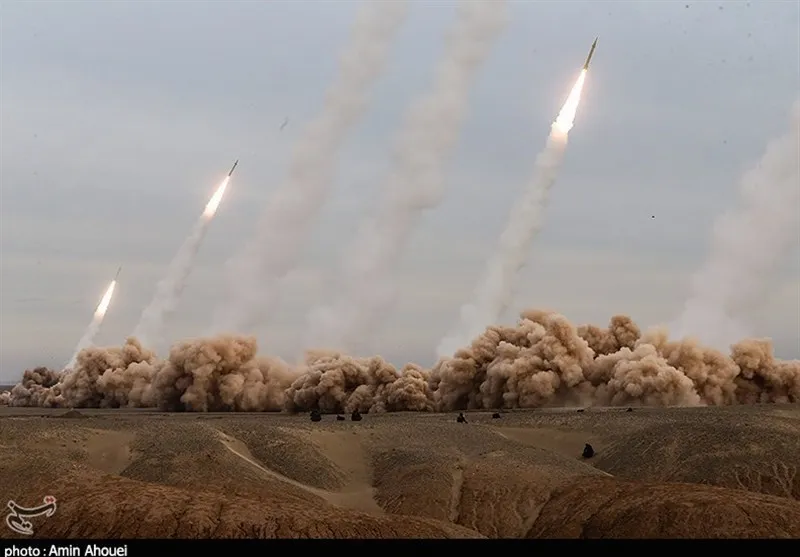
Iranian drones strike Amazon data centers in the Gulf, knocking banking systems offline across the region. Qatar halts liquefied natural gas exports, and European gas prices spike 50% in 48 hours. Experts warn that even if fighting stopped immediately, restarting cryogenic LNG processes could take weeks. The United States Strategic Petroleum Reserve remains half-empty after years of drawdowns. Missile defense systems costing hundreds of millions of dollars are being destroyed faster than they can be replaced. Governments across the Middle East call Washington asking for interceptor missiles; Washington responds that a task force is being formed.
The lesson is not simply military. It is cultural.
A civilization cannot run on inertia. Capital must be recreated continuously. Infrastructure must be maintained and expanded. The institutions that coordinate complex economies must renew their competence, generation after generation. When these processes slow or fade away, the system does not collapse overnight; it decays.
This is the pattern Plato described in the Republic (especially Book VIII). Political orders rarely fall because an enemy suddenly becomes stronger. They fall because rulers abandon the cultivation of wisdom and begin governing through appetite, vanity, and the pursuit of dominance. Institutions hollow out. Infrastructure deteriorates. Leadership becomes detached from any meaningful vision of the future.
The result is the strange condition now visible across much of the Western world: enormous, yet fragile technical capacity existing alongside a growing inability to maintain the foundations that make that capacity possible. Military stockpiles once assumed to be inexhaustible that turn out to be alarmingly finite.
Harley Schlanger reports that U.S. soldiers have filed complaints after senior officers framed the conflict in apocalyptic religious terms—telling troops that the war forms part of a divine End Times plan. The Military Religious Freedom Foundation reported more than a hundred complaints within the first 48 hours of the conflict alone. One soldier wrote that such rhetoric “destroys morale and unit cohesion and violates the oath we swore to support the Constitution.”
What image of humanity must be instilled in people to make them eager for Apocalypse? And what does it say about a civilization when such ideas circulate within the institutions entrusted with its survival?
The vulnerabilities exposed by the present crisis are not limited to any one nation. Energy markets, food supply chains, fertilizer production, financial systems, and digital infrastructure have all been built under the assumption of permanent stability. Yet a few days of conflict have already shown how quickly that stability can fracture.
The consequences are global. The fastest-growing regions of the world—South Asia and Sub-Saharan Africa—now face fertilizer shortages, oil price spikes, and remittance shocks they did nothing to create. At the same time, these regions are also the site of forward-looking developments in public health, energy, and infrastructure. Nigeria is preparing a new deployment of an HIV-prevention drug with the potential to transform public health across a continent. South Africa has joined more than 30 countries supporting a global initiative to triple nuclear power capacity by 2050.
These developments point toward a different trajectory: one grounded in production, scientific progress, and long-term development rather than decline managed by people unaware that the empire has no clothes.
The United States nears the 250th anniversary of the Declaration of Independence amid a sobering landscape: war framed in apocalyptic language, economic uncertainty, institutions hollowed by decades of financialization, and a population and leadership largely bereft of the intellectual tools needed to confront the scale of the challenges ahead.
With clarity and courage, a new paradigm is possible.
That clarity—and the insistence that human creativity must guide the future rather than fatalism—was reflected in the March 6 meeting of the International Peace Coalition, where Helga Zepp-LaRouche warned that “the world picture is disintegrating in front of our eyes with a rapid speed which is absolutely breathtaking.”
Yet she also emphasized that a crisis of this magnitude demands not despair but responsibility: the construction of a new international security and development architecture grounded in diplomacy, economic progress, and the common interests of humanity.
As Zepp-LaRouche concluded, “when governments fail in the way we are seeing now, it is up to the citizens of the world to try to recognize it themselves and remedy it.”
A civilization ultimately receives the leadership it chooses, or at least tolerates—and the future its citizens are willing to imagine and demand.
Contents
Strategic War Danger
- Trump Demands 'Unconditional Surrender' from Iran (↓)
- Trump Says He Must Choose Iran's Next Supreme Leader (↓)
- Brits Plot, But Worry That Global Situation May Spin Out of Control (↓)
- Iran War Threatens Global Fertilizer Supply As Planting Season Begins (↓)
Collapsing Imperial System
Strategic War Danger
Collapsing Imperial System
- Qatar Stopping Gas Sends LNG Prices Up (↓)
- Stablecoins Are Just Banks Without the Rules, Warns Financial Historian (↓)
- Trump’s ‘Spiritual Advisor’ Stages Prayer Session with the President (↓)