The Lead
A New Framework for Reconstruction in Southwest Asia: The Only 'Practical' Plan for the Future
by Marcia Merry Baker (EIRNS) — Mar. 21, 2026
As of today, the beginning of Week Four in the Israel-United States war on Iran, three exigencies are dramatically clear. First, the warfare is escalating out of any bounds. Secondly, all prior models of economic, diplomatic and related conditions in the region are now over, not to be restored. Thirdly, only the perspective of reconstruction in greater Southwest Asia/North Africa is the “practical” road ahead to guarantee the future, both for the region and the world. There are now several calls from the Persian Gulf for a new, multilateral framework, which, if the world community acts upon, can make way for true security and economic benefit. There is no going back to some prior time of recent decades, which, in any case, was based on injustice and accommodation to the casino economics system of the Collective West, which is now at the breakdown stage.
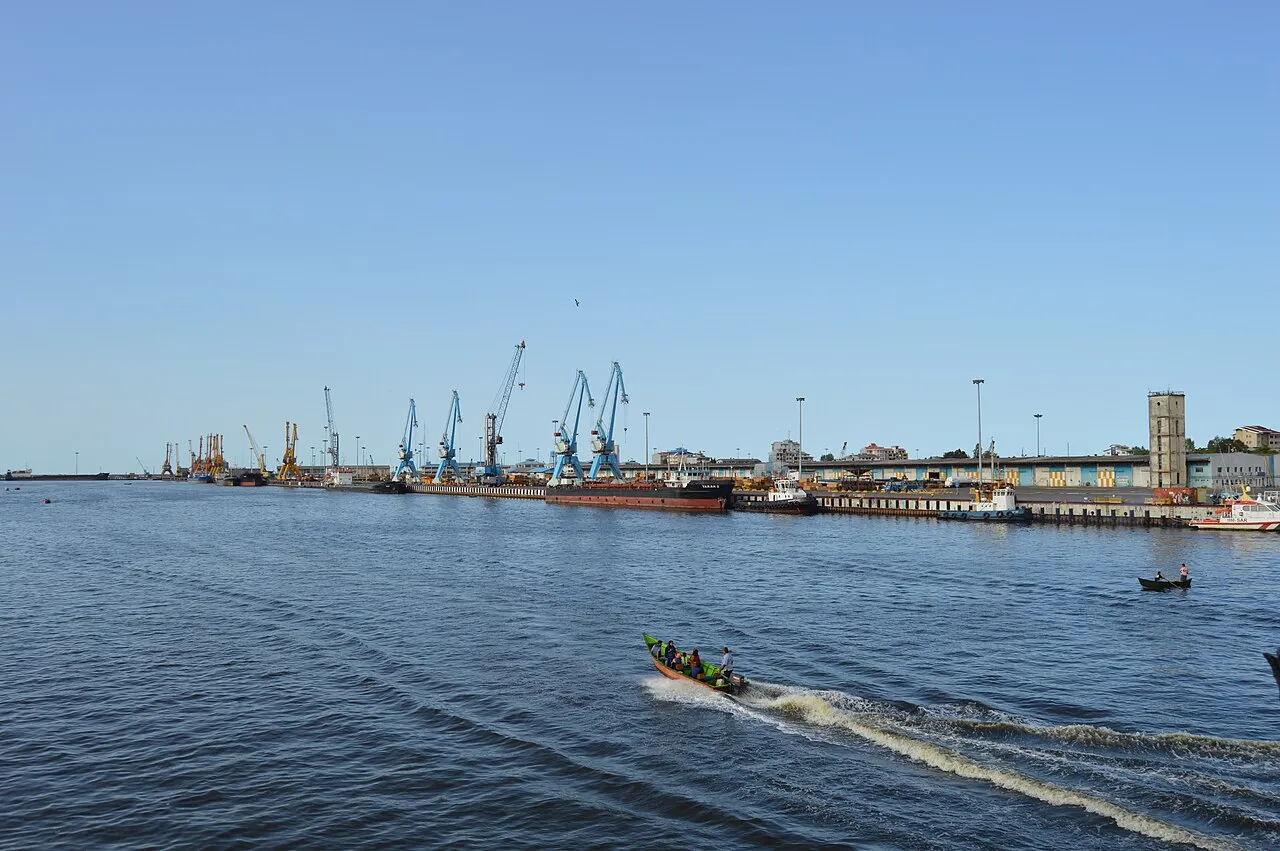
Firstly, the regional escalation includes many attacks. The U.S. and Israel struck Iran’s port on the Caspian Sea, Bandar Anzali, March 18-19, extending the hot warfare into Central Asia bordering Russia. This port figures in the multi-nation mega project, the International North-South Transit Corridor (INSTC), first agreed to in 2000 by Russia and Iran, and involves India. Already, U.S. bombers struck near Iran’s INSTC seaport of Chabahar on March 16.
Meantime this weekend, Israel struck in Syria, and Israel conducted precision “regime” strikes in Tehran today. For its part, Iran fired two Intercontinental Ballistic Missiles March 20, some 4,000 km to the Diega Garcia military base island in the Indian Ocean, owned by the U.K. and hosting U.S. operations. Though they were repelled, Iran’s missile capacity was demonstrated.
Secondly, the economic profiles of the oil states in the region are now fatally disrupted. This involves many other kinds of functions, besides drilling and selling gas and oil. The U.A.E., for example, has evolved in the Western financial system to be among the top re-export hubs globally, for commodities and goods. Until recently, it was the world’s largest re-exporter of rice, the third largest re-exporter of diamonds, and fourth largest of gold. The U.A.E. and other Persian Gulf oil states are centers for luxury goods and tourism, whose economies are characterized by the super-rich, served by ranks of poor guest workers. As the world economy spirals downward from war, don’t expect any of these “sectors” to continue or resume as normal.
Strategically, the same Gulf states came to host multiple U.S. military bases, presumably from the thinking this would mean security. The exact opposite has happened, predictably.
Thirdly, what is the solution? Multilateral cooperation, with physical economic reconstruction and development throughout the region. This is the workable, practical solution. The “Oasis Plan” approach is the concept advanced by economist-statesman Lyndon LaRouche since the 1970s. This idea, for plentiful water, power, and infrastructure development, is not only urgently needed for Gaza, the West Bank, and entire Trans-Jordan, but also for the greater Southwest Asia-Northeast Africa region, from the Caucasus and Caspian Basin to the Indian Ocean, and from Pakistan to the Mediterranean.
LaRouche himself reiterated and elaborated his Oasis Plan, in a June 2002 address in the U.A.E., at the Zayed Center in Abu Dhabi.
In recent days, several voices have sounded calls, coherent with diplomacy in this positive direction, including from Oman, Qatar, and Russia. China’s Special Envoy to the Middle East, Zhai Jun, has been visiting government leaders since first meeting March 8 in Riyadh with Saudi Arabian Foreign Minister Faisal bin Farhan Al Saud.
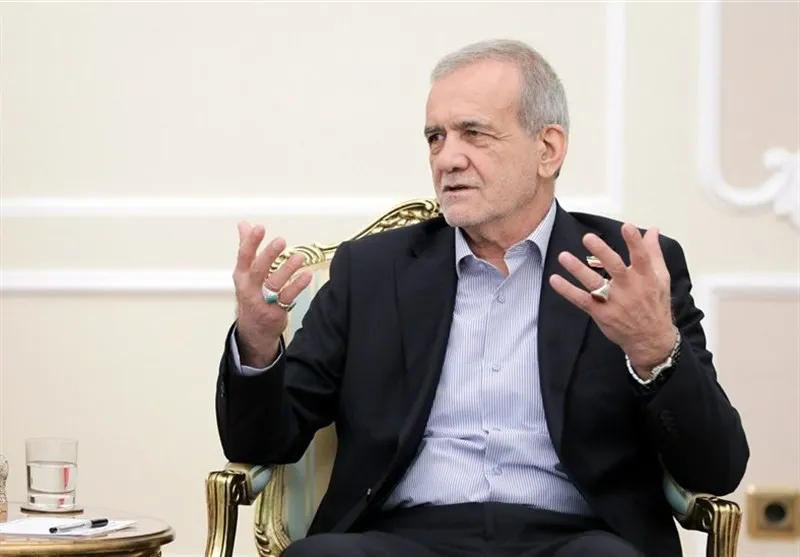
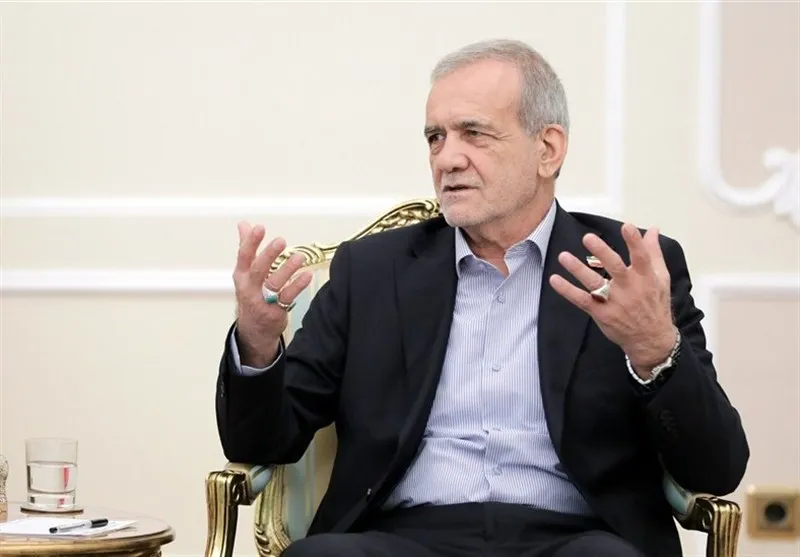
President Masoud Pezeshkian, in a phone call on March 20 with India’s Prime Minister Narendra Modi, called on the BRICS bloc to play an independent role in ending the aggression against Iran. Pezeshkian said that he “proposed the creation of a regional security framework led by West Asian countries, aimed at ensuring stability without foreign intervention,” as reported today by the WANA News Agency in Tehran. Pezeshkian also offered that Iran is willing to participate in nuclear energy dialogue and plans with other nations, on the sidelines of the UN General Assembly.
Oman’s Foreign Minister Badr Albusaidi put forward proposals for regional cooperation and nuclear power on March 18 in The Economist of London, in an article headlined, “America’s Friends Must Help Extricate It from an Unlawful War.” Albusaidi wrote, that U.S.-Iran bilateral negotiations be linked, “to a wider regional process, designed to achieve a framework for transparency on nuclear energy—and the energy transition more broadly—in the region.” Despite war, he proposed that “Oman and its Gulf Co-operation Council neighbors propose such initial talks, which could lead over time to confidence-building measures and a consensus around the role nuclear energy should play in the energy transition.”
On March 19, the Russian Foreign Ministry issued a statement reporting that Al Busaidi’s “proposals set out in the article are broadly in line with our own views on the need to establish a security architecture in the Middle East and the Persian Gulf that ensures a balance of interests among all states in the region. We share the Omani Foreign Minister’s view on the importance of launching an inclusive regional dialogue aimed at reaching agreements on confidence-building and transparency measures in the field of nuclear energy, as well as on mutual security guarantees.” Moscow has for years promoted what it has called “Russia’s Collective Security Concept for the Persian Gulf,” as, for example, its Foreign Ministry stated in 2021.
The EIR Roundtable series, held in two emergency sessions so far this year, January 12 and March 2, is a platform dedicated to furthering the dialogue to bring about a new world mutual security system. The very same principles of economic development urgently called for to end the war in Southwest Asia, are also those which need to be applied, for example, to restore the electricity generation capacity in Europe, to install power throughout Africa, and in the Western Hemisphere, to end drought in western North America, and upgrade all infrastructure in the Americas. And continue such infrastructure-building and development in Asia and around the planet. This is the perspective for all humanity.
At the conclusion of the International Peace Coalition’s 146th consecutive Friday weekly meeting on March 20, Schiller Institute leader Helga Zepp-LaRouche laid out this perspective, appealing to everyone “to try to really put this idea of a new security and development architecture seriously on the table” of the world community, including local communities everywhere. “Join our campaign to introduce this idea of economic reason rather than World War III.”
Contents
Strategic War Danger
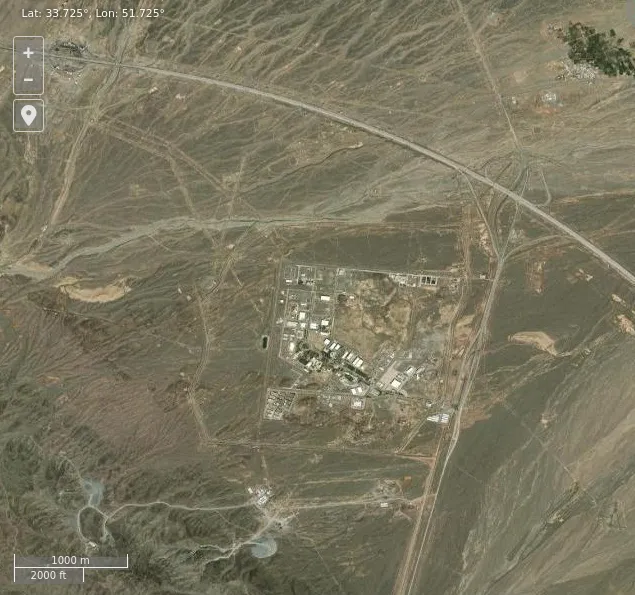
- Natanz Enrichment Plant Attacked; Iran Fires Missiles at Diego Garcia (↓)
- Russia Condemns Bombing of Iranian Caspian Sea Port (↓)
- Israel Targets Medical Workers with Double-Tap Strikes in Lebanon (↓)
Collapsing Imperial System
U.S. and Canada
New World Paradigm
- Strategic Iran Friendships Affirmed in Nowruz Greetings; but Trump Affirms U.S. 'Righteous Mission in the Middle East' (↓)