The Lead
When the State Becomes a Cult: If Faith Replaces Strategy, Who Pays The Price?
by Jason Ross (EIRNS) — Mar. 07, 2026
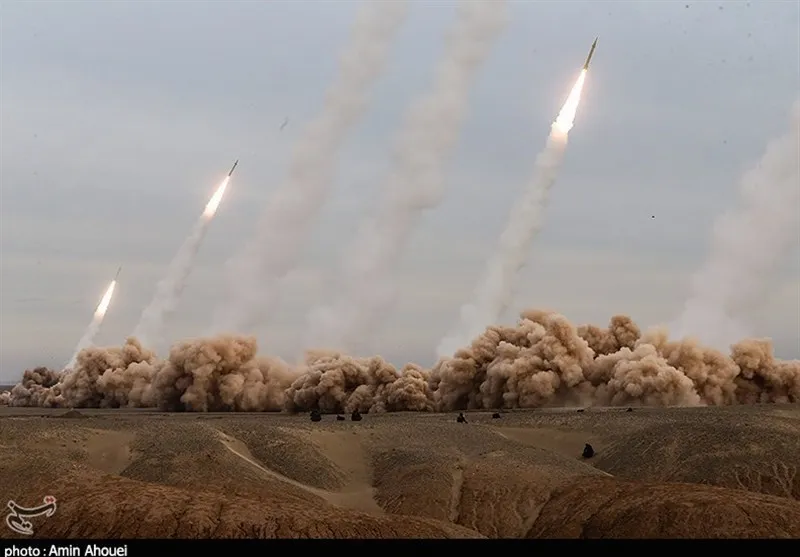
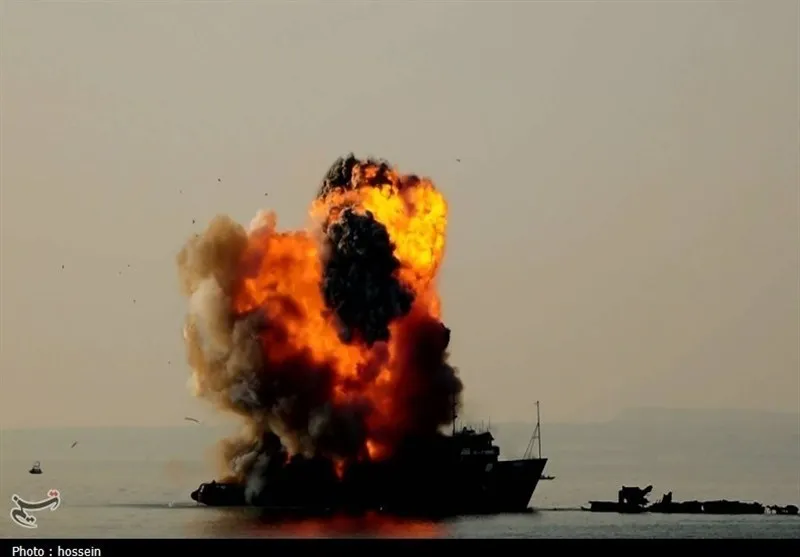
The rulers of the Gulf nations made a calculation: that American military bases on their soil were an insurance policy. This week, they are discovering they may have purchased the opposite. Iran has declared it will not strike neighboring countries—unless those countries serve as launchpads for attacks against Iran. Saudi Arabia, Qatar, and the U.A.E. did not choose this war. But because they host the bases, the missiles keep coming, despite Trump declaring that Iran had surrendered to its neighbors. The “security umbrella” has instead become a lightning rod. And as their stocks of interceptor missiles deplete—each one costing far more than the Iranian drones they take down—they have to ask: Is the American military presence in the Persian Gulf a strategic asset for them, or a strategic liability?
But to ask that question in purely strategic terms is to already miss what is actually driving events.
The war against Iran cannot be understood only as a strategic project. It also has a powerful religious driver.
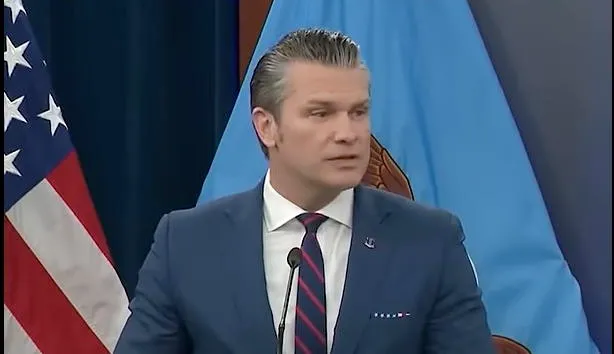
The program being executed—the attempted dismemberment of Iran, the construction of a Greater Israel stretching from the Nile to the Euphrates, the demolition of the Dome of the Rock and the erection of a Third Temple in its place—does not find its basis in any rational calculation of national interest, but in scripture instead. And it is being enforced by the most powerful military apparatus in human history, whose field commanders have filed over 110 complaints in the war’s first 48 hours reporting that their officers told them Trump had been “anointed by Jesus to light the signal fire in Iran to cause Armageddon.” The Defense Secretary has used the word “crusade” without apparent embarrassment. These are not merely rhetorical flourishes. They describe the theology of the chain of command.
Secular societies are particularly poorly equipped to take religious motivation seriously. We are trained to look for the “real” interest behind the theological language—the oil, the geopolitics, the electoral calculation. These are real. But they are not enough to explain the situation.
Lyndon LaRouche, writing in 2003 about the Synarchist tradition that ran through European fascism and its American offspring, identified this blind spot as a strategic vulnerability in itself. The separation of church from state, he argued, is “the most efficient form of weapon of defense of the institution of the modern nation-state from corruption by such terrorist cults.” We must not let the state become the tool of a religious body, or a religious body the tool of the state. When either happens, the American or European nation-states, as a vehicle for the promotion of the common good operating with the informed consent of the governed, ceases to exist.
That is precisely the transformation now underway. The intelligence was clear before the first bomb fell: a classified National Intelligence Council report, completed a week before Feb. 28, concluded that even large-scale military assault would not lead to regime change in Iran. The clerical and military establishment had succession protocols designed for exactly this scenario, and the opposition taking power was “unlikely.” The attack happened anyway, because this war was not launched on an intelligence estimate. It was launched on a prophecy.
The consequences are arriving regardless of the theology. Hormuz carries a fifth of the world’s oil. Qatar’s energy minister warned this week that the disruption could “bring down the economies of the world.” The U.S. economy shed 92,000 jobs in February, and that was before the oil shock began to hit consumer prices. BlackRock has gated a major private credit fund, the first tremor of a $1.8 trillion shadow banking sector that Italian economist Michele Geraci calls the real story: not BlackRock itself, but a systemic loss of confidence in the financial architecture built on post-2008 deregulation. THAAD arrays are being destroyed faster than they can be replaced. And across the Global South—from Indonesia pulling back from Trump’s “Board of Peace” to the African Union watching fertilizer prices spike—the same question is being asked: Where does this end?
The West is not steering toward any destination it can name. It is accelerating as if motion itself were the point. As if to stop and think about what kind of world is actually being built would be more terrifying than plunging ahead with the destruction already underway.
Not everyone has lost their bearings. Former Congressman Dennis Kucinich warns that Iran could become “the graveyard of the American Empire” and that Washington has “incited jihad” through a catastrophic failure to understand Persian culture and history. Colonel Richard Black, a former Marine and JAG officer who headed the Criminal Law Division at the Pentagon, reminds the “Great Awakening” commanders that Jesus said “blessed are the peacemakers.” EU parliamentarian and former UN Assistant Secretary-General Michael von der Schulenburg, warns, based on his three decades of field experience in Iran, Iraq, and Afghanistan, that this war “opens the Gates of Hell."Russia’s Sergey Lavrov points out, with devastating logic, that if the declared goal was nonproliferation, this war has made nuclear weapons the only rational insurance policy for every government that watched what happened to Qaddafi after he disarmed.
In Europe, in the halls of Congress, and in the growing unease of Trump’s own base of voters who sought to cast their ballot for no new wars, something is beginning to stir.
LaRouche, in that same 2003 document, named both the enemy and the stakes with precision. Referring to the groupings necessary to understand the promotion of modern terrorist cults, he writes: “The Martinists and their Synarchist outgrowth have been the principal enemy of our republic, from outside and internally, since our War for Independence. They represent the evil that was the Roman Empire ... the enemy of the creation of the sovereign nation-state republic.” But he did not leave it there. He pointed toward what becomes possible when that corrupting force is removed: “It is our proper destiny and potential, to fulfil the intended effects of our creation: the establishment of a community of natural-law principle among a system of perfectly sovereign-states throughout this planet, a work which must be wrought chiefly by rediscovering and invoking the noblest features of our history, by our example, by our good will, and by the influence we should exert to encourage the achievements of other republics.”
Monday night, March 9, LaRouche candidates Diane Sare and Jose Vega discuss what it will take to turn that vision into political reality, with guests Scott Ritter and Garland Nixon.
Contents
Strategic War Danger
- Descent Into Barbarism (↓)
- Iran Claims U.S. Strikes vs. Desalination Plant, Warns This May Set Precedent (↓)
- Pezeshkian Apologizes, Trump Declares Surrender That Hasn't Happened (↓)
- Kurdish Opposition Group Says It Will Not Be a Pawn in Trump's War in Iran (↓)
- Pre-War U.S. Intelligence Assessment: Bombing Won't Bring Regime Change in Iran (↓)
- Brussels, Fico Condemn Zelenskyy Threat Against Orbán as EU Loan Standoff Deepens (↓)
- EU Parliamentarian, Former UN Official: The West Has Opened the Gates of Hell in Iran (↓)
- Lavrov Says, Trump's War on Iran Could Spread Nuclear Weapons (↓)
- EIR Interview With Gilbert Doctorow Is Now Posted (↓)