As U.S. President Donald Trump’s second administration now appears determined to double down on the defense of the unipolar world order by means of the sword, many in Russia are considering what this means strategically going forward. Dmitry Trenin, a lead research fellow at Russia’s Institute of World Economy and International Relations and a member of the Russian International Affairs Council, represents a level-headed view from within Russia. He has spoken recently at Schiller Institute sponsored events. Because of the importance for Western audiences to hear the Russian viewpoint on these matters, we include a summary of Trenin’s clear-eyed March 16 article published in RT.
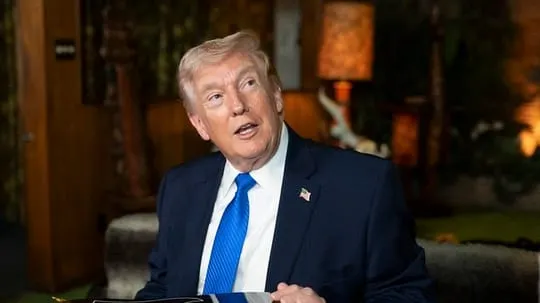
Trenin begins by recalling Trump’s campaign promises—of being the “peace president,” of rejecting the excesses of “globalism,” and of focusing more genuinely on the interests of the American people. As a result, Russia had welcomed the re-establishment of direct contact with Washington at the beginning of Trump’s second term, culminating in the Putin-Trump summit in Anchorage, Alaska.
However, the actual unfolding of events has left many startled and Russia reconsidering its relationship with the U.S. After the Anchorage meeting, Trenin continues, progress stalled, and Trump chose not to use his leverage to end the Ukraine war. The U.S. even further tightened sanctions against Russia, including secondary sanctions against countries buying Russian oil. Washington also rejected Russia’s proposal to extend the New START Treaty.
With the recent aggressive actions against Venezuela and Iran, “Trump has moved away from the original objectives associated with the MAGA movement and returned to the traditional global agenda of Washington.… Instead of presiding over the slow decline of the liberal-globalist order, Trump is attempting to build a new version of American hegemony, one based far more openly on force.” Trenin questions whether Trump is attempting to “generate global instability and then dominate within that chaos.”
Taking all this into account, Trenin notes, “such a strategy inevitably makes the United States a geopolitical, and potentially military, adversary…. This does not mean that the U.S. will necessarily attack Russia directly. But the trajectory of U.S. policy increases the likelihood of strategic confrontation.”