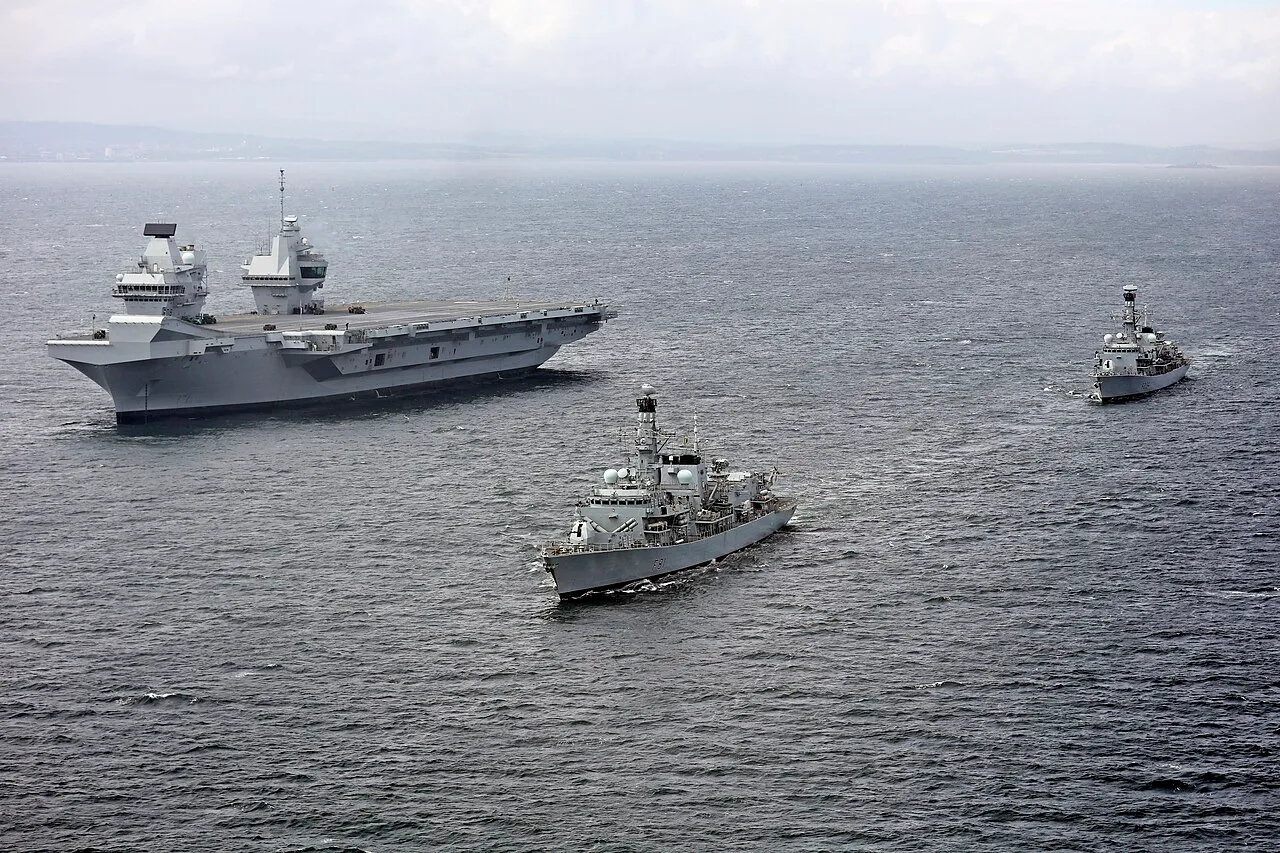
10 Downing Street announced on March 25 that UK law enforcement and military forces have been authorized to interdict, board, and haul into UK ports any of the 544 Russian commercial ships sanctioned by the UK if found transiting UK waters. The stated intent of the order is to sustain Ukraine’s war against Russia, by shutting off much of Russia’s oil and gas revenue. (They calculate 75% of Russia’s crude oil is transported by ship.)
Prime Minister Keir Starmer’s statement reported that the Royal Navy has already been supporting the interdictions in the Baltic Sea and the Mediterranean which have been carried out by the U.S. and other European allies (e.g., by Finland, Sweden and Estonia) against Russia’s so-called “shadow fleet,” thereby “closing off critical maritime routes to Russia’s malign [sic] operation.” By extending such operations into British waters, such as the Channel, “the UK will put a stranglehold on the shadow fleet,” it asserts.
Just two days before, the Russian Foreign Ministry had issued a blunt warning that these “acts of piracy” being carried out by Western countries in the world’s oceans have reached the point that they are “outright unacceptable,” and Russia will therefore take all available measures to defend itself against this violation of international law and freedom of navigation.
The Brits appear to be itching for a direct confrontation with Russia. “Military and law enforcement specialists have been put through their paces in preparation for a number of scenarios in recent weeks, including boarding vessels that don’t surrender, are armed, or use high tech pervasive surveillance to evade capture,” the Prime Minister’s Office stated.
The measure was reportedly timed to buttress Starmer’s leadership of the summit held today in Helsinki of the leaders of the so-called “Joint Expeditionary Force.” The JEF is a UK-led military coalition of 10 Northern European nations —the UK, Denmark, Estonia, Finland, Iceland, Latvia, Lithuania, Netherlands, Norway, and Sweden—which have abrogated to themselves the right to police the geostrategic region they consider “theirs”: the Baltic Sea, the High North and North Atlantic. Conceived in 2014 and fully operational by 2018, the JEF nations maintain a pool of “high-readiness” land, air and sea forces as a “complement” to NATO, which can be assembled as a force as this rump group of nations decide.
They are expanding - Canadian Prime Minister Mark Carney attended this year’s meeting remotely, as did Ukraine’s Volodymyr Zelensky.
Judging by the UK’s summary report on today’s meeting, Ukraine may be excluded from NATO still, but it is being incorporated into the JEF. The “ambitious” JEF/Ukraine Enhanced Partnership established last year aims to maximize Ukraine’s “operational collaboration” with the JEF, the UK reports, with Ukrainian units participating in “the JEF’s signature JEF LION series of exercises later this year.” Further “integration of Ukraine into broader JEF activity” is expected, through the “exchange of tactical and operational experience on modern warfare.”