Omani Foreign Minister Sayyid Badr bin Hamad Al Busaidi, who was in the midst of mediating U.S.-Iranian negotiations when the United States and Israel launched their “unlawful military strike” against Iran, has now put on the table a far-sighted proposal to end this otherwise unwinnable war. The proposal calls for the establishment of a regional non-aggression treaty, pivoted on an agreement for the development of nuclear energy. His proposal takes on added weight, as it comes not from the outside, but from a member of the Gulf Cooperation Council, and at a time when Gulf nations are being pressured to join the war on the side of Israel and the United States.
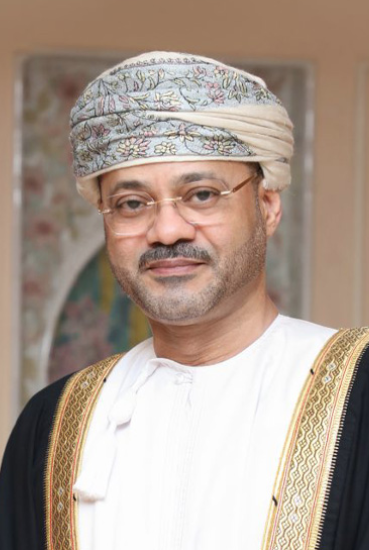
Albusaidi outlined his proposal in an opinion piece published in London’s weekly The Economist on March 18, under the title “America’s Friends Must Help Extricate It from an Unlawful War.” He writes as a friend of the United States, to warn that it has “lost control of its foreign policy” by allowing itself to be drawn into the war against Iran. “America’s friends have a responsibility to tell the truth,” he writes. “That begins with the fact that there are two parties to this war who have nothing to gain from it, and that the national interests of both Iran and America lie in the earliest possible end to hostilities….
“The leadership of the United States will then need to decide where its national interests really lie, and act accordingly. A sober assessment of those interests would indicate that they must include a definitive and decisive end to nuclear-weapons proliferation in the region, secure energy supply chains and renewed investment opportunities in the context of the region’s growing global economic significance. All of these would be best achieved with Iran at peace with its neighbors.”
How to get there? Albusaidi proposes that, given the deep lack of trust on both sides, U.S.-Iran bilateral negotiations be linked “to a wider regional process, designed to achieve a framework for transparency on nuclear energy—and the energy transition more broadly—in the region. As all the countries of the region look towards their shared post-carbon future, secure innovation and development may depend upon some basic agreement on the role nuclear technologies will play.”
He suggests that Oman and its Gulf Cooperation Council neighbors propose such initial talks, which “could lead over time to confidence-building measures and a consensus around the role nuclear energy should play in the energy transition. The ultimate destination of such a process is, of course, impossible to determine, especially in the middle of a war. But might it be possible, perhaps in the context of a regional non-aggression treaty, to secure a substantive regional deal on nuclear transparency?”
The Back-Story
Russia was quick to endorse it. In a March 19 statement, Russia’s Foreign Ministry said: “The proposals set out in the article are broadly in line with our own views on the need to establish a security architecture in the Middle East and the Persian Gulf that ensures a balance of interests among all states in the region. We share the Omani Foreign Minister’s view on the importance of launching an inclusive regional dialogue aimed at reaching agreements on confidence-building and transparency measures in the field of nuclear energy, as well as on mutual security guarantees.” The statement recalls that Russia has been promoting “the concept of collective security in the Persian Gulf, aimed at establishing lasting peace and fostering cooperative relations among all coastal states” for a number of years now.
However, the proposal itself was likely the outgrowth of diplomatic activity spanning the entire region over the recent months. Last June, when negotiations were also being pursued before the United States and Israel bombed Iran’s nuclear sites, the Bulletin of the Atomic Scientists published “A Regional Nuclear Consortium in the Persian Gulf.” The authors proposed “a regional nuclear consortium in the Persian Gulf as the basis of a new nuclear deal between the United States and Iran.” It featured Iran taking on the mission of uranium enrichment for the entire Gulf Cooperation Council (GCC), Iraq, and Jordan, under IAEA and other inspections, to spread nuclear power through the region. Iran and Saudi Arabia were cited as the two states immediately wanting nuclear development (the U.A.E. also has a need for fuel).
Dispatches from India and Pakistan on March 19, the day after Albusaidi’s proposal was published, reported that Omani Prime Minister Sultan Haitham bin Tariq Al Said was also on the phone with Prime Ministers Narendra Modi of India and Shebaz Sharif of Pakistan, and other GCC leaders. The Modi and Sharif contributions appeared as routine diplomatic greetings. That same day, Sultan Haitham called Turkish President Recep Tayyip Erdoğan “to discuss the regional situation.” Erdoğan “described an unprecedented security crisis” in the region, and “emphasized that Ankara continues to pursue diplomatic efforts including mediation,” according to the Anka Haber Ajansi news agency. Egypt has also been playing a large role in diplomatic activity over the recent weeks.
The Needed Economic Development of the Region
Proposals for such a regional economic and security framework for Southwest Asia go back many years—the most comprehensive of which were made by the LaRouche movement. The unfortunate hallmark of this region is, despite its enormous raw materials wealth, that it has been carved up and dominated by colonial powers seeking geopolitical and geoeconomic leverage, epitomized by the 1916 Sykes-Picot Agreement by France and Britain. This is a reality which still affects this region today.
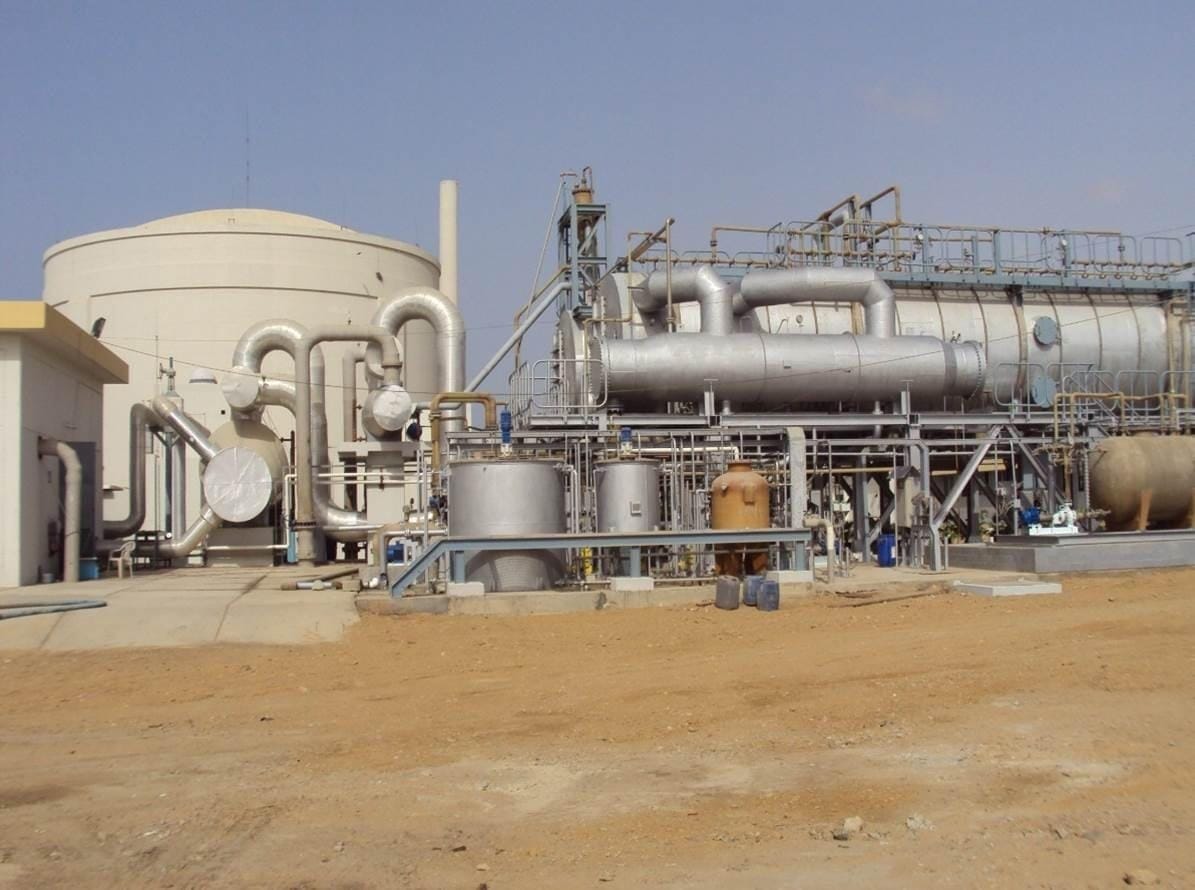
Breaking free from these neocolonial shackles, therefore, also requires an economic architecture which abandons the region’s narrow reliance on fossil fuel exports. Lyndon LaRouche emphasized that the use of high energy-flux dense nuclear power would become a necessity in this regard, especially given the region’s lack of fresh water. Nuclear power offers the most efficient means of desalinating the abundant ocean water, and transforming the region into an “oasis,” as he outlined with his famous Oasis Plan proposal. Comprehensive agreements on the use of nuclear power, therefore, become vital, not only for the survival of the nations of Southwest Asia but for the entire planet, given this region’s central location as a “crossroads of civilization.”
Speaking at the Zayed Center in Abu Dhabi in 2002, LaRouche spoke about the core challenge facing the region, and its central importance for the world as a whole:
The world has come to a crossroads in modern history. If the world were to continue along the pathway currently chosen by my government and some others, civilization will be plunged, for as long as a generation or more, into a global dark age comparable to that which struck Europe about 750 years ago. We must not pretend that danger does not exist; but, also, we must commit ourselves to the hopeful alternative which wise governments will prefer. Therefore, I shall speak frankly, but also optimistically, of a second crossroads, the Middle East….
For as far back as known history of civilization reaches, long, long before the discovery of oil, the Middle East has been the strategic crossroads of Eurasia and Africa combined, as it is today. With or without petroleum, the historic strategic significance of the Middle East would remain…. Given the desperate situation of the world today, we cannot be so naïve as to presume that powers which may be great, or even simply powerful, will, therefore, react sanely to the relevant strategic facts of the situation….
Zoom in, as if from an orbiting space-station, upon the past and present ecology of this region of the world’s biosphere. In our imagination, let us watch the long-range historical process, of melting of the great Eurasian glacier, over the interval from about 19,000 years ago, when ocean levels were approximately 400 feet below those today. Watch the evolution of the Mediterranean region over the following millennia. Watch the later phase of great desiccation of the once rich, desert regions of the Sahara, Gulf, and Central Asia. From the standpoint of that lapsed-time panorama, we are reminded in the most useful way of a fact we already know: that the most critical of the strategic economic factors inside the Middle East region as a whole today, is not petroleum, but fresh water….
That is the principal strategic ecological challenge which obstructs the realization of an otherwise great potential, a potential which has existed for the greater part of two millennia, in Arab civilization. It is to the degree that we make significant steps toward applying and improving the methods for production and distribution of fresh water, that other crucial factors of development can be brought into play. In that case, we shall see the implicit strategic potential of the Middle East as the crossroads of Eurasia. Any long-range forecast of the prospects of Middle East petroleum must be studied in the context of that challenge.
The development of fresh-water production and management, which is interlinked with the role of petroleum, is the indispensable foundation for all other optimistic prospects for a peaceful and politically stable internal development of the Middle East region.