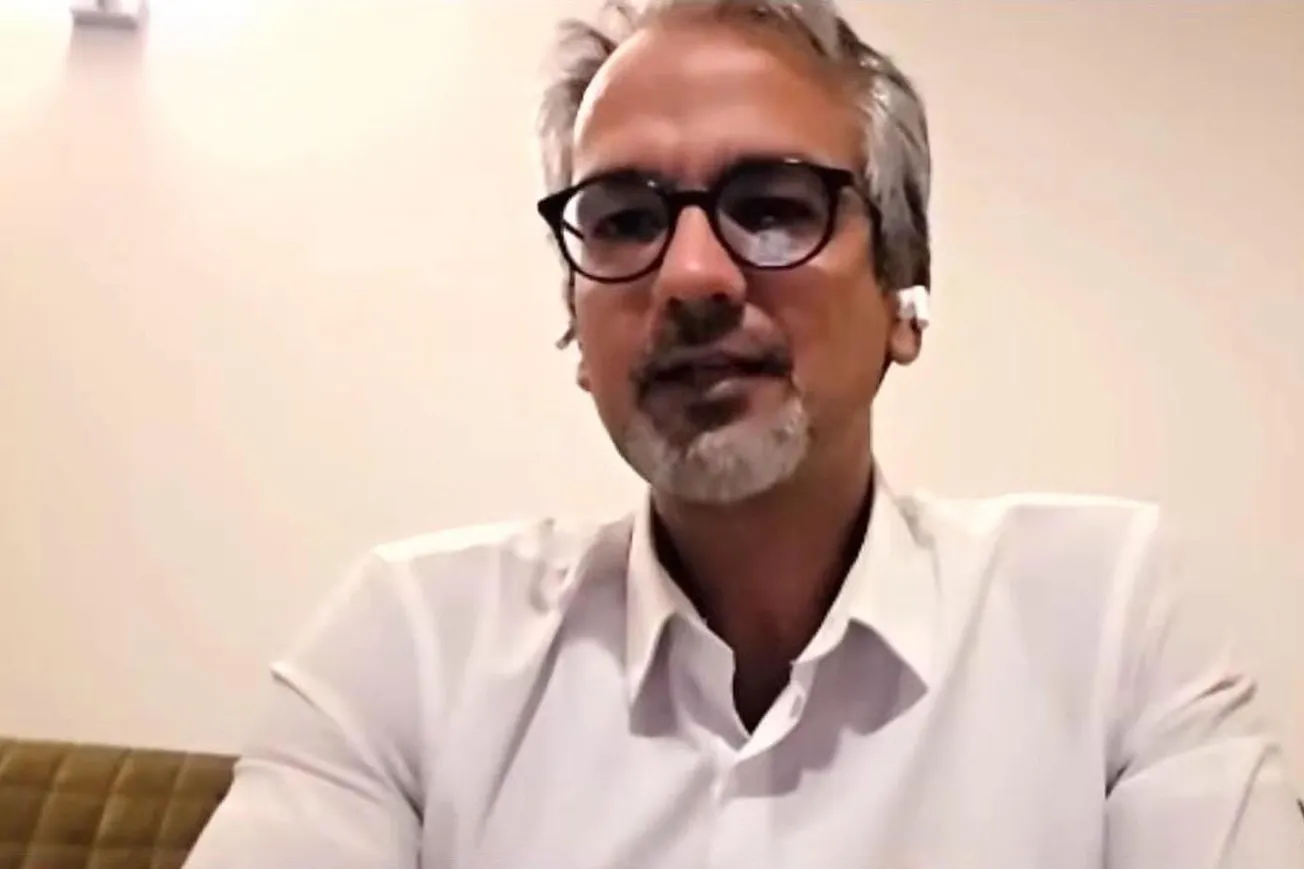

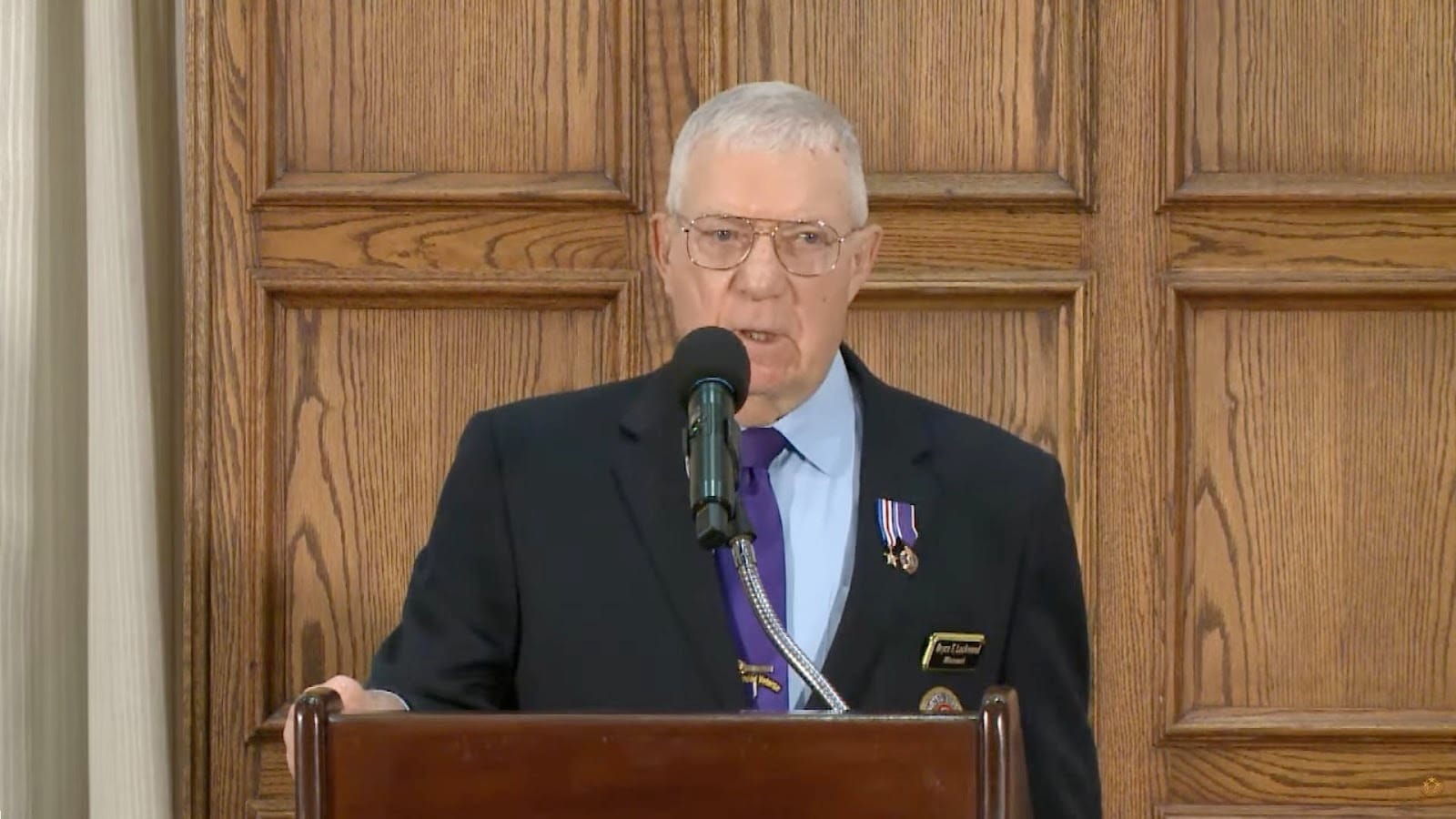
The following is an edited transcript of remarks by U.S. Marine Staff Sergeant (ret.) Bryce Lockwood to the March 26, 2026 Eisenhower Media Network press briefing, titled, “Imminent Threat—or Ruse? Intel on Iran a Flashback to Iraq?” held at the National Press Club in Washington, D.C.
On June 8, 1967, Sgt. Lockwood was serving as a U.S. Marine Corps linguist aboard the USS Liberty, a U.S. Navy spy ship, when it came under attack by the Israeli military. This attack, carried out by unmarked Israeli fighter jets and torpedo boats, lasted for over an hour. Out of a crew of 294, 34 were killed and 174 wounded. To this day, no serious investigation of the “incident” has been undertaken. Sgt. Lockwood in his remarks provides compelling insights as to why this may be the case. Subheads have been added. The video is available here.
A little background. Early 1960s, several Sub-Saharan African countries had recently won their independence from Spain, Portugal, Belgium, Germany, Great Britain. You know, there was a heavy influence by both the Soviet Union and Cubans in Sub-Saharan Africa, primarily due to the wealth of natural materials, gold, silver, rare metals. And the United States wanted to keep track of what was going on. Mind you, back in the early 1960s, satellites were very rudimentary. In order to keep track of things, you had to get up pretty close.
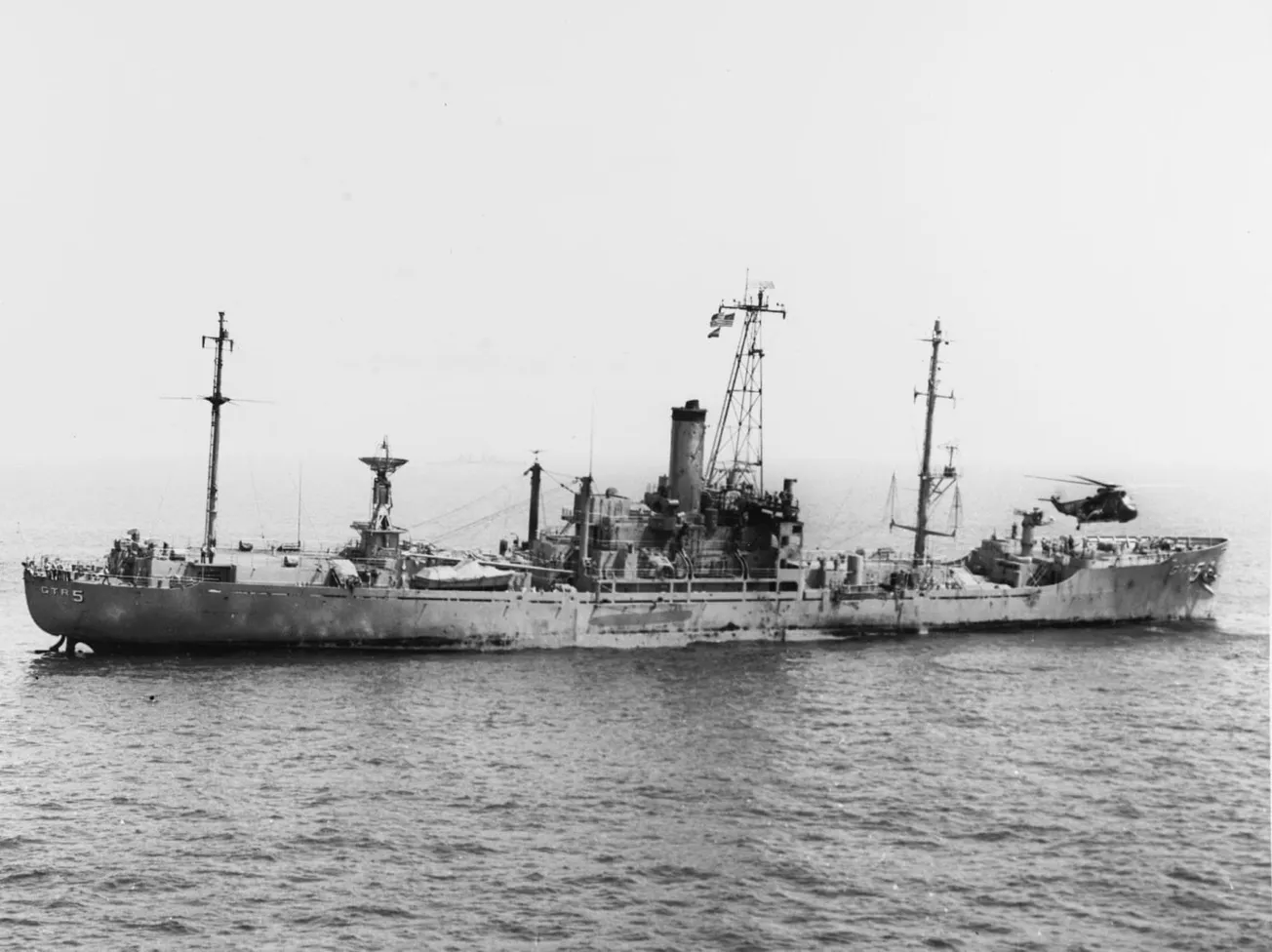
Several vessels were taken out of mothballs, fitted with high intelligence materials, electronics. USS Liberty was one of those. She was commissioned in 1945 as the SS Simmons Victory, a cargo-carrying ship. In 1965, the U.S. government spent 26 million dollars equipping USS Liberty with the latest electronics intelligence. Also aboard her, we had the world’s largest mobile computer, a Univac 500. You could probably do about as much intelligence with your smartphone today, but in 1965, the Univac 500 was pretty top-dollar.
USS Liberty was sent with linguists up and down the west coast of Africa, monitoring what was going on with these newly founded independent countries. In 1967, war appeared to be imminent between Israel and her neighbors. USS Liberty was ordered to proceed to Port of Roda, Spain, take on fuel and stores, pick up six additional linguists, and proceed with all due haste to the Eastern Mediterranean, cruising international waters up and down the coast of Gaza. I was one of those linguists that was taken aboard USS Liberty on June the 1st in 1967. On June the 5th, hostilities broke out between Israel and her neighbors.
I remember seeing the intelligence report from the U.S. Army that Israel had actually initiated hostilities. That was not what the press was told. The press was told that the Egyptians had initiated hostilities. Let me back up a little bit further here, too.
There was a group of U.S. phantom photo-reconnaissance aircraft that was sent from the United States to Morón Air Base in Spain. When they arrived, all the U.S. markings were obliterated on the aircraft. The pilots were given neutral uniforms and neutral identification and sent to overfly the United Arab Republic. At that time, it consisted of Egypt, Jordan, Syria, and to a lesser extent, Libya. The results of those flights were given to the Israelis. When hostilities broke out, they knew where every aircraft was located, every piece of artillery, every tank.
The Egyptians were in defensive positions. They had dug in the rear of their tanks to where they could get more trajectory on their projectiles. On June the 8th, we had had drill general quarters [signaling for all hands aboard the ship to man their battle stations —ed.] at noontime. We had secured from drill GQ. I had had the mid-watch [12:00 midnight – 4:00 am] the night before. I was at my rack stamping my name on some new T-shirts when suddenly there was a very loud noise.
Serious Trouble
I’d never been under enemy fire before, but I knew immediately that we were in serious trouble. I dropped what I was doing and headed for my GQ station, which was below decks. There was a crew of 294 aboard the USS Liberty. Out of that 294, roughly 180 were intelligence collection people, linguists, Morse code operators, voice intercept operators, technical intercept people. I went to my GQ station down below decks. I remember the division senior enlisted man, Chief Smith, saying, well, I guess we’re going to have to initiate destruction.
When you’ve spent years collecting intelligence, you don’t want to hear that. All those years of work, breaking codes, translating languages, putting it all together to make some readable intelligence out of it, that all had to go into ditching bags. We had these large canvas bags with a lead weight in the bottom and brass ferrules on the side.
When we collected voice intercept tapes in those days, we didn’t have chips to do the work. We used six-inch magnetic reels. There were hundreds of those, linguistics magazines, manuals. All that had to go into ditching bags and over the top. The captain came on the internal speaker system of the ship and said, “brace yourselves, torpedo attack, starboard side.” I remember one of my friends saying, “Well, they hit us with everything else. What else can they hit us with?”
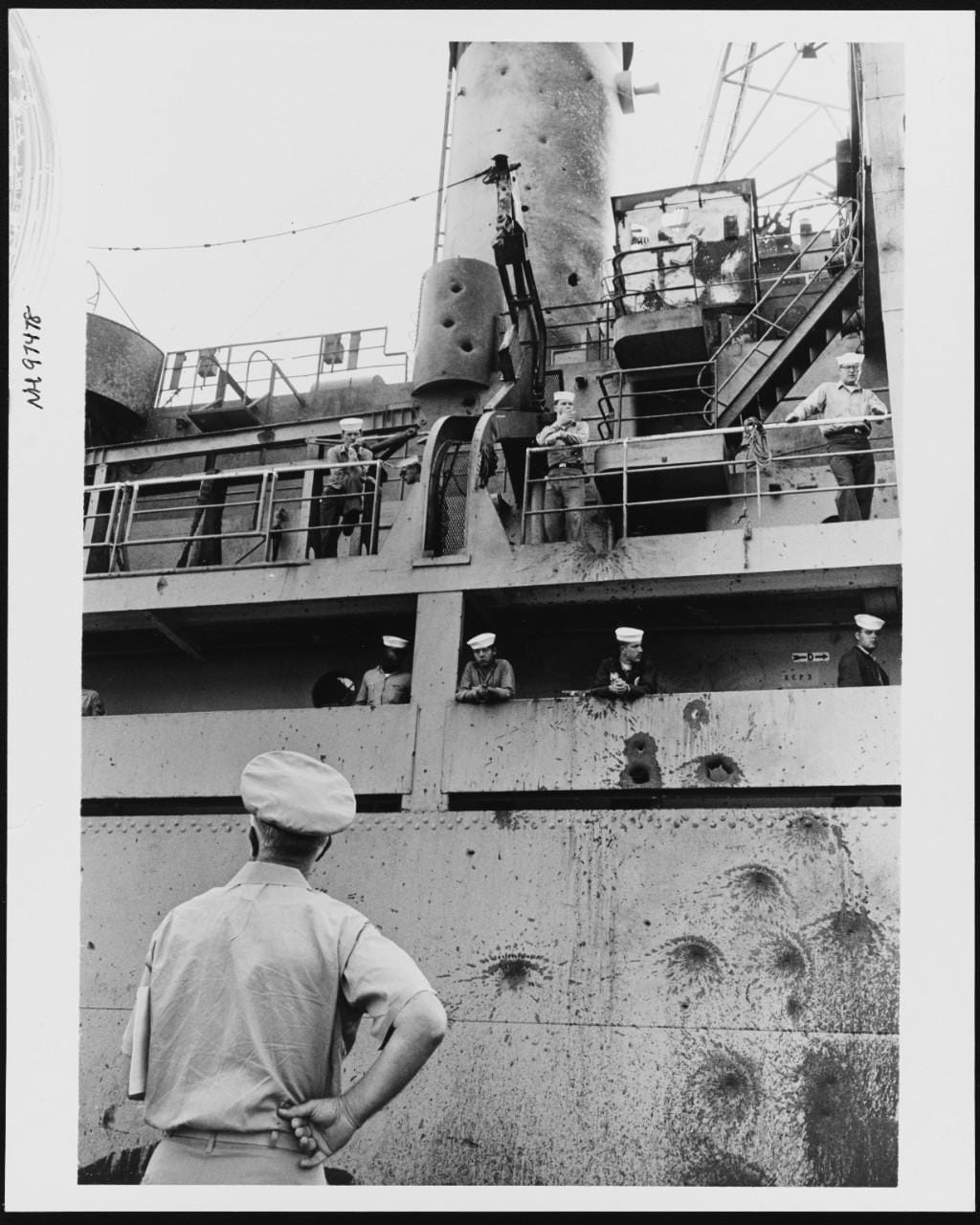
There were 826 large caliber strikes on the ship, 40-millimeter cannon fire, guided missiles, heat-seeking missiles. Every transmission antenna that we had was destroyed. The Israelis were jamming our distress frequencies, which is a violation of international law. They were using unmarked aircraft, which is a violation of international law. The division officer stuck his head in the door and said, “Sergeant Lockwood, would you come here a minute, please?” I stepped out into the passageway and he got me into a discussion with the senior research officer aboard the ship, Commander David Lewis. It was a Marine’s job to get shot at and there’s these heavy bags full of intelligence material that’s got to be taken topside and pitched over into the sea, the idea being by the time they could be recovered, there wouldn’t be anything there of value.
‘Well Lord, I Guess This Is It’
We had just gotten into this conversation when suddenly there was a very loud noise and a flash of fire. I [was] knocked to the deck; first thought that came to my mind said, “Well Lord, I guess this is it. I guess I’m going home. At least Lois and the kids are taken care of.” Lois is my wife.
I felt something cold. I looked down and water was gushing in and I heard a moan behind me. There was a sailor. His name was Joe Lentini. Joe had stepped out into the center passageway and had taken a piece of shrapnel from an Israeli rocket in his thigh. He’d gotten a tourniquet and sat down on the deck and leaned up against the ladderway, which is the only way out. I was putting a tourniquet on that wound when the torpedo struck.
We had sheet steel bulkheads that separated the various compartments on the ship. You were required to only be in the area that you had access to. That was so if someone should compromise the intelligence, only that small piece would be compromised. Those sheet steel bulkheads just mushroomed with a force of the explosion. Joe’s leg was caught in that and literally made toothpicks out of it. He was moaning. I tried to get my arms under his and pull him loose, but he was wedged in there tightly. I said, come on, you got to get your legs under and help me. I can’t do it by myself. Come on, push. I didn’t realize that his left leg was smashed, but he’s able to get his right leg under him and move just enough pressure to where I could pull him loose.
By that time, the water was almost to the overhead. We only had about a foot and a half of airspace. Mind you, 180 intelligence people crammed into this underwater compartment. The only way out was a ladderway, which is about two feet wide, very steep. There was a lot of screaming and hollering going on. As loudly as I could, I said, “Knock it off. If y’all don’t settle down, none of us will get out of here alive.” I heard the division officer, Lieutenant Bennett, at the top of the ladderway saying, this is Mr. Bennett. Open this hatch.
Apparently, I passed out because the next thing I remember was, I was holding a man’s head above water. There were no lights. The only light we had was coming through the torpedo hole, which was roughly 36 by 42 feet, most of it below the waterline. He was unconscious. I was trying to hold his head above water. I struggled to go up the ladderway.
When the torpedo struck, it ruptured a bulk fuel tank. Bunker oil is what fired the boilers and made the steam to drive the ship. That bunker oil stunk to high heavens. Heavy waste oil is what most of it was, and that was everywhere. Oil and water don't mix very well. You put it on steel, and it’s pretty slippery.
I got this guy started up the ladderway, and a piece of the torpedo had struck the railing on that ladderway and bent it into where there’s only about a foot and a half of space. I got to that place, and I dropped him. As the ship was rolling with the sea, water was gushing in and out. He’s headed back out towards the torpedo hole. Went back, got him, started back up the ladder. Again, got to watch out for that bent railing.
Got him to the top, and the hatch was sealed shut. I was trying to hold his head above water and pounding on the hatch, and a sailor named Bobby Schnell came and opened the hatch and let me out. There was another sailor there named Phil Tourney. Phil was part of the damage control aboard the ship. Phil said the captain had announced prepare to abandon ship, said you need to get a life vest on, put a life vest on him—this unconscious sailor—and take him to the mess decks. All the tables that we ate off from, they’d taken mattresses and put them on there, and were trying to take care of the most severely wounded.
I tried to pick him up, dropped him, tried to pick him up again, dropped him again. Phil said, “Oh here’s Bobby Schnell.” Bobby was a weightlifter and in pretty good physical shape. He picked him up and trotted back to the mess decks with him.
I felt real thirsty, and there was a scuttlebutt drinking fountain around the corner and another passageway. I went over to get a drink of water, and a black man stared back at me [His own soot-covered reflection —ed.]. Apparently when the torpedo struck, the only thing that happened to me was the blast effect from the torpedo. It killed 25 men all around me. How I escaped, I don’t know. We were told to go to the radio room, which is on the starboard side of the ship.
Mayday Finally Goes Out
The Israelis were using three motor torpedo boats. They had fired five torpedoes at us. Years later, at one of our reunions, one of the fellows that was in the front part of the ship [reported that he] had heard a strange noise. Didn’t realize what it was. That was a near-miss torpedo. I remember lying on the deck in a radio room and hearing this Mayday go out. “Firefox! Firefox! This is Rockstar! Rockstar! Under attack by unidentified surface and air units. Require immediate assistance.” It seemed that when the Israelis were firing rockets at us, they couldn’t jam our distress frequencies because that would screw up the flight of the rockets. And that brief moment of time, that Mayday went out and immediately the shooting stopped.
These motor torpedo boats were circling us and firing heavy caliber machine guns onto us. There were 3,100 strikes from those heavy caliber machine guns. I kept wondering, why? They told us, “Oh, there’s no need for an escort. We can have air cover to you in 10 minutes.” We had been under attack for well over an hour at that period of time. Mind you, the Israelis were using unmarked aircraft, a violation of international law.
One of those pilots refused to fire on us. He said, “It’s an American ship. It’s an American ship. I can see the flag.” His name was Lev Toth. He returned to base, was court-martialed, spent five years in an Israeli prison. When he was released, he came to the United States, started hanging around with a lady who was a bank bilker.
Bankers don’t like you messing with their money. Lev Toth got sentenced to another five years in prison. In 1988, his girlfriend contacted a U.S. Congressman by the name of Pete McCloskey, Republican Congressman from the State of California, and asked him if he wouldn’t go to Springfield, Missouri and interview this pilot at a federal medical prison located in Springfield.
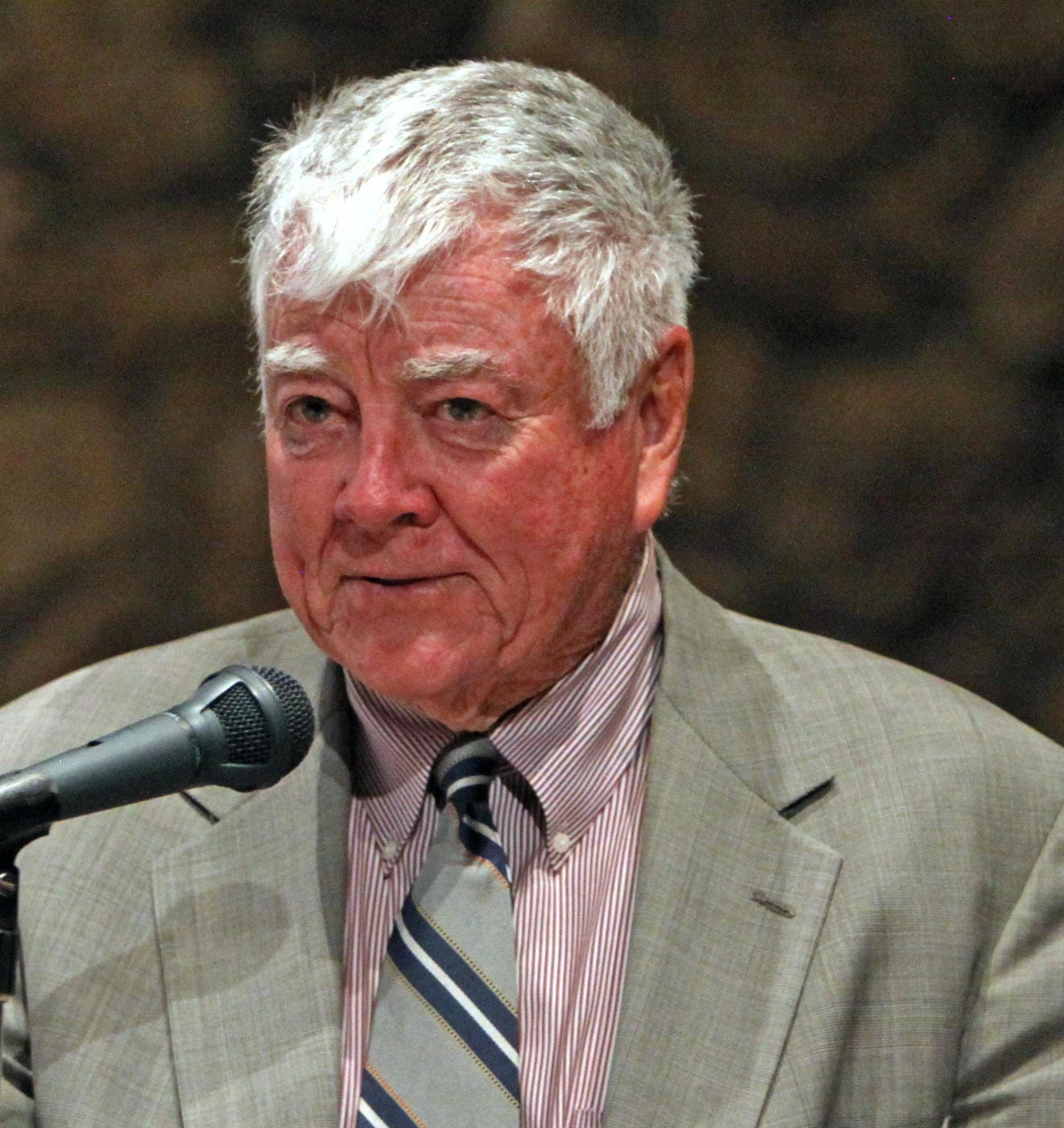
Congressman McCloskey sent me a dossier from that Israeli pilot, three-quarters of an inch thick. Among the documents in that dossier was an interview that Congressman McCloskey had with a former Israeli Mossad agent in Canada. He wouldn’t come to the United States. He said, my life wouldn’t be worth a nickel in the United States. One of those documents was an Israeli Mossad attempt to assassinate George Herbert Walker Bush because he was not friendly enough towards Israel.
I was medevacked [medically evacuated] to the [aircraft] carrier [USS] America. While I was aboard the America, Commander Dave Lewis [was also there], whom I was talking to [on the USS Liberty when the] torpedo struck. I was facing the torpedo and my glasses protected me from the debris from the torpedo. Commander Lewis was perpendicular to it. Some of that debris went under his glasses and sealed his eyes shut. It was about five days after the attack, he was in the optical section aboard the America, and his eyes had just been lanced open.
Admiral Larry Geis, who was commander of Task Force Six, that included the carriers USS Saratoga, USS America, and the guided-missile cruiser USS Little Rock, asked Commander Lewis to come to his stateroom. He swore Mr. Lewis to secrecy until, quote, after I am dead, and related this story.
Did President Johnson Whitewash Israeli War Crimes?
Rescue aircraft had been dispatched from the USS Saratoga to come to our aid. They had nuclear weapons aboard them. Secretary of Defense Robert McNamara came on the air and said, get those aircraft back. Joe Tully, who was skipper aboard the USS Saratoga, figured out that that’s probably why they were recalled, is because of those nuclear weapons. He relaunched aircraft with conventional weaponry, again announced that he had launched them, and again, Secretary McNamara came on the air and said, get those aircraft back.
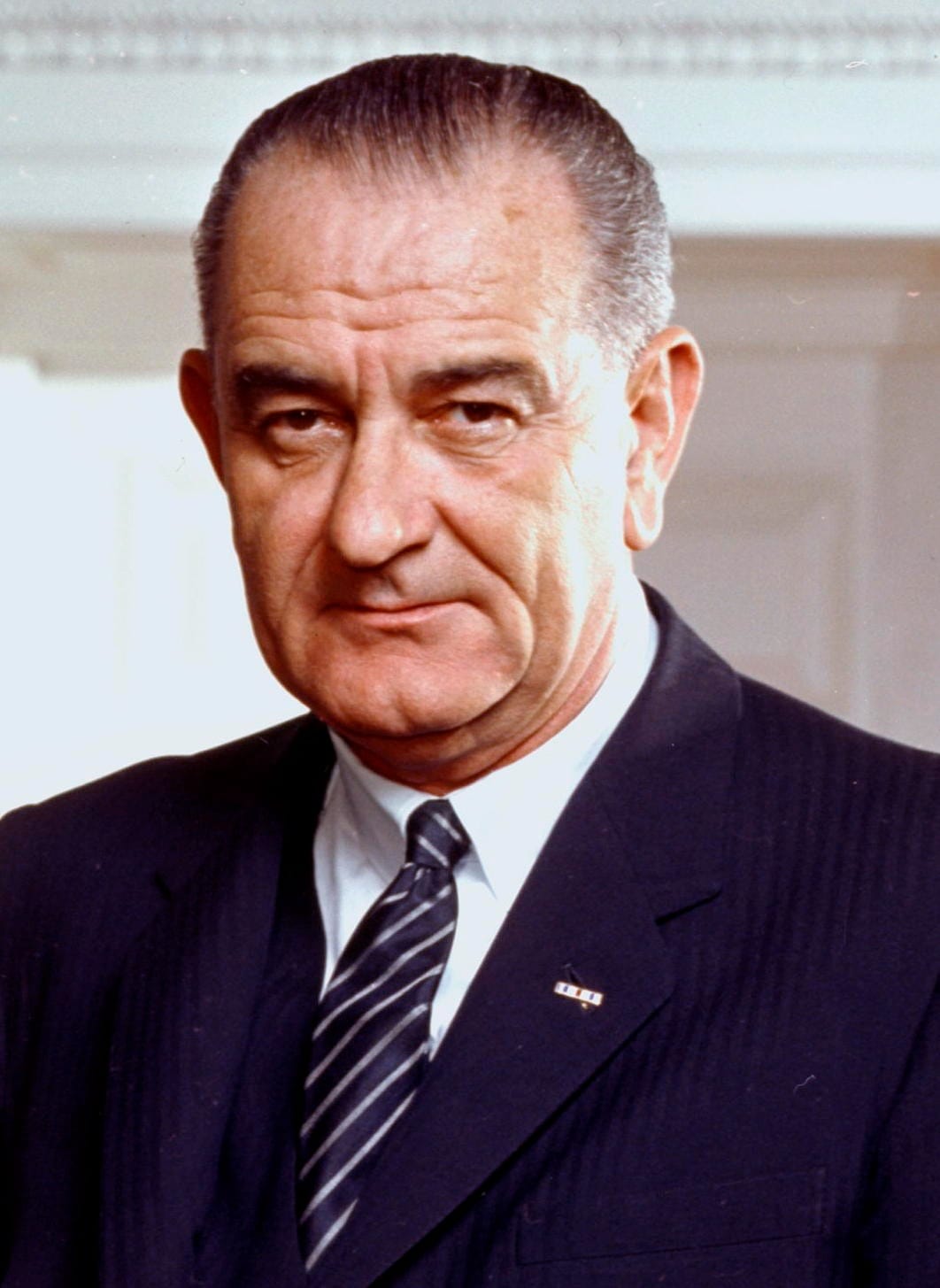
Admiral Geis said he wanted to exercise his authority to hear that from higher authority. Well, the only higher authority was a President of the United States. President Johnson came on the air and said this: “Get those aircraft back. I will not have my allies embarrassed.” They were using unmarked aircraft, and we did not know who was attacking us. How did President Johnson know? America’s entire nuclear force was on full alert the morning of June 8, 1967, before we were attacked. Why?
President Johnson hated President Gamal Nasser, President of Egypt—hated him. We think the President set us up, sacrificial lamb, sink the ship, kill everyone aboard it, and get the U.S. involved on the side of Israel.
In 2005, Steve Rosen, then a senior officer with his AIPAC [American Israel Public Affairs Committee], was dining with Jeffrey Goldberg, who was then with The New Yorker magazine. I believe he’s currently with The Atlantic. He said, you see this napkin? In 24 hours, I could have the signatures of 70 United States Senators on this napkin—seven zero— 70 U.S. Senators.
We did nothing. Survivors were ordered to silence. “You say anything about this, we’ll send you to Fort Leavenworth and forget about you.” There has never been a U.S. Congress investigation into the attack on the USS Liberty, which is required under Article I, Section VIII of the U.S. Constitution to investigate acts of piracy on the high seas and violations of the law of nations. There has never been a U.S. Congress congressional investigation of the attack on the Liberty.
Years later, the USS Davis was attacked off the coast of Yemen. Seventeen sailors were killed. U.S. Congress spent nine months investigating that attack, but it was America’s best ally that attacked USS Liberty. We did nothing. The result? Israel realized they could do whatever they wanted, and U.S. Congress, U.S. government would do nothing.
Please don’t mistake anything I have to say today as being anti-Jewish. My argument is not against the Jewish people. It’s against a foreign government who attacked a vessel of the United States on the high seas in international waters and covered it up. Seventy thousand Gazans killed, and the U.S. supplied the bombs. A million Palestinians, refugees, homeless. Israel attacking Lebanon now. Beirut pretty much destroyed. A million Lebanese homeless, and we’ve done nothing.
The only investigation of the attack on the Liberty was ordered by the [U.S.] government. It took five days, and Admiral Thomas Moorer, who was then the Chairman of the Joint Chiefs of Staff, personally concluded that we were ordered to accept the Israeli excuse that it was a case of mistaken identity. The so-called ship that the Israelis claim we were mistaken for was an Egyptian World War I horse transport, the Al-Qasir, which was in dry docks in Alexandria, Egypt, had not been to sea for 20 years and was waiting to be cut up for scrap. The only armament was a four-inch muzzle-loading cannon. Quite a case of mistaken identity, and I guess you could say the Israeli pilots were colorblind because Egyptian ships are painted black with hull markings in Arabic script.
U.S. ships are painted gray. Maybe they were colorblind.