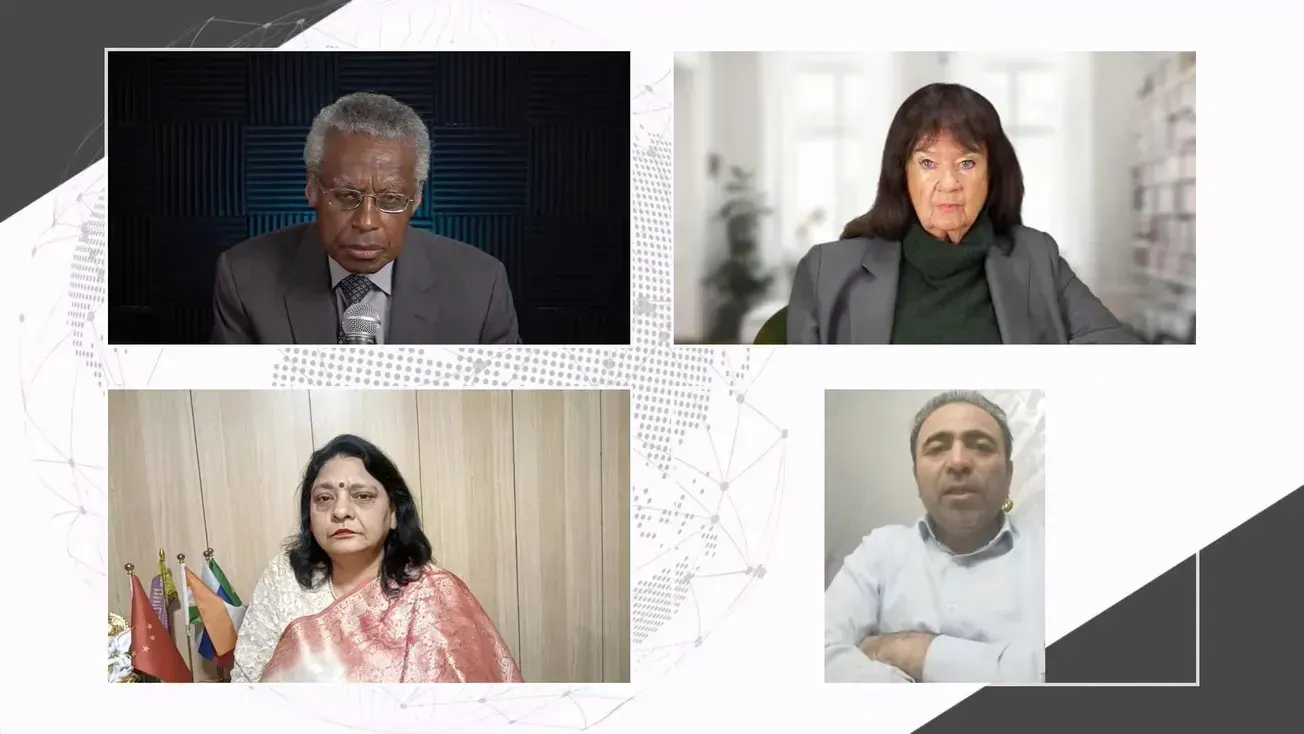
On April 6, EIR brought together experts from around the world for an emergency roundtable titled, “A Dialogue of Civilizations: Is There Still Time to Prevent the War Against Iran from Escalating into a Global Nuclear Conflict?” The event was an urgent and dramatic call to action, occurring as the United States is unleashing hell on Iran and President Donald Trump is threatening to bomb that country “back to the Stone Age” and end their entire civilization forever. As was made crystal clear during the proceedings, this has the very real potential of triggering a nuclear exchange, which could quickly lead to a global nuclear war, and must be urgently stopped. The dialogue occurred with the presence and participation of a representative of the Iranian government, Dr. Khalil Shirgholami, Iran’s Ambassador to Armenia and former Director General of the Institute for Political and International Studies in Tehran, which is affiliated with the country’s foreign ministry.
EIR editor-in-chief Helga Zepp-LaRouche kicked off the event by warning that the war risks not only a rapid descent into global thermonuclear war, but is also bringing on a global economic collapse, which threatens to collapse economies around the world. Instead of continuing on this “short road to hell,” Zepp-LaRouche said humanity must adopt a sublime, future-oriented perspective by viewing Southwest Asia from the standpoint of what the region could become in 20, 50, or 100 years. She laid out her proposal for an “Extended Oasis Plan,” which would integrate advanced technologies and massive infrastructure corridors, drawing on other successful initiatives, for example, China’s greening of deserts in Xinjiang. Toward this end, Zepp-LaRouche presented [two maps]https://eir.news/2026/04/extended-oasis-plan-for-southwest-asia/) of proposed rail links, outlining this development potential for Southwest Asia. Along with strenuous diplomatic efforts, this kind of economic development perspective could play a key role in laying the foundation for peace throughout this war-torn region.
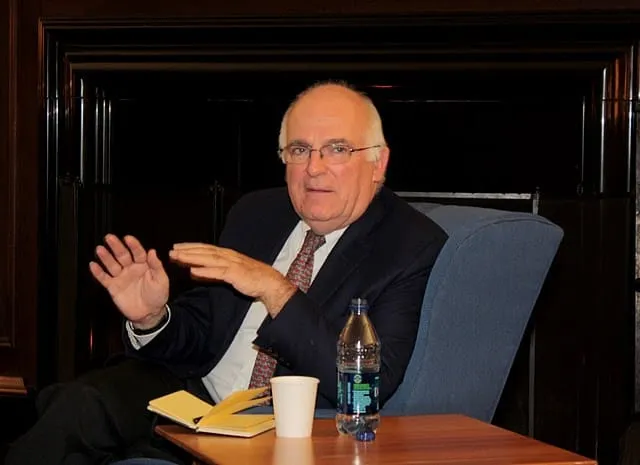
Speakers addressed the many aspects of this crisis, as well as their ideas for how to move the world out of it. Dr. Theodore Postol, professor emeritus at MIT, said Washington has gone “morally insane,” and warned in the strongest possible terms what the consequences would be if Israel is allowed to use a nuclear weapon against Iran. Chandra Muzaffar, founder and President of the International Movement for a Just World, urged elected officials, institutional representatives, and military officers from around the world to contact their counterparts in the U.S. and urge them to bring this war to an end. Purnima Anand of India, President of the BRICS International Forum, stressed the significant role the BRICS have in being able to solve this crisis, and spoke of mobilizing member nations “to showcase their unity” in this regard.
Significantly, the event brought together a representative of the Iranian government to dialogue with forces from around the world who are intent on stopping this trajectory.
The full videos of Panel 1 and Panel 2 are available for viewing.
The speakers included:
- Helga Zepp-LaRouche (Germany), EIR Editor-in-Chief and founder of the Schiller Institute
- Dr. Khalil Shirgholami (Iran), Iran’s Ambassador to Armenia and former Director General of the Institute for Political International Studies in Tehran