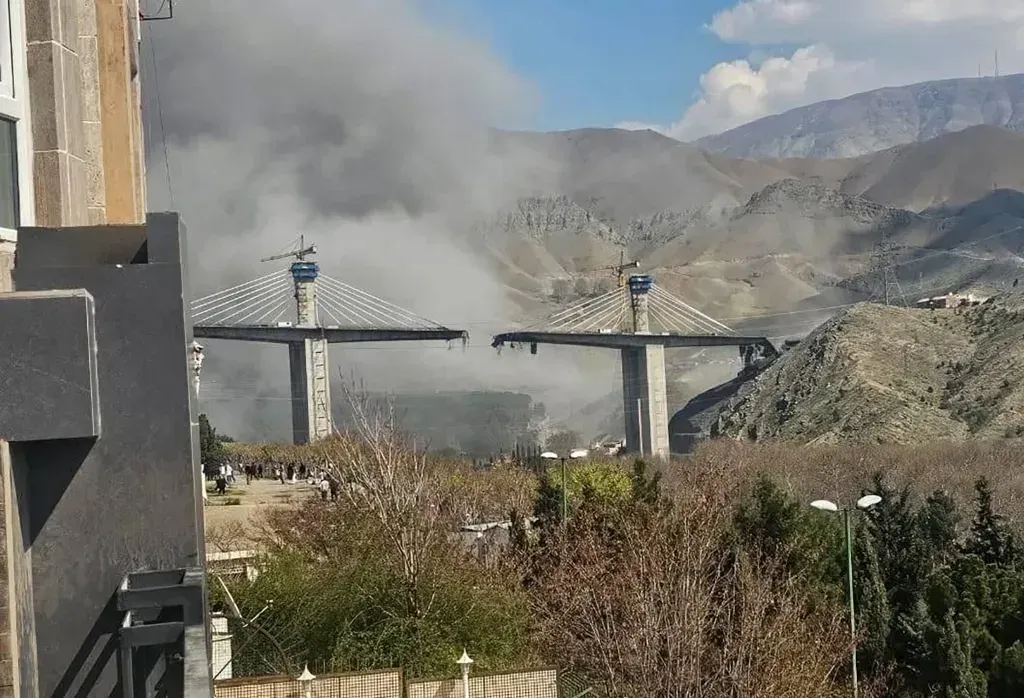
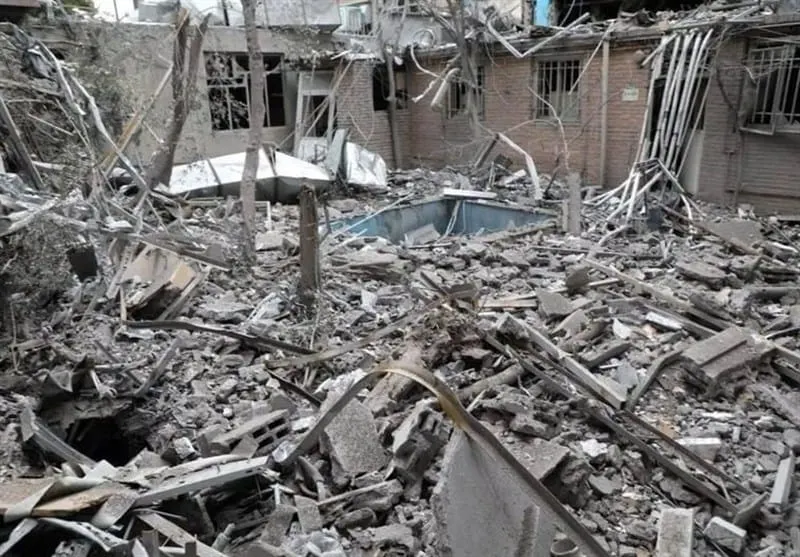
On April 2 , U.S. air strikes took out the B1 Bridge in Alborz province in northern Iran. The suspension bridge, reported to be the tallest in the Middle East, was opened in 2023, and linked Tehran’s western suburbs with Karaj, about 20 km away. Imagery shows a huge gap in the middle of the span between the two bridge pillars, reportedly caused by two hits about an hour apart. The War Zone noted that the bombing of the bridge came a day after Trump’s threat to bomb Iran “back to the Stone Ages.”
Iran state TV reported on the incident yesterday, in what is a deadly double-tap strike: “A few minutes ago, the American-Zionist enemy once again targeted the B1 bridge in Karaj.” The first strike had caused two civilian casualties. A later attack took place as emergency teams were deployed to the site to help victims of the first strike. The death toll then rose.
“The biggest bridge in Iran comes tumbling down, never to be used again—Much more to follow!” Trump boasted on Truth Social. “IT IS TIME FOR IRAN TO MAKE A DEAL BEFORE IT IS TOO LATE, AND THERE IS NOTHING LEFT OF WHAT STILL COULD BECOME A GREAT COUNTRY!”
Iran’s Foreign Minister Abbas Araghchi responded. “Striking civilian structures, including unfinished bridges, will not compel Iranians to surrender,” he posted on X. “It only conveys the defeat and moral collapse of an enemy in disarray. Every bridge and building will be built back stronger. What will never recover: damage to America’s standing.”
In a separate post, Araghchi noted that one difference between now and the Stone Age is that there was no oil or gas being pumped in the Middle East back then. “Are POTUS and Americans who put him in office sure that they want to turn back the clock?”
Araghchi also shared a post by World Health Organization (WHO) Director Tedros Adhanom Ghebreyesus, in which he reported on the alarming destruction of health care facilities in Iran, including the Pasteur Institute in Tehran which “sustained significant damage and was rendered unable to continue delivering health services.” He noted that the Pasteur Institute was established in 1920 and “plays an important role in protecting and promoting population health, including in emergencies. Two of its departments have been working with @WHO as collaborating centres.”
Also hit were the Delaram Sina Psychiatric Hospital which “sustained significant damage due to a strike on 29 March, and the Tofigh Daru pharmaceutical facility, “which produced medicines for treating cancer and multiple sclerosis, was damaged in another attack on 31 March.”
“Since 1 March, WHO has verified over 20 attacks on health care in Iran, resulting in at least nine deaths, including that of an infectious diseases health worker and a member of the Iranian Red Crescent Society,” Dr. Tedros reported further. “Attacks on health have also been recorded outside Tehran, including on 21 March, when an explosion nearby Imam Ali Hospital in Andimeshk, Khuzestan province, led to the facility’s evacuation and cessation of services.”
“The conflict in Iran, and the region, is impacting the delivery of health services and the safety of health workers, patients, and civilians present at health facilities,” he concluded. “Peace is the best medicine.”