The Iranians had been warning for at least a week that if Israel bombed Beirut, Iran would launch strikes against Israel, while President Trump had been trying to restrain Israeli Prime Minister Benjamin Netanyahu in order to save his shaky truce with Iran. Netanyahu went ahead and did it anyway.
Yesterday, the IDF struck what it claimed was a Hezbollah headquarters in the Dahiya suburb of Beirut. Local news reports described the target as apartment buildings. Lebanese authorities reported 2 people killed and 11 wounded. Hezbollah said none of its people were hurt. Iranian officials immediately responded with warnings. “This rabid dog must be disciplined and put in its place. Watch the sky of the occupied territories tonight,” Ebrahim Rezaei, spokesperson for the Iranian parliament’s foreign policy and national security committee, posted on X.
At about midnight, the skies over Iran lit up with the launches of Iranian missiles from a half-a-dozen different locations in Western Iran, followed a few minutes later by the arrival of those missiles in Israeli airspace. The number of missiles launched was variously reported as 10-20. The Middle East Spectator counted at least three impacts. Iranian officials claimed to have hit the Ramat David airbase in northern Israel. Israeli officials claimed all missiles were intercepted and no one was hurt except for an elderly woman who fell while running to a bomb shelter.
President Trump was immediately on the phone. He called Israeli Prime Minister Benjamin Netanyahu, reportedly telling him not to retaliate. According to Ynet, he urged Netanyahu to wait ‘a few days’ to see if a deal can be reached with Iran. In turn, Netanyahu informed Trump of Israel’s intent to launch a ‘massive attack’ on Iran, and Trump emphasized the U.S. would not participate. An Israeli official told Israel Hayom: ‘We will respond to Iran’s attack, even if it does not happen in the immediate timeframe’
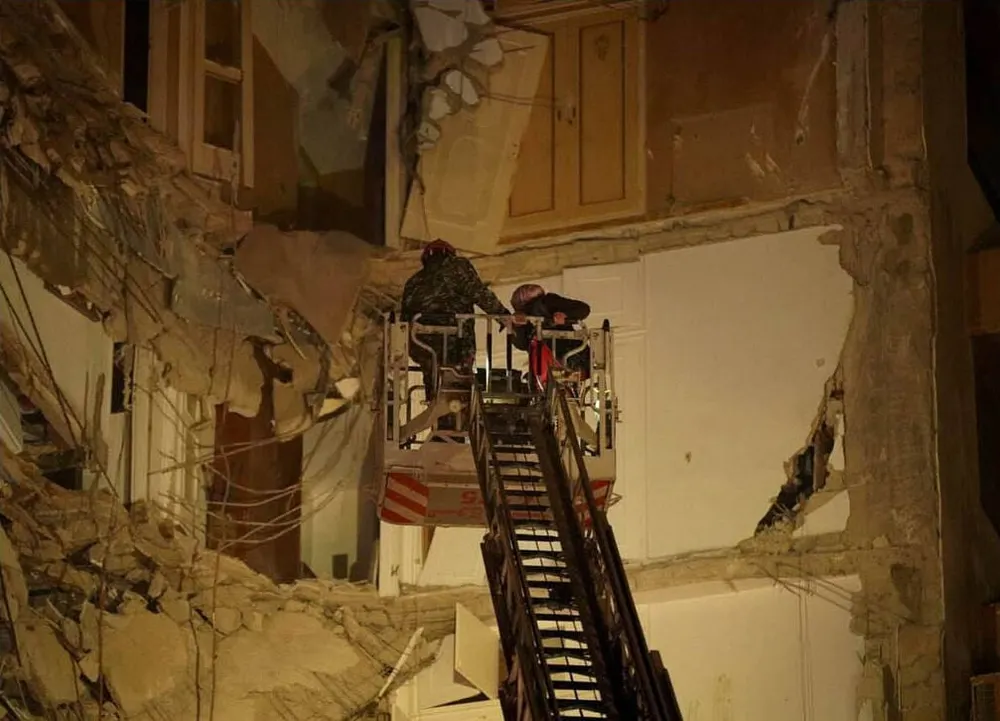
Trump was then all over the media, telling interviewers that he was in control, that Israel would not retaliate and that a deal with Iran was very close. But more missiles began flying within just a few hours after the Trump-Netanyahu phone call. The IRGC confirmed Monday morning that Israel had struck targets inside Iran using air-launched ballistic missiles, as loud explosions were reported in Tehran, Tabriz, Isfahan, and Karaj, reported Mehr News. Among the targets reported hit was the Karun Petrochemical facility in Mahshahr .
Iran answered with a further barrage of missiles, with Yemen’s Houthis joining in with a ballistic missile fired at “a sensitive Israeli target in occupied Jaffa” and announcing that the Red Sea was now closed to Israeli maritime traffic. The Iranians said they targeted an industrial facility in Israel and two more Israeli airbases, Nevatim and Tel Nof. Israel’s Channel 12 reported missile impacts and falling debris in the Beit Shemesh area west of al-Quds and in the city of Beersheba in the Negev.
By dinner time, Tehran time, the tit-for-tat retaliations appeared to be over. TASS cited Israeli Channel 12 news reporting that Israel had decided to halt attacks on Iran at Trump’s request but will continue strikes on Lebanon.