June 10—The 29th annual St. Petersburg International Economic Forum (SPIEF) June 3-6 provided a critical opportunity for international deliberation this year, inclusive of its economic focus, but far more broadly. This year’s theme was, “Pragmatic Dialogue: The Path to a Stable Future.”
The dimensions of the four-day conference were summarized June 6, after the event concluded, by Anton Kobyakov, Russian presidential Special Advisor and executive secretary of the SPIEF organizing committee. “Representatives from 142 countries around the world took part in the event. The Forum also demonstrated that Western investors are showing cautious interest in returning to Russia. A total of 1,084 agreements were signed at the Forum. The total number of participants exceeded 24,500 people.” He added, “For the first time in 10 years, an official U.S. delegation took part in the Forum.”
The economic agreements added up to some $96.3 billion. Governor of St. Petersburg Alexander Beglov said that his city alone reached 74 agreements worth nearly $10 billion. Video of the Forum is available, including recordings of the many concurrent working sessions on core policy questions on economics.
The SPIEF 2026 came as a significant world occasion of economic and strategic diplomacy, amidst Western-centered intransigence against stopping warfare, and initiating steps toward a new peace order. This fact was dramatized by two Ukrainian drone attacks deployed during the time of the Forum, aimed at the hydrocarbon export complex near St. Petersburg. As the attendees were arriving, black smoke rose on the horizon of the famous port skyline. Nevertheless, the Forum agenda proceeded as planned.
New Development Centers
In President Vladimir Putin’s speech to the Forum’s plenary session June 5, he addressed the global shift away from Western unipolarity, toward new development centers and dynamics. He discussed the root causes of today’s world “turbulence” associated with this transition, pointing out, “The geography of economic growth is changing, with new centers of development emerging across the countries of the Global South.” (Excerpts of his presentation follow.)
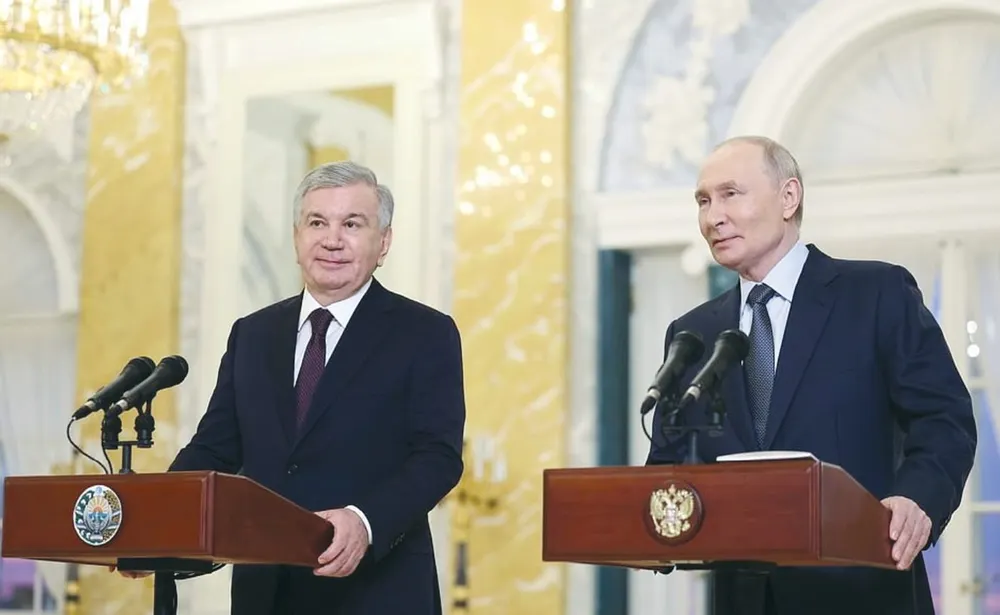
Joining him on the podium were Uzbekistan’s President Shavkat Mirziyoyev, Tanzania’s President Samia Suluhu Hassan, and China’s Vice President Han Zheng, with Geeta Mohan, international news editor at the India Today Group, moderating the session. Saudi Arabia was the Guest Country for this SPIEF, with its Minister of Energy, Royal Highness Prince Abdulaziz bin Salman bin Abdulaziz Al Saud, heading its delegation. The 20,000 in the hall included many heads of leading companies, businesspeople, and experts from 142 countries attending the forum.
It was clear, as President Samia stated in her opening address, that the SPIEF is one of the world’s most significant platforms for economic matters. She and President Mirziyoyev represent two of the world’s leading new development centers Putin spoke of: East Africa and Central Asia. They described in some detail the economic progress and goals for their regions.
The world is at a crossroads, Mohan said in opening the session, in which “a new international economic order, a new architecture is now taking shape…. The countries represented on the podium today reflect this change…. The era of moralizing, pressure, and intimidation is being called into question and challenged. But at the same time, maintaining independence is not easy. Strategic autonomy comes at a cost. So, today’s discussion is not limited to geopolitical issues,” she asserted. “It is devoted to the price of sovereignty….
“Can countries protect their national interests without being forced to align with camps or face sanctions? Will a multipolar world be truly just, or will a single center of power simply be replaced by a number of centers competing with one another? Can BRICS and South-South cooperation move from rhetoric to reality and become a tool for interaction? We are talking about transport corridors for technological and energy cooperation. Can all this give the Global South a real voice? Can an order emerge in which countries do not listen to what they are told, but speak for themselves?”
Cordial Exchanges
In the discussion period, President Putin invited Saudi Prince Abdulaziz to speak from the floor. He obliged, speaking of how the partnership which Saudi Arabia and Russia established in 2015 has withstood all the storms and winds that have shaken the world since, including the events of today.
A most interesting exchange also took place between the Russian President and Rodney Mims Cook, Jr., the Chairman of the U.S. Commission of Fine Arts—the first U.S. government-linked presence at SPIEF in nearly a decade. Cook spoke, quite sincerely, about his love for St. Petersburg, which he has visited for 30 years, studying its culture and architecture, adding that he thought St. Petersburg had been able to fight off “the Fuehrer” in World War II not only by its resolve and grit, but because of its culture and music. He conveyed “a big hello from your friend, President Trump,” and reported that he was encouraged by everything that had happened here over the past few days, “and we have a lot of ideas to talk about in our two capitals in the next week.” Putin, in turn, asked Cook to send his greetings back to President Trump, and thanked him for his heartfelt comments on St. Petersburg.
The prospect of Russia-United States good will and cooperation was raised prominently on the sidelines of the formal SPIEF agenda, as embodied in prospects for going ahead with a tunnel across the Bering Strait, to connect Alaska and Chukotka. Kirill Dmitriev, head of the Russian Direct Investment Fund (RDIF) and presidential Special Representative for Investment and Economic Cooperation with Foreign Countries, announced on June 4 that work is proceeding toward a memorandum of understanding between appropriate engineering experts for a design concept by the end of 2026. Dmitriev, who has occasionally referred to the megaproject as the Putin-Trump Tunnel, told reporters that, “We only pursue economically viable and feasible projects…. There are numerous joint resource projects, including those between Russia and the United States, and Russia and China, that could utilize this infrastructure.”
Uzbekistan ‘at the Heart of the Great Silk Road’
President of Uzbekistan Shavkat Mirziyoyev opened his speech to the plenary by reiterating a central theme of the event: “This new architecture of the global economy—we all see it, recognize it, and feel it. The world is undergoing a profound restructuring.”
He focused on the central role that Uzbekistan intends to play, “at the heart of the Great Silk Road,” in connecting key corridors from North to South, East to West. “This is not only about linking traditional transport, logistics, and energy corridors. It is also about integrating digital, payment, and industrial infrastructure. A strong, united, economically interconnected, open, and stable Central Asia serves the strategic interests of all our partners.”
In that context, Mirziyoyev proposed the formation of a Eurasian Technological Industrialization Belt, coordinated on a single digital industrial cooperation platform to link supply chains, technology development, personnel development, and linking local production to broader markets. He also highlighted Uzbek–Russian cooperation to develop nuclear power in his country with the commissioning of Uzbekistan’s first hybrid nuclear power plant, along with plans for a new nuclear engineering school and collaboration on peaceful nuclear applications.
Tanzania Vision 2050
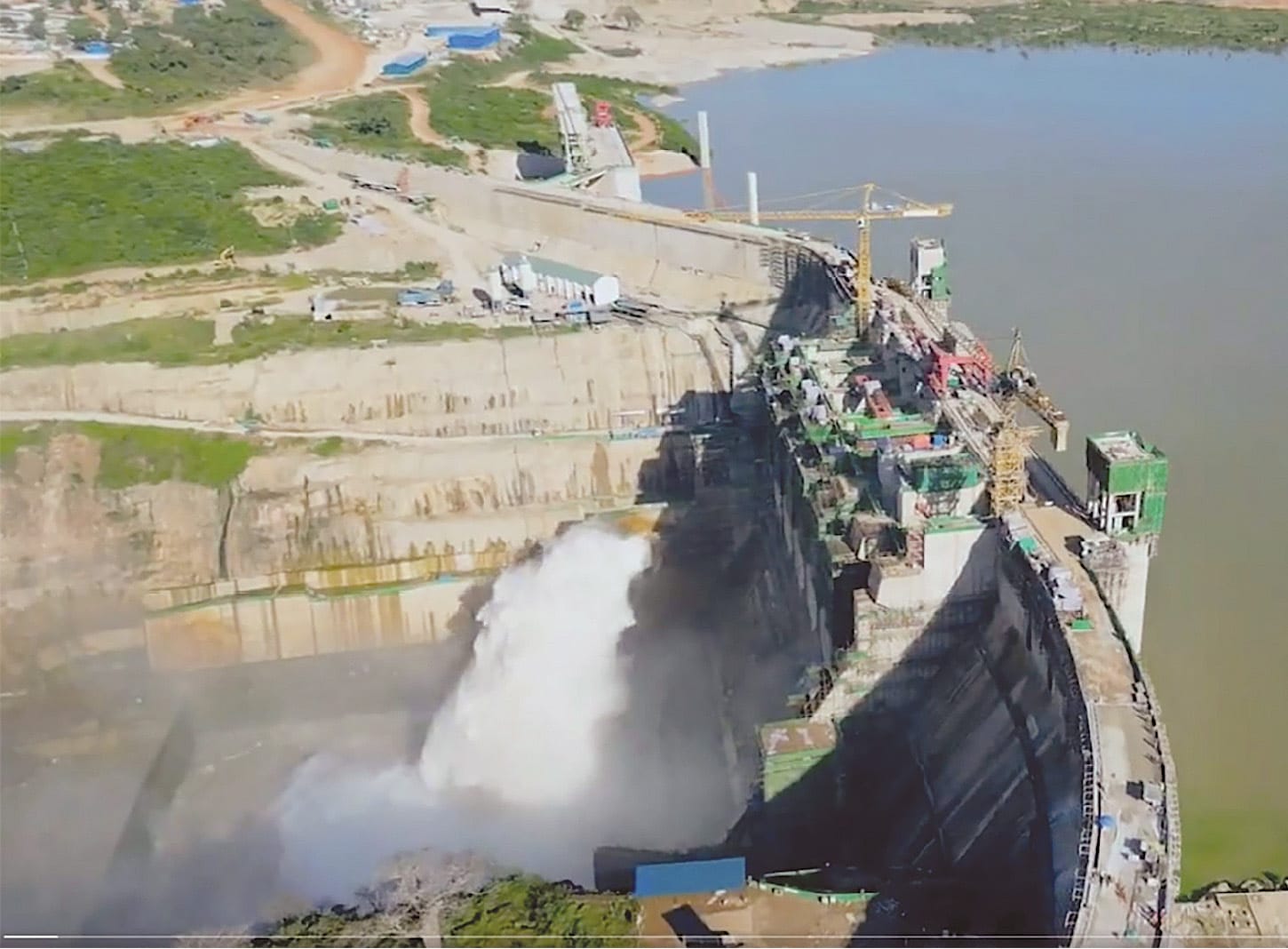
President Samia Hassan presented exciting details of how her country, with a growth rate over 6%, is progressing toward becoming an upper-middle-income economy in line with the Tanzania Vision 2050. “We are building three pillars at once,” she began, reviewing the growing rail grid and port development. Secondly, the country is increasing its electricity generation, and distribution grid, with a centerpiece being the newly-completed Julius Nyerere hydropower project. With Uganda, the East African Oil Pipeline project is proceeding. Thirdly, soft infrastructure is progressing, in collaboration with neighboring countries, for broadband and related services.
Samia pointed out that Tanzania is collaborating both with nations and businesses for advancing all East Africa in the context of the Africa 2063 development vision, and collaborating in this with Russia in particular. She cited five main project areas for which Tanzania seeks international partnership. First, ambitious new port infrastructure, with the Bagamoyo Special Economic Zone, north of Dar es Salaam, as the flagship project. Second, the nation welcomes collaboration in developing mining and mineral beneficiation, given the presence of a wealth of gold, uranium, nickel, and other natural assets. Third, Tanzania is a world-renowned tourist destination, with Mount Kilimanjaro, the Serengeti National Park, and other spectacular features. Fourth, increasing agricultural productivity is a priority, including developing fertilizer production. Fifth, Tanzania has energy generation as a priority, especially nuclear, given its huge deposits of uranium.
“Our main target is to use some of it in generating nuclear energy to meet the growing demand, which is expected to reach 8,000 megawatts by 2030, and subsequently 70,000 megawatts by 2050…. To guide this effort, we have developed an ambitious national roadmap for nuclear power development, including the use of small modular reactors in our long-term energy strategy.”