Helga Zepp-LaRouche is the founder of the Schiller Institute and initiator of the International Peace Coalition. She gave this speech to the Schiller Institute Youth Conference, July 18, 2026. The video is available here. Subheads have been added.
Let me first greet all of you, wherever you may be—and I am fully aware of the fact that the world right now, to characterize it with one sentence, seems like it is going to pieces. The world day by day is becoming a more difficult place to be for everybody, young and old. But for young people in particular, I always keep thinking it’s not fair to leave young people who have their whole lives in front of them, a world which is as absolutely out of order as is the present situation.
Now, the international order as it developed first of all after the Second World War, and then after the Cold War, is disintegrating. One could actually say it has disintegrated already. It is continuously doing so at an accelerated speed. We have two regional wars, in Ukraine and in the Middle East, and both of these wars are presently escalating with the danger that they may turn into a global nuclear war.
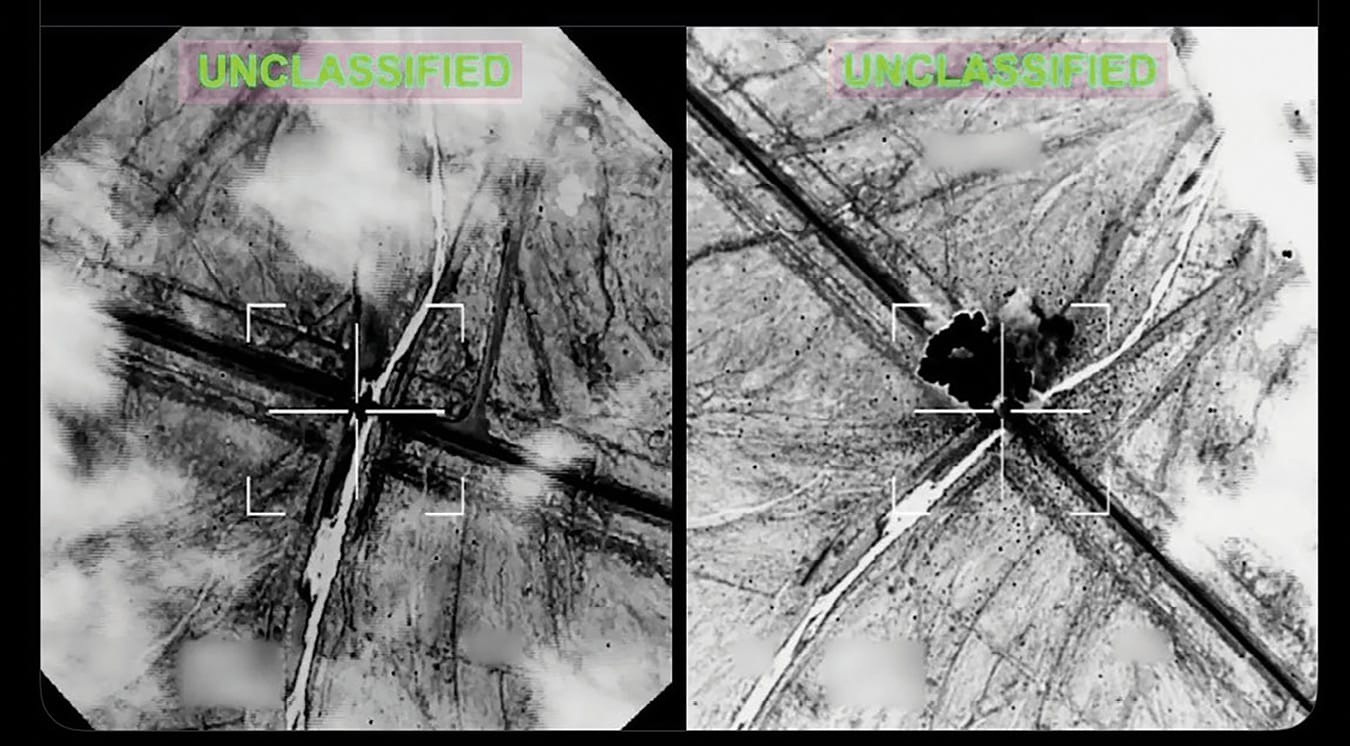
To start off with a couple of words about the situation around Iran: After the so-called Memorandum of Understanding, which was signed between the United States and Iran in June—that is now practically a question of the past. The United States has attacked Iran seven nights in a row, and it is hitting, according to the U.S. side, military targets; but according to the Iranian side, more and more civilian targets. Iran has answered that by attacking seven U.S. bases in practically all the Gulf Cooperation Council countries.
The United States claims that its aim is to degrade the Iranian military capabilities. But after almost five months, the United States has not been able to defeat Iran. That is, the strongest military power in the world, the United States, in combination with a very strong military power, Israel, have not been able to defeat a medium-sized adversary, Iran. And there is no prospect that they have any chance to win this war, because Iran is a very big country, and at this point it still has an enormous arsenal of weapons, which means thousands of targets for the United States to eliminate if it wants to win. The Iranians have many, many drones, cruise missiles, short-range ballistic missiles, fast boats, underwater drones, surface-level drones, anti-ship missiles, intermediate-range ballistic missiles. So, there are thousands of targets in the vast territory of Iran, many of them underground, many of them hidden deep in mountains.…
In the Gulf Cooperation countries, there are seven bases. In the previous war, in June of last year, Iran relied on a GPS [satellite-based navigation system] controlled by the U.S., which at that point could be what is called “spoofed,” that is, electronically changing the coordinates of the target. So, having had that experience, Iran changed from the American-controlled GPS system to the Chinese BeiDou system, which cannot be spoofed. That is why the Iranian missiles are hitting the U.S. and also Israeli targets with much greater precision than in the first war last June.
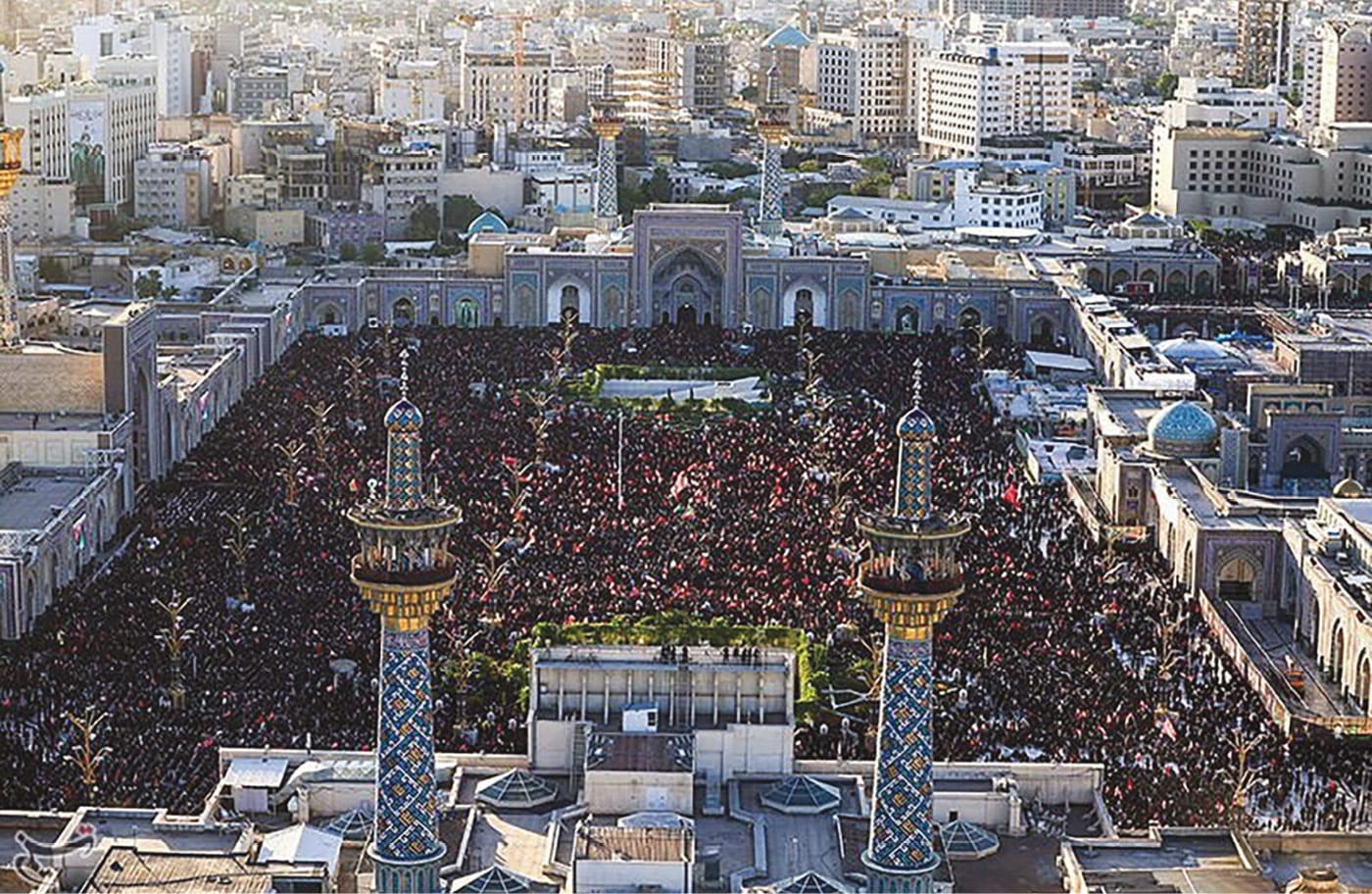
Now, the Iranians are absolutely without any illusion about whether they can trust anything coming from the United States, given the fact that two times they were in diplomatic negotiations, and two times that was used as a deception by the United States to attack them. So, well, you saw that when the funeral of the supreme religious leader Ali Khamenei took place—there were 43 million people in that [several-day] funeral [procession]. That is, without any parallel, the largest such demonstration in history ever. Nowhere ever has such a large procession taken place. And it shows the resolve of the population behind the Iranian government.
Two Weeks To Acquire a Nuclear Weapon
Already on the 9th of July, the Iranian parliamentarian, Ebrahim Rezaei, declared that if Iran were to be attacked again—which it was in the meantime—its leadership would change the nuclear doctrine, which up to now had a fatwa saying that Iran, for religious reasons, would not use or even try to acquire nuclear weapons; but that they would change that, and they might even leave the Nuclear Non-Proliferation Treaty. The American nuclear and rocket scientist Dr. Theodore Postol has argued several times that Iran would need only one to two weeks to basically acquire a nuclear weapon—and that would obviously completely change the strategic equation in the region.
Now yesterday, for the first time, Iran hit not only [military] targets in the different Gulf states—U.S. military bases—but they hit a desalination plant in Kuwait. If you know that in many of these Gulf countries 60, 70, 80, 90 percent of their water comes from such desalination plants, this must be read as an absolute signal that if this is not stopped, they could really take away the entire basis for the population to exist.
If you look at this, it is an amazing change in the strategic balance, because none of the U.S.-Israeli war aims have succeeded. There was no regime change, and now Iran controls the Strait of Hormuz. If the Strait of Hormuz is not opened soon— And already now, it is having enormous effects on the energy supply of the world, the oil reserves are running out, the fertilizer is severely reduced. So we are already looking at the danger and likelihood of a world depression if this is not stopped soon, with enormous hunger in the world, and the potential of the whole financial system blowing out. The business model whereby the Gulf states relied on the United States for military protection, clearly is out, because the U.S. did not protect them. This means a complete change in the strategic situation for the Middle East, which could escalate; nuclear weapons could be used. But it also could mean the beginning of a completely new security architecture for the region.
Now, if you look at the second strategic situation, around Ukraine and the war, according to former NATO General Secretary Jens Stoltenberg, it was not unprovoked and did not start in 2022, but in 2014. The reason for this war is not “unprovoked” Russian aggression; it is very clearly the NATO eastward expansion. In 1989, when the Berlin Wall came down, U.S. Secretary of State James Baker, III, promised to Soviet President Mikhail Gorbachev and Eduard Shevardnadze, who was the Foreign Minister of the Soviet Union at that time, that NATO would not move one inch to the east. The same was promised by German Foreign Minister Hans-Dietrich Genscher. At that time, there was the option for a peace order in the world, because communism dissolved peacefully. But, as Pope John Paul II warned, the West should not go into a triumphalism that they had won the Cold War, because he said that the West had as much “structure of sin” as the East. And if one wanted to know the proof, one should just look at the condition of the developing countries to see that structures of sin existed there [in the West] as well.
The Lost Chance of 1989
Unfortunately, at that point, rather than using the chance to establish a peace order for the 21st Century—which the Schiller Institute promoted at that time in the form of connecting the Eurasian continents through economic development corridors—the neocons in the United States and Great Britain decided to use that moment to establish a unipolar world. Fukuyama, an American historian, declared the “end of history”; and it was basically The Lost Chance of 1989. I warned at that time, if one would make the mistake to superimpose on the bankrupt Soviet economic system, the equally bankrupt Western liberal system, one could maybe have a long period of looting, but then eventually it would come to an even larger explosion and collapse of the entire world system. And that’s exactly where we are today.
My late husband, Lyndon LaRouche, already in 1971, when U.S. President Nixon changed the fixed exchange rates to floating exchange rates, warned that if one continued on that trajectory, we would end up in a new depression, new fascism, and the danger of a new world war. In 1971, I visited China for the first time, not yet knowing my later husband. And, you know, I saw what China looked like in the middle of the Cultural Revolution. It was a poor country, like many African countries today. I’m just mentioning it to make reference to what happened later with the most unparalleled historic miracle China has achieved in the meantime.

In 1975, my husband proposed replacing the International Monetary Fund with a new development bank, which would alleviate and overcome the underdevelopment of the Global South. I came back from this trip to China with the same kind of experience as my husband when he came back from the Second World War theater in Burma and India, with the idea that the underdevelopment of the so-called developing sector was something which could not remain; and that it was the most urgent task for humanity to overcome that through economic development. His proposal to have an International Development Bank was actually the proposal which was then picked up by the Non-Aligned Movement in 1976, in their conference in Sri Lanka. And 75% of the world population represented by the Non-Aligned Movement declared that they insisted on having a new world economic order.
Now, this basically led to an enormous backlash. The countries of the North were involved in a destabilization against Indian Prime Minister Indira Gandhi, against Prime Minister Sirimavo Bandaranaike from Sri Lanka, against Pakistani President Ali Bhutto. In any case, China in the meantime changed its government. In 1978, China’s leader Deng Xiaoping started the reform and opening-up policy. And in 1991, after the collapse of the Soviet Union, we proposed the Eurasian Land-Bridge, to unite the Eurasian continent through economic corridors as the basis for peace. China picked up on this. And although in 1996, at a big conference in Beijing, the Chinese adopted it as a long-term strategy, in 1997 came the Asia crisis, which caused an interruption. In any case, in 1999, after almost a decade of the West having no problem with the Boris Yeltsin government in Russia, NATO started to change its character. They attacked Serbia; they introduced the “right to protect” policy, replacing the Peace of Westphalia idea with the idea of having interventionist wars.
China Emerges as an Economic Power
So, in 2013, President Xi Jinping announced the New Silk Road in Kazakhstan, which was basically very much in line with what our proposal of the Eurasian Land-Bridge was. And that obviously was the beginning of the absolute expansion of China. China has made the most unparalleled economic miracle in the history of mankind ever. They turned, in essentially 40 years, from being an absolutely poor, poor country, into the leading economic power in the world today. And that is an inspiration for every country in the Global South.
At the same time, when China started to move in the direction of the New Silk Road and the Belt and Road Initiative, this is when the EU started their expansion to become really the largest imperial power. Those are the words of the former advisor of Lady Ashley, admitting that the EU is an imperial power. They wanted to have Ukraine join the European Union Association Agreement at the end of 2013, which then led to the Maidan coup—which was instigated by the West. And basically, the idea was to get Ukraine into NATO.
Former German Chancellor Angela Merkel knew perfectly well that if NATO would absorb Ukraine, that that would be a casus belli for Russia. And she warned in 2008 at the Bucharest NATO Summit, that this would happen. But nevertheless, NATO continued with all the different eastward expansions. And now we have this proxy war of the entirety of the NATO states against Russia. This war has been going on for more than four years, and is now reaching the point where it is about to go out of control. We have crossed red lines three times: In 2024 with the invasion of Ukraine into Kursk; with the attack against the airfields of the nuclear triad of Russia; and with the assassination attempt against Russian President Vladimir Putin in December 2025. So now we are at a point where leading military figures in Europe like Gen. (ret.) Harald Kujat, the former Chief of Staff of the German Army, is warning that we are about to experience a large war, potentially even a global war if this is continued. And we should not be surprised if the Russians use the [hypersonic intermediate-range] ballistic missile, the Oreshnik, against production sites [outside of Ukraine—ed.] of the missiles and weapon systems which are attacking Russia.
Now, this is of the utmost concern to you, young people from all over the world, but especially from the Global South. Because, as Indonesian President Sukarno and Indian Prime Minister Nehru were already warning at the Bandung Conference [Asian-African Conference] in 1955, if it comes to a nuclear war in the North, it may take a couple of weeks more to affect the Global South, but eventually you will be affected in the same way. So, that is why we have to have an international security and development architecture replacing this present, collapsed system.
There is a historical precedent, and that is the Peace of Westphalia, which in 1648 ended 150 years of religious war in Europe. And it came about because the people participating in this war realized that if the war continued, there would be nobody left to enjoy the victory. Xi Jinping has in the last several years proposed four global initiatives, the last one being a Global Governance Initiative, which is a framework for such a new security architecture.
The Genius of Cusa
The Schiller Institute has promoted the idea of an international security and development architecture which, in order to function, must take care of the interests of every single country on the planet. The philosophical inspiration for this is the ideas of Nicholas of Cusa, who was a church father of the 15th Century and the founder of modern science and the founder of the modern nation-state. He developed this idea that harmony in the macrocosm can only develop if all microcosms develop and each microcosm takes it as being in its interest to develop the other microcosms in the best form and vice versa. And if you replace the word microcosm with the idea of nation, that it is the interest of every nation to develop the other nations in the best way and vice versa, you get the essential idea—the World Land-Bridge.
Already in 2014, we designed all our different development programs into what we called at that time the World Land-Bridge, which is the idea to have infrastructure development programs for all continents, linking them with tunnels, with bridges. It is actually a blueprint for the immediate start of the economic development of the new world economic order. So, that is what we could start immediately.
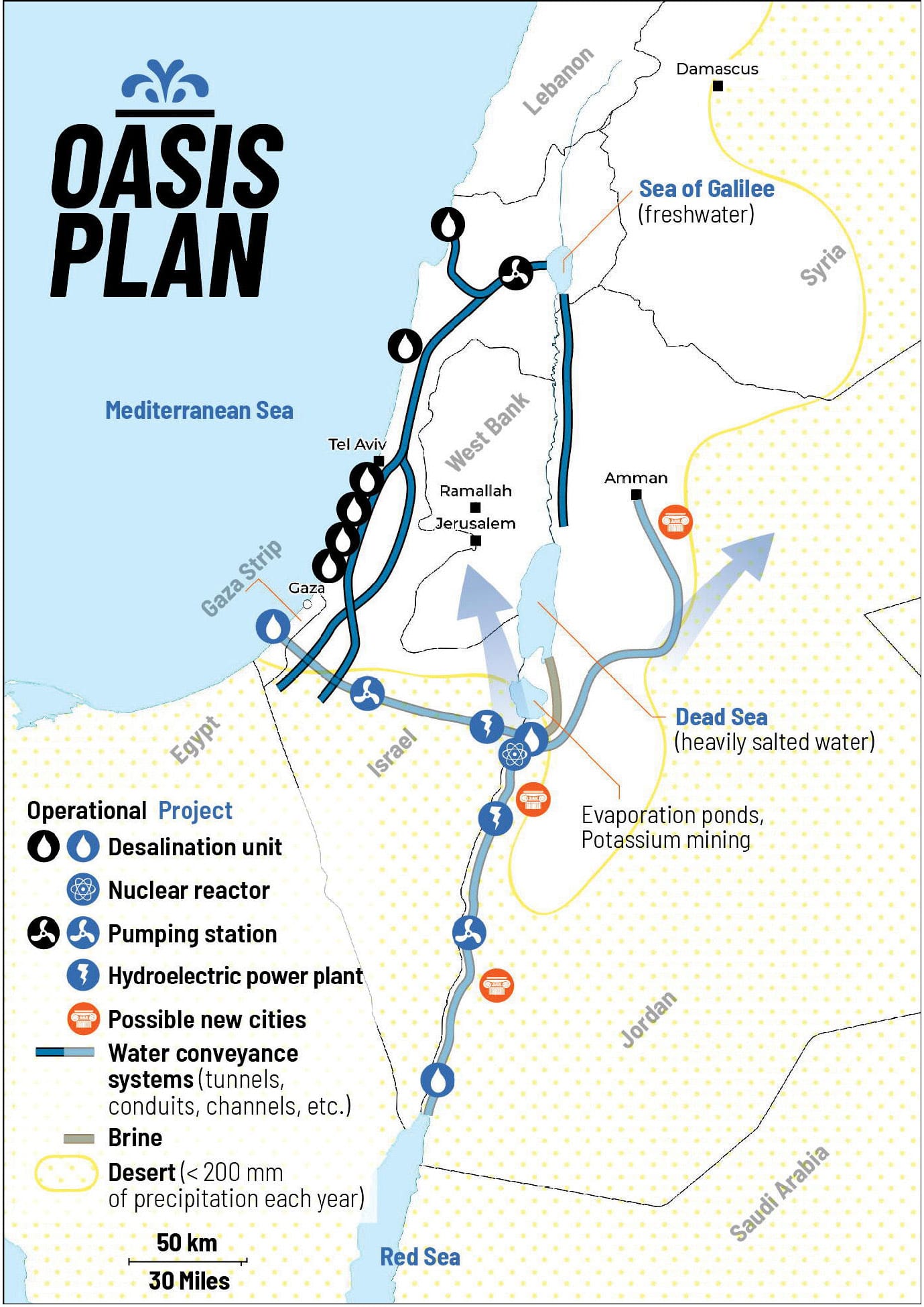
Part of that is the Oasis Plan, which is the idea of taking the entire region from India to the Mediterranean, from the Caucasus to the Gulf, extend the development corridors which are being built already in the form of the CPEC (China-Pakistan Economic Corridor), the International North-South Transport Corridor, extending them all the way from Iran to Iraq, Syria, Jordan, Israel, Palestine, Egypt; another corridor going all the way from India to Turkey; and eventually connecting Asia with Africa and Europe like the ancient Silk Road did. Thereby, Southwest Asia would become the development hub in the middle of these three continents.
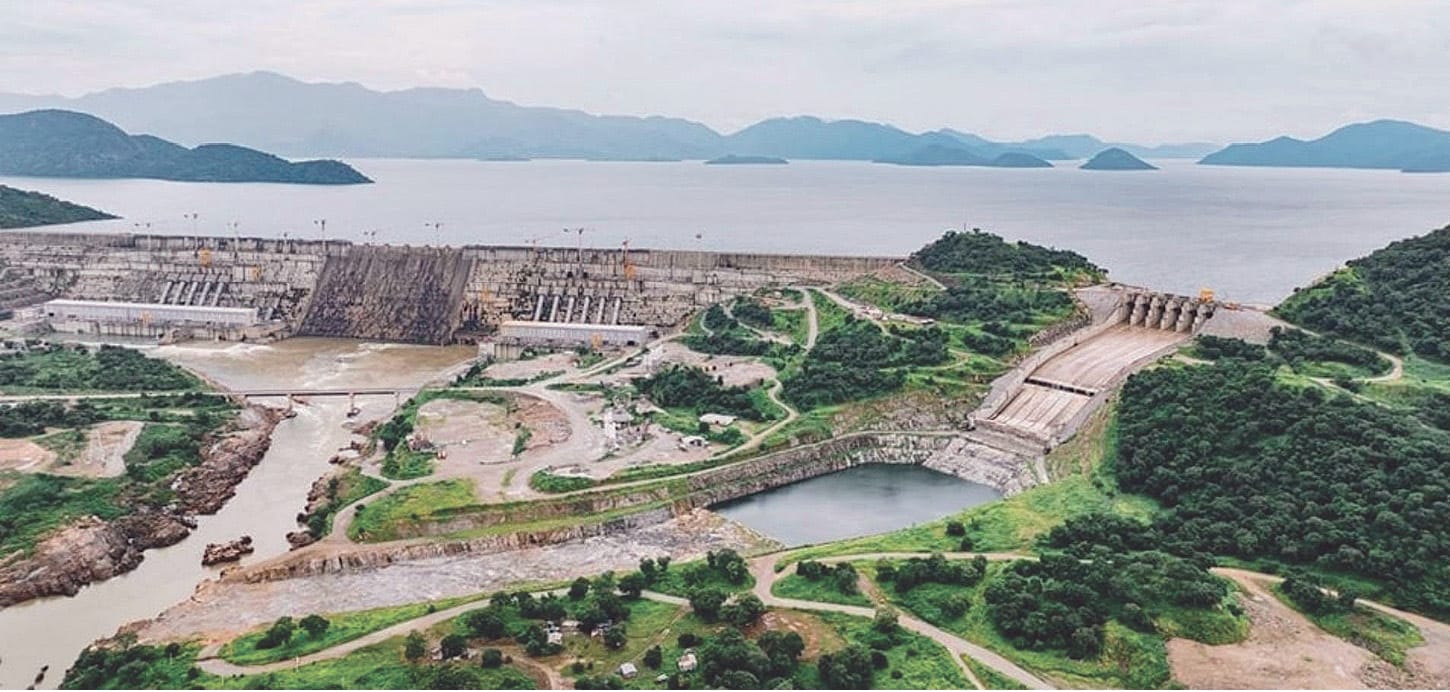
So, for Africa, the same idea exists by putting serious economic development into the Africa 2063 plan. A very good example would be the GERD, the Grand Ethiopian Renaissance Dam, which is a perfect example of European, African, and Chinese cooperation. We have proposed not only electricity for the entire continent to be built, but to also have infrastructure; an integrated transport system including railway, highway, and waterway systems. And also to have large development projects like the Transaqua Project, which would take 3% of the water of the Congo River at 500 meters high, which is now flowing unused into the Atlantic, and bringing it through a system of canals and rivers to Lake Chad, which would give hydropower to 12 states along the way, and then have plenty of water for irrigation in the Sahel region. Likewise, we would propose large projects for Latin America, like the Bioceanic Railway connecting the oceans, as one of the arteries which were already thought about by Alexander von Humboldt in the 19th Century.
At the same time, speed up the development of a fusion economy. The breakthroughs in fusion technology are on the horizon, as demonstrated by recent breakthroughs by China. We would set up cooperation in space exploration and travel, and basically have a situation where the development of the Global South could be taken on in earnest.
Young People Can Make the Difference
By the year 2050, the African continent will have 2.5 billion people. That is 1 billion more than now, which means, in the next 25 years, we will have to create 1 billion new productive jobs. So the very idea of the youth movement is to adopt the idea of peaceful development. The young people can make the difference. If you look at the world’s strategic situation, it is absolutely on the road to catastrophe. The establishments of the West seem absolutely unable to learn from their mistakes. They are not able to recognize that the present collapse of the world order is the result of their failed policies. The situation between the large superpowers is pretty much geopolitically stuck. I do not see any hope for Europe to play a positive role in the near future. The situation between the U.S. and Russia is deteriorating. The situation between the United States and China is in an equally confrontational mode.
But the voice of the Global South can make a difference if you will unite. And there, I think the absolutely crucial role will be that of the young people. If you unite and become the voice of the Global South, it will affect the strategic situation like nothing else can.
Now, in addition to promoting these economic development plans and making it your very interest that these plans are realized, we absolutely need a dialogue of civilizations, whereby each nation and each civilization promotes the best of their traditions. In the case of the Asian civilizations, this is already fully underway. China, India, Persia, Thailand, and many others are promoting their sometimes three or more-thousand-year-old traditions and situating the identity of their population as the basis for a very optimistic perspective of the future.
I think the example for Africa is a beautiful speech which was given by the Ethiopian Ambassador H.E. Eskinder Yirga Asfaw, in Berlin recently at a conference of the Schiller Institute, where he proudly presented the situation that Ethiopia is one of the few countries of Africa which was never colonized. And in one sense, one can say that we are all Ethiopians, because the first traces of human people were actually found in Ethiopia. About 3.2 million years ago, a female fossil, which the historians and the archaeologists called Lucy, and which is called Dinkinesh in Ethiopia, was found in the Afar Valley. And from that, it is very clear that the human population spread all over the world into all other continents. So, he presented the proud history of the Kingdom of Aksum and the 3,000 years of continuous civilization and statehood.
Now, if you look at universal history, it is very clear that the torch of progress was not in one continent and not in one civilization, but it sort of moved from one continent to another. And many times, when one civilization went under, like the Roman Empire, there was a renaissance period in India, in the Gupta period, and then it moved to the Song Dynasty in China, and later it came back to the Italian Renaissance. So, if you look at universal history, you have to take the entirety of human history to understand how mankind progressed to the present situation where we are today.
The Tenth Principle
The reason we can be very optimistic, despite this terrible strategic situation, is this: I want to read to you the 10th of the Ten Principles I have proposed, which should be respected if one builds a new international security and development architecture. This 10th principle is:
The basic assumption for the new paradigm is, that man is fundamentally good and capable to infinitely perfect the creativity of his mind and the beauty of his soul, and being the most advanced geological force in the universe, which proves that the lawfulness of the mind and that of the physical universe are in correspondence and cohesion, and that all evil is the result of a lack of development, and therefore can be overcome.
That self-perfection, however, is not an automatic one, but it does require a commitment of every human person for lifelong learning to improve your soul, to improve your mind with the aim of becoming a beautiful character. Now, that is an absolutely essential precondition for the new paradigm to function, because in the liberal society—a paradigm which is just collapsing—you have the idea that anything goes, every crazy idea is allowed; and every perversion, every violence, everything is allowed. We want to put against that a principle which exists in many cultures, in religions, but especially in Friedrich Schiller’s idea of the aesthetic education: that because of great art, you can improve your moral senses, you can improve your emotions, you can educate your emotions up to the point where they never ask you to do anything different than what reason commands. Schiller called that the idea of the beautiful soul; and he said the only person for whom this applies is the genius, the person who, in a lawful way, increases the lawfulness of the universe.
We have right now an unbelievable situation where the world is in peril like never ever before. Not at any previous moment was the danger so great that if we continue these regional wars, it could lead potentially to the annihilation of civilization. But, if we create a youth movement which is united across all continents, and if you are fighting for the economic order which would allow the prosperity and overcoming 500 years of colonialism of the Global South, this could be the one factor that would make the difference. You would become a movement of world citizens by being the voice of the Global South, and in that way, it is up to you and in your power to change the course of history. Thank you.