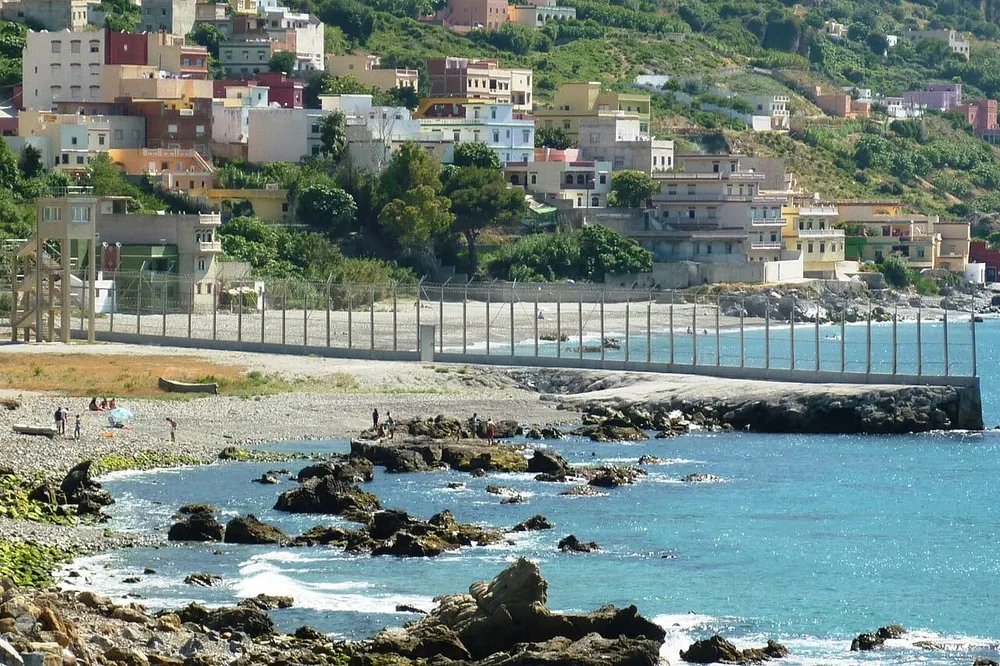
Tens of thousands of migrants have reached Ceuta, the Spanish exclave bordering Morocco across from Gibraltar. Estimates of Thursday’s arrivals range from 49,000 to 60,000, mostly young men who swam over from Morocco. The surge follows Spain’s decision to regularize half a million undocumented immigrants — a measure consistent with the 1951 Geneva Convention on Refugees. However, some point instead to a recent Spanish Constitutional Court ruling that migrants reaching Ceuta by sea cannot be automatically turned back. Interior Minister Grande-Marlaska and Prime Minister Pedro Sánchez say human traffickers have exploited that ruling, spreading word that the border is now easier to cross. Rescue NGOs counter that those who swam to Ceuta had no knowledge of the ruling at all.
Other observers have suggested that international forces, governmental or otherwise, are behind the mass exodus, to retaliate against the Spanish government for its position against the Gaza genocide, against the Iran war, and its efforts to normalize the refugee crisis in the wake of the Pope’s trip to Spain in early June.
Ceuta’s immigration center can hold only 500 people, and the Spanish government, under mounting pressure, has responded by sending military reinforcements. Neighboring countries have called for suspending Schengen border rules to seal Spain’s borders and keep migrants from moving north. In Italy’s case, at least, that call looks like pure political theater: Italy is a transit country, and migrants there are headed for Northern Europe, not remaining in Italy.
None of the finger-pointing will solve the underlying crisis. Whoever bears responsibility for the tens of thousands who reached Ceuta’s shores, the real question is why so many thousands—millions, worldwide—are desperate enough to flee their home countries in the first place. What policies could reverse the economic and security collapse driving that exodus, so people don’t have to leave at all?
As of Friday afternoon, Spain had sent 25,000 migrants back to Morocco, the government said.
Between 19 and 34 young men are reported dead so far in the attempt to swim to Ceuta. The length of the swim varies with departure point and tides; some crossings reportedly took two hours.