A senior Polish official, Bartosz Grodecki, head of the Polish president’s National Security Bureau (BBN), met with Elbridge Colby at the Pentagon July 2, and told reporters afterwards there was “enormous openness on the U.S. side” to Poland joining NATO’s nuclear sharing program. Asked by the Polish press agency PAP whether this meant nuclear warheads could potentially be stationed in Poland, he did not give details, saying only that it concerned “joining the program.”
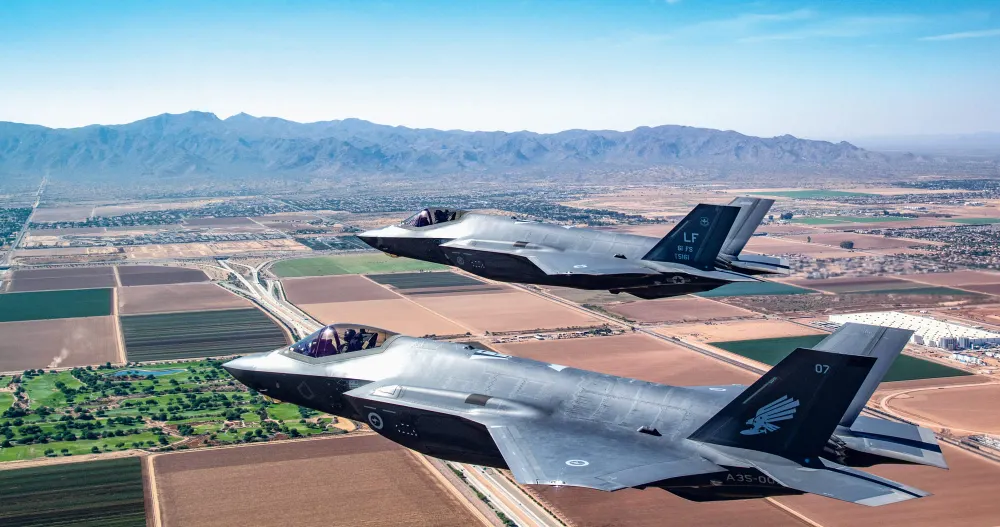
Grodecki said, “In what form—we currently have, above all, the capability with our F-35s to carry such capabilities. That is not being specified today, but the willingness itself ... the warm reception we’ve received in Washington, understanding of our role on the eastern flank ... means we are able today to speak very openly and positively about joining this program.”
Poland already supports the alliance’s annual Steadfast Noon nuclear exercises through the provision of conventionally armed fighter jets. The placing of U.S. nuclear weapons in Poland would certainly be seen in Moscow as an enormous provocation.
Grodecki also reported that the rotation of U.S. troops to Poland which has been suspended, will now be completed. “As far as completing the rotation is concerned, we are still waiting for the planning work to conclude,” he said. “No timeline or [information] on which unit exactly we can expect in Poland has been given, but—importantly—the question of whether that unit will come is not being questioned at all,” he added. Grodecki said the completion of the rotation was being treated separately from plans for a permanent U.S. base in Poland, on which he said Washington was also positive.
He said the American presence should now be viewed as “an entirely new concept,” adding that troop numbers matter less than capabilities, and that the shift from a rotational to a permanent footing itself carries significance as a signal “to both the East and the West.”
The day before, Marcin Przydacz, head of the Polish presidential office’s International Policy Bureau, told Polish media that U.S. Secretary of State Marco Rubio described himself as “absolutely” in favor of changing the US military posture in Poland from mostly rotational to fully permanent during a roughly hour long call. “There is absolutely a green light from the White House, and it was also stated by Marco Rubio himself,” Przydacz said