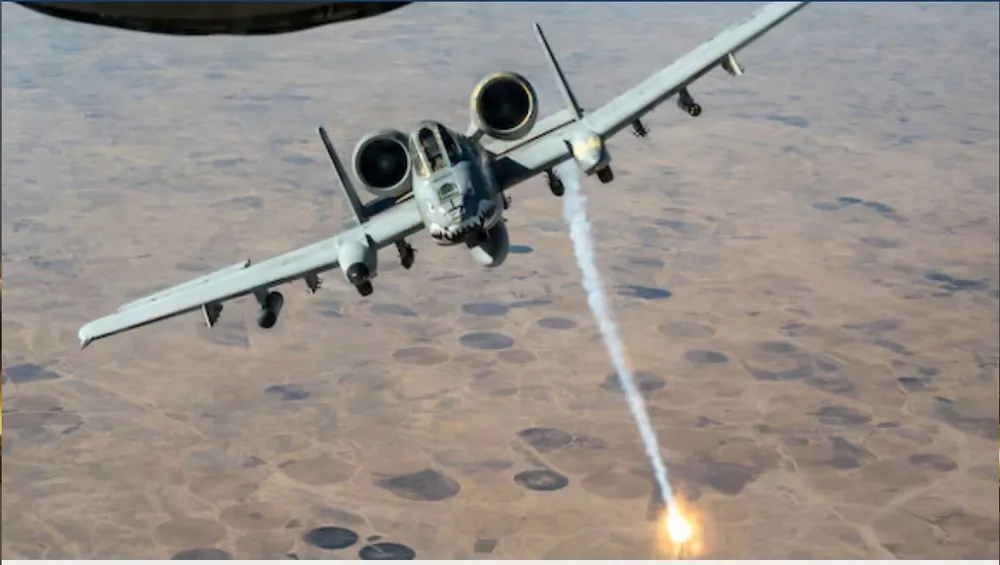
The US expanded its bombing campaign overnight to include bridges and other civilian infrastructure in southern Iran in its sixth consecutive night of air and missile strikes. “U.S. forces, including fighter jets, aerial drones, and warships, launched precision munitions that hit dozens of Iranian military targets such as coastal surveillance and air defense sites, military logistics infrastructure, and maritime capabilities,” U.S. Central Command stated last night.
According to an AP report, which is backed up by Iranian social media postings, the US hit a half dozen highway and railroad bridges in what appeared to be an effort to cut off the port of Bandar Abbas from the rest of the country. While other routes still are open, the U.S. strikes could expand further, potentially disrupting both the movement of military materiel and goods needed for Iran’s 90 million people, AP added. Iran also acknowledged “attacks on power infrastructure” during the U.S. airstrike campaign for the first time Friday when its Energy Ministry issued a call for people to use less power in southern provinces. The strikes also collapsed a tower at Iran’s Chabahar port on the Gulf of Oman, a key trade route for landlocked, neighboring Afghanistan, the IRNA news agency reported. Chabahar is also crucial for Iran-India trade and for the North-South Transport Corridor.
Bandar Abbas, Ahvaz, Qeshm Island, Bushehr and other locations were reportedly hit hard with strikes targeting strategic infrastructure, including telecommunications networks and electricity transmission lines, leading to widespread power outages and reportedly disrupting operations at local hospitals.
As of 6 a.m. Friday, the U.S. strikes had killed at least 38 people and wounded more than 400 in Iran, according to Iranian Health Ministry spokesperson Hossein Kermanpour.
In turn, the Iranians intensified their strikes on U.S. military facilities in the region, including in Iraq, Jordan, Kuwait, Bahrain, Oman and Qatar, and even the US special forces base in AL Tanf, Syria. In Iraq, the Iranians have been hitting US bases in Erbil and camps of anti-Iran Kurdish groups. The IRGC has claimed the destruction of two key radar sites in Oman, the King Fahd Bridge connecting Bahrain and Saudi Arabia, and an American ground-to-ground missile battery in Kuwait (most likely HIMARS). In Kuwait, authorities said Iran attacked a power and water desalination plant, causing widespread damage to the station.