
The following is an edited transcript of the opening remarks by Helga Zepp-LaRouche, editor in chief of Executive Intelligence Review, to the July 31, 2026 EIR Emergency Roundtable, titled “Solve the Immigration Crisis with Development—What You Need To Know About the Strategic Significance of Pope Leo’s Encyclical.” Subheads have been added. The video is available here.
Thank you, Dennis, and hello to all of you in all continents, wherever you may be watching from. I think that what unites us to come together here and think about what to do, is the awareness that the world indeed faces an unprecedented political, military, economic, social, and, I would say, above all, moral crisis, for which solutions clearly exist. But in order to escape the clearly looming catastrophe, a fundamental policy shift has to occur. And it has to occur exactly the way Lyndon LaRouche said in his speech in São Paulo; it has to occur outside the rules of established thinking and outside of the axioms which led us to this crisis.
In order to motivate such a radical shift in thinking, we are conducting this combined International Peace Coalition–EIR roundtable meeting.
Yesterday, close to 50,000 refugees entered the Spanish enclave of Ceuta in Morocco. Most of them had swum along the coast. Some of them reported that it took them up to two hours of swimming. And obviously, they were acting out of complete desperation. There are some reports that this was triggered by the recent decision of the Spanish government to regularize 500,000 immigrants, which is perfectly in accordance with the 1951 Geneva Convention on refugees. As a matter of fact, Spain is a glorious example of sticking to that Geneva Convention on refugees, unlike many other countries in Europe. Or it could have been triggered by a recent decision of the Constitutional Court, whereby the migrants who reach Ceuta by sea can’t be automatically rejected. Now, some of the aid people from NGOs said that those who swam did not know that. In any case, Ceuta is a city of a little bit more than 80,000 people, and obviously has absolutely no infrastructure to accommodate 50,000 refugees. It didn’t stop there. Last night, a second Spanish enclave in Morocco, Melilla, was basically stormed by another 400 to 500 migrants. And at the border, there are thousands more trying. They’re being pushed back right now by the security forces.
Now, if you go to the United States, President Donald Trump’s administration gave an order that as of August 3, 300,000 Haitians living and working in the United States under the Temporary Protection Status are now under orders to return to Haiti. They’re working in nursing homes, health facilities, hotel services, construction, and so forth. Republican Ohio Governor Mike DeWine said Trump is making a big mistake, because the economy of Ohio would not function without the help of these Haitian workers. [Retired U.S. Army] Lieutenant General Russel Honoré wrote an editorial in the New York Times, where he said, “This is not the America I fought for.” Vilès Dorsainvil, the director of the Ohio Haitian Community Help and Support Center, said he and others are perfectly willing to return to Haiti, except there is no country to return to. And as you all know, the conditions in Haiti are of complete chaos, criminality, gangs, crimes—it’s just unlivable. The Department of Homeland Security has created a new deportation airline, which is now operating 24/7—that’s around the clock without interruption—to deport migrants, with seven Boeing 737s, and two large Gulfstream jets.
So, the character of the United States is just being completely transformed. John F. Kennedy [in a 1958 book] said that America is a country of immigrants, but no more. President Reagan frequently said that the United States is a shining city to which people from the whole world are coming.
Depression, Fascism and World War
The migrant crisis is only one, but one of the most obvious symptoms of the complete failure of the policies of the political order, which is just collapsing in front of our eyes. I want to situate that crisis and available solutions in the proper strategic context. For decades, Lyndon LaRouche had warned that this would happen. Starting on the 15th of August 1971, when President Nixon went from fixed exchange rates to floating exchange rates, LaRouche warned that these monetary policies of the Western system of the liberal economy, if continued, would lead to a new depression, new fascism, and even a new world war. He updated that prognosis many, many times, and every time the situation went into a worse direction, a branching point, increasing the liberal aspect of the economic system by deregulation of the markets, by favoring the speculators even more, he pointed with absolute crystal clarity to these consequences.
And it is because he was so outspoken, that he was prosecuted, slandered, and demonized. Ramsey Clark, the former Attorney General of the Johnson administration, who came to his defense, said that this was the worst case of political bending of the justice system in the United States he ever encountered in his entire career. LaRouche dared to point to the consequences of these policies in hundreds and hundreds of articles, speeches, interviews, and so forth. He addressed, as you just heard in the video [shown earlier in the panel -ed], the underlying axioms of thinking that cause people to have these wrong ideas, and also the remedies to get out of it. Now, his prognoses are coming true in a horrifying way, pointing to the possibility of a complete collapse of civilization.
We have two ongoing regional wars, Ukraine and Iran, and now the two wars are merging. In the last several days, there was an attack by Ukraine on Bandar Anzali, which is Iran’s largest Caspian port and a hub for trade with Russia. The former Indian diplomat and commentator Bhadrakumar said this is not a stray incident, it could very well be a calculated move by Washington. And a similar analysis comes from an Iranian news agency called Iranian Nua News, which is close to the Iranian Security Council. And they say that all the different parts, what is now happening in Yemen, Lebanon, and Ukraine—these are all interconnected parts of an overall design.
The Guns of August
Now, regarding the situation in Ukraine, where NATO has been fighting Russia for 12 years, since 2014, the former Inspector General of the German Army, Harald Kujat, was warning a couple of days ago that the present situation has terrible parallels to August 1914. All of this is the result of the attempt to create a unipolar world after the end of the Cold War, when, as we wrote many times, the great historical chance of 1989, when the [Berlin] Wall came down, when there was the possibility to create a peace order, was awfully missed. What followed was the broken promise not to expand NATO one inch to the east, followed by many color revolutions, attempted regime changes, interventionist wars, unilateral sanctions—but especially the NATO expansion to the east—eventually meant that offensive weapon systems were installed close to the Russian border, in reality creating a reverse Cuban Missile Crisis. And now, more recently, long-range weapons are being launched by Ukraine with the help of NATO and the United States deep into the territory of Russia.
This has been a four-and-a-half-year war, which was always called [by Russia] a special military operation. But about one month ago, Russian government spokesman Peskov said, “We are no longer in a special military operation, we are at war.” And it is very clear that Russia is starting to respond to these escalations from the side of NATO, with a clear determination to finish this war with military means. And one of the aspects of this is that they’re cutting off Odessa from Ukraine, thereby making Ukraine essentially a landlocked country.
Now, if you look at the unprovoked war of aggression against Iran, the promise to have diplomacy was broken twice. In addition to that, you had the unprovoked cancellation of the Memorandum of Understanding, which had been signed on June 17. And now, this war is flaring up again; after three days of supposed pause, it’s now expanding: the first drone attack occurred in Egypt; you have the U.S.-Saudi attacks on militias in Iraq; you have the Houthi blockade of the Red Sea—and there is the danger that this all will explode into a general regional war.
This war has already changed the strategic landscape irreversibly, because the United States, being the strongest military power on the planet, together with another very strong military power, namely Israel, have lost that war. They could not win because there was an incredibly strong Iranian resilience. There was no regime change. A middle-sized country could not be defeated. However, that does not mean that Iran won, because they are suffering tremendous damages and losses. So basically, there was a restart of the war. And for 13 nights, there were relentless strikes on Iranian targets. Then it stopped. And it is generally reported, and sounds very credible, that the Pentagon at that time told Trump that the United States had become very low in munitions, especially missile-interceptor systems like the Patriot, the THAAD, and so forth. So, the ability of the United States to have a military presence in other parts of the world is greatly diminished. It is reported that Trump is exasperated, that he obviously fell into the trap of Israeli Prime Minister Benjamin Netanyahu, and obviously does not see an off-ramp.
Nazism on the Rise in Europe
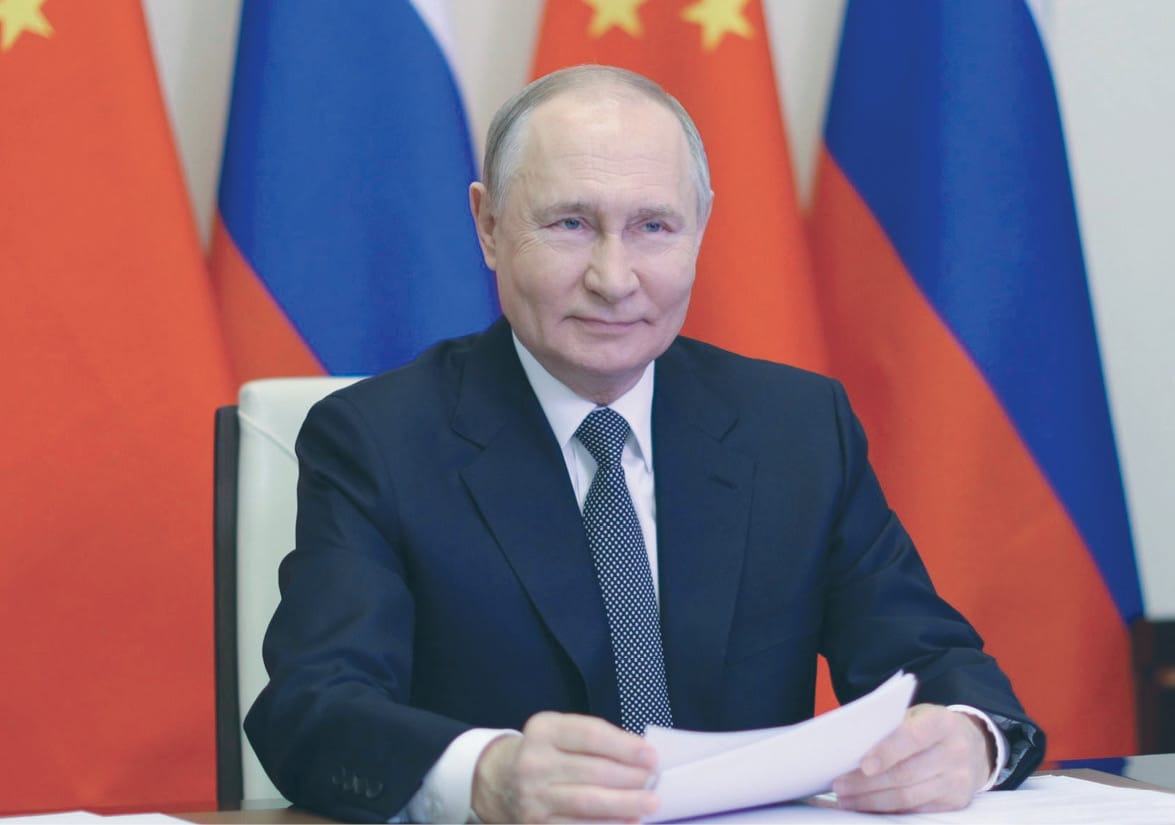
This combined situation has all the makings of a new world war. Because the idea that one can inflict a strategic defeat on Russia is absolute insanity. Russia is the strongest nuclear power on the planet. They are looking at the unprecedented—since 85 or 90 years ago—militarization of Europe. And they are having a discussion in Russia that Nazism is coming back. Russian President Vladimir Putin, in a recent article, basically said that this revival of Nazism is the result of Western policies after the Second World War, because the United States and Great Britain incorporated a lot of old Nazi networks, which is not a secret; among them the anti-Bolshevik bloc, the Operation Galen, and many other operations where these Nazi networks were kept, and obviously continued to function in new forms.
So, we are looking at an extremely serious situation. Because if Russia is convinced that Nazism is coming back, or has come back, it brings forward the memory of the Great Patriotic War, and what that implies in terms of losses—27 million people in the Soviet Union had died as a result—and it does have an incredible impact on the mindset of Russia.
If the Strait of Hormuz is not opening soon, and the Red Sea, which has been recently closed by the Houthis, this will have an enormous consequence on energy prices, the hunger crisis, and a major famine is already pre-programmed. The UN just issued their latest “The State of Food Security and Nutrition in the World (SOFI),” and they report the absolutely shocking figures that 80% of all babies in Africa between 6 and 23 months are undernourished—80%! In 2025, more than half of the population in Africa had medium or severe food insecurity. That means every fifth African is suffering hunger. Last year, 7.8% of the world population suffered hunger. Now, that is completely unnecessary, because we could easily produce all the food needed.
So, the world right now is threatening to fall into a full depression worse than the 1930s, if these straits are not opened, with hunger and social explosions. One cannot avoid the suspicion that all the measures we see right now—limiting free speech, curbing civil rights and human rights, which we observe in the United States and Europe—are in anticipation by the authorities of the eruptions to come; they cannot be blind to the fact that this will happen. There is still another layer of thinking of the Malthusians, and that is depopulation and what John D. Rockefeller used to call the “population bomb” or overpopulation; or what Hans Schellnhuber, the former head of the Potsdam Climate Institute, said in many speeches, that the world can only carry one to two billion people, leaving out what should happen with the rest of them. In that context, we should not forget the project of the Council of Foreign Relations, the so-called Project 1980s, which called for a controlled disintegration of the world economy. And you should listen to the following quote:
Bad times, you may say, are exceptional and can be dealt with by exceptional methods. This has been more or less true during the honeymoon period of industrialism, but it will not remain true unless increase of population can be enormously diminished. At present, the population is increasing at about 58,000 per diem. War, so far, has had no great effect on this increase, which continued through each of the world wars….
War has hitherto been disappointing in this respect, but perhaps bacteriological war may prove to be more effective. If a Black Death could spread throughout the world once in every generation, survivors could procreate freely without making the world too full. This state of affairs might be somewhat unpleasant, but what of it? Really high-minded people are indifferent to happiness, especially of others.
This was written by Bertrand Russell in the book, The Impact of Science on Society, in 1953.
A Declaration of Independence for the World
Now, we propose a radically opposite approach, that we basically treat the principles of the Declaration of Independence—which after all, we are celebrating the 250th anniversary of America this year—as being valid for the entire population of the entire world. Namely, that life, liberty, and the pursuit of happiness are the inalienable right of every human being on the planet. The Declaration of Independence, therefore, is actually the founding document of the Schiller Institute. When we founded it, I only changed the Declaration of Independence by six or so words to make it applicable for the whole world. The reason is that every newborn child is potentially a genius, who can discover fundamental principles of the physical universe, and in this way increase the relative potential population-density of the planet and beyond, and in this way bring the development of the universe forward, of which man is the most advanced expression.
What is needed to deal with the refugee crisis is basically to install in these countries and continents basic infrastructure in Africa, Asia, Latin America, the poorer parts of the United States, of which many look like a Third-World area, and poor areas of Europe, and basically industrialize these places. Africa will have by 2050 2.5 billion people. That is one billion people who will be under 24 years old. That means we need approximately one billion new productive jobs in the next 24 years in Africa alone. This means we must create basic infrastructure, integrated continental transport networks, integrated highways, fast train systems, waterways, energy production and distribution, communication, and game-changing projects such as the Grand Ethiopian Renaissance Dam (the GERD), bringing water from the Congo to Lake Chad, and other such projects.
We need the Oasis Plan for Southwest Asia, connecting the entire region from India to the Mediterranean, from the Caucasus to the Gulf, which essentially is all desert, and apply the unbelievably great success by China of greening the deserts, which they have demonstrated in Xinjiang and the northwest of China by basically greening areas the size of the territory of Germany. We have to bring canals to that region; we should access aquifers, we can find underground lakes with the help of space technology, we can ionize the moisture in the atmosphere [to induce cloud formation and rainfall], and so forth, and in that way transform the deserts into gardens, into forests, into agricultural land.
We should connect that with the expansion of existing development corridors like the CPEC, China-Pakistan Economic Corridor; the International North-South Transport Corridor from St. Petersburg to India; another corridor connecting Iran, Iraq, Jordan, Israel, Palestine, and Egypt; another corridor from India to Türkiye to Europe. In this way we can make this region again the hub of transport and exchange of culture and ideas between Asia, Africa, and Europe, like it was during the time of the ancient Silk Road.
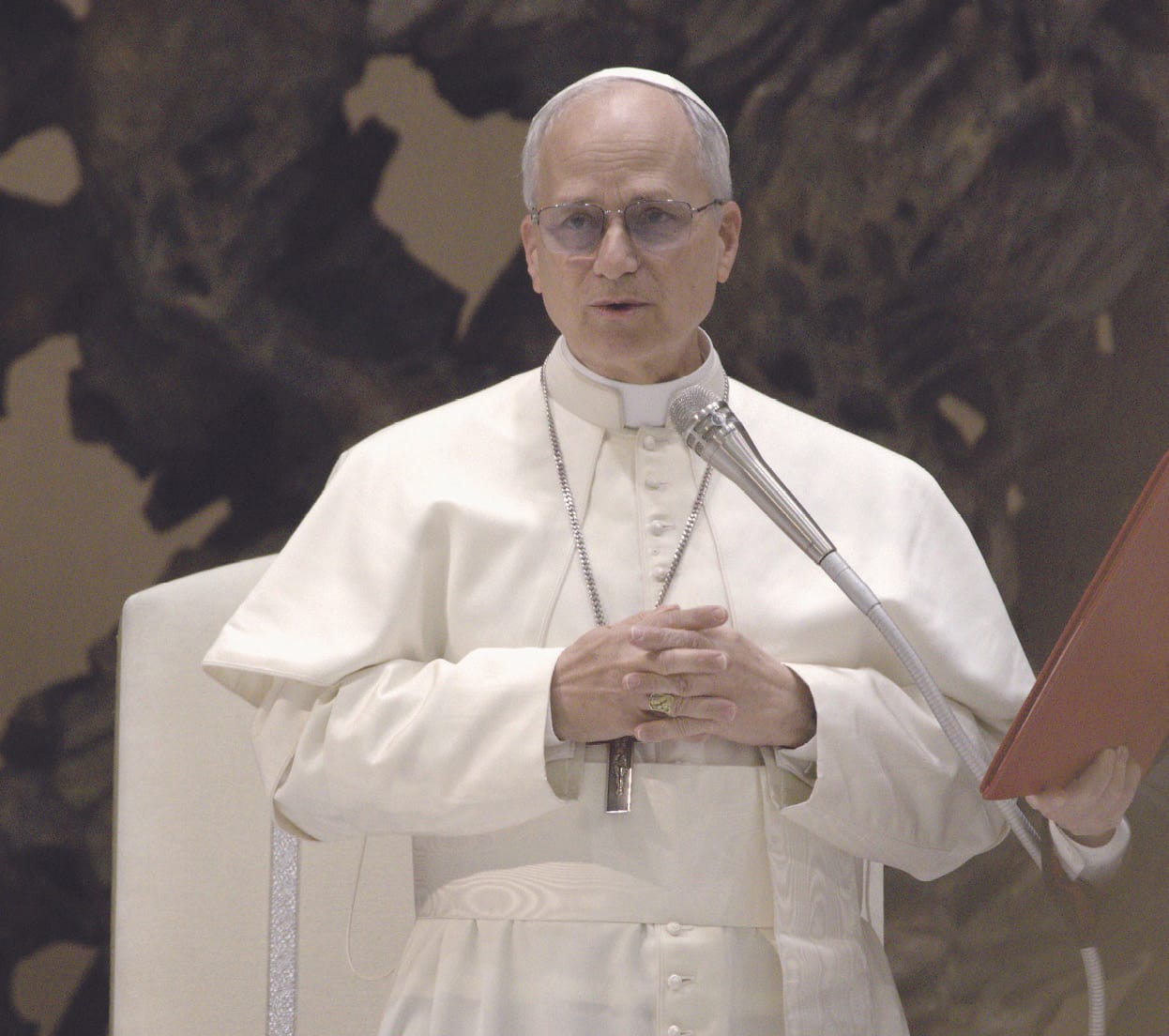
We absolutely must move from geopolitical confrontation to economic cooperation. We must proceed with that, not with the bestial image of man of Bertrand Russell, but with the lofty idea of man which was expressed by Pope Leo XIV in his Magnifica Humanitas encyclical, where he says that every man is in the living image of God, or as Cusa would say, imago viva dei, because Nicholas of Cusa said that creation continues through the creativity of man.
Root Causes of the Migration Crisis
Now, that must also address the root causes of the migrant crisis, which the Pope said in many speeches when he was in Spain in the beginning of June, where he said we have not only to integrate the migrants based on their dignity—which every human being has in the same way; but we have to also create the conditions so that they can stay in their home countries, because everybody wants to stay in their home country much more than taking the risk of dying of thirst in the Sahara, or drowning in the Mediterranean, or ending up in a concentration camp around the Mediterranean. This is a formulation used by Pope Francis which I fully agree with.
We have to wake up to the fact that if the present geopolitical confrontation escalates, it will lead to a world war, and that will mean with almost 100% certainty the annihilation of mankind, of everything which has been created in all the generations up to now, because the result will be a 50-year nuclear winter in which all life on the planet will disappear. We have to look at the strategic and historical situation which we are in, and we have to make a willful commitment to end the epoch of 500 years of colonialism.
We have to devote our efforts to the idea that the new name for peace is development, and that we will create a new security and development architecture which will implement the interests of every single country on the planet. So that is the tall order we have in front of us, but I’m absolutely confident that if we can evoke the passion of enough people around the world to fight for this, that we can succeed and avoid the destruction of our civilization.