
Helga Zepp-LaRouche, founder of the Schiller Institute, issued the following statement on September 10.
Thoughtful citizens all over the world are breathing a sigh of relief. The landslide victory of the Alternative for Germany party (AfD) in Saxony-Anhalt sends a clear message: The German people are intelligent enough not to let the establishment of the so-called “Coalition of the Willing” drag them into a war against Russia. The Merz government’s war-mongering course was decisively rejected. With an election result of 43.8%, the AfD more than doubled its vote since the last state election. And Chancellor Friedrich Merz has managed—as promised—to halve a party’s support, just not the AfD’s, but his own party’s, the CDU, which is down to 17.2%.
However, anyone who assumed that this unprecedented electoral defeat would lead to a change in government policy must now recognize that Merz has proven himself to be as stubborn as a mule, true to the motto: Neither ox nor donkey can stop the progress of BlackRock capitalism!1 The day after the election, when asked by a journalist whether the fact that the AfD and BSW (Sahra Wagenknecht Alliance), having together received over 50% of the vote, would lead to a change in his Russia policy, Merz replied that he would not deviate a millimeter from his core convictions. In his speech to the Bundestag during the subsequent general debate on the budget, Merz even claimed that the AfD would not be able to win a majority anywhere in Germany—a statement that, given the just announced election results, was met with roars of laughter from the AfD.
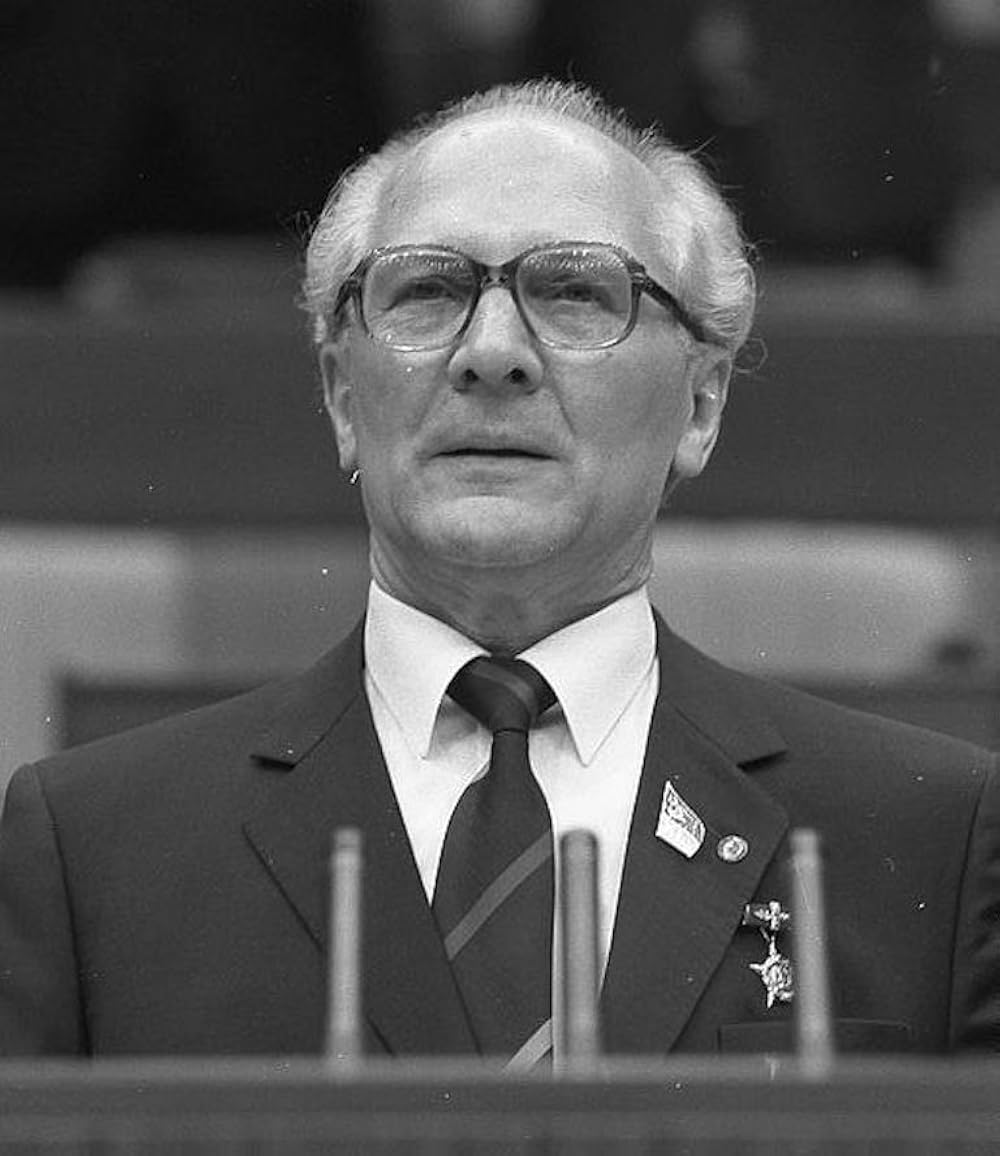
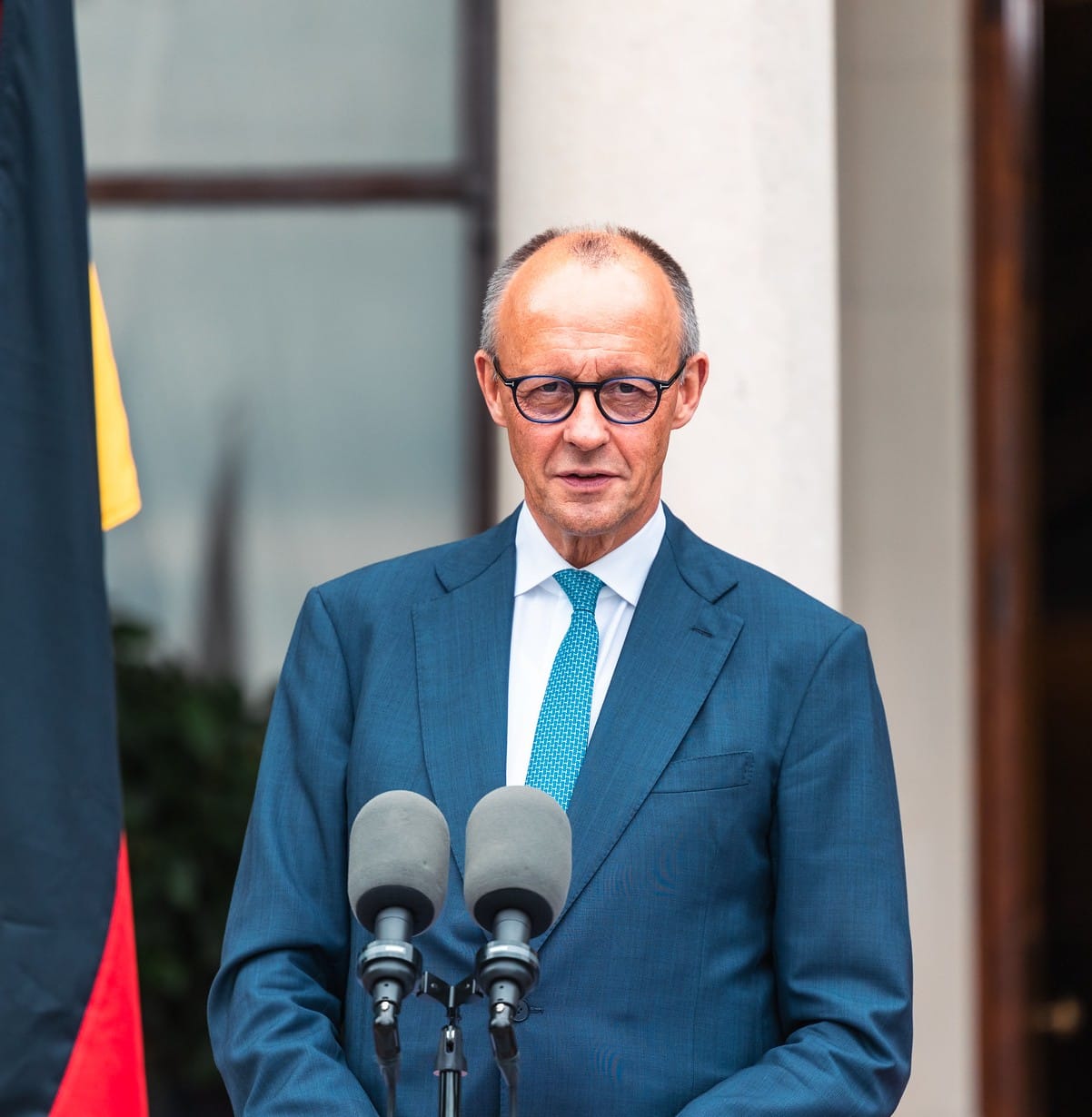
Chancellor Friedrich Merz (right), like German Democratic Republic President Erich Honecker (left) before him, is determined to hold fast to his policies despite German voters’ overwhelming rejection of them at the ballot box. Credit: Rainer Mitelstädt Government of Ireland
Although the media coverage on election night and the commentary the following day could not hide the establishment’s consternation over the results, politicians and media representatives conspicuously avoided addressing the main reasons behind the gains of the AfD and the BSW. Voters in Saxony-Anhalt delivered a crushing defeat to Merz’s war policy and his oft-stated intention to inflict a strategic defeat on Russia. They also made the current government pay the price for the free fall of the German economy. For 43.8% of the voters, it was no problem that the Office for the Protection of the Constitution—whose reputation, as is well known, is not all that clean—classified the AfD as far-right and unconstitutional.
The fact that Merz is not the only hardliner in the CDU leadership was immediately demonstrated by the Minister-President of North Rhine-Westphalia, Hendrik Wüst, who still called for proceedings to ban the AfD even after its landslide victory. Brussels promptly indicated that the EU might freeze funding for Saxony-Anhalt, primarily for school renovations and refurbishment of gyms and daycare centers, should an AfD-led government come to power. Sven Schulze, the recently defeated CDU Minister-President of Saxony-Anhalt, announced that he would renounce plans for his state to assume the one-year rotating chair of the Conference of Minister-Presidents of the German States scheduled for October 1.
The online radio and TV station NIUS, funded by the honorary chairman of the CDU Economic Council in Rhineland-Palatinate, Frank Gotthardt, also reported on a strange discrepancy between the official election results and the results of the mail-in vote: Statewide, the AfD won 51.2% of the votes cast at the polls, which means an absolute majority, but only 24.3% of the mail-in ballots. It remains to be seen how voters in Mecklenburg-Western Pomerania and Berlin, who go to the polls for state elections on September 20, will respond to all of this.
Anyone following the mainstream media on election day (September 6) might have thought that Russian tanks were already at the gates of Berlin, so great was the hype around the alleged Russian threat posed by hybrid warfare in connection with the drone incident at the Leipzig/Halle Airport, which had taken place, as if on cue, a few days before the election. One could easily have concluded that fear of the purported Russian threat, stoked by the media, was part of a campaign of cognitive warfare designed to dissuade voters from electing parties considered more pro-Russian, such as the AfD and the BSW.
Meanwhile, Ukrainian blogger Anatoly Shariy has published an account of that drone incident that differs significantly from the official narrative, and former Inspector General of the German Armed Forces, Harald Kujat, supports the call by former CSU Bundestag Member Peter Gauweiler for an independent commission to investigate the incident—as the Federal Republic of Germany is obligated to do under international law. Gauweiler refers to the Nov. 9, 1990, “Treaty Between the Federal Republic of Germany and the Union of Soviet Socialist Republics on Good Neighborliness, Partnership, and Cooperation,” which remains in force to this day and was part of the overall Two-Plus-Four Treaty package, one of the preconditions for the Soviet Union’s approval of German reunification. As one can see, politics in Germany is once again becoming interesting.
Whether the AfD will fulfill voters’ hopes for peace and a better future, however, will largely depend on which tendencies within the party gain the upper hand. If it is the supporters of the libertarian Friedrich von Hayek Society and the Argentine “chainsaw wielder” President Javier Milei, then German voters will go from the BlackRock frying pan into the Milei fire. Moreover, the so-called “remigration” of refugees has the same extremely chauvinistic and potentially barbaric orientation that President Donald Trump’s “ICE” [U.S. Immigration and Customs Enforcement] policy in the United States has displayed. A policy that does not address the real causes of migration—which lie in war and underdevelopment in the affected countries—through genuine industrial development is neither morally acceptable nor economically sound.
The truly decisive question, however, will be how the AfD reacts to the epochal transformation currently taking place in the world: The Global South is in the process of overcoming 500 years of European colonial policy once and for all and realizing its right to full development. The Global Majority—85% of the world’s population—is in the process of creating powerful new institutions that base international relations on sovereignty, non-interference, and mutual cooperation. Organizations such as the BRICS, the Shanghai Cooperation Organization, and ASEAN are taking the lead in this effort. The AfD’s long-term viability will depend on whether it is willing to cooperate with these organizations as partners.
Meanwhile, the good news from Germany is that a stop sign has been put up, for now, in front of Friedrich Merz’s anti-Russian suicide course. Now it is time to work on real options for Germany’s future.
Notes
- A play on the now famous words proclaimed by East German leader Erich Honecker in October 1989, shortly before the fall of the Berlin Wall: “Neither ox nor donkey can stop the progress of socialism.”
