The Lead
Whoever Prepares for War Ends Up Waging It
by Jason Ross (EIRNS) — Oct. 26, 2026
Brazil re-elected Lula da Silva on Sunday by 4.4 million votes, a result Lula’s advisor Celso Amorim called “a defeat for the United States’s defense strategy in Latin America, based on the Shield of the Americas.” The Brazilian stock market fell, and Flávio Bolsonaro refused to recognize the result. The world continues to move:
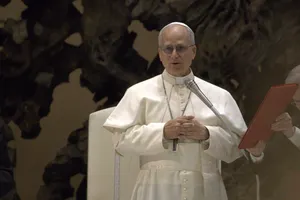
In Assisi, where the Community of Sant’Egidio has gathered religious leaders from every continent through Tuesday to discuss “unarmed and disarming peace,” Cardinal Matteo Zuppi, president of the Italian bishops and Pope Francis’s envoy for Ukraine in 2023, named the disease. Forty years after John Paul II first brought the religions to Assisi, “we have seen many prophets of doom—those who... incite war that is always waged by others.” Today “the prevailing vortex leads us to believe that rearmament is indispensable, a vortex that invariably results in further rearmament,” and “a coarse and ignorant culture of power” has spread, discrediting the international institutions and appearing “in the temptation to construct a collective identity in opposition to an enemy.” Arsenals “joined with artificial intelligence, make war tragically more inhuman.” Prayer, he said, “is a rebellion against war, against its logic, against the many forms of complicity, against the subtle desensitization through which we grow accustomed to pain.” And: “Only the unarmed can disarm.”
The Archbishop of Kinshasa, Cardinal Fridolin Ambongo, took aim at the maxim that justifies the arsenals, that to ensure peace a country must prepare for war. “Whoever prepares for war ends up waging it,” he countered, “and it is always the poor who pay.” In eastern Congo, “the coltan, the cassiterite, the gold of our hills feed the war instead of feeding our children.” He added a rule for those who say they want peace: “A dialogue that excludes those with whom one is at war is not a dialogue: it is a monologue.” The Grand Rabbi of France, Haïm Korsia, told the hall that peace must never be confused with weakness, and asked them to “convert our power into the capacity to build.” A Shia scholar from Najaf and a Sunni preacher from Baghdad shared a stage, and the scholar, Jawad Al-Khoei, described the same problem in both East and West, of “converting anxiety over complex, real problems into fear of another group, and reducing the world to a simple picture of ‘us’ and ‘them,’” whose extremists on each side are not interested in confronting one another, only in shrinking the space for moderates at home.
Meanwhile, there are those more interested in the power to destroy. Two U.S. officials told CNN that the forces now in the Middle East can begin “potentially major” operations against Iran within 96 hours of an order from President Trump, that the target list runs to energy infrastructure, military sites and nuclear facilities, and that the order is “a question of when, not if,” most likely after the Nov. 3 midterms. Nonessential personnel in the next rotation have been told they are not going. In Israel, which votes Oct. 27, Channel 12 reported an “unprecedented confrontation” between Prime Minister Netanyahu and Chief of Staff Eyal Zamir over an instruction for military action that the defense establishment fears could bring on a clash with Iran before the polls close; Zamir is said to have asked for the order in writing with its legal authorization. Netanyahu called the report “nonsense,” and in the same interview said he had “instructed the IDF and Mossad to topple the regime.” Trump endorsed him a second time: “we have to finish the job that we started.”
Now look at the reshaping geometry of the region. Saudi Defense Minister Khalid bin Salman, Pakistan’s army chief Asim Munir and the head of Turkish intelligence, Ibrahim Kalin, were in Tehran on Monday, the three signers of the Mecca defense pact meeting President Pezeshkian and Supreme National Security Council Secretary Mohsen Rezaei in the first four-way meeting of its kind. Iran calls the idea “endogenous security": the region’s states providing for their own safety rather than hosting the forces to be used against one of them. They agreed to keep talking. That is Ambongo’s rule applied: parties at odds in the same room, engaged in dialogue, not monologue. And it is the answer to the “identity in opposition to an enemy” that Zuppi described. The more human identity is the one we share.
The forces of peace and development have on their side the fundamental nature of the human species. What do we do when we are not preparing for war?
In 1950, a child born anywhere in the world could expect to live 46 years. In 1975 it was 58; the most recent data put it at 73, which is longer than an American born in 1950 could expect. The gain did not go to the already rich. In the countries the World Bank classifies as low-income, life expectancy was 31 in 1950 and is 65 now; Ethiopia has gone from 39 to 67 since 1975, Bangladesh from 51 to 75, India from 51 to 72, Iran from 55 to 78. In France, the shortest-lived 1% of babies born in 1950 lived less than three months. For those born in 1960 it was six months; 1970, three years; 1980, 18 years; 1990, 25 years. Fewer parents bury their children, and more of us grow old with the people we went to school with. In 1950, if you collapsed with a heart attack, the doctor who reached you would give you morphine and tell you to lie still; the idea that a heart attack could be treated at all is only about 50 years old, and since the mid-1980s the share of patients who die within a month of the most severe kind has fallen by two thirds. The people who brought about these changes did not resign themselves to disease and poverty as facts of life. They saw problems to be solved, and solved them.
That is the same power that builds a refinery or a reactor, applied to fighting death itself. It is universal, and it is physically efficient. The choice is not between strength and weakness. It is between two ideas of what we are.
Contents
New World Paradigm
- At Assisi, Zuppi Denounces a 'Coarse and Ignorant Culture of Power' (↓)
- At Assisi: 'Whoever Prepares for War Ends Up Waging It' (↓)
- Representatives of Saudi Arabia, Turkey and Pakistan Meet With Iran's President And Supreme National Security Council (↓)
- China Backs Zimbabwe's Call to End Western Sanctions (↓)
Strategic War Danger
- Netanyahu Reportedly Clashes With Zamir Over Attacking Iran (↓)
- CNN: U.S. Ready to Strike Iran ‘Within 96 Hours’ of a Trump Order (↓)
Collapsing Imperial System
- Bolsonaro Retreats From Claims of Election Fraud in Brazil Run-off Election; London Turns on Its Financial Guns (↓)
Harley Schlanger Update
Watch The Daily Update with Harley Schlanger, a short video update available every weekday morning from The LaRouche Organization.