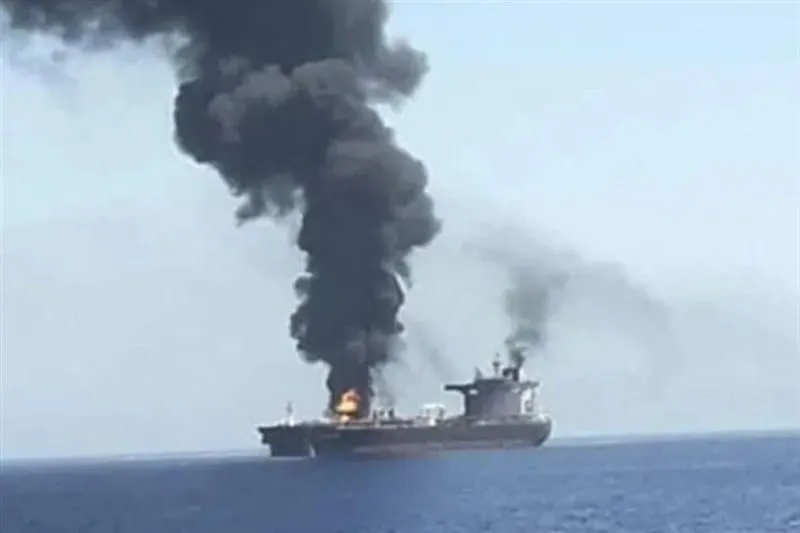
Oil prices spiked upwards today as the holes in the recent narrative are exposed. The benchmark Brent crude was already at $105.46 at 7 a.m. in New York City, a rise of more than 5%. In tandem, West Texas Intermediate, a benchmark within the U.S., also rose. Both stories—that the Strait of Hormuz is open and that the drawing down of oil reserves will come to the rescue—had holes blown in them.
Most of the blame has centered on the increase in attacks on oil tankers. And it is certainly the case that, in the seven days (Sept. 7 to Oct. 4) after Washington escalated its ‘solution'—whereby the U.S. and Europe are to throw their oil reserves more aggressively onto the market—a record number of tankers were hit in the Strait of Hormuz. The previous record of six shot up to ten, according to Kpler’s data. This data, reported in the last 24 hours, undoubtedly was a contributing factor.
Further, as of Oct 6, only seven tankers passed through the Strait, the least since July 23 and not even half as many as the daily average (taken over a seven-day period).
Despite this, it did not stop U.S. Secretary of State Marco Rubio from proclaiming in Athens on Oct. 7: “The Straits of Hormuz are open. There’s almost as much oil flowing out now as there was before this conflict began.” U.S. Central Command said the same day that “traffic is flowing through the Strait of Hormuz right now,” citing 20 million barrels of crude, and that the U.S. and regional partners “clearly control the strait.”
However, less discussed is yesterday’s news by the International Energy Agency, clarifying that the vaunted release by the G7 last week of 100 million barrels from their reserve, pushed for and touted by U.S. President Trump, was actually the long-overdue commitment from last March, now being filled. The IEA made clear that its member governments were not making a new commitment, beyond that of last March. Euronews claimed that they had seen an internal document saying as much.
Upon this news yesterday, ICE Gasoil Futures, a benchmark for European diesel prices, shot up, ending the day 6% higher. With Europe’s prices of diesel, oil and natural gas increasing, fears of the exposure of European bonds are breaking out. And the underlying reality of Europe relying upon imported energy fed a renewed sell-off in European bonds.