Nov. 6—The vastly expanding world of artificial intelligence-vectored “data centers,” upon which U.S. GDP and most other measures of “economic growth” in the United States now depend, has entered a period of chaos called by stock analysts and the like, a “debt shakeout.”
The “market reaction”—if one could call it that—to American voters’ furious rejection of the President Donald Trump Administration policies in the midterm elections, was even more chaotic, with tremendous post-Election Day ups and downs of stocks related to artificial intelligence (AI). But it did not change the underlying reality of an approaching financial crisis. Stocks of the leading seven super-big AI firms—“hyperscalers,” as they are called, for their dominance in the colossal buildout of data centers across the nation—lost another $1 trillion on top of $5 trillion lost in previous weeks.
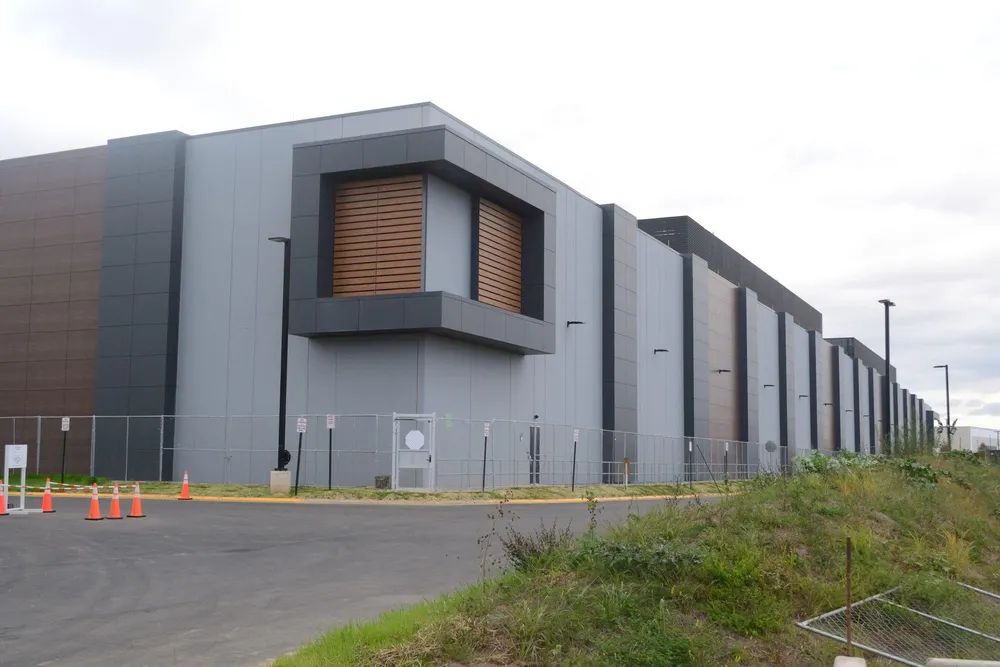
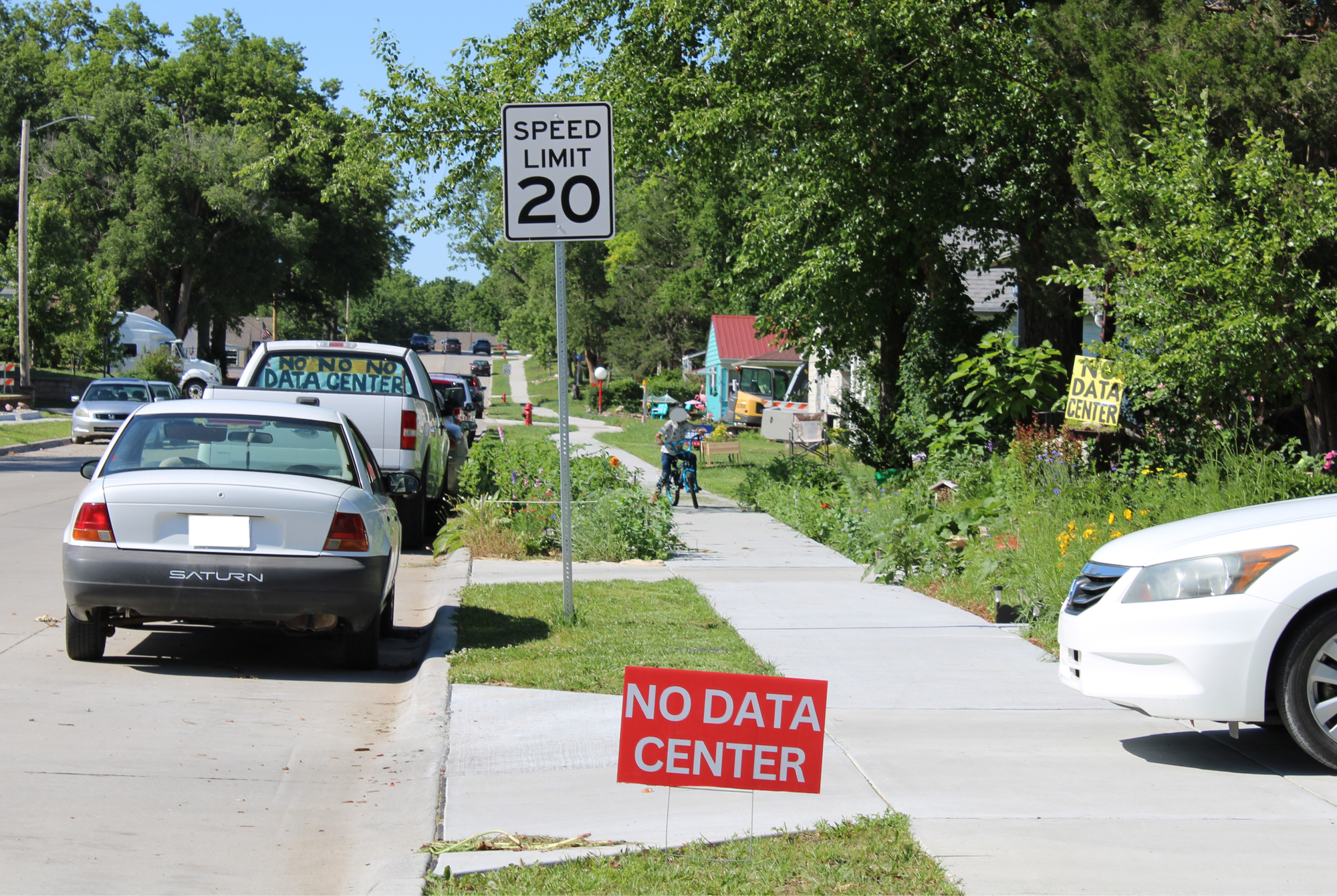
Voters opposed data centers, giant windowless buildings full of computer servers and semiconductors powering artificial intelligence and other online functions, in all but one of at least 40 jurisdictions around the country where they had the chance. More than half of voters told a CNBC survey that data center construction in their area was a major factor in their vote. They elected public opponents of the buildout.
An Overnight Debt Bubble, in Information Infrastructure
The financial bubble surrounding the “infrastructure” of data centers—if an innovation in the field of information can be considered economic infrastructure, as opposed to joining war spending in the category of economic waste—has grown so vast, so fast, as to be hard for most people even to conceive. The United States already has more than 5,000 data centers; some 800 more are under construction, and thousands more are planned. A researcher’s team at Columbia University estimated that these big plungers alone have plans to spend $1 trillion per year, every year into the indefinite future, on these data centers.
Now rather suddenly, data center builder/leaseholder firms like Coreweave, and even the hyperscaler Oracle and the lender Softbank, are suddenly borrowing at junk-bond 10%-and-higher interest rates by which lenders characterize “high risk” or subprime debt. The biggest data center plungers, like Meta, Amazon, and Oracle, have been making “circular” debt deals for some time, in which they lend $100 billion-multiples of (borrowed) money to each other, to buy data center cybernetics capacities (vulgarized in slang as “compute”), advanced semiconductor chips, or promises of electric power from each other. Oracle, for one, has lost half its stock value over a five-month period.
Articles in the New York Times, Wall Street Journal, and others are cataloguing the tremendous and chaotically duplicative “overbuild” of the data centers relative to the U.S. economy’s physical capacity for generating and delivering the amounts of electric power which can feed them.
In strict terms, the data center “buildout” is the biggest infrastructure investment in history (this one is no Trump exaggeration!), estimated to equal the national highway program of the 20th Century and the railroad expansion of the 19th Century combined—and virtually all done by private capital. The hyperscalers of AI—Oracle, Nvidia, Microsoft, Amazon, Meta, Google, etc.—have been spending 7-8% of GDP on a single infrastructure purpose—information—over less than the past two years, in a nation which has never before spent more than 3% of GDP annually for all purposes of infrastructure, public and private, put together. All of it is borrowed, and large portions of it now are junk debt.
The Tottering Financial Infrastructure
Here is the U.S. financial landscape:
- AI debt: The “Mag7” (as they are called on Wall Street)—have lost more than $5 trillion in stock value the last several weeks alone, and another trillion since the mid-term election. Despite their very profitable Silicon Valley “legacy” tech businesses, these companies now suffer negative free cash flow: Meta, minus $2.12 billion third quarter; Amazon, minus $42.4 billion; Alphabet, minus $9.07 billion, for examples. In other words, they have to borrow all of the nearly $1 trillion these seven firms alone have, in committed data center spending, from the bond markets, at high interest rates.
The only financial bubble comparable to the ongoing AI “spend” is the growing bubble of derivatives used by hedge funds to speculate in the U.S. Treasury market, the world’s largest financial market.
- U.S. defaults in the category of debt called “private credit,” meaning what used to be called “non-bank lending,” have reached a record: 6.3% of all $2.7 trillion of private debt is in default. This category is now completely overlapped with junk debt (or “leveraged lending,” debt borrowed by already overindebted companies).
- The day after the major AI-stocks’ collapse on Wall Street on Wednesday, Nov. 4, Korean and Taiwan stock markets experienced tech crashes of 6-9%, and Taiwan began “stock stabilization acts,” i.e., short-selling bans and bailouts.
- Crypto: The largest crypto exchange, Binance, lost $6.3 billion to the largest hack in U.S. history, which it covered with its own money, but since reopening, it has lost about $6 billion more to withdrawals.
- Separately from the data center builders, one of the leading companies whose AI models (“large language models,” or LLMs) compete with China’s for world leadership in this intensely geopolitical field, has been slowed in its climb. Anthropic PBC, whose latest LLMs go by “Claude,” has had to scale back its colossal initial public offering (IPO) from an estimated “value” of $1.5 trillion, to a target amount more like $1 trillion, and may have to postpone the IPO entirely, hoping the shock wave from American voters will go by.
- U.S. Interest rates stopped their steady climb two weeks ago and have, relatively speaking, gone into a slow dive, with the reality of Federal Reserve quantitative easing being covered up by what is being called a “flight to safety out of AI stocks.”
Is There an Alternative?
If the AI “bubble” of debt soon bursts, what will remain of the new “technology” of artificial intelligence, and of the United States’ economy? In the past of the United States’ unique economic history, innovations limited to the field of information—including even the Internet, per a detailed study by Nobel economist Robert Gordon in his book, The Rise and Fall of American Productivity—have failed to add any growth in multifactor productivity to the economy.
According to Elon Musk in thestreet.com, podcasting with biographer Walter Isaacson, AI capability will continue to grow regardless of a financial crash—which Musk admits is inevitable. “AI and robots,” he says, will then produce far more growth in goods and services than money-supply growth, causing general deflation, only to be solved by giving away bitcoin and/or other cryptocurrency to the population at large. This, Musk claims, will be the only way to pay U.S. sovereign debt—by aggressively inflating it away with bitcoin. It will otherwise implode soon.
A more telling sign was that AI, in the second quarter of 2026, did not produce any multi-factor productivity growth at all—zero—in the U.S. economy.
Among the President and other putative leaders in the political parties, only Diane Sare, an independent candidate for President in 2028 and a student of Lyndon LaRouche’s economic ideas, has real proposals for restoring physical productivity to America’s “finance first” billionaires’ feast. Sare made a powerful and challenging statement to the American people after they “had spoken” Nov. 3 on the nation’s “destiny.”
The LaRouche candidate will demand a new “Glass-Steagall Act” from Congress, ensuring that all these masses of unpayable private debt are not bailed out as the above-mentioned Asian countries are attempting to do. She’ll deal with the even larger and faster-growing mass of public debt by a long-term “Hamiltonian” reorganization, beginning to convert unpayable Treasury debt into credit for infrastructure of energy, electric power, transportation, water, and healthcare. And she’ll prioritize thermonuclear fusion power R&D and expanded space exploration to convey technological productivity growth to industry.