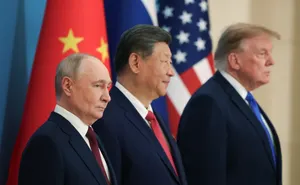
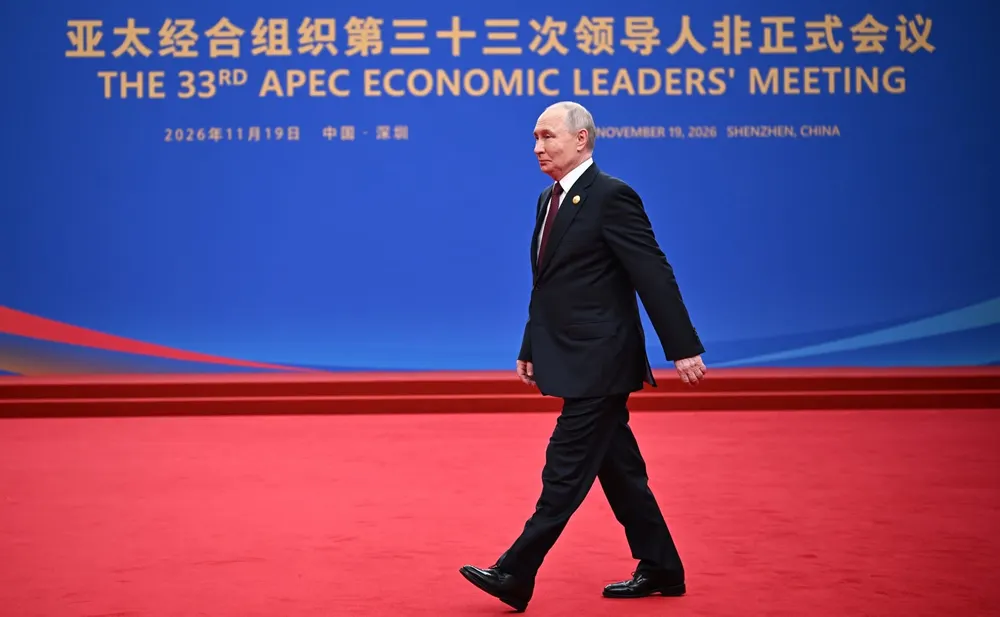
On the eve of the Shenzhen summit, the Financial Times Editorial Board published a warning about the strategic implications of the Xi-Trump-Putin meeting which is blunt about why it is such a nightmare for the British. Under the headline “Putin’s delusions of a ‘new Yalta’; Russia’s leader cannot be rewarded for aggression with another carve-up of Europe,” the FT editors warn that “For a decade or more, Russia’s Vladimir Putin has craved a ‘Yalta 2.0’… On Thursday, he will be granted something that looks rather like his wish: a three-way meeting with the world’s two most powerful leaders, China’s Xi Jinping and US President Donald Trump. There may be practical limits on the harm that this gathering in itself could do. But it creates sizeable risks—and the optics of giving the Russian president such an opportunity are deeply damaging.”
The City of London mouthpiece fulminates that “Putin’s mere inclusion at Shenzhen looks like a reward for his aggression, even if Trump has insisted he wants to talk about control of nuclear arms,” and voices outrage over what Russia seeks: “redrawing the European security architecture… [and] a rollback of NATO troops to pre-1997 borders.”
The FT then takes a predictable swipe at Trump: “The Russian leader seems to have been emboldened too by signals from Trump, and his hapless emissaries Steve Witkoff and Jared Kushner, that more might still be on offer.” Which means London-led Europe must take the initiative to prolong the war: “All this adds to the pressure on Ukraine’s European and international allies to prepare for what may still be a long haul. As a deliberate counterpoint, the 35-nation ‘coalition of the willing’ to support Ukraine will gather in Berlin on the same day as the Shenzhen summit in a show of solidarity.”