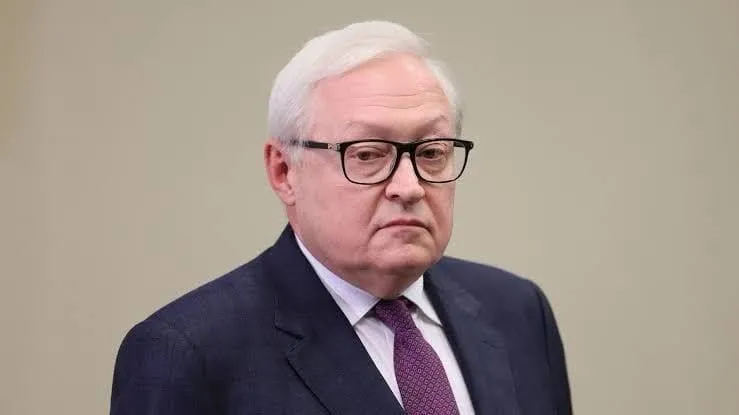
On Nov. 20, Russian Deputy Foreign Minister Sergey Ryabkov told reporters in no uncertain terms that Russia has not agreed to Europe joining tripartite talks on Ukraine at this time; that Russia will not permit Ukraine to join NATO and that all such discussions are “a completely unacceptable option"; and that more broadly “there can be no deviation from the principle that ‘security is indivisible’” if an actual solution to the war in Ukraine is sought.
In part, Ryabkov was responding to the earlier, amateurish (not to mention ungrammatical) statements by President Trump’s son-in-law Jared Kushner, which earned widespread misleading coverage in the Western media. The Financial Times reported that Kushner said on Thursday in Berlin at the latest so-called Coalition of the Willing conference: “I think we’ve gotten the Russians comfortable with that concept where any security guarantee for Ukraine would be based on Article 5.” Kushner added: “President Trump sent Steve and I [sic] here today,” and “on behalf of Steve and I [sic], I’d like to thank Chancellor Merz for hosting us here so graciously.”
Ryabkov’s extensive response came in answer to a question by TASS: “I want to say that even proposing a formula for Kiev’s quasi-membership in NATO or seeking some ‘creative’ solution in this area is unacceptable to us…. We discuss security guarantees primarily in terms of ensuring the security of our own country. Ukraine must recognize Russia’s non-negotiable demand that it not join NATO. Once this is acknowledged, the issue of security guarantees can be discussed.” Ryabkov added that Moscow is not ruling out dialogue, but “not dialogue about Ukraine joining NATO…. Once again, this is a completely unacceptable option.”
Ryabkov left no room for ambiguity: “There can be no deviation from the principle that ‘security is indivisible,’ since ‘one cannot strengthen one’s own security at the expense of the security of others.’ This principle guides the approach Russia is developing in its contacts with the European Union and NATO, including in the trilateral format.”
As for what happens next with the tripartite Russia-U.S.-Ukraine talks, Ryabkov stated that “the parties have reached no agreements or understanding on the trilateral format as previously practiced, including at the recent meeting in Abu Dhabi.” He confirmed that President Putin had invited representatives of the E3 nations (United Kingdom, France and Germany) to present their positions, but “I want to stress that if they accept the invitation and come to Moscow, this will not mean that the group is joining the so-called trilateral format.”
Sergey Ryabkov has been a deputy foreign minister for 18 years. During that time, and earlier, he has specialized in Russia’s relations with Europe and the United States, related to strategic security. He handled negotiations with Washington on ballistic missile defense (2008-2009, after President Putin’s proposal for joint Russian-American BMD for Europe) and the U.S.-Russia Strategic Security Dialogue (2021). On the eve of the Nov. 10-11, 2026, Russian-American-Ukrainian talks in Abu Dhabi, Ryabkov was added to the Russian negotiating team, in line with announcements from both Moscow and Washington that an overall European security architecture would be the framework for discussion of the Ukraine conflict as such.