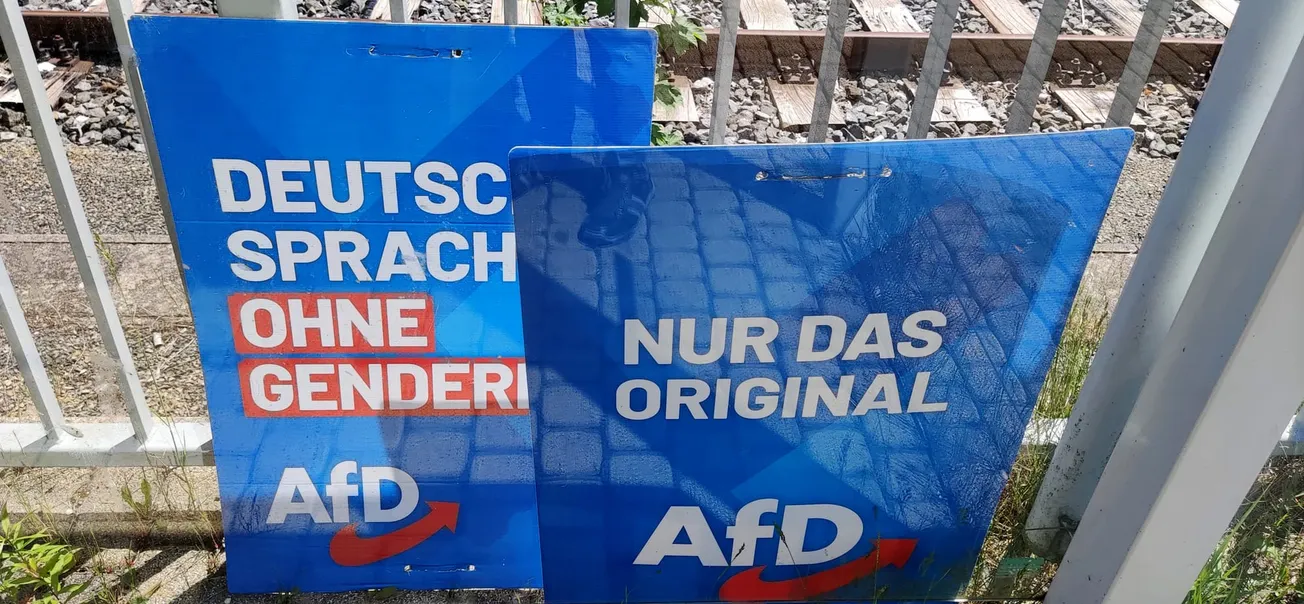
The nightmare of all those hysterics who tried to tell voters in Saxony-Anhalt that a vote on Sept. 6 for the rightwing Alternative for Germany (AfD) would make the state capital Magdeburg a “suburb of Moscow,” and turn the state into a foothold for Putin, has not deterred voters from voting for the AfD, which received 43.8 percent, by far the leading tally. The voter participation was high at 77.8 percent of those eligible, due to unprecedented mobilization on both sides—the AfD and the anti-AfD camp.
Results for all other parties than the AfD are way behind: CDU (Christian Democrats) 17.2%, Greens 8.9%, SPD (Social Democrats) 9.3%, Linke (Left) 8.6%, BSW (Alliance Sarah Wagenknecht—Reason and Justice) 5.3%—which is over the necessary threshold for qualification in the legislature. Taking the BSW out because it has a different approach to the AfD from the other four parties, the latter combined have slightly more than the AfD.
The most dramatic aspect is the loss of the CDU, the vote for which collapsed by more than half of what it was in the last election of 2021. The Saxony-Anhalt CDU blamed this on the unpopular and disastrous policy of national CDU party chairman and Chancellor Friedrich Merz. Discussion about his replacement or resignation is certain to increase, as well as about the Merz “firewall” against the AfD. There is a growing ferment inside the CDU party for abandoning the firewall and starting at least discussions with the AfD, though not a coalition agreement for the time being.
It’s time for Merz to go, an issue to gain even more relevance after the two other state parliament elections in Berlin and Mecklenburg-Vorpommern (both on September 20), particularly in the latter state where the AfD may come out in the lead as well, against the other parties.