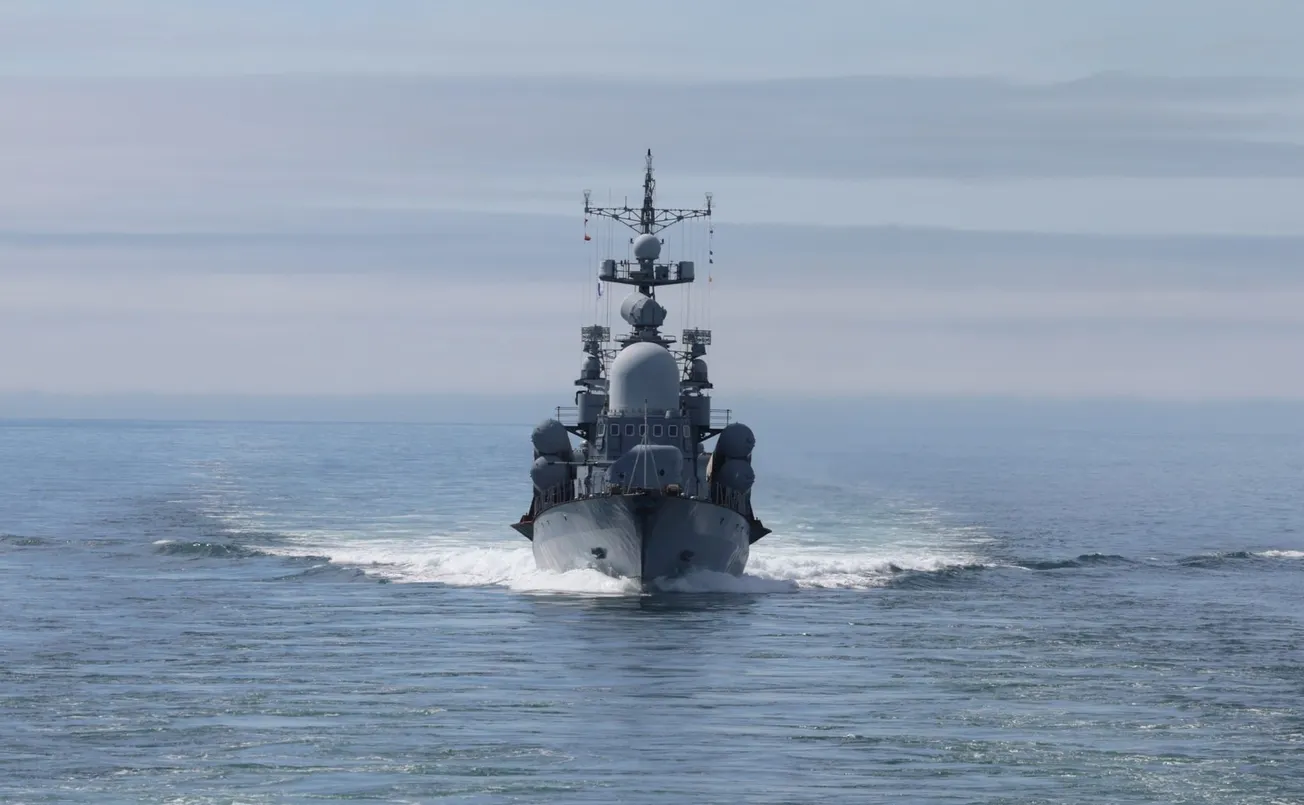
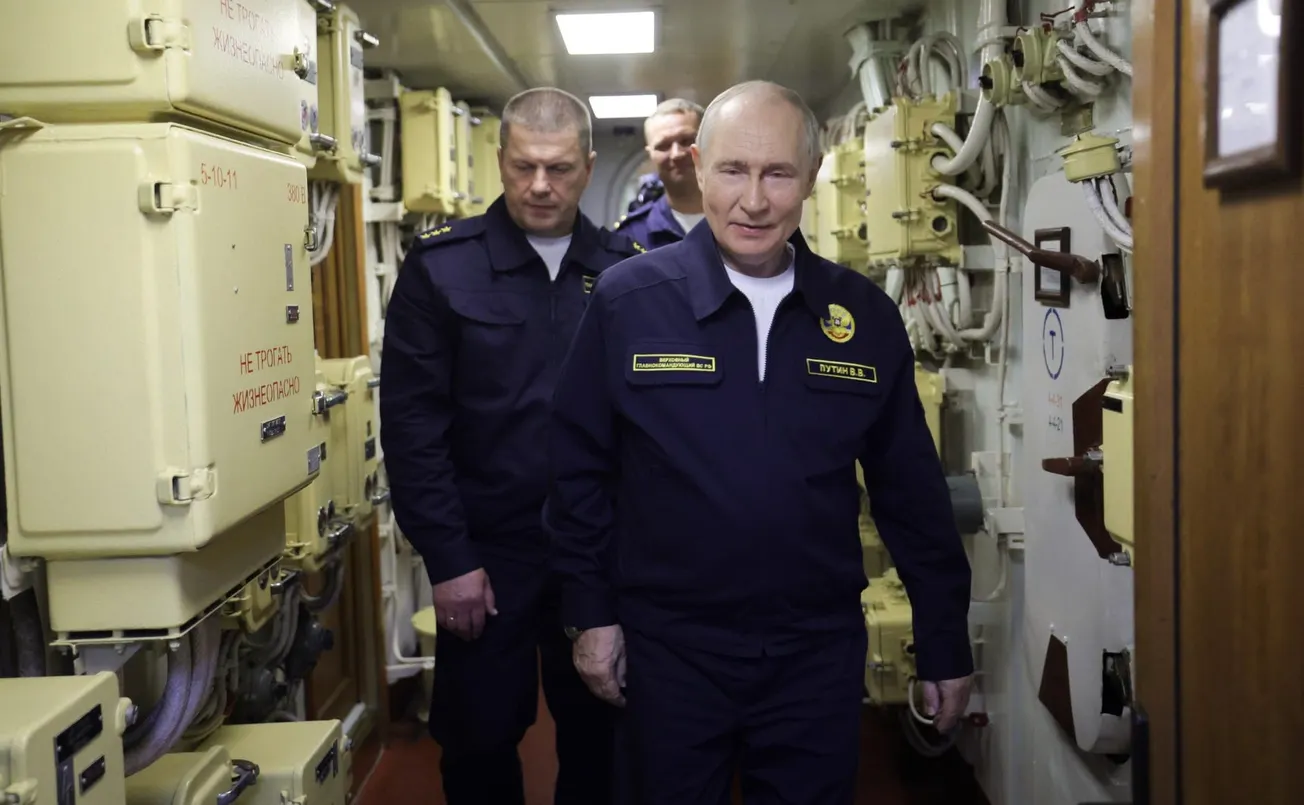
President Vladimir Putin visited the Russian missile cruiser Varyag on August 12 to observe the ongoing Pacific Fleet maneuvers, and to receive a report on the situation in the Asia-Pacific region from the Pacific Fleet Commander Viktor Liina. Putin praised the work of 55th Naval Infantry units from the Pacific Fleet which have played a major role in the Ukraine conflict, enduring some of the heaviest fighting. He also remarked on cooperation on the Northern Sea Route with China, India and friends, while noting the rising tensions there as well.
Putin warned that NATO was “seeping into” the Asia Pacific region and new military blocs were being created. He noted how Russia had made every effort to establish relations with its war-time rival, Japan. He expressed grave concern over the recent attempts of the Japanese government to retreat from its postwar stance, which would have assured that it would never be a threat to its neighbors. He also lamented the fact that talks which had been ongoing with former Premier Shinzo Abe regarding a possible peace treaty with Russia (territorial claims in the Sakhalin Islands have never been resolved), had been largely abandoned by the present government.
Putin expressed concern with regard to the threats by the EU nations to interfere with Russia’s civilian maritime fleet. “We see that the authorities of some countries, in violation of the International Law of the Sea, are trying to restrict the movement of ships of our commercial vessels operating in a peaceful manner,” he said, “and recently they came up with the possibility of the seizure of our ships and the sale of our looted property. Of course, this is nothing more than piracy and robbery. And if it starts in practice, we will have to respond in a corresponding manner. And not necessarily in those waters where raids on our ships and vessels are planned, but where we ourselves calculate it necessary and expedient, in any place, including in the area of responsibility of the Pacific Fleet.”
Pacific Fleet Commander Viktor Liina then gave his report on the situation, some of which was made public. “The situation in the region is tense and has a steady tendency to complications,” he told the President. “The main growth factors of military-political tension are the destructive activities of countries of the West to reformat the security system in the Asia-Pacific region, to build up their advanced military presence, as well as the creation of new military-political alliances controlled by the West. We are talking about the AUKUS bloc structure and the Triple Alliance….