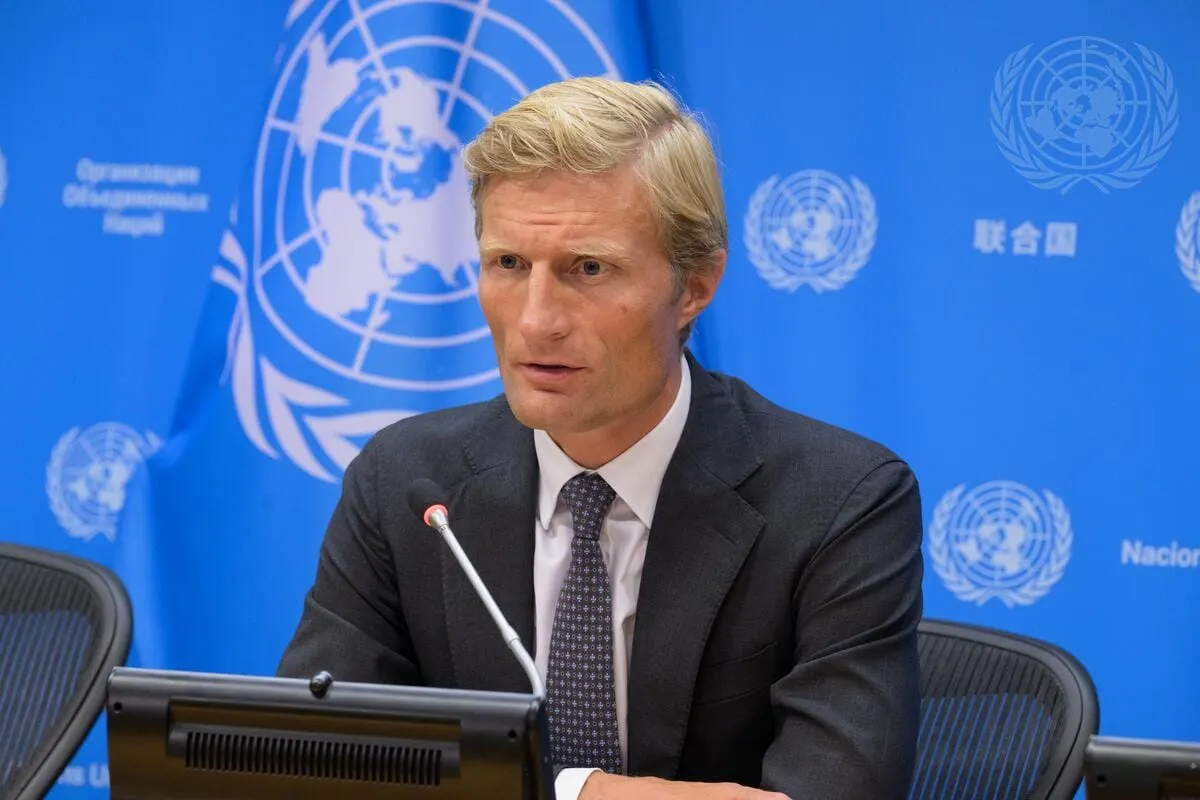
Secretary of Defense Lloyd Austin took to the podium in Singapore today to demand that China submit to US calls for “dialogue,” as defined by the US, of course. To underscore his point, US and Canadian warships sailed up the Taiwan Strait at the same time. The transit was aimed at demonstrating the U.S. and its partners would continue operating in what they consider to be international waters, despite rising tensions between the two rival powers, reported the Wall Street Journal.
“I am deeply concerned that the [People’s Republic of China] has been unwilling to engage more seriously on better mechanisms for crisis management between our two militaries,” Austin said in a keynote address at the annual Shangri-La Dialogue in Singapore. “But I hope that will change, and soon.” It did not change at the formal dinner on Friday night (June 2) where Austin and Chinese Defense Minister Li Shangfu were seated at the same table. They “spoke briefly” at the dinner and “The two leaders shook hands, but did not have a substantive exchange,” Pentagon spokesman Pat Ryder said in a statement, reported CNN. “A cordial handshake over dinner is no substitute for a substantive engagement,” Austin said during his speech.
A senior Chinese military official struck back at Austin, saying the United States was responsible for a breakdown in dialogue by ramping up sanctions on Chinese officials and destabilising the Asia-Pacific with its military presence. “China-U.S. military relations are faced with difficulties and the responsibility lies entirely on the U.S. side,” Lieutenant General Jing Jianfeng told reporters on the sidelines of the conference, reported Reuters. “China attaches importance to developing China-U.S. military relations, and our interactions and communication have never been suspended.”
Jing charged that Austin used his speech to solidify the U.S.’s hegemonic position in the region and stir up confrontation. “For their selfish interests, they disregard the regional desire for stability, and through both incentives and threats, they use other nations as pawns,” he said. He said Beijing believes it is responding lawfully to what it perceives as illegal surveillance activities by Washington and that it is upholding the freedom of navigation and overflight that all nations enjoy under international law.
Austin pointed to Russia’s invasion of Ukraine as an (alleged) example of “how dangerous our world would become if big countries could just invade their peaceful neighbours with impunity (you mean, like the US did in Iraq and Libya? -cjo).” He claimed the U.S. was “deeply committed” to preserving the status quo in Taiwan and opposes unilateral changes from either side. “Conflict is neither imminent nor inevitable. Deterrence is strong today and it’s our job to keep it that way,” Austin said.
General Jing said Austin’s comments were misleading, accusing Washington stoking tensions by forging direct diplomatic relationships with Taiwan and increasing arms sales to the territory. “The U.S. uses Taiwan to contain China and the Taiwan separatist forces solicit U.S. support to push for independence,” Jing told reporters.