
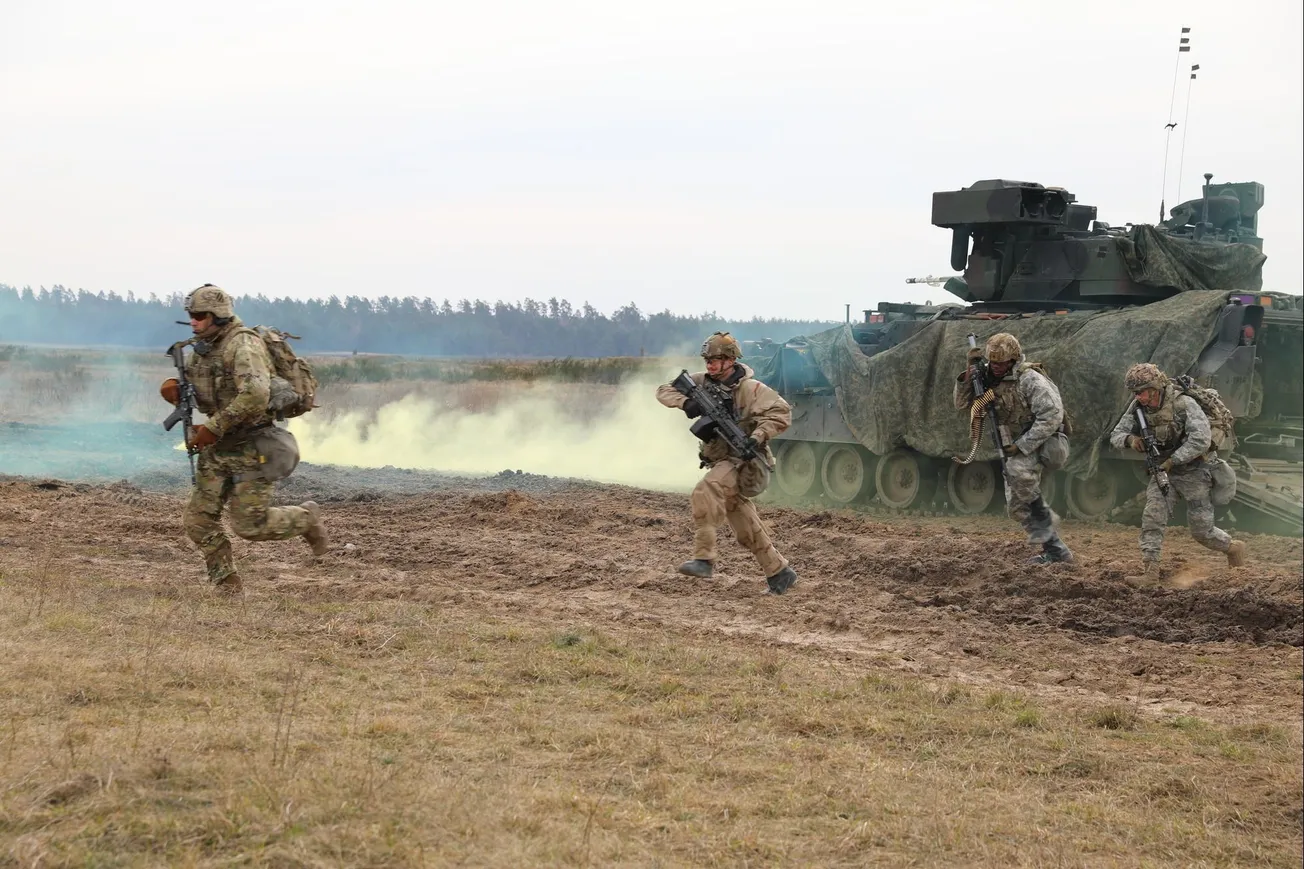
What Moscow sees in NATO is the alliance building up for offensive war against Russia. “All military construction has only one goal—to create military superiority in all theaters, to create real military threats to the Russian Federation. And, in fact, to prepare the military structure, the NATO-EU military machine, for a military clash with Russia,” Russian Deputy Foreign Minister Alexander Grushko told students and teachers of Altai State University, in commenting on the NATO summit, where the member states decided to increase military spending to 5% of GDP, reported TASS.
He said that, earlier, NATO and the EU saw Russia as a “direct immediate threat,” now they consider it a “long-term threat.”
“Why is that? Because they have a time lag threshold for achieving these 5% of military spending of GDP in 2035. This is why, no matter what happens in Ukraine—peace will be established, an agreement will be signed—Russia is still recorded as a long-term threat,” he explained. Grushko stressed that Ukraine, in the eyes of the West, is an instrument of “fighting the Russian Federation to inflict a strategic defeat on it or, as they say now, exhaustion with a real hot theater of military operations.”
Grushko also pointed out that part of the hybrid war unleashed against Russia is an information campaign that has probably never been seen in the history of mankind, such demonization, when any hostile intentions are attributed to Russia. “So, they say that Russia will definitely attack. And it’s not about whether it will attack or not, it is when it will happen—in five years, in three years, in eight years? And how will it do it? Will it cut off the Suwalki Gap? Or the Danes suddenly decided that Russia would probably land troops on Bornholm,” the deputy minister added. He said that Bornholm Island was liberated by the Red Army, which stayed there for several months, then the island was handed over to the Danes and the Red Army evacuated. “This is the reality, in which we have to exist,” he concluded.
Bornholm, located in the western end of the Baltic Sea, about 140 km east of Copenhagen, is being militarized like the rest of Europe. Sputnik reported on July 14 that the air and sea port infrastructure has been beefed up to handle heavy military cargo and that the island has been the site of NATO military drills since 2022. That same year, Sputnik notes, NATO announced plans to turn the Baltic Sea into a “NATO lake” and that Bornholm would play a key role in this calculus.