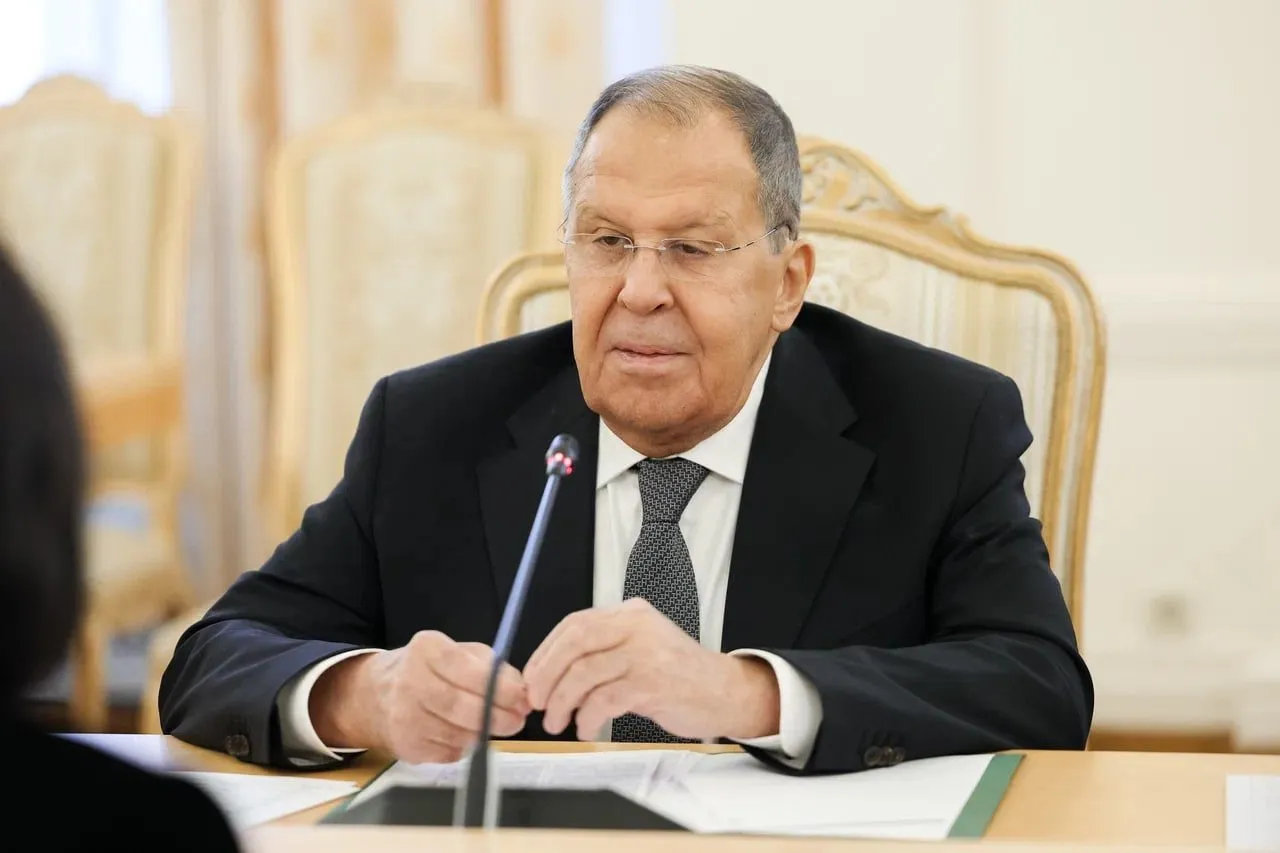
Russian Foreign Minister Sergey Lavrov answered media questions following his speech at the plenary session of the 3rd Minsk International Conference on Eurasian Security on Oct. 28. He underlined, in particular, the efforts by the Western European powers to beef up their nuclear arsenals, with attempts by France and Great Britain to combine their nuclear arsenals, and even discussions of Germany possessing nuclear weapons. “In July 2025, France and Great Britain agreed to coordinate their nuclear forces by creating an Entente Cordiale-like framework for designing missile systems,” he said, using the name for the British-French alliance that set the stage for World War I. “The Germans signed an agreement with the U.K., which basically amounts to establishing military cooperation, and in recent days we have been hearing calls coming from London to add a nuclear dimension to this military cooperation between the U.K. and Germany. The militarization of Europe is gaining traction with more funding for defense manufacturers, large-scale exercises, and efforts to perfect logistics for moving troops to the so-called eastern front by using the infrastructure of countries which are not part of the North-Atlantic Treaty Organization.”
Similar to comments by Belarus President Alexander Lukashenko, who preceded him on the podium, Lavrov noted that the previous security arrangements on the European continent have totally fallen apart. “They planned and provoked the conflict in Ukraine, which dealt a final blow to the Euro-Atlantic Security model, which used to rely on NATO, the OSCE and the European Union. Over the past eight years, the EU evolved into a Euro-Atlantic component of this setting,” Lavrov said. “Today, there are voices coming from Europe about building a new European security system, but having floated this idea, they instantly add that there is no place for Russia and Belarus within this framework.”
He again pointed to the beginnings of the Ukraine crisis in the broken promises of the West not to expand NATO. Not only has NATO expanded, Lavrov noted, but this “purely defensive alliance” is now spreading its tentacles to the Asia-Pacific region and to regions surrounding Russia to create new areas of conflict and tension for Russia. He also lambasted the European attempts to undermine any attempts by the U.S. to mediate a peace settlement in Ukraine.