The following is an edited transcript of the December 31, 2025, weekly Schiller Institute dialogue with Schiller Institute founder and leader Helga Zepp-LaRouche. Subheads have been added. The video is available here.
Dennis Speed: Helga, this is the last show of 2025. It’s the end of the year and the midpoint of the 2020s. Where do you think we stand overall, in the battle for a new security and development architecture, and for an actual, positive resolution of such a complex set of conflicts that plague the world today?
Helga Zepp-LaRouche: First of all, let me wish all our viewers a Happy New Year! Because I think we should wish everybody not only a Happy New Year, but a full new year, which is not necessarily guaranteed, given the state of affairs. This past year of 2025—people have expressed this many times—has been so tumultuous that one could get the feeling almost every day that a strategic, dramatic change would take place. People were completely shocked, and then the next thing would happen.
The year started with the surprise victory of Donald Trump; he went into the White House in late January [as U.S. President]. And we should remember that later it became known that the Pentagon had an estimate by the end of the [President Joe] Biden administration that, as a result of the U.S. policy and European policy towards Ukraine, the probability of ending up in nuclear war was estimated to be 50%. And the fact that that was just taken for granted gives you a sense of how absolutely reckless some of the elites have been.
What unfolded then, was a year full of strategic contradictions. On the one side, President Trump made a couple of significant changes, I think the most important of which was the Anchorage [Alaska] meeting [with Russian President Vladimir Putin on Aug. 15], where he credibly expressed his desire to normalize relations with Russia. He moved away, one has to clearly state, from the Wolfowitz Doctrine, which had been persistent throughout the Biden administration—that the United States would insist on global dominance, including the possibility of having a first strike capability and the ability to win a tactical nuclear war. At least that was expressed by Rear Admiral Thomas Buchanan [U.S. Navy] in a meeting of the CSIS in November 2024.
So later, when the Trump administration issued the National Security Strategy, it showed a clear break with that thinking, by not insisting on the dominance of the United States anymore. But if you look at the actual implication, it has not really changed that much, even if the main emphasis is now on the Western Hemisphere. Looking at the different crises, there is the Middle East, where there is a danger of a new war against Iran; you have now the new crisis between Japan and China, triggered, really, by Prime Minister [Sanae] Takaichi’s remark about how military intervention by mainland China in Taiwan would represent an existential security interest for Japan; and you have the continuation of the Ukraine war by the “Coalition of the Willing,” an establishment which clearly does not have ties to the United States. And people in Europe, for a long time at least, thought that Europe had become a colony of the United States. With the arrival of President Trump in the White House, it became clear that it is not a colony to the United States as a state, but to the permanent bureaucracy, or more correctly, the financial elites sitting in Wall Street, Silicon Valley, and the City of London.
Colonialism Has Come to an End
The other major development of 2025, which is totally unacknowledged by the Western elites, if one can call them that, is the fact that we are experiencing an epochal change, where the 500 years of colonialism clearly has come to an end. This was very much demonstrated by a series of events of the BRICS, but especially also by the Shanghai Cooperation Organization meeting at the end of August and the beginning of September, including the incredibly impressive military parade at the occasion of the 80th anniversary of the end of the Second World War in the Pacific, celebrated with a big, big military parade in Beijing, attended by many leaders of the Global South. It just showed that the world has completely changed.
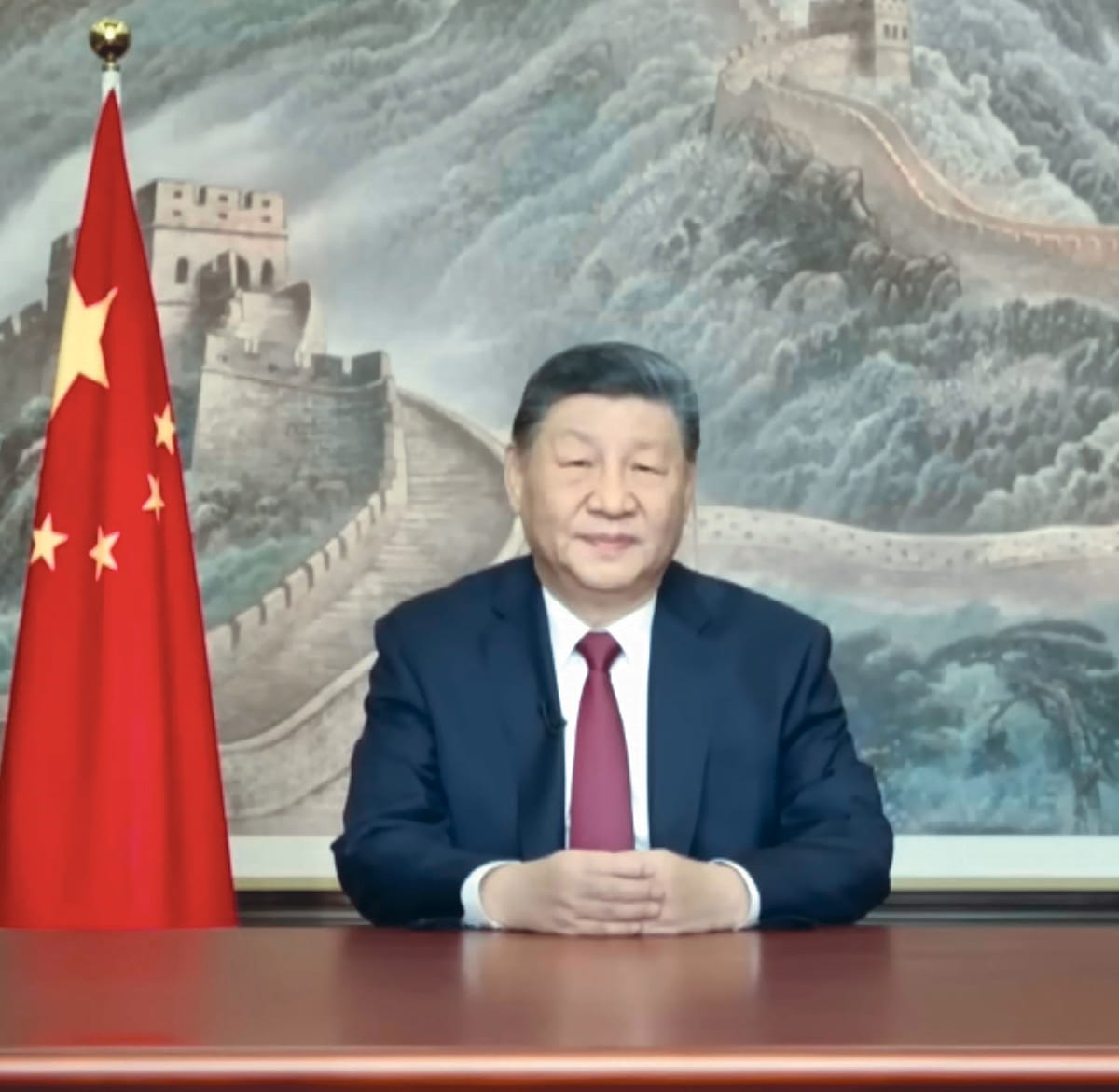
Now the world has changed also because of the rise of China. And I want to show you a short clip, which is a very tiny excerpt of the New Year address from Chinese President Xi Jinping. The reality of what is behind that has been completely unacknowledged by the Western establishment. So, let’s see this clip:
Xi Jinping: Tianwen-2 probe began its star-chasing journey to explore asteroids and comets. Construction of the hydropower project at the lower reaches of the Yarlung Zangbo River started. China’s first aircraft carrier equipped with an electromagnetic catapult system was officially commissioned. Humanoid robots did kung fu kicks, and drones performed spectacular light shows. Inventions and innovations have boosted new quality productive forces and added colorful dimensions to our lives.… All this has turned China into one of the economies with the fastest growing innovation capabilities.
Zepp-LaRouche: So, this gives you a glimpse, and I can only encourage you to watch the entire speech, not only for what Xi Jinping is saying, but when you see the footage, which the TV team attached to his speech, it gives you a glimpse of the absolute transformation of China, which it has accomplished in the last 40 years, turning from a poor country to clearly the most modern and most powerful physical economy of the world today. And it demonstrates that the policy of China building up its own physical economy, lifting 850 million people from poverty, and then extending that model through the Belt and Road Initiative as a way for the countries of the Global South to begin their own development—overcoming the colonial status, developing from raw materials-exporting countries into middle level income countries—that that model of cooperation and helping countries to overcome their underdevelopment, obviously has proven to be so much more successful than the Western model of the liberal system; trying to maintain superiority and control of the institutions, which clearly is not functioning.
So, now we are confronted with a situation where Asia as a whole is rising. It’s not just China. There are other countries like India, where the effort to pull India into the camp of the so-called “democracies versus the autocracies” also has not functioned. You now have a close cooperation between Russia, China, India, but also Brazil, Indonesia, and many other countries of the Global Majority.
China Goes with the American System
In 2026, I think the key question will be, can we move the Western countries to understand that obviously the Chinese model is more successful? Why? Because they have resorted to the American System of physical economy of Alexander Hamilton, the First and Second National Bank [of the United States], of Friedrich List, of Henry C. Carey. They have applied an economic theory which used to be that of every country which had a successful industrialization, starting with the American young republic, which is celebrating its 250th anniversary in this coming year.
And that should be taken by anybody of goodwill as a reminder, not only in the United States itself, but across the world, to go back to the origins of the American Revolution, which was the first [successful] anti-colonial war of independence against the British Empire; why America was a beacon of hope and temple of liberty for the whole world; and why the United States should go back to a foreign policy, as it was conducted by John Quincy Adams, whose very famous idea [expressed while U.S. Secretary of State in a July 4, 1821 speech to the U.S. House of Representatives] was that it is not the purpose of the United States to “go abroad and chase monsters,” but to work in an alliance with republics for the common good of all, as it is expressed in the American Constitution and the Preamble to that Constitution. So people of good will are called upon in 2026 to think about how we can get humanity off the edge of the abyss, because we are still at the edge of the abyss.
The recent issue of Foreign Affairs has another article reminding people of an earlier piece from 2024 about the return to the concept of a “total war.” And one can see that if you look at the rearming of Europe, the militarization of Japan, the effort to get China, Russia, Cuba, Iran, out of Latin America with the new NSS [National Security Strategy] doctrine of the United States, the situation in the Middle East, we are not very far away from the potential that any one of these crisis points could develop into a global nuclear war, which would cause humanity to become extinct.
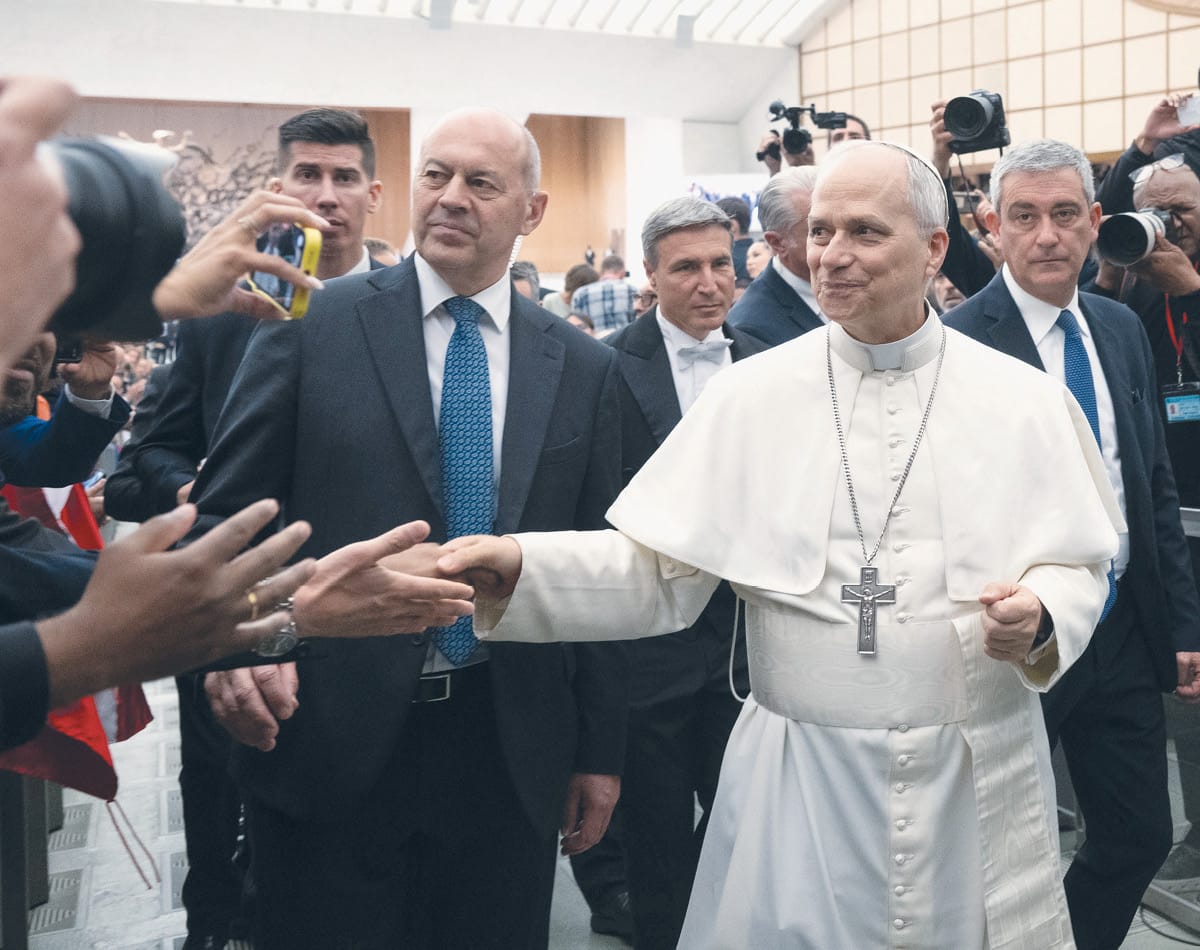
Therefore, I think that the biggest task for everybody who wants to have peace— And Pope Leo XIV has made some very, very important interventions in this respect, saying that only peace is holy, and he completely attacked the idea of conflict resolution with war. Very importantly, he introduced the method of Nicholas of Cusa and his “coincidence of opposites” as the way of conflict resolution, which I think is of the highest strategic importance. Because he applied it to the present situation, by saying that that method of thinking of Nicholas of Cusa is a way of putting things together which otherwise would not get united in a coherent way.
So therefore, what we really have to put forward as a challenge for 2026: People of goodwill should do everything possible to avoid the danger of the extinction of civilization, which is the most important issue, because if that happens, everything else will be moot. And that we move to a new security and development architecture, which this time must take into account the interest of every single country on the planet, to work in the tradition of the Peace of Westphalia, and in cohesion with what President Xi Jinping has called for with the Global Governance Initiative. So that sets our task, and I call on all of you to work with the Schiller Institute to help us to accomplish that.
Speed: Helga, what’s happening today is that various media outlets and others are putting forward their view of what the most important events were of 2025. I noticed two contrasting such lists. The first would be the one from the Council on Foreign Relations. I’m not going to indicate every one of their top ten events as they gave them, but I’m going to contrast this to a different list, which was put out by Xinhua News Agency of China. So, the Council on Foreign Relations says (I’ll just read the top five events of their ten list): 1) Donald Trump disrupts U.S. foreign policy. We’ll say a little bit about what they have to say about that a little later. 2) China weaponizes rare earth minerals. 3) Israel and the United States attack Iran’s nuclear facilities. 4) The war in Ukraine grinds on. And 5) the United States brokers a Gaza peace plan. So, all of their top five are about war, as you can see here, with a peculiar number one, denouncing Donald Trump for disrupting U.S. foreign policy.
Xinhua has the following: 1) China’s head of state’s diplomacy advances the cause of peace and development, and then it just details some of the things that Xi Jinping did, the various meetings he attended, and trips to Russia, South Korea, and other meetings. 2) The U.S.-initiated tariff war severely impacts multilateral trade system. 3) International community marks 80th anniversary of World War Two victory. 4) Explosive AI [Artificial Intelligence] development requires strengthened governance. And then, 5) Global market turbulence intensifies economic risks.
So, I’d like to ask you, what do you think? They’re so different, it’s like two different worlds. What’s your comment about this?
Zepp-LaRouche: What these two different lists reflect is the completely different idea of the image of man underlying what they think is important. People probably have noticed that it is sometimes puzzling how two or more people interpret the very same event completely differently, so that you end up with such a result that you think it’s two different universes. And when you scratch the surface and look at the axioms on which their thinking is based, it always can be reduced to the image of man which they have.
In the case of the Council of Foreign Relations, it is very clear that they have an image of what I said before, keeping control, keeping the world in line with what are the original axioms of the Wolfowitz Doctrine. Now it has been modified a little bit, but it just takes different forms. But keep control, keep the privilege of a leading class, which one can say a lot about, because that’s emerging and going through a transformation right now. But that is one set, an oligarchical outlook.
The Chinese way, on the other side—and you can look at each point; each of these points is motivated by an image of man, where you don’t have this exaggerated liberalism which we find in the West, but you have the priority of the common good of the people, not only for the state of China itself, but also the community of countries. Therefore, they would have completely different priorities.
People are always talking about the systemic threat coming from China. Well, you can say that the systemic threat [to the Western elites] may turn out to be that the [Chinese] model puts the image of man as the most important purpose of politics—the improvement of the living standard, the happiness of the people. If you put that first, then naturally that may be more appealing to people. And so, the threat comes not from a war threat, it comes from the threat of being good! And it may be that this perspective, which appeals to the improvement of the living standard and the well-being of people, is becoming more attractive, and that is the systemic threat.
So, if people start to think about that, maybe they would feel inclined to go back to the better traditions of the West, which you had, for example, not only with the Founding Fathers in the United States. You had it with [Abraham] Lincoln, you had it with FDR [Franklin D. Roosevelt], you had it with [John F.] Kennedy. In Europe, you had it with Charles de Gaulle, you had it with various people in the post-war period in Germany—Konrad Adenauer [Chancellor of West Germany, 1949-1963], Helmut Schmidt [Chancellor of West Germany, 1974-1982]—with Enrico Mattei [the founder of ENI, Italy’s state-owned petroleum company], not always perfect, but in a positive direction.
We have to really reflect on the fact that we are in an unprecedented crisis. But so far, the Western elites have been completely unwilling to look into the reasons why that is, and that the present constellation in the world is entirely their own doing. It’s a blowback of their own policies, and if we want to remedy it, we all have to go to the best traditions of our histories in Europe and in the United States, and then just look for cooperation instead of confrontation with the countries of the Global Majority. So, people should reflect on that, because these two lists you are referencing give you an insight into the mindset of those who made up the lists.
Speed: Yes, I’ll just indicate otherwise, just to read the other ones from the Council on Foreign Relations, because they’ve only got one that I think is not about war. Number six is, Sudan’s grueling civil war continues. 7) The AI race intensifies, which is actually also a part of the war idea. 8) India and Pakistan clash. And then number 10 is, Cambodia and Thailand clash. So, the only one they have that’s not war [number nine] is, Cardinal Robert Prevost becomes Pope Leo XIV. So, maybe we can make a comment on the fact that the Pope managed to make it on the list.
This, of course, is the first American Pope in history, but the Pope also did something important this year, on Oct. 25, when he brought up a figure that you’re very fond of, and is very important as a whole to your idea of a new security and development architecture: Nicholas of Cusa. Could you say something to us about what you think is the importance of what this Pope represents, what he’s been doing, and how that shift that happened this year is affecting the world’s community at this point?
Zepp-LaRouche: What I can see is that the thinking of Pope Leo XIV is very much in tune with Nicholas of Cusa. While I have not yet listened to so many sermons and speeches by him, I think he has appealed to unity in the Curia; that’s very important. He has again and again emphasized the need to have peaceful cooperation. That has been done by previous popes, but I think especially the speech he gave at the occasion of the Jubilee Year, where he evoked Nicholas of Cusa and his method of the coincidence of opposites, applied to the present time. That’s extremely important, because, given the long history of the significance of Nicholas of Cusa, who had been put on the Index [of Forbidden Books] by the Council of Trent [in 1564], and therefore, was not known for many centuries in the academic world and among monasteries and so forth. Now, there has been a renaissance in recent years, and people have recognized the outstanding importance of Cusa, who was for sure the most important thinker of the 15th Century, at least in the Western world. He provided a method, which is a rejection of Aristotle and the Aristotelian method, which always goes by the contradictions, the contradictions which can never be overcome.
And that’s naturally the Aristotelian thinking, which leads people to think that there is geopolitics, that you always have to have an enemy, that you never can come to a resolution. And Nicholas of Cusa rejected that, and he developed this idea, interestingly enough, in the period where there was a clash of civilizations. Constantinople was taken over a little bit later. But he also wrote De Pace Fidei, which is based on faith in religion, about peace in religion, in the mindset of the coincidence of opposites, refuting the idea of religious war, refuting the idea of violent resolution of conflicts, by appealing to the ability of the human mind to always think the higher One, which overcomes the contradictions on the lower level.
Always Seek the Higher Unity
Now, it happens to be that Albert Einstein said the same thing later on. He said, you can never find a solution to a problem on the level where the problem arose, but you always have to think of the higher unity. And that is exactly the method which has to be applied today. Because, if we do not overcome geopolitics, which is, as I said, based on an Aristotelian approach, and transform our thinking to the idea of thinking the “one humanity” first, we will not live, because in the time of nuclear weapons, the idea of war as a means of conflict resolution will doom us as a civilization.
And it does put the civilizational challenge to all of us that we have to start thinking the one humanity first. And then you can have a legitimate interest in your country, but that interest in your country cannot ever be in contradiction to the interest of the one humanity. If you think in terms of long-term history, we are at the point where we have to make a jump in our thinking to think the one humanity, and that jump has to be as dramatic as overcoming the Middle Ages and the axioms of scholasticism, witchcraft, all kinds of superstitions, to enter the modern age, which was accomplished through the thinking of Nicholas of Cusa and the Italian Golden Renaissance.
We are now almost 600 years later, at a point where we have to make the intellectual jump to the new era of civilization as a requirement for our own survival. And I find this extremely interesting that the Pope puts his intellectual and moral weight into this debate in this way. One could only hope that, given the fact that he is an American, that it would have a big impact among Catholics and other religious leaders, but also the U.S. President.
Speed: In the last three or four days, there’s been a dramatic event—the attack on the residence of President Putin—even as the peace negotiations were going on at Mar-a-Lago, and phone calls were going on between Donald Trump and Vladimir Putin, and then various discussions that were happening in Florida. Russian Foreign Minister Sergey Lavrov issued a statement in which he stated the following: “The incident has reaffirmed the terrorist nature of the group of individuals who are unlawfully holding power in Kiev.”
He called out those in the EU and NATO, “who loudly demand ironclad guarantees for Ukraine’s security as part of the negotiated settlement process led by Russia and the United States.” He said “There is no doubt that the main goal of Brussels, Berlin, Paris and London is to preserve the regime that dreams of being helped to survive.” And then he had a pretty sharp statement. He said, “I am confident that the racist nature of the Kiev regime and the cynicism of its international sponsors can be clearly seen by conscientious members of the international community, who cannot fail to understand that without the cessation of this criminal policy, negotiations aimed at achieving a reliable and durable settlement of the Ukrainian crisis will not succeed.”
I think it’s been notable, and we’ve talked often on your webcast about how, on the one hand, you have the process that happened up in Anchorage, Alaska, on Aug. 15 between Donald Trump and Vladimir Putin. And then you have this process that’s happening around things like this Mar-a-Lago–timed incident and how Russia has been caused to have to respond. And I wonder, given that you have talked often about the coincidence of opposites, you’ve tried to emphasize to people that there are often these situations which are complex and very difficult. And so, in looking at this recent exchange and this recent incident, I wanted to get your sense of what this means, what it implies, and what needs to be done going forward from here.
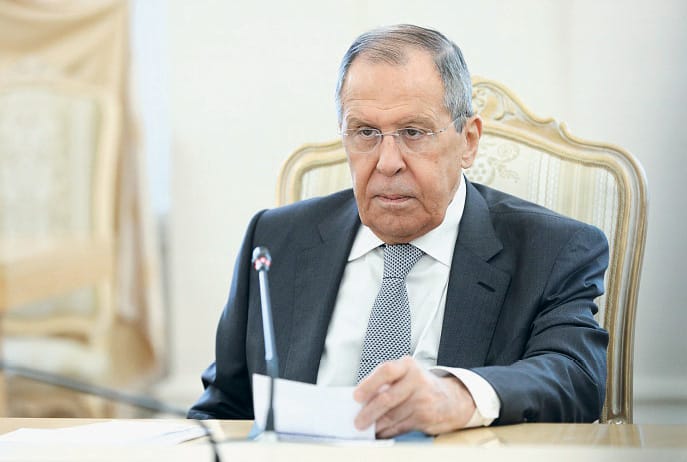
Zepp-LaRouche: I think it is quite amazing, because the Russians put out the statement that there was this attack on Putin’s residence; 91 drones were knocked out, so they didn’t do any damage, but it was an attempt on Putin’s life. Trump was asked about that, and he said, yeah, I got the news from President Putin, and I don’t like it, and so forth. But almost all the Western media and many Western politicians basically immediately said: “Oh, this is just Russian propaganda, it didn’t happen, where is the proof?” Now this is insane. First of all, an attempt to kill the commander of the strongest nuclear power in the world is an utmost act of war. It’s a casus belli. If they would have succeeded—just think about it for a moment. Where would the world be if they had actually killed Putin? We would be in a super crisis. And maybe not anymore, because it could have exploded into a large nuclear war.

The former advisor of [Acting Ukrainian President Volodymyr] Zelensky, Oleksii Arestovych, said that he thinks that the reason why this particular residence in Novgorod, in Valdai, was targeted, is because it is also a nuclear command center, and that maybe there was some dimension to it whereby Putin would have been in that command center, and that was the target, which would make it even worse. But the fact that the Western media are dismissing it like that, condoning, obviously, what is an act of state terrorism, which implies the danger of a complete escalation—it just shows you that the sense of reality of the Western media, controlled naturally by their elites, is completely detached from reality.
Cooperation Can Solve Any Problem
First of all, I think that in the meantime, the Russians have provided a video, where they show all kinds of damage which was caused by these drones. They show the flight routes of these drones; they locate where they were sent from. And I’m sure that more proof will be provided. But I think it makes very, very clear that the populations of the Western countries have to impress on their leaderships that this cannot be tolerated anymore, and there must be a change in course towards cooperation. And then any problem in the world can be solved.
Now, that is something which the people have to take up in 2026. The United States will probably go to install the U.S. medium-range missiles in Germany. These are systems where some of them have a range of more than 2,000 km, reaching deep into the territory of Russia. That means we are in a situation like in the middle-range missile crisis at the beginning of the 1980s. The only difference was that then you had hundreds of thousands of people in the streets, because they knew we were on the verge of World War III. And this time, people are dormant, people are complacent. People are influenced by the NATO narrative to such an extent that they don’t even perceive the danger they are in anymore. And we have to really do everything we can to strengthen the courage of people to speak out. Because if this thing is not stopped, we may not have a civilization very soon.
Speed: Also Helga, it was notable that at different times this year, President Vladimir Putin introduced an idea, which he talked about as being not unipolarity, not multipolarity, but polyphony, and the idea that if there was going to be a new security and development architecture, you were going to have to have much more of, if you will, an orchestral or choral approach, rather than soloists. He made this musical analogy about those who are off soloing, and they’re not on the score, they’re going to have to learn that that’s not the way to actually produce harmony in the world community. And I wanted to know if you had any comment about his introduction of that, because it was also picked up by others. Xi Jinping had another version of it, and I think others, including you, had some comments about that.
Zepp-LaRouche: I actually used a similar conception many years ago, when I did the work on Nicholas of Cusa. Nicholas of Cusa had this idea that harmony in the macrocosm can only exist if you have the best possible development of all microcosms, and you can replace microcosm with nations and macrocosm with the whole world. Cusa argued that, only if you develop every microcosm, and every microcosm regards it as its self-interest to have the other microcosms develop in their best possible way, and vice versa, that this joint development is like a contrapuntal fugue, where the development of one nation furthers and improves the development of the other one; and that the whole thing is working together like a polyphonic symphony, that the idea of a division of labor in the world, is the only way that you can imagine a peaceful future.
It’s so good that we are different nations. We have different cultures, different civilizations, different languages, different poetry, different traditions, including our different economic circumstances. Some countries are large, others are small, some have special raw materials, others don’t. But altogether, we are a family of nations, and it only works if there is a division of labor, where the potential of every nation is being furthered in the best possible way, and that each of them brings in their contribution, like in polyphony, where each instrument contributes to the larger conception of the composition. And that’s a beautiful image of what I imagine the future of humanity can be. It’s so much better to have that kind of harmonious development, based on the equality of each, rather than just one who is giving the tune, and everybody else has to march in lockstep. That’s a model which for sure has not worked so well.
Speed: Helga, we got a question from Kynan, who asks this: What would you say were the most significant achievements of the three conferences of the Schiller Institute in the United States, Berlin, and Paris? I was personally inspired by the ensemble of speakers that were assembled, such as Dr. Naledi Pandor [South Africa’s Minister of International Relations and Cooperation (2019–2024)], Zhang Weiwei [professor of international relations at Fudan University in Shanghai, China, and director of its China Institute], and many others, representing what [Zhang] calls “the better nature of the West.” What should people take away from this process?
Zepp-LaRouche: First of all, we always design our conferences as a “one.” It’s not specific academic issues, but we try to represent the strategic picture so as to locate where we are in the world. Then, we always have something on economic solutions, how to overcome problems. We always have a big panel on the breaking developments and breakthroughs in the most advanced sciences. And very importantly, the dialogue of civilizations, bringing forward the best traditions. But the whole thing is composed as a one. We are trying to get speakers from five continents to represent how such a cooperation would function. And in that way, if you take the three conferences—New Jersey, Berlin and Paris—it shows you the absolute model of how easy it would be, really a piece of cake, to put the world in order. And that’s the method we have learned from my late husband, Lyndon LaRouche. Those of us—and I know, Dennis, you are one of the earlier members of this movement—when you met with Lyn, you would always talk to him and you could come into the meeting in the most disgruntled state of mind, and then you would have a conversation with Lyndon LaRouche, and you would go out of this meeting and say, he put the world back in order and everything is coherent again, and you can actually make sense out of it!
Young People Must Determine the Future
That is what we are trying to do with these conferences. Because the effect is, that people meet other people from Africa, from China, from Russia, from the United States, top experts in their field. And they come out of this meeting and they always say, look, it would be so easy to get reasonable relations among all of these nations, because we have just demonstrated it. And I think the icing on the cake this time was the Paris conference, where we had a lot of young people, who demonstrated that principle in the most joyful way, because they’re just full of energy and want to make a better world.
That’s why we are in the process of building an international youth movement. If you are listening to this discussion right now and find this idea attractive, contact us, because I’m absolutely certain that in 2026, if we manage to get a powerful youth movement internationally, it can become the most important factor in moving the world from the abyss, from the danger we are in now. Because young people have a right to determine the future—because it’s theirs.
Speed: Helga, as we go to the close, I wanted to also note, of course, the British were going to show up with their own list of things. But there’s one article in particular I’d like to get a comment from you about. It’s called “A Divided America Celebrates its 250th Birthday.” I’m going to read this partially, because it will make, I think, many of our American viewers appropriately angry. But it will give you also a chance to address the matter of this being the 250th anniversary of the birth of the country.
So, here’s what London’s The Economist had to say: “Donald Trump may not be the most literary of men, but he hit upon the perfect metaphor when he proclaimed that he would mark America’s 250th birthday by hosting a brawl on the White House lawn. The coming year will feature plenty of parades, fireworks and commemorative coins. Yet the octagon cage to be erected on the south lawn ahead of July 4th, and the Ultimate Fighting Championship”—this is actually true—“bruisers who will grapple within it, will best represent the state of American society, at least as channeled through its politics….
“Two rival national commissions are planning events. In 2016 Congress created the America250 Commission….” It goes through what that is, says it’s Democrats and Republicans, and “its honorary co-chairs are the Obamas and the Bushes.”
“However, on returning to office, Mr. Trump issued an executive order establishing his own ‘Task Force 250.’ …” And it goes on [to say] what that is. “How the two commissions will coordinate remains unclear. Will Mr. Trump’s task-force promote the exhibition about George Washington’s history of slavery, planned at his Mount Vernon estate? Will it embrace the ‘decolonisation’ and ‘LGBTQ+ inclusive’ guides proposed by the other task-force?
“The past has become a partisan battleground in America.”
Now there’s more there, but I will spare all of us having to hear it. But there is something very serious about what is happening now in America around the 250th. I know you have ideas about it, and I think I’d like you to share those with us.
Zepp-LaRouche: Well, the present world and what you are reporting about these two approaches, or actually three approaches, reflects the fact that the image of man has been forgotten. I think there is a danger of a new fascism in the world. It has some elements of the old fascism—militarization, economic austerity for the people. But there is a new element in it, and that is reflected by the writings of some people who shamelessly advertise that it’s not a bad thing to accumulate as much wealth as you can. So I’m adding this [as an element of the new fascism]: You can turn from a billionaire into a trillionaire and that gives you the right to do what you want; it’s this unashamed idea that the privileges of a few are supposed to be what determines the fate of humanity.
It’s like a cancer; it grows, and eventually it replaces the healthy cells in the body. But when the cancer takes over, the patient is dead. And it’s these kinds of ideas which are so absolutely dehumanized. If we don’t replace them I think that means the end of America as a republic, which, unfortunately, is already no longer a true republic. And I believe that the 250th anniversary provides a chance to go back to the original idea of what America was supposed to be.
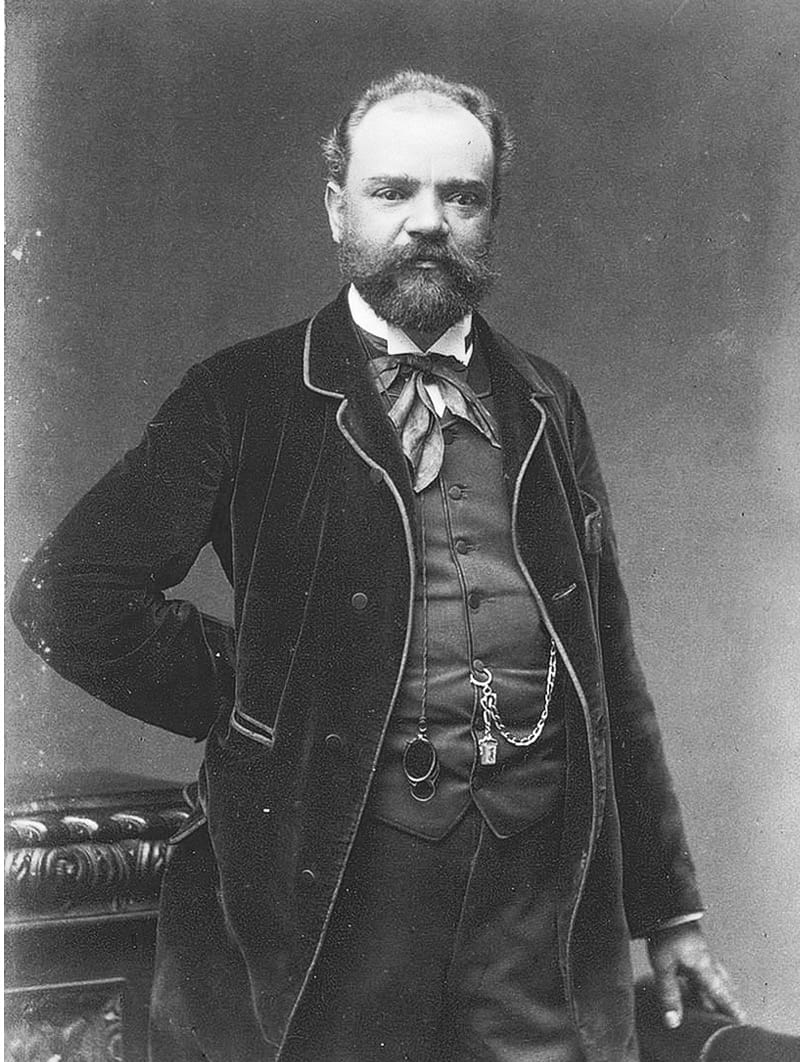
You have to go back to Toscanelli, who invented the maps for Columbus. You have to reconstruct the entire effort, which in a certain sense, is beautifully expressed in Dvořák’s Symphony [No. 9] From the New World. We should play that particular composition throughout the year, because it gives you, when you listen to this music, it picks you up wherever you are, and it gives you the hopeful vision of what the American dream was supposed to be. So my immediate request to all of you is to listen to Dvořák’s Symphony From the New World, to get a metaphor of what I’m talking about. Because if you look at what America is supposed to be, it is a rejection of the oligarchy of Europe at the time of the American War of Independence. And it’s a complete rejection of the British Empire.
The Tragedy of British Subversion
The tragedy of the United States has been that, in the following centuries, America was subverted by that very same ideology of the British Empire. They tried it first in 1812, militarily; they tried it again. The British Empire tried to undo the American Revolution and turn it back into a colony. They tried it for sure in the Civil War, where the British Empire allied with the Confederacy. They realized that militarily it could not be won. And after that, the various British institutions like the Fabian Society, Milner’s Kindergarten, and various other such efforts tried to subvert the American establishment by convincing them that they should adopt the model of the British Empire to run the world, based on a unipolar conception, based on the Anglo-American special relationship.
That has been the basis for the Wolfowitz Doctrine. That has been the reason why the great chance at the end of the Cold War was not used, because, rather than building a new peace order for the 21st Century, the neocons started to implement exactly that idea of a unipolar control of the world, which clearly didn’t work. It backfired. Francis Fukuyama will go into history as having made the most short-lived wrong analysis, when he proclaimed the “end of history.” Because this was the idea that the whole world would be taken over by the model of the British liberal economic system, which caused an incredible blowback, as we have seen with the revolt by the Global South.
Now we have a situation, where President Trump responds to an impulse in the American population, with the MAGA movement and so forth, but it completely falls short of the beauty of what the American Founding Fathers were discussing. George Washington, Benjamin Franklin—Benjamin Franklin, who based his entire ethics on Confucian philosophy. That is something very little known, but that would be a way of reaching out to China and recognizing that the ideas of Benjamin Franklin and the Chinese model are so similar, and that dialogue is possible.
So, I can only say these two approaches are like—for example, many years ago you had Marian Anderson singing the National Anthem beautifully; I mean beautifully. Listen to that. Go to YouTube, listen to Marian Anderson singing the National Anthem. And then [President Barack] Obama had Beyoncé [Giselle Knowles-Carter] singing the same thing, Hollywood-style, naturally flashy and so forth. But compare these two performances of the National Anthem by Beyoncé and by Marian Anderson, and then you get a sense of where the true soul of America is, and to where we have to bring America back. So that is my comment.
Speed: Helga, as we were beginning to assemble today’s show, we got the tragic news that one of the founding members of the LaRouche organization, Anita Gallagher, had passed away. For people who would not know, she and her husband, Paul Gallagher, were two of the people, among several others, who found themselves on the most brutal receiving end of the armed might of the state, as they call it, and went to jail, together with Lyndon LaRouche, your husband, during 1989. Anita and Paul both are founding members of Lyn’s association. But at the end of a year like this, and for a lot of people all over the world, in all countries who have lost people, lost loved ones in many different ways, whether that be on a battlefield or because of disease and so forth, it’s often hard, or at least important to reference, what is the significance of human life?

Your husband, Lyndon LaRouche, wrote an article called “ in which he talked quite a bit about this. And I know we all think about him, and we think about many others at these kinds of times. And I just wonder, it being the last day of the year and a kind of final time for people to reflect on the meaning of human life. I know you knew Anita as well, and sometimes it helps people who view shows like this, just to hear why it is that individuals go through all sorts of suffering for higher purposes. Why is it that it is never in vain? What is it that makes them precious? And what is it that makes those efforts so important to humanity as a whole?
Zepp-LaRouche: I knew Anita, and actually, I visited Anita and Paul when they were in jail, and inhumanly, they were for a very long time there in separate places, and for a loving couple to be separated in jail for many years is a form of torture, which is really unbelievably brutal and despicable, because they were innocent completely. They did not do anything other than oppose the oligarchy in the United States and be in absolute agreement with the ideas of my late husband. Anita was a true, beautiful soul and a warrior angel and, a true wit; she had an incredible sense of humor. And by being a beautiful soul, she would impact many, many people around her. That is how humanity lives on.
I absolutely agree with Moses Mendelssohn, and Nicholas of Cusa, who in particular said, the fact that the soul is creating things which are immortal means the human soul, which is of a higher order than that which it creates, is immortal as well. So, it is the contribution of the life of such extraordinary individuals like Anita, which brings humanity forward. And I think that the most important thing you can do with your life is that you commit yourself to bring humanity a step further, because that is what lives on in all of us. And I want to express my fullest condolences to Paul.
Speed: Thank you, Helga. I think that’s a beautiful way to end today’s webcast and to end this year. And I want to extend Happy New Year greetings to you and to everyone. I think we’ll leave it at that. Thank you all for watching. Thank you all for supporting us throughout this year. And we’ll see you next year.
And let’s make that the success of humanity 2026.