The following is an edited transcript of the Jan. 21, 2026, weekly Schiller Institute dialogue with Schiller Institute founder and leader Helga Zepp-LaRouche. Subheads have been added. The video is available here.
Harley Schlanger: Hello, and welcome to our weekly dialogue with Helga Zepp-LaRouche. She’s the founder of the Schiller Institute and initiator of the International Peace Coalition, which has met now for 137 consecutive weeks. I’m Harley Schlanger and I’ll be your host today.
Helga, there’s a lot going on in the world, and we’ll get right into it. Your late husband, Lyndon LaRouche, an American economist and statesman, was the first to identify the succession of phase-changes that began with the takedown of the postwar Bretton Woods system in 1971. Since then, we’ve seen his analysis vindicated; that the system of empire was ultimately doomed—but that its sponsors in the City of London would fight to retain the global imperial power they held. He not only provided the most precise analysis of their intent, but also of their vulnerabilities and how the geopolitical paradigm they built should be shut down and replaced. The present global instability—which includes the possibility of a Third World War, and could lead to a nuclear Armageddon—is a result of that transition period we’re in.
Helga, you’ve been continuing your husband’s work of creating a new paradigm which recognizes the needs and hopes of all nations. As the globalists are gathering for their annual conference in Davos, where do things stand now? And if you were allowed to address them, what would you say?
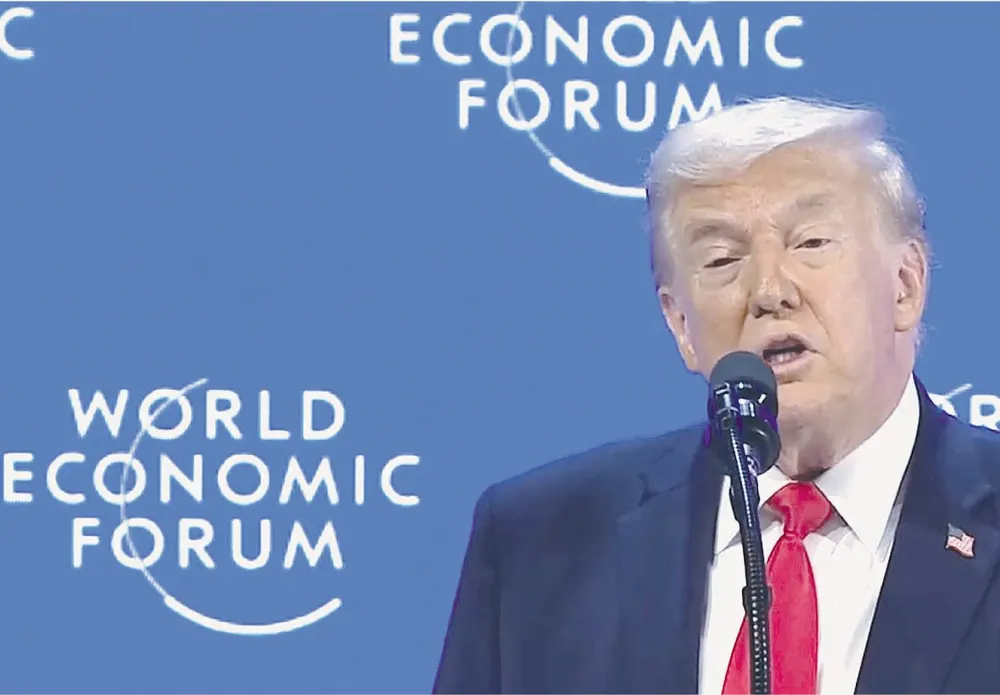
Helga Zepp-LaRouche: I must admit, I’m still a little bit under the shock of having just listened to the speech President [Donald] Trump gave in Davos [Switzerland, the 2026 World Economic Forum]. I’m sure I’m not the only one having such a reaction, because this was probably the most incredible speech ever given by a U.S. President or head of state. He managed to insult a whole bunch of people—presidents, heads of state—and he was unswerving in declaring that he wants to have Greenland. The panorama was quite something; one could not see the faces of the audience, but one could see that it was the people in the first rows in the audience who were actually standing up after this speech for a standing ovation. So, here is somebody who slaps them in the face, kicks them in the ass, and then they say, “Oh, yes, Mr. President, this was so wonderful.” I’m kidding, but I think one has to digest all the elements of what he said.
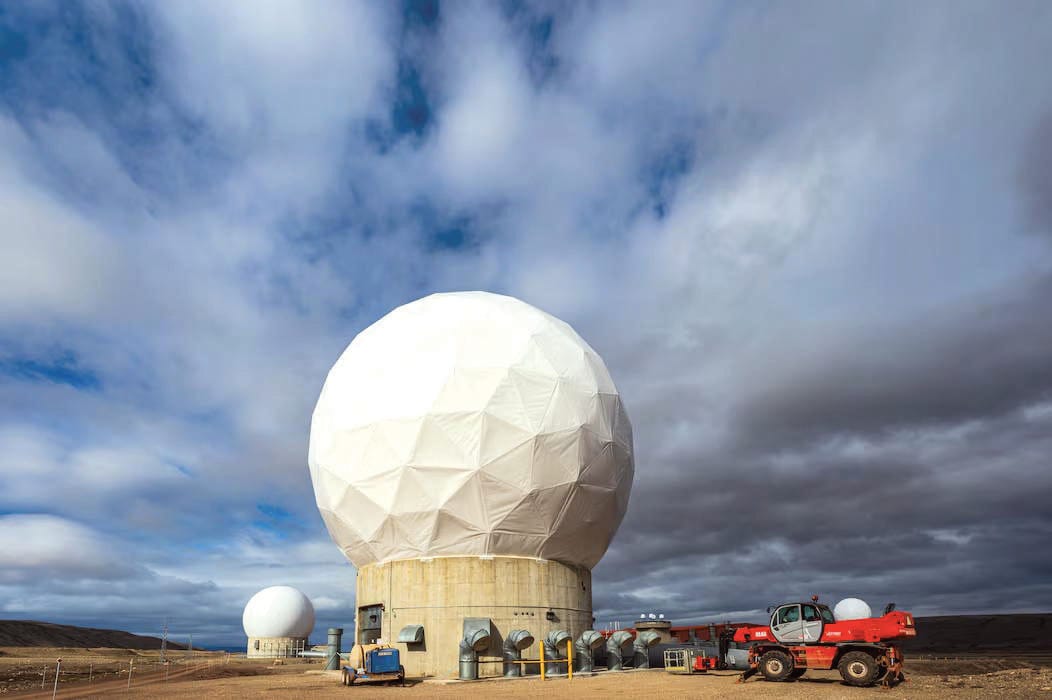
I must admit, I did not think it was completely coherent at all. But in it there were some elements which were quite hair-raising. Probably the topic which will have the most debates around it, is his absolute insistence that he wants to have Greenland. He gave an explanation that the United States would have liberated Greenland after the Second World War, and therefore, it was a mistake to give it back to Denmark in the first place. But now Trump wants to own it and dismisses any assumption that it may be because of its raw materials or rare earth minerals; he says nothing of this sort. It’s because he wants to build the “Golden Dome” [a proposed space-based missile defence system] and that will be important for the defense of not only the United States, but of the West in general.
This is a topic we will have to spend more time on in the next period, because this has to be evaluated. If he says he wants to have Greenland to build the Golden Dome, that has all kinds of question marks to it. One of them, naturally, is if the Golden Dome is a realistic conception. There are some military experts who have doubted that, and we will try to investigate this in the next days, now that it’s on the table. I’m pretty sure that in the upcoming IPC [International Peace Coalition] meeting this Friday, we will have a top expert who has already committed himself to speak there—Dr. Theodore Postol.
I would really urge all of you to come and listen to him, because he is without question one of the, if not the most experienced and knowledgeable person on the topic of nuclear missiles and missile defense. So, there are people who doubt the conception of the Golden Dome, not the least because it would be extremely expensive. It would cost trillions of dollars; it would take quite some time before it would go into effect; and there is a discussion both in Russia and China about what the real intention is behind it, because there is right now such a revolutionary change in strategic weaponry.
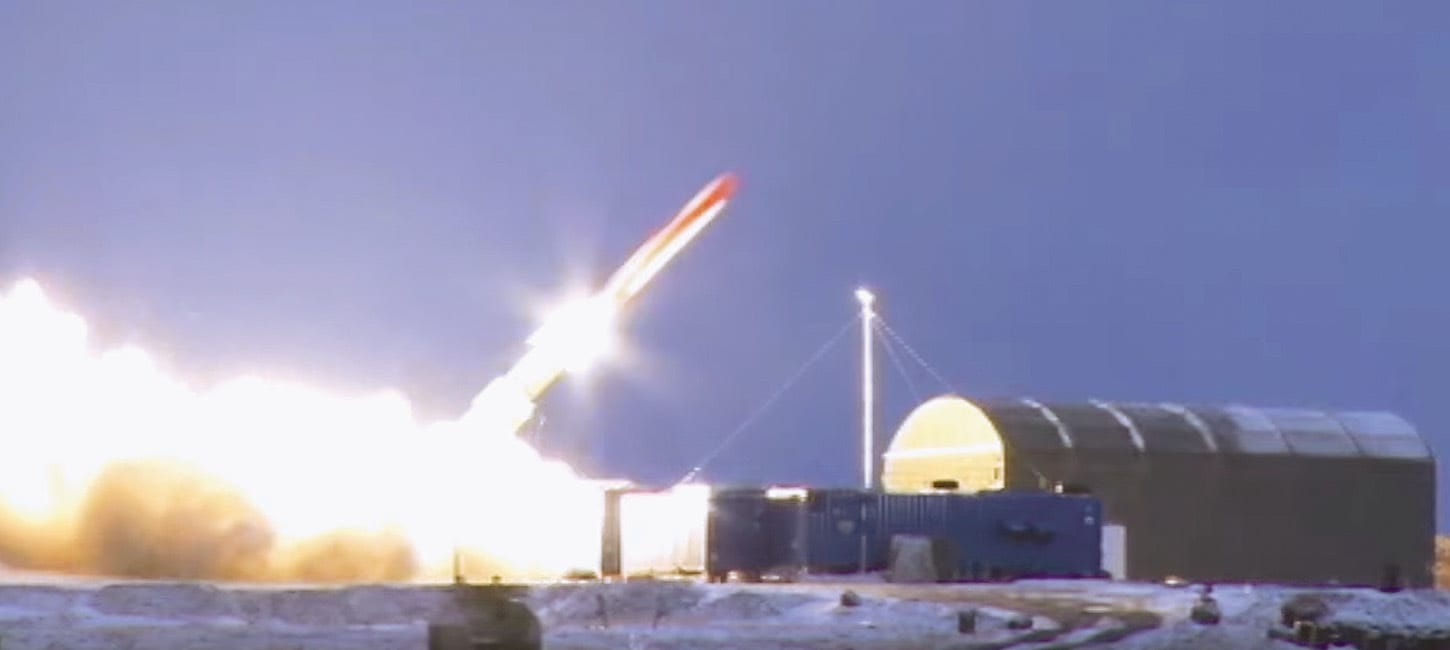
For example, Russia not only has the Oreshnik [hypersonic medium-range missile, which can reach speeds up to Mach 11], but it also has the nuclear-powered Burevestnik. This is a cruise missile which has practically unlimited range, because it’s nuclear-powered, and it can be directed wherever need be. As [Russian President Vladimir] Putin had said when he announced this, it could be launched over the South Pole. Therefore, Greenland doesn’t give any protection against that. So then the question is, why is Trump so insistent that the Golden Dome requires Greenland? Some Russian and Chinese military experts are arguing that the only conclusion is that it would be for an offensive action against Russia, and possibly also China, because the two obviously hang together.
Will ‘European Chihuahuas’ Stand Up for Greenland?
So, this is a serious matter. And given the fact that the entire existence of the human species depends on our ability to prevent an escalation into the use of nuclear weapons and a Third World War, I’m pretty sure that this whole issue will be on the table now in every area where experts are discussing it. Europeans will also have to think about how they will respond to this, because Trump was pretty clear. He said either the Danes agree to let us have Greenland—he didn’t specify if he wants to buy it or not—or he made some remark like, we will be mindful of it; basically a not-so-veiled threat hinting in the direction of the fact that the U.S. could just militarily occupy it, and what could the European Chihuahuas do against this?
Naturally, it is a fact that the United States could insist on owning it—and there is a big debate where people say the United States already has a base in Greenland. They could increase the number of troops stationed there, so why does he insist on owning it? I’m pretty sure there will be a big discussion.
There are so many factors in total disarray right now. For example, you had in the recent period, a very important change in the attitude whereby the so-called “Coalition of the Willing”—at least some of them—started all of a sudden saying that they want to talk and resume discussions with Putin. The first one was [French President Emmanuel] Macron, then [Italian] Prime Minister [Giorgia] Meloni, and finally [German] Chancellor [Friedrich] Merz. All said, maybe we have to have a more balanced approach and restart talking to the Russians. Then Macron, shortly before the Davos meeting, said he wants to have an emergency G7 meeting in Paris this week, to which they want to invite Putin. Then, apparently it was Trump who said, no, he doesn’t want to participate in such a thing, so instead there will be some EU meeting. It’s all very unclear what is motivating him at each given point.
In any case, after this speech in Davos, every government and every political person and circle in the whole world will look at this speech and try to re-evaluate what this means, given the fact that President Trump, in an interview with the New York Times on Jan. 7, after the Venezuela invasion and kidnapping of [President Nicolás] Maduro, was asked, what international law do you respect? He said, I only have my own mind, my own morality; I do not need international law. That was an incredible statement, and I think the world clearly has entered a new phase as you mentioned in your introductory remarks. The world has to come around to evaluate exactly what that means and what options for action still exist.
Schlanger: We have a question from a former member of Parliament in Austria, who asks, “Will NATO and the European Union survive if Trump succeeds in seizing Greenland?”
Zepp-LaRouche: There is a good chance that it may not, because if the Europeans capitulate—which could happen—and Denmark “sells” Greenland to the United States, there may be some compromise, and that may happen. But if, for some reason, the jellyfish would grow a backbone for a change, that would be a new development. And then, indeed, you would have a military action between two NATO members. Given the fact that NATO really is the United States, if the United States pulls out of NATO, there is nothing really significant left. Therefore, I think that the alienation and the increase of tensions between the United States and Europe, which reflects itself in the European Union, could lead to detrimental centrifugal forces getting the upper hand, and these institutions would dissolve—which in my view would not be the worst.
In fact, I think both structures are giving the world so many troubles that I have argued since the beginning of 2022, that we urgently need to replace NATO with a new security and development architecture, basically by going back to where the Cold War ended in 1991, where there was the potential of Russia being included in the European common house, and into a Eurasian security architecture from Vladivostok to Lisbon. So, the discussion was already there. [Russian President] Putin, himself, argued both with President Clinton and George W. Bush that Russia was ready to join NATO, which was flatly refused. Therefore, the sooner there is a serious discussion about establishing a security and development architecture which recreates governance in the world, the better. That is the most urgent question, because a collapse into chaos for sure would have terrible consequences.
Schlanger: We have a message from a viewer, who says, “We should go back to the Golden Rule instead of building the Golden Dome.” There are a couple of other questions on Davos. One person writes in, saying that the narrative in the media is that there is going to be more discussion than usual at Davos. He writes, “Yes, they’re going to offer false choices based on their conception of man as Hobbesian. Whether it should be force or whether it should be deals, there will be no better option coming forward.”
A friend of ours from Ghana asks, “Do you think the trans-Atlantic sector would accept the emergence of a multipolar world, given that that’s one of the topics that is supposedly going to come up?” And a viewer from Australia asks about rumors spreading that Donald Trump has an agreement with [President] Putin and [Chinese President] Xi Jinping to divide the world into three spheres of influence. So, you can take those questions: Would they accept a multipolar world, or are they going for a tripartite division into spheres of influence?
Zepp-LaRouche: On the last question, that theory is floating around everywhere, but I do not think that is a valid idea, because that would assume that the notions of governance of the Chinese, the Russians, and the Americans are the same—and they are very different. I would say that if you look at the conception of Xi Jinping, he has these four initiatives he launched during the last several years. In the last year there was the Global Governance Initiative, which is the idea of a multipolar world, where the principles of the UN Charter and the Five Principles of Peaceful Coexistence are the basis.
Sovereignty, non-interference, acceptance of the different social systems, peaceful cooperation for the benefit of all sides—this is a very harmonious conception, based on Confucian philosophy. I think that’s absolutely workable; it would be a major step ahead in terms of international law. It would build on concepts which were developed at the Peace of Westphalia, but applied to the modern world, including the existence of the Global Majority, which is the majority of the world and needs to be represented. (Naturally, the Peace of Westphalia was an entirely European affair.) So, that is one conception.
Trump’s ‘Board of Peace’ Is ‘Superfluous’
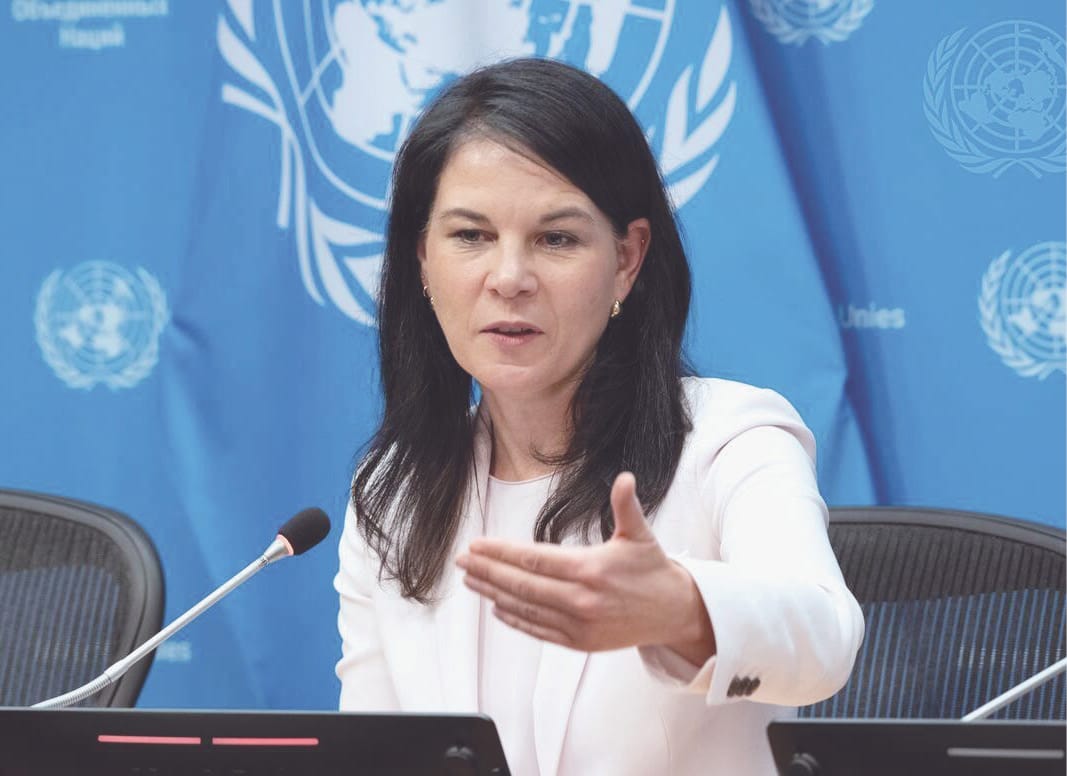
Then you have, on the other side, a world outlook which is reflected in the new idea of a “Board of Peace” that President Trump has proposed. First it seemed it was only for Gaza, but now it seems to be growing. It’s inviting everybody to be involved. To give you an idea of how far the world has started to go to pieces, I would never have thought in my whole life that I would agree on any one point with Annalena Baerbock. But now the moment has arrived, and I do think she has said something reasonable: namely that this Board of Peace is superfluous, because there is already an institution which represents all countries—the United Nations, the UN Security Council, and the UN General Assembly. That is obviously the case. So, given the fact that the membership in the Board of Peace would cost $1 billion just to be a member, I think that gives away the show, what this is supposed to be—namely the club of the multibillionaires, who are all aiming to become trillionaires.
That is unfortunately a lot of what is in the background of President Trump, namely the Silicon Valley billionaires, where seven people own half of the United States or some crazy proportion like that. In any case, this is the idea that the rich people have the right to be rich. Peter Thiel wrote an article in which he said we should not be ashamed to amass as much wealth as we possibly can. It’s a mixture of Caligula and Croesus running the world. I think one should look at what happened to that conception.
Schlanger: On the Board of Peace idea of paying $1 billion to become a member, apparently Benjamin Netanyahu said he would be willing to do that. But one of my contacts said he’s sure Netanyahu would ask for a discount.
A couple more questions: Someone wrote back in and asks, if you were able to speak at Davos, repeating the question, what would you stress as the most important thing to come out of Davos?
Zepp-LaRouche: Given the fact that all of these people, who come there with their private jets or some other way, of living in luxury hotels to show off their wealth, these are the top billionaires and millionaires and multimillionaires of the world. But they may seem to be so fantastic and exquisite, and Trump said, “You in the hall here”—talking to the people in the audience—“you have the best brains in the world.” Now, I very much have my doubts about that, but these are people who pretend to be the runners of the world, but they are all scared shitless—I’m sorry, I shouldn’t use this language—but they are completely freaked out, because they are the ones who know that the financial system is bankrupt.
A lot of the craziness, the absolutely insane craziness, which is being portrayed nowadays in international politics, comes from the fact that the so-called powers or financial elite are out of their wits, because they know that the [speculative debt in the] system is not payable, even if they create new bubbles. And Trump also wants to be the crypto-king of the world. Nevertheless, the outstanding debt cannot be paid, and the whole system could blow apart at any moment. That is what is driving the whole thing.
How To Organize a Real Recovery
So, given the fact that that is the reality, which is not talked about, but which is the underlying cause, what I would say is: We have to have an orderly reorganization of the financial system. We have to do what [U.S. President] Franklin D. Roosevelt did with the Glass-Steagall banking-separation act [of 1933]. Let’s have a global Glass-Steagall and shift the whole policy away from essentially the policy shift which President Nixon introduced in 1971 by introducing floating exchange rates, and all the many deregulations of the markets which have happened since, where every step of the way was pointed to by Lyndon LaRouche. He always said this will have the following consequences, and he was absolutely right.
Now we are at the end of the whole thing, and the only thing left to do, is organize a banking holiday, reorganize the whole system, get rid of mega-speculation, put the commercial banks under state protection, keep the economy going while this reorganization is happening. And then create a national bank in every country; go to a Hamiltonian credit system where productive credit is being issued to restart the economy. That would be a major shift.
You would basically say, there is no enemy threatening us; the Russians and the Chinese have no interest in starting World War III; and therefore, let’s have a rational reorganization, shifting from military production into [production for] the civilian sector, rather than wasting all these billions of dollars, yen, euros, and whatnot in destructive military production which doesn’t feed anyone or clothe anyone and doesn’t house anyone. Let’s shift these productive activities back to investments in transport systems, infrastructure, housing, affordable housing for everybody, a functioning medical system. If that shift would occur, the world could be brought into order in a very short period of time.
The Rules-Based Order Was Always a Fraud
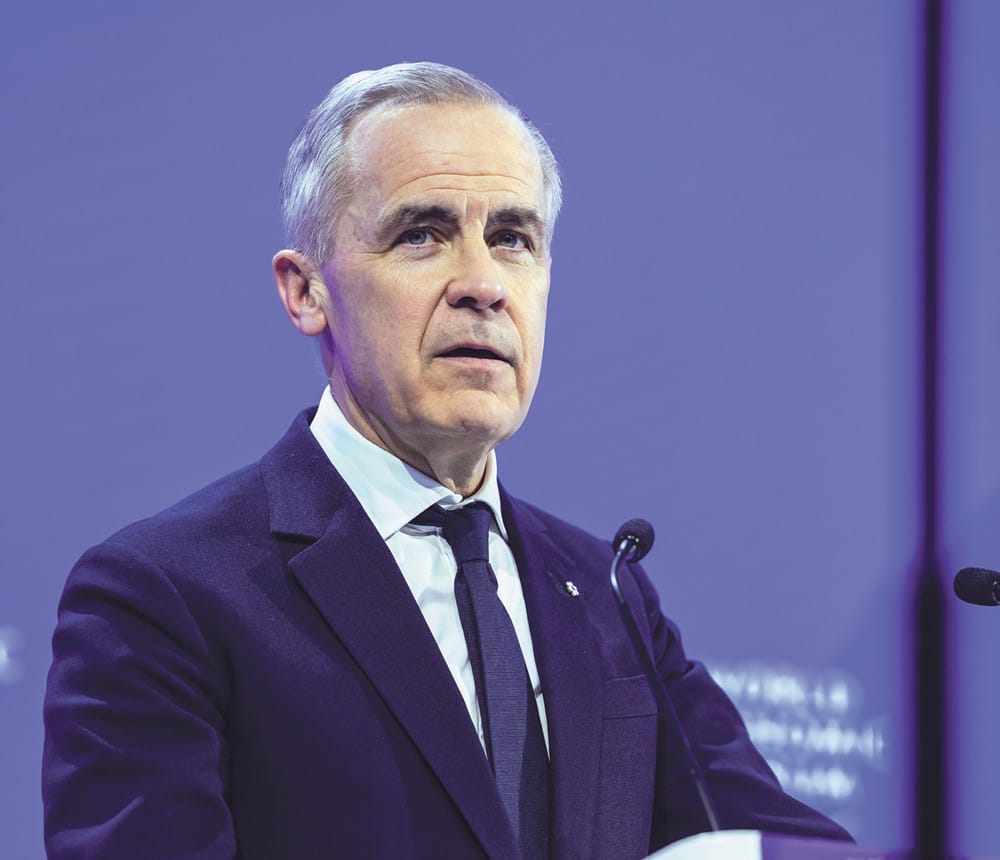
I doubt, however, that the present crop of leadership is capable of accomplishing that shift. Even so, I must say, there was this remarkable speech by Mark Carney, the Prime Minister of Canada and former head of the Bank of England, who said in his speech in Davos yesterday, that now that the international rules-based order is dead, one has to admit that it never was real in the first place. It always was a narrative which was not really true. That is a remarkable admission, because that is exactly what we have been saying all the time. I always said I cannot understand that the whole world is going to pieces and none of these establishment figures starts to question what is the origin of this failure—namely their own policies. I find it quite remarkable that Mark Carney is obviously one of the first ones to say that.
I think it should be picked up and people should discuss this, because the rules-based order was always a fraud—and he said it. He said the mighty ones would bend the narrative as they wanted to, and that was exactly what we have seen—these incredible double standards in everything—and it’s an important point for everybody to start really discussing this fraud called the rules-based order and why it should be thrown out as an argument altogether and replaced by a system of governance based on natural law. So, we are in a very crucial moment, and discussion is more urgent than ever.
Schlanger: It’s especially interesting that Carney brought it up, given that he was the one who, in 2019 at the Jackson Hole, Wyoming, Federal Reserve conference, was the one who put forward the latest conception of the Great Reset, the global bankers’ dictatorship.
You mentioned earlier the Venezuela question, Russia and China. Here’s a question that came in: “If Trump’s actions in Venezuela were aimed at countering Russia’s and China’s influence in South America, why did they not do more to contest the kidnapping of President Maduro and the U.S. build-up in the Caribbean?” But then he sort of answers his own question by saying, “What, realistically, could they have done?”
Zepp-LaRouche: It’s easy to say: Why did Russia and China not defend Maduro? But if you think about what they should have done, or what they could have done—intervene militarily? The whole strategic situation is already so tense, that if you think about the pending threat of a new strike on Iran, the Ukraine war has not ended—I think neither Xi Jinping nor Russia would risk escalation into a direct military conflict with the United States. If you look at Xi Jinping, he’s an absolute incarnation of patience, of diplomacy, of harmonious negotiations. And Putin is also enormously calm.
I’m always shocked; they have all these horrendously Russophobe statements coming from so many people in the West, and Putin, at least so far, has been remarkably calm and collected; he does not react to provocations but makes his moves in a very strategically thoughtful way. So, it’s unfortunately a symptom of the times, that such things cannot be remedied because of what is at risk in a much larger situation.
Schlanger: Here’s a question from a retired law professor: “How is it that sanctions are allowed under international law, when there are sanctions that end up killing more people than wars?” He says, “Isn’t this proof of the case that ‘might makes right’?” He cites the example of [U.S. Secretary of State (1997–2001)] Madeleine Albright’s and President Clinton’s sanctions in Iraq that killed half a million children.
Zepp-LaRouche: It’s not allowed under international law, that’s the whole point, even though the mass media and the governments are not acknowledging it. Unilateral sanctions are illegal. Only sanctions which are imposed by the UN Security Council are legitimate. And none of the sanctions, for example, against Venezuela, Cuba, and many other countries have been sanctioned by the United Nations. The aim of it, as you correctly say, is not against the government, but against the people.
Sanctions normally increase the cost of living, making inflation go up, making certain important technologies unavailable, weakening the economy, threatening the entire livelihood of the population. They are trying to increase by tightening the screws, so that the population will go into the streets and protest the measures by the government, not always looking to where these hardships come from. The idea of unilateral sanctions is to get an uprising—mostly steered from the outside by NGOs—with the idea that the people overthrow the government and there is a regime change.
These sanctions are illegal, and the reason they are not talked about that way has to do with the suppression of free opinion and expression of freedom of thought. We are really very close to a dictatorship already, because if there would be a free debate, these issues would be discussed.
Schlanger: Here’s a comment from someone who picked up on your somewhat vulgar characterization. He said, “Scared shitless? The problem is that they keep coming up with more shit.”
I have one more question for you. This is from someone who wrote in last week, and we didn’t get to it. He said he heard Ambassador Chas Freeman on the EIR, saying he thinks the U.S. is in a pre-revolutionary mood. He said, “I’d like to see that, but I think Americans are too complacent. What do you think it would take to change the complacency?”
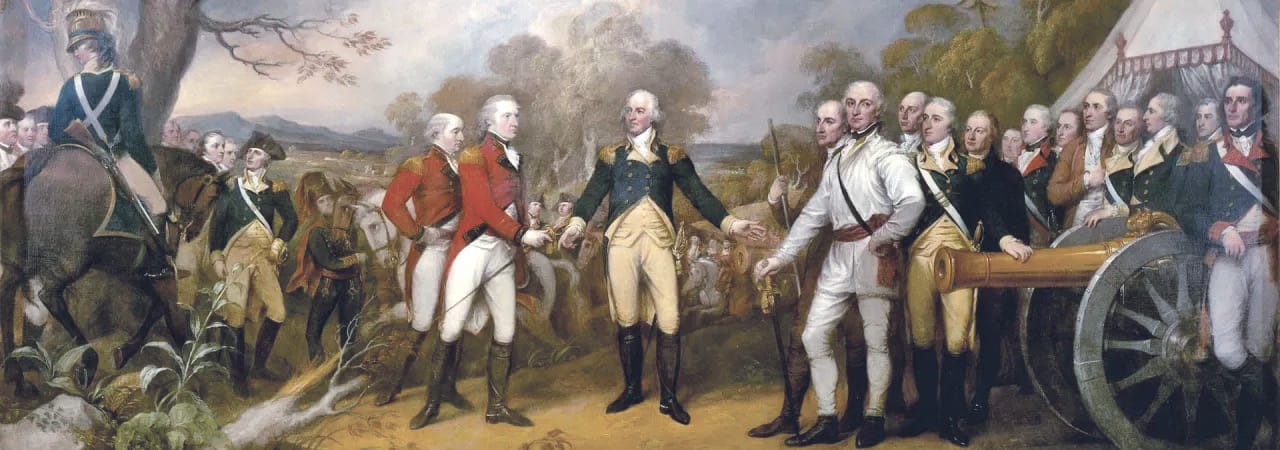
Zepp-LaRouche: I did not yet have the chance to talk with Chas about what he meant by that exactly. Obviously, he does not mean— I assume he does not mean, any kind of gang-countergang fight in the streets. There are some people who would like to see that, and have been predicting for a long time that civil war will break out in the United States, which would obviously be the worst option. If, however, he means—and I didn’t discuss it with him—if he means by that, the recognition of the people that the United States has moved so far away from the ideas of the American Revolution—whose 250th anniversary we are celebrating this year—and that there is a need to go back to that spirit of the American Revolution; if he means that by “pre-revolutionary,” then I would welcome it. And The LaRouche Organization and Diane Sare with her campaign, we will do everything to celebrate the 250th anniversary in such a way that people are being reminded of that.
A Devotion to the Common Good
Nowadays, the population has forgotten what the project of the American War of Independence was. It was the first successful anti-colonial war against the British Empire. The American Constitution was one of the first, if not the first, really republican constitution devoted to the common good of the people. The American System of economy was a clear opposite of the British system of free trade. Benjamin Franklin had a vast network of international friends and collaborators. Being involved in the project of the American Revolution, he propagated Confucianism as a moral foundation for the United States. All of these things are not known anymore. We are planning to publish this widely, and make it known and celebrated. We will have many musical events. So, if you want to be part of this, contact us and become a part of it.
Schlanger: Someone also just sent in a comment regarding your answer earlier about what you would say [at Davos], where you gave a summary of Lyndon LaRouche’s Four Laws. He suggested that people go to the Executive Intelligence Review website and study LaRouche’s Four Laws, because that’s the basis for the kind of change that’s needed….
Final comment. Someone writes in and says you mentioned that both Xi Jinping and Putin are very calm. The woman asks, “How do you stay calm in the face of this? And how do you keep all of this in your head and still remain calm?”
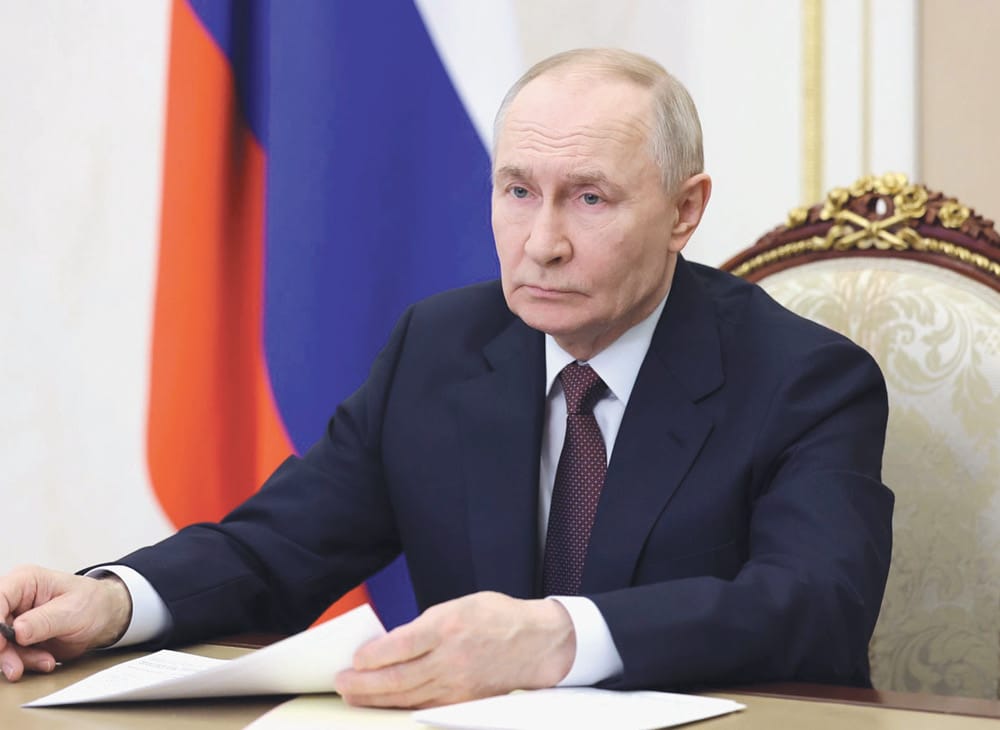
Zepp-LaRouche: That’s because I have a well-grounded identity in German idealism. That is not utopianism; many people think idealism is utopianism, but it’s not. It comes from the idea of humanism, which in Europe means something different than in the United States. It’s the ideas of people like Nicholas of Cusa, Gottfried Wilhelm Leibniz, and Friedrich Schiller. It’s associated with tremendous optimism about the human character of human beings, and a belief that, despite everything, people have the potential to become better.
I fundamentally agree with Leibniz, who thought that any evil evokes an even better and stronger good, because the laws of the universe are such that that is the way it works. It’s an anti-entropic conception. That is why, even if sometimes one really gets shivers about what is happening, I almost never lose the idea that something can be done about it. There is always a way out for any problem, if you put your mind to it, and if you find good comrades and colleagues and friends and associates who will work together. That way, you don’t lose your optimism.