The following is an edited transcript of the Jan. 7, 2025, weekly Schiller Institute dialogue with Schiller Institute founder and leader Helga Zepp-LaRouche. Subheads have been added. The video is available here.
Harley Schlanger: Hello and welcome to this week’s dialogue with Helga Zepp-LaRouche. She’s the founder of the Schiller Institute and the convener of the International Peace Coalition. Today is January 7, 2026. I’m Harley Schlanger, and I’ll be your host.
Now, Helga, there’s still many unanswered questions about what happened last weekend and the reason behind the kidnapping of Nicolás Maduro and his wife by U.S. forces. It is seen by many as a new phase of international relations. One common formulation is that it represents the definitive end of the era characterized by the rule of law, and its replacement by the law of the jungle—although, to be more precise, we’ve seen this before with “regime-change” coups sponsored by trans-Atlantic governments, assassinations, and so on. What’s your present assessment of what was the intent of the operation and the broader implications of the action?
Helga Zepp-LaRouche: I think it represents a true phase-change, not that such interventions by the United States against countries of Latin America or other parts of the world are something new. But what’s new about it is the sort of blatant, unashamed attitude of President Trump, who seems to have forgotten his earlier election promises that he would not involve the United States any longer in endless wars, and that he would try to stop all of the ongoing ones. He seems to have lost his memory completely. But what’s new about it is the blatant openness in which some of the members of Trump’s Cabinet, and Trump himself, are saying that. The most incredible in my mind is Stephen Miller, the White House Deputy Chief of Staff, who blatantly says, this is just might, and there’s nothing new about it; since ancient times it has been that the stronger just win out.
The only thing that tells us, is what an absolute brute Mr. Miller is, because he completely pushes aside every accomplishment of civilization. In all civilizations, there has been a debate over whether or not there is such a thing as international law. And even before international law was created, after the [1648] Peace of Westphalia, later with the UN Charter, you had in all civilizations the idea that there is a higher lawfulness, which is higher than that of men. In China it was called the Mandate of Heaven; in India it was called cosmology; in European history it was called, and is called, natural law. The idea that the law of the jungle rules means that the stronger animal is eating up the weaker animal. But we are not animals. And if Mr. Miller belongs to the animal kingdom, then that’s his choice. But I, for sure, refuse to be part of that, and I believe there is such a thing as international law.
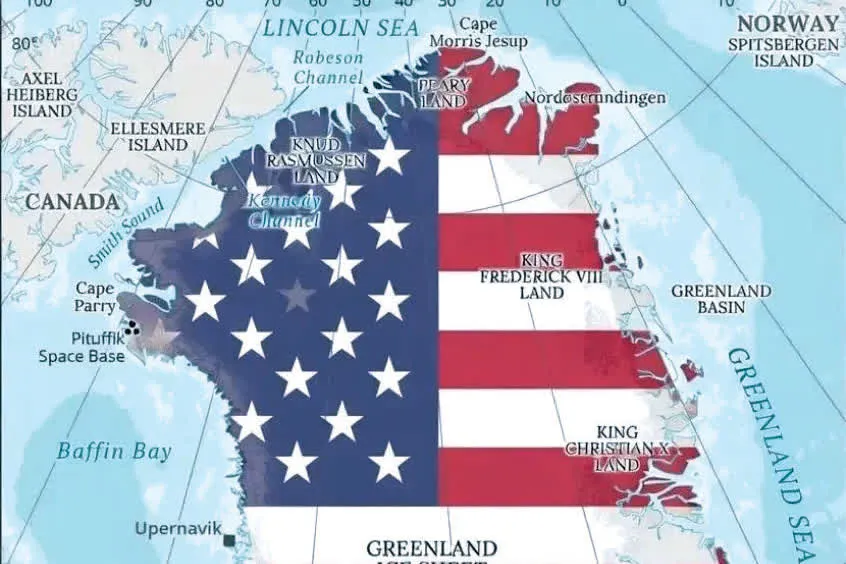
It’s obvious what they now have announced [as the next phase]: [Gen. (ret.) David] Petraeus and others have said Cuba should watch out. Others were talking, I think even President Trump, that military operations will be carried out in Mexico and Colombia. He now wants Greenland, and there is a debate: Will the U.S. intervene militarily?—which is not a big thing; all they have to do is send a couple of soldiers and a couple of helicopters and then occupy the place. Who would want to get into a fight militarily with the United States? Obviously nobody. It could also be, as the Wall Street Journal is saying, that they’re trying to buy Greenland, which is equally obnoxious.
Schrecklichkeit as U.S. Foreign Policy
So, the only thing new is the blatancy with which all of these things are announced, according to the principle of Schrecklichkeit, that is, we do it with such shock and awe, and demonstrate such a precise military power—who would want to oppose us? That is very short sighted; it is one more final blow to the already non-existing, unipolar world, rules-based order. Even the pretext of legality and legitimacy are out the window.
But, given the fact that this is only coming from the United States—which, admittedly, in terms of conventional forces, is the strongest military power on the planet—how long this lasts, I don’t believe will be very long, because the majority of the world is definitely interested in a global governance system ruled by international law. I can imagine that there will be a huge backlash. It may not go easily, and we may see a couple of more horrible developments. But I think in the end, the trend of history is in the direction of civilization and not barbarism.
Schlanger: Now, given the urgency of the situation, we’re going to stick with the subject of the military danger. Some are saying this represents the change in the U.S. strategic doctrine that was written into the National Security Strategy [NSS] document of 2025. What do you think?
Zepp-LaRouche: Yes, it is definitely playing that out, that the Western Hemisphere is the backyard of the United States. Many people say this is the Monroe Doctrine, but that is completely wrong. It’s the Teddy Roosevelt Corollary to the Monroe Doctrine, which was an imperial change to the original Monroe Doctrine. The original Monroe Doctrine was written in the period of the post-Vienna Congress, where various European colonial powers had their tentacles around the world, and James Monroe and John Quincy Adams did not want European colonial powers to intervene in the Americas. But the idea was not that of imperial possession of the Americas by the United States; that was added later by Teddy Roosevelt. That distinction is extremely important.
The NSS [2025 U.S. National Security Strategy] definitely expresses the idea that the United States can do in the Western Hemisphere whatever it wants. But if you read that security paper more carefully, you can actually see that it also does have elements of controlling the Pacific; it does not limit the United States to the Western Hemisphere alone. And as we can see, Greenland is certainly part of Europe. So, it definitely has an overall imperial design.
Schlanger: Helga, there’s a lot more on this. Let me go to the next question. You’ve said that one intent of the attack on Venezuela was to undermine the efforts to achieve a normalization of relations between the United States and Russia, which have been in an up-and-down pattern in recent days and weeks, especially after the Anchorage [Alaska] summit [where U.S. President Donald Trump and President Vladimir Putin met on Aug. 15, 2025]. Who is it that wants to prevent normalization, and why?
Zepp-LaRouche: It’s essentially the powers that want to stick to geopolitics…. At the end of the Biden administration, according to some reports, 50% of the Pentagon believed that nuclear war would be the outcome of Biden’s policy. Now, for me, that is a sign of complete insanity, because that would mean risking the existence of the entire human civilization. What was articulated by Rear Admiral Thomas Buchanan in a CSIS meeting at the end of 2024, was that the United States should be able to win a tactical nuclear war, if it just makes sure that it has enough nuclear weapons left over so that it can dominate the world afterwards. This is complete insanity and lunacy, because there is no such thing as a tactical nuclear war which can be won. I think [nuclear weapons expert] Ted Postol has demonstrated beyond any doubt that any use of nuclear weapons has the characteristic of escalating into a global nuclear war, and therefore leading to the extinction of civilization.
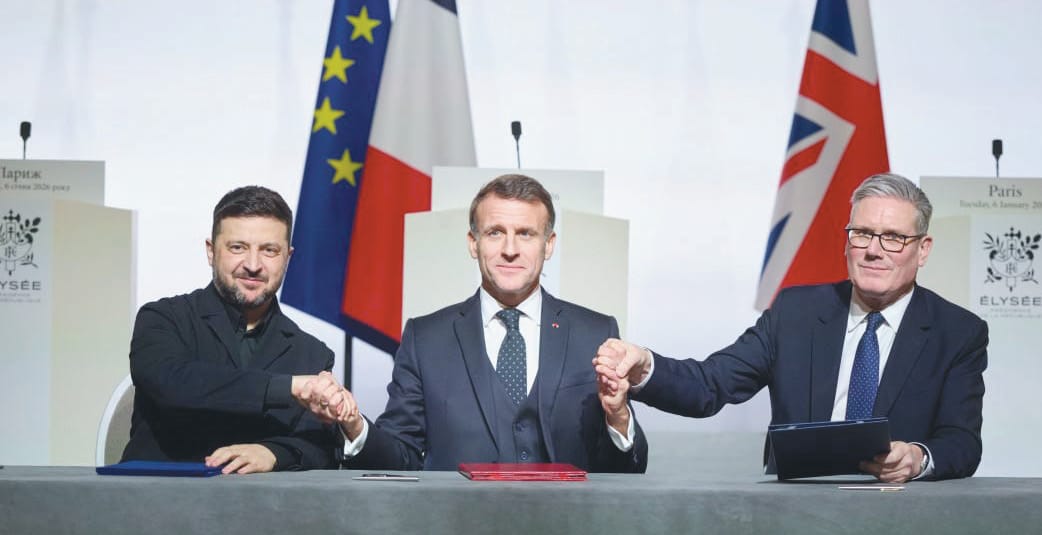
So the people who want to stick to geopolitics—who are they? They are the Coalition of the Willing. They do not want an agreement between the United States and Russia which would eliminate geopolitics. It’s for sure the British government, [Prime Minister] Mr. Starmer, [French President] Macron, [German Chancellor] Merz. The Coalition of the Willing just had a meeting in Paris, where they agreed to have so-called European Peace Troops, following a ceasefire in Ukraine. Merz was a little bit more guarded. He said, well, you cannot expect Germany to not be involved, but we will put troops in neighboring countries which are part of NATO. That would be Poland or whatever. It would mean European troops are NATO troops, because they are all from NATO countries, which has been ruled out by Russia as the absolute non-negotiable point, because that was the reason why the war broke out in the first place. The idea now under the cover of peace troops being sent into Ukraine will not be accepted by Russia, I’m pretty sure.
Enormous Blowback from the Global South
So, it’s basically an establishment of countries who are not willing to reflect on the fact that all the problems we have in the world are not genuine problems, but they are the result of wrong policies imposed by the West. Especially after the end of the Cold War, there was an effort to establish a unipolar world, an effort to get rid of the so-called “axis of evil,” which is every country which does not agree with that, and is targeted for regime change or color revolution. This had an enormous blowback. That is why the countries of the Global South are now trying to form a new economic system, because they’ve been hit with unilateral sanctions. I continue to be amazed at the inability of the Western establishment to reflect on the fact that the present conditions in the world are the result of their own policies, and not of some evil machinations from Russia or China or wherever. And I think the more sane forces should make their voices heard more loudly.
Schlanger: Now, there are some commentators who are saying that the response from Russia and China has been somewhat subdued—I don’t know what they’re expecting, as if they were going to jump around and rattle their sabers. But they’re saying that it indicates what they think might have been a deal made between Trump and [Russian President] Putin. What do you think about that?
Zepp-LaRouche: Yes, I heard many of such theories expressed as well. Obviously, there are certain negotiations going on behind closed doors which are not hitting the public eye. The statements made by the Russians indicate that their absolute core interests are in Ukraine. I think that’s what one should go by, the fact that the membership of Ukraine in NATO is unacceptable, the stationing of offensive weapons at the border of Russia is unacceptable. So, are there any kinds of deals?
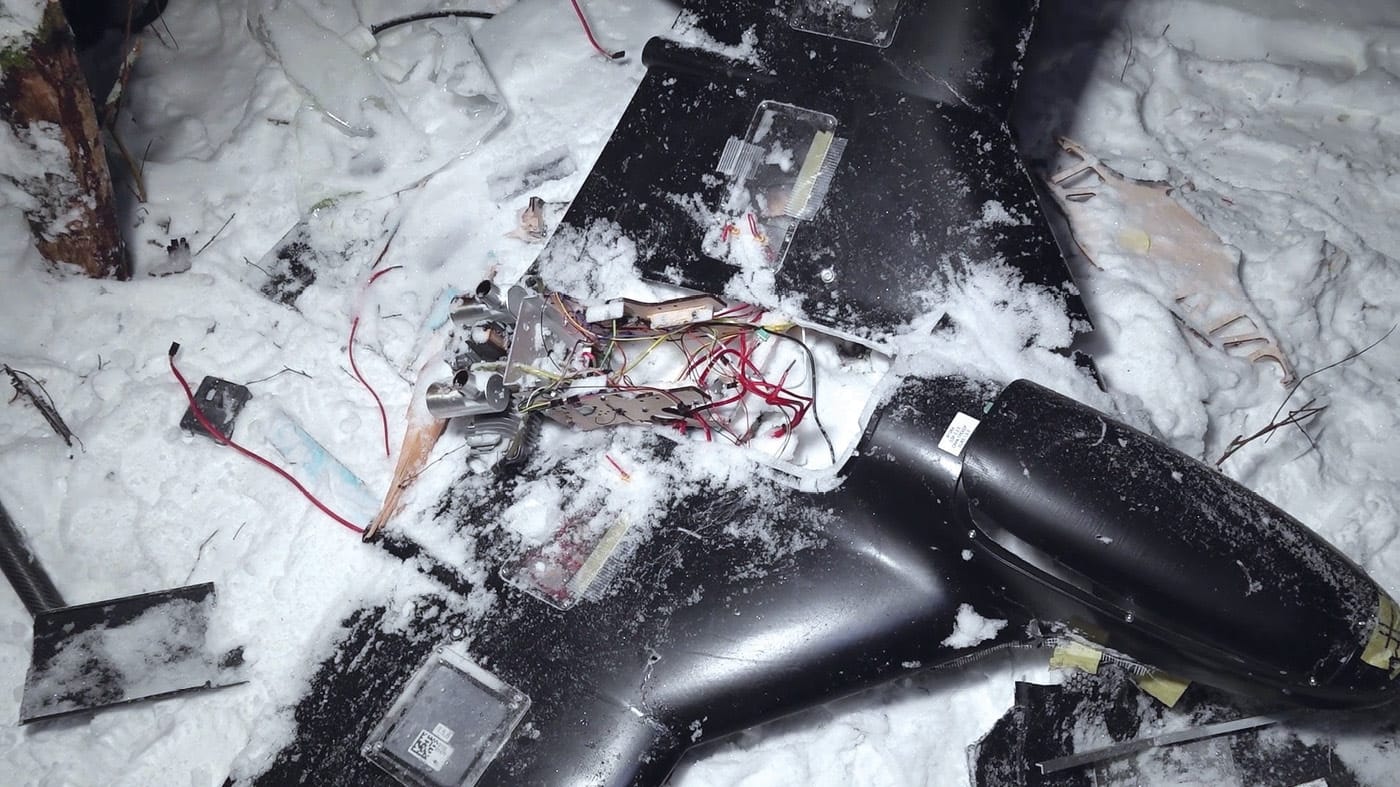
Well, I’m a little bit worried, because at the end of the year there was the likely attack on Putin’s Valdai residence in Novgorod. And apparently, from reports, Putin called Trump and told him that. Trump’s initial response was to say that he was angry, that he thought this was terrible. But then a couple of days later, he changed that line and said that there was no such attack by Ukrainian drones; that it was all made up. In the meantime, the Russian Defense Ministry had given to the U.S. military attaché in Moscow the proof from some shot-down drones they had retrieved. They had the flight direction, they had the origin where the drones came from, and also that this all could only have happened with some help in terms of guidance and data exploration, leading some people to say that the CIA was involved. Then, naturally, some people ask, was President Trump involved in that? I don’t know.
It’s very difficult to judge, but the end result is that Trump now says there was no such attack. And this is really very worrisome, because if the Russians presented proof that there was such an attack, then it must have been an attempted decapitation strike against the head of the government of the most powerful nuclear force in the world. And if that attack would have been successful and Putin would have been killed, we would not be sitting here anymore talking. This would have escalated immediately into a global strategic confrontation. So this is not a light matter….
Russia Has No Motive To Attack Europe
[Steven] Witkoff and Jared Kushner were participating in the meeting of the Coalition of the Willing in Paris just yesterday. Obviously, the Europeans want to keep the United States in the defense of Europe, because they know perfectly well that without the military power of the United States, Europe at this point, and for a very long time [before], is not defensible. Even so, the question of Russia planning an attack on a European NATO country, has been credibly dismissed by all competent military experts I know of, by making the argument that if you look at the difficulty Russia has had for years to conquer a certain amount of territory in Ukraine, obviously they don’t have either the military power or the manpower to occupy further into European NATO countries.
If you ask such a question, you always have to ask, what is the motive? What is the capacity? Well, the capacity, for sure, is not there; the motive is also not there, because Russia has its hands full developing its incredibly large territory—eleven time zones, where you have all the raw materials in the Periodic Table you could want—and very few of them are developed. So Russia has no motive. Why would a country which already has a huge territory and a relatively small population compared to the size of that territory, why would they burden themselves trying to subdue populations who would for certain be hostile to them? It just does not make sense. It’s a narrative trying to motivate the populations of Europe [to accept] the enormous spending on militarization—which, indeed, is in danger of becoming a self-fulfilling prophecy. Because if you rearm and rearm and make one more preparation, then it can eventually end up exactly as what you are saying it would be. But you caused it to happen and not your supposed opponent.
Schlanger: Sticking with Europe, someone brought up the question of Trump saying Greenland is next. This is causing a kerfuffle among European leaders. Would they resort to the common security agreements if there were some military action by the United States for Greenland? But the Europeans can’t seem to get on the same page anymore. You mentioned to me Merz’s response, which seemed somewhat ambivalent. What can you say about Europe’s reaction to the challenge to Denmark around Greenland?
Zepp-LaRouche: There is a very interesting division coming out between those people who believe that international law exists and must be defended if mankind is to be prevented from collapsing into barbarism, and those who don’t. And I think this will stick on those people who now say, “the communist Maduro,” or “the drug-pusher Maduro,” when all the facts speak in the direction that Maduro has not been responsible for the drug epidemic in the United States, because most drugs come from the Pacific. So now you have all these people who otherwise are against interventionist wars, but all of a sudden say, “That’s okay, because Maduro is a communist.”
More fundamentally, you see the division in Europe right now between those who believe that international law must be upheld and those who are opportunists or worse. The European Union is highly divided. Mette Frederiksen, the Prime Minister of Denmark, said, if there is a military attack on Greenland, this will be the end of NATO. So maybe one should encourage President Trump to attack militarily. That would be ending a horror show, [to express it] on a light note. I think more dangerous, is that they will try to buy off people in Denmark, maybe in Greenland itself. Some of the Trump team had visited Greenland before, talking to the citizens there and offering them bribes of various kinds. I think there is a danger that it will really come to that.
Will Global Chaos Create New Options?
But, other than that, seven states support Denmark, including, interestingly enough, Great Britain and Starmer—which is typical for the British; they always try to cover their role in instigating things. In any case, the European Union is totally divided; it could split apart. I think NATO could split apart. If there is a continuation of what Trump and some of his team have said—military action in Mexico, in Cuba, in Colombia, Greenland, then, naturally, the next strike against Iran—I think the world will plunge into such chaos, that new options will develop.
And I do not believe that this idea of “might is right” is the last word, because the majority of the world population, which is 85%, in the Global South and Global Majority, want a governance system based on legality, on legitimacy. The Shanghai Cooperation Organization, the BRICS, other organizations like ASEAN, the European Economic Union—all of these organizations are working to establish a global governance system which is based on sovereignty, on the respect for the sovereignty of every single country, non-interference in the internal affairs, respect for the different social systems, the right to have their own path of development. That is what the majority of the countries are working towards. I think the United States may look like the big, powerful bully right now, and they did indeed do this operation with great precision, which is being lauded by all of themselves, but is that enough to rule the world? I don’t think so.
Schlanger: On this question of the Global South, a viewer from the United Kingdom asks, what are the BRICS countries doing to support Venezuela other than declarations and words? And how could the UN Security Council impose the rule of law?
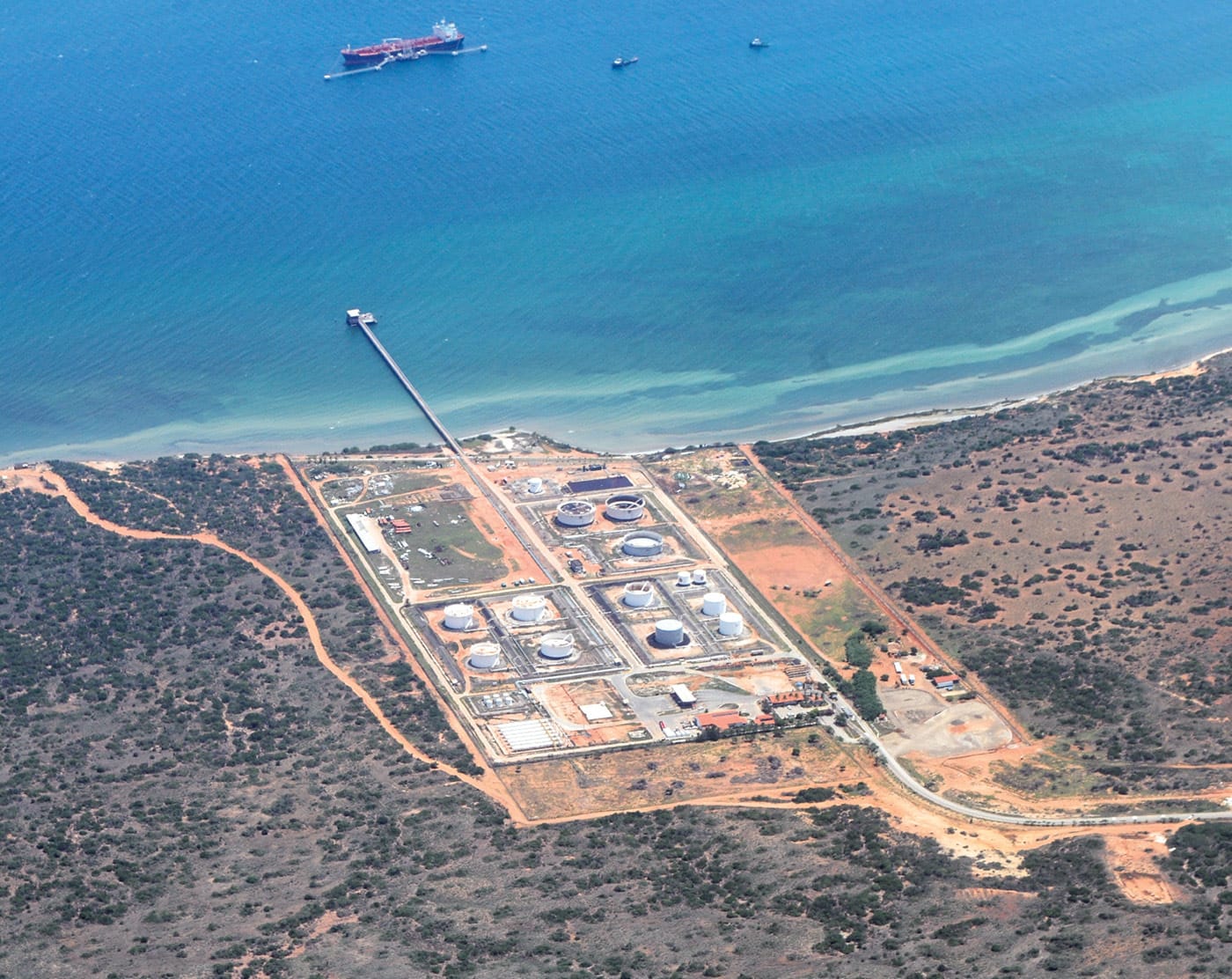
Zepp-LaRouche: Regarding the BRICS countries, the United States apparently put as a first demand that Venezuela should cut all ties economically and otherwise with Russia, China, Iran, and I don’t know [how many] other countries. So that creates a difficulty for anybody who doesn’t want to get into a military conflict with the United States. The whole operation of stealing Venezuela’s oil is also not so easy. According to the Wall Street Journal, the CEOs of the large U.S. oil companies—Chevron, Exxon, Aramco, and others—plan to go to Venezuela in March, setting up operations. President Trump said this oil is all mine, I will manage it as President of the United States. Give me a break! I don’t think he can do that. If he does do that, he will not be able to be functioning in the White House anymore.
The reactions from the BRICS countries are slow; they’re not all on the same page. But if you look, for example, how the fight between the United States and China ended up in the tariff war: Trump went in there with big 200% tariffs. I believe it was first 50%, then 100%, then 200%—absolutely unbelievable percentages of supposed tariffs.
China Fights Like Bamboo
And then, China very carefully did not go into an escalation, because they are wise. There was an ancient philosopher who said that countries should fight like bamboo, that you should go with the motion but not break, bend but not break, or some similar formulation like that. China has applied that successfully, by first answering with tariffs, but then more efficiently, using its effective control over rare earth and other strategic minerals. And that was the end of the story.
There are some countries that have a completely different approach. They’re not going in bullying, but they’re also not giving up on their core interests. I think it may take a little time for this to play out. But there will be a counter-motion, to put international law back on the agenda, because the world cannot survive without that. And that is clear to the vast majority of nations, like the Non-Aligned Movement. One hundred and twenty nations condemned the intervention in Venezuela. The group of the Friends of the UN Charter—this is 80 nations—they also came out very strongly. So, there are already a majority of nations that have come out very strongly condemning this—and I think that trend will continue.
Schlanger: There’s a question from someone who identifies himself as a long-time supporter of the Make America Great Again movement, the America First. But he says that this may be a step too far for him. He brought up the Helsinki conference in 2018 between Trump and Putin, where Trump said in the press conference, that he trusted Putin more than he did his own intelligence officers in the CIA. Now, in this case, after being briefed by CIA Director Ratcliffe, he said that the CIA was telling the truth and that he didn’t believe Putin. What does this say about the shift in Trump in terms of the MAGA support, which is also breaking apart over the whole defense of Israeli Prime Minister Benjamin Netanyahu and the genocide in Gaza?
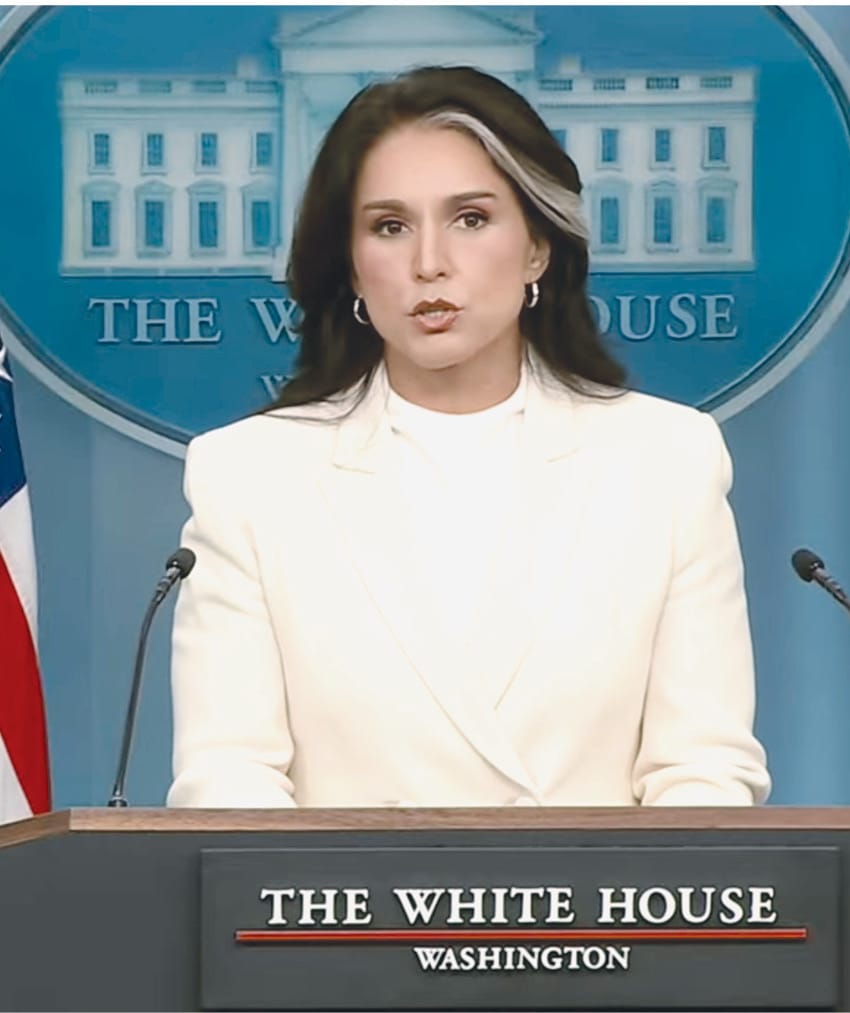
Zepp-LaRouche: Tulsi Gabbard, who was in charge of cleaning out the so-called Deep State, and who had made some initial steps successfully, in the recent period was pretty much sidelined. She, after three or four days of being silent, put out a statement praising the soldiers who carried out this operation, but it was very far from yelling “hooray” about the whole thing. So, it seems that she was not involved in the inner circle of the planning of this. And what you could call the neocons in the Trump administration, for the time, have gained the upper hand. That’s [Secretary of State] Marco Rubio, [Secretary of Defense Pete] Hegseth, the White House Deputy Chief of Staff [Stephen Miller], maybe [CIA Director John] Ratcliffe. There are some people who are very critical about Ratcliffe; some American columnists have uttered big suspicions about him. But it seems that right now, President Trump is under the control of the neocons once again. Whether or not that will last, well, one can only hope that with the many changes in Trump’s attitude, this could be over tomorrow—hopefully. But right now, it looks like [the neocons have the upper hand].
Schlanger: Someone just sent in a comment saying, on the question of Rubio, who they’re now calling the Viceroy of Venezuela, that you have to look at the role of billionaire Zionist Paul Singer, who was a big supporter of Rubio for President in 2015. So we’ll take a look into that. I have one more question here for you, Helga. The International Peace Coalition [IPC] released a statement two days ago calling for a mobilization to demand that the U.S. intermediate-range missiles not be placed in Germany this Summer. The question is, why is this deployment so significant? This was Biden pushing it. Is Trump going to go along with it, or what can be done to shift the policy?
Zepp-LaRouche: As you say, this was implemented by Biden. And Scholz, the previous Chancellor of Germany, participated in the NATO summit in Washington, without any discussion with the German parliament, the German public, the German commentaries; nothing. Scholz just agreed with Biden to put these missiles into Germany. Now remember, this was the big issue at the beginning of the ’80s with the [U.S./NATO] Pershing IIs and [Soviet] SS 20s, where all of these weapon systems, from the Warsaw Pact and from NATO, were all the time on “launch on warning.” That is, that the warning time would have been anywhere from three, four, five, six minutes, which obviously is much, much too short.
Therefore, the danger of an accidental nuclear war was clear in the minds of many people. Helmut Schmidt, who was the Chancellor at that time, came out repeatedly saying, we are on the verge of World War III. There were hundreds of thousands of people in the streets. And that was one contributing factor as to why, then, the INF Treaty, prohibiting the stationing of medium-range missiles, was agreed upon—which, unfortunately, was lifted in 2019 by President Trump.
But then, in 2021, the 56th Artillery Command was re-instituted in Wiesbaden. And that command is supposed to be in charge of the installation of these missiles. These missiles are of different types. The worst one, I think, is the Dark Eagle, which eventually will be able to fly 2,700 km—that means far, far beyond Moscow, deep into the territory of Russia. And obviously, given the fact that all of these weapon systems are nuclear-capable (supposedly they are only conventional, but they’re nuclear capable), Russia would have to assume that they are nuclear-armed. They cannot take the risk of assuming it’s conventional, and then [finding] it’s nuclear. So, this would put the whole danger of an escalation as a top priority.
Germany Would Cease To Exist
And, you know, the moment these missiles would be installed in Germany, Germany would be a prime target for an attack. Germany would be the first target. And if it comes to an escalation, Germany would cease to exist from the map. That is why the IPC had discussed this at the last meeting. There was a very important author who has written a lot of books about the topic, Wolfgang Effenberger. Out of this meeting came the agreement that we will try to make, in this present, extremely tense strategic context, which is much worse than the beginning of the ’80s, that we will make a campaign to gather signatures [for an IPC statement against the missile deployment]. So if you, our viewers, agree that these missiles should not be placed, please write your signature, circulate the appeal, which, by the way, is directed to the American people.
Originally it was supposed to be sent to President Trump, but after his attack on Venezuela, it did not seem that the White House was the right address. So it’s addressed to the American people—who are the sovereign, as per the Constitution—and Trump and the Congress. But I think it is an issue of the American people in general, who, after all, are celebrating this year their 250th anniversary of the American Revolution. And this, in any case, is hopefully an occasion for people to remind themselves what the aim was of the young American republic.
The American War of Independence was the first [successful] anti-colonial war in history. If America would go back to that tradition and realize this was done against the British Empire, it could only be fruitful in terms of clarifying what are the principles of a republic devoted to the common good, which is in the Constitution, which is in the Preamble of the Constitution. And naturally, the foreign policy of John Quincy Adams must be looked at as a part of that. Namely, that it is not the purpose of the United States to go abroad and chase foreign monsters, but to only care about the common good of its own people. So, that is a very important occasion, to celebrate the 250th anniversary by reversing this decision. And so we will hopefully get a lot of signatures, and hopefully this decision can be undone.