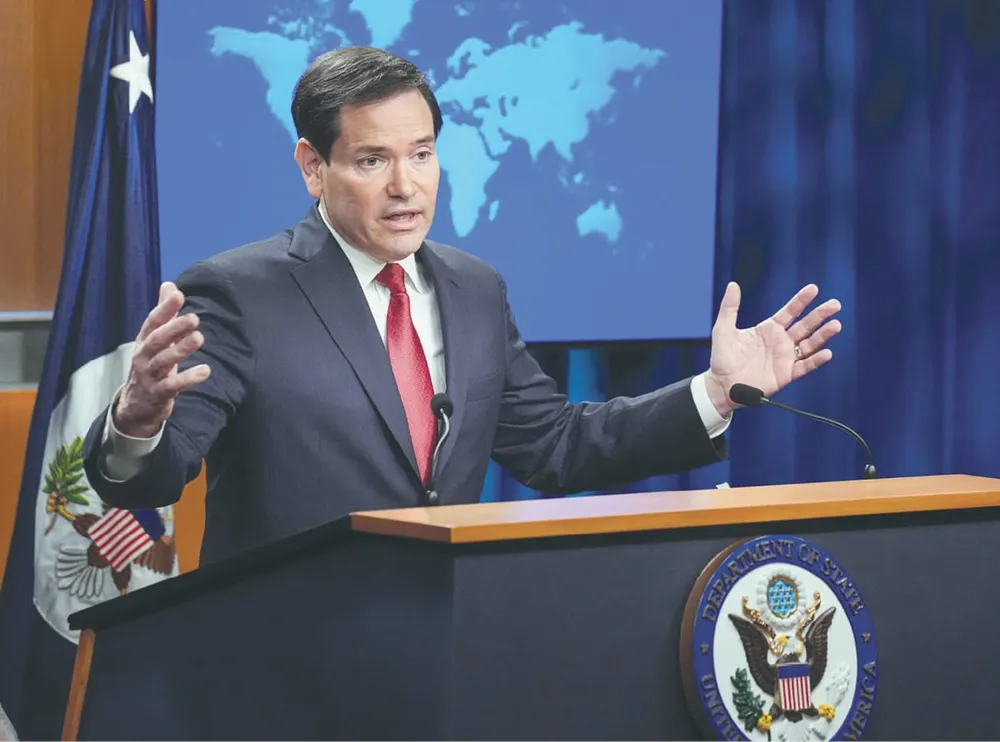
Feb. 6—Like so many of his predecessors, U.S. Secretary of State Marco Rubio brings a rabidly neocon perspective to his conduct of foreign policy, but he adds his own unique and ominous twist to the office. With his Cuban background, Rubio infuses the State Department with a special kind of venom that is the hallmark of the Bay of Pigs crowd.
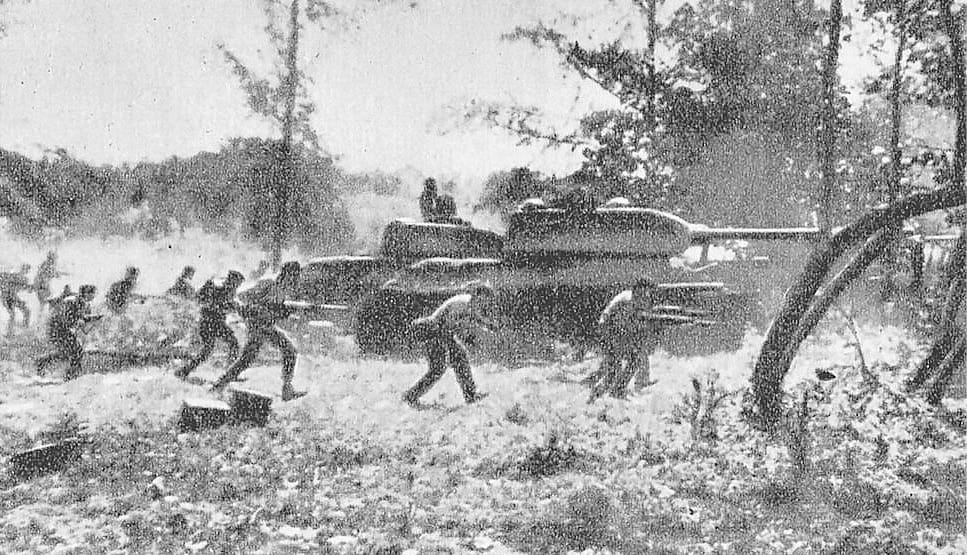
The Bay of Pigs Invasion was a failed military operation in April 1961, orchestrated by the United States Central Intelligence Agency (CIA) and carried out by Assault Brigade 2506, comprising approximately 1,400 Cuban exiles opposed to Fidel Castro’s communist government. Known as Operation Zapata, it was an early attempt at “regime change,” and relied on surprise, U.S. air support, and a popular uprising within Cuba to succeed. However, it collapsed rapidly, due to poor planning, lack of local support, and strong resistance from Castro’s forces.
Rubio’s native state of Florida, which he represented in the U.S. Senate from 2011 to 2025, is home to a large Cuban exile community, where the Bay of Pigs affair remains a dominant issue. Rubio participated last year in the celebration for what he termed the “brave patriots” of the Assault Brigade 2506, who “embarked on a heroic mission … in search of freedom and independence for Cuba.” Rubio described these CIA patsies as “men who risked their freedom and sacrificed their lives to try to liberate their homeland from Castro’s communist tyranny.”
‘Covert Operations Are Us’
Florida is also home to JMWAVE, the covert CIA station located in Miami once headed by Ted Shackley, a famed covert-action specialist and alleged drug runner known as the “Blonde Ghost,” due to his light hair and aversion to being photographed. In addition, Florida is home to MacDill Air Force Base—the headquarters of U.S. Central Command (CENTCOM) and U.S. Special Operations Command (SOCOM), which, along with the Joint Special Operations Command (JSOC), headquartered at Fort Bragg, North Carolina, runs covert military commando operations. Behind these acronyms lurks a deadly constellation of professional killers, coup-runners and terrorists, including those who lead the CIA’s influential Counterterrorism Mission Center (CTC). They also represent a cast of characters involved in domestic political operations, including the Iran-Contra gang that went after Lyndon LaRouche and his associates, and more recently, former CIA Director (from 2013 to 2017) John Brennan of Russiagate fame. CTC and JSOC collaborated in high-level assassination operations under President Barack Obama’s administration, with Brennan playing a key role. These included the execution of Osama Bin Laden (which saved his erstwhile collaborators in the U.S. intelligence community a great deal of embarrassment, had there been a trial), and the drone assassination of Anwar Al-Awlaki and his teenage son, American citizens killed without relevant due process.
Marco Rubio and Ileana Ros-Lehtinen
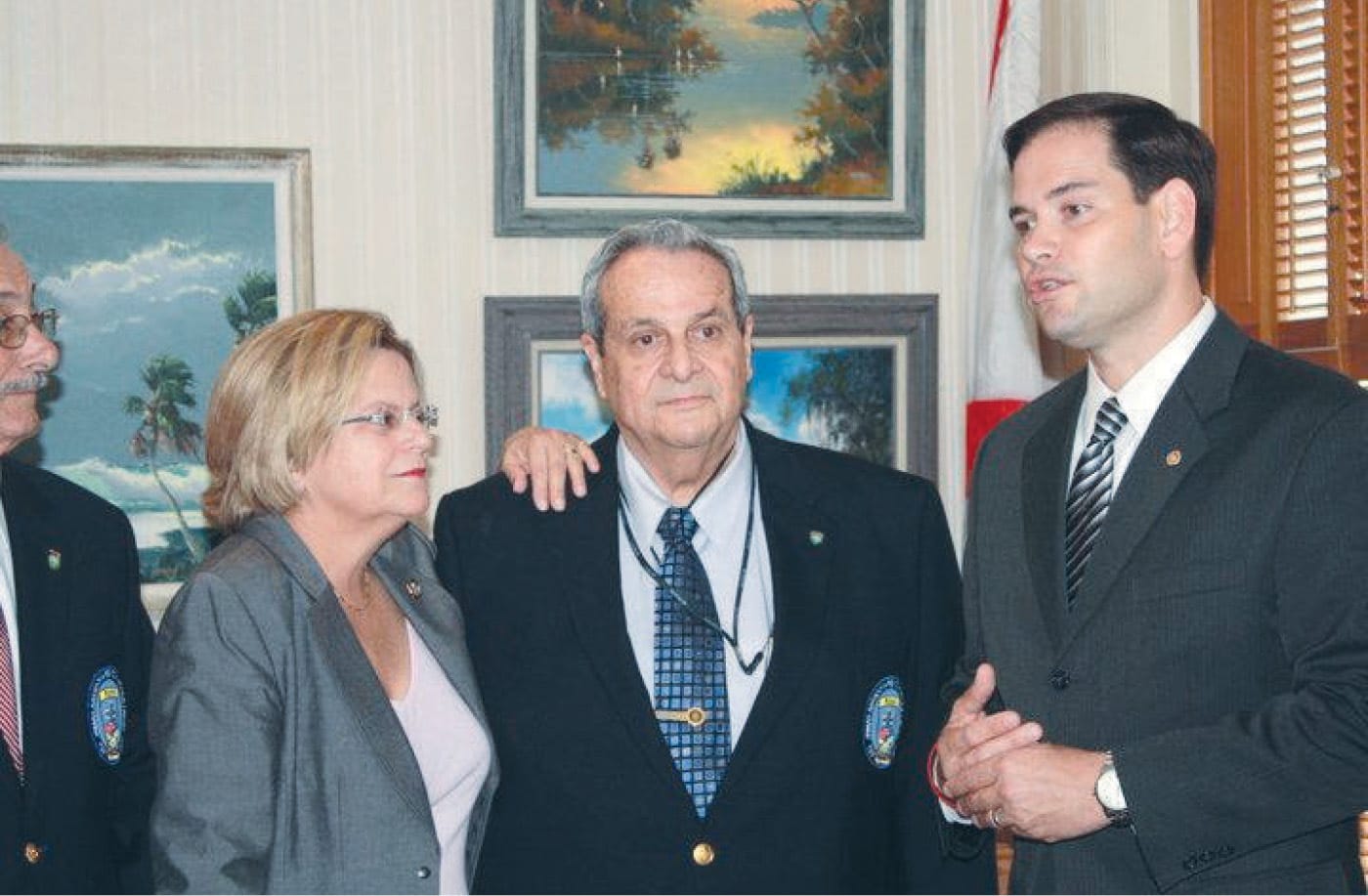
While studying law at the University of Miami, Rubio interned in the Miami office of Congresswoman Ileana Ros-Lehtinen, who represented Miami from 1989-2019 and was Chairwoman of the House Foreign Affairs Committee from 2011-2013. Her shrill vituperation is legendary in the neocon community. Ros-Lehtinen’s father, Enrique Ros, was an Assault Brigade 2506 veteran and something of an academic who chronicled the exile struggles against Cuba. Ros hosted radio shows on Radio y Televisión Martí, a U.S. government-funded broadcaster aimed at Cuba, and was a strong advocate of retaining the United States’ embargo against Cuba.
The Lehtinen part of her name comes from her marriage to Dexter Lehtinen. He and Ileana were in the Florida state legislature before Lehtinen resigned from the Florida Senate in 1988, after U.S. Attorney General Edwin Meese nominated him to be U.S. Attorney for the Southern District of Florida. Although Lehtinen’s nomination was never confirmed, due to an alleged misconduct scandal, during his brief tenure as acting U.S. Attorney in Florida he nonetheless oversaw the prosecution of another leader who was considered insubordinate by the neocons, Panamanian President Manuel Noriega.
‘Narco’ Rubio
It appears that this Cuban exile community played its part in the Miami drug scene, which some have described as the center of the drug trade in the Western Hemisphere during the late 1970s. Stalin Vladimir Centeno, of Stalin Magazine, described Rubio’s early years in an article in late 2025:
When he was a 16-year-old teenager, Rubio lived in a Miami house that was not an innocent family haven, but the logistics center of a drug trafficking gang.
There, under the same roof where he slept, kilos of cocaine were stored, carefully packaged in cigarette boxes, ready to flood the streets of Florida. We’re not talking about a distant relative: it was his brother-in-law, Orlando Cicilia, the head of a criminal network that moved millions.
In 1987, federal police captured him in the famous Operation Cobra, and he was sentenced to 35 years in prison. Rubio lived in that house, sharing meals and a roof with that warehouse of poison. To claim he knew nothing is an insult to intelligence.
However, the Miami New Times asserts that Rubio’s brother in-law was merely the frontman for Mario Tabraue:
During Miami’s Cocaine Cowboy era of the 1970s and ’80s, Orlando Cicilia played a major role in an international drug ring, using an exotic animal business as cover. Mario Tabraue, who would later allow spotted leopards to roam free inside his Coconut Grove estate, was the boss of the operation, but Cicilia was the frontman. In 1989, Cicilia was sentenced to 35 years in prison. He was released early in 2000.
According to Mother Jones, which covered the game reserve angle, Tabraue was quite ruthless:
Mario Tabraue, Sr. was the Cuban American kingpin of a massive Miami cocaine empire. His palatial villa and ruthless multimillion-dollar drug syndicate evoked comparisons to Scarface. Tabraue’s 1989 trial featured testimony that he’d once attempted to dismember the corpse of a federal informant with a machete.
According to federal prosecutors, Tabraue had been the “chairman of the board” of a cocaine- and marijuana-trafficking network worth $75 million. At one point, investigators charged, Tabraue had stored 10,000 pounds of marijuana at the Parrot Jungle, a Miami-Dade tourist attraction owned by a friend.
However, Mother Jones also covered the other relevant part of the story:
Prosecutors alleged that Tabraue and his father, Guillermo, a Bay of Pigs veteran who ran a jewelry store in Miami’s Little Havana, had masterminded the entire network. But Guillermo’s charges were reduced to tax evasion, after a witness testified that Guillermo had been an informant for the CIA.
In Defense of Torture
It would appear that this Bay of Pigs network continued their covert operations for the CIA. CIA’s head of Latin American operations, Jose Rodriguez, would become Director of CIA’s National Clandestine Service (in Dec. 2004), following the tenure of John Brennan as Director of the National Counterterrorism Center (Aug. 2004-Aug. 2005) and Cofer Black’s tenure as Director of the CTC (Nov. 2002-Nov. 2004). Earlier, like many officers in the Latin American Division, Rodriguez was questioned by the FBI about his role in the Iran-Contra affair after allegations of CIA involvement emerged, but he was absolved of any role in it. Brennan and Black, for their part, had oversight of the networks that were involved in the terrorist attacks on the United States of Sept. 11, 2001, but apparently were inept in their capabilities—or worse. As the alleged 9/11 terrorists were rounded up and sent to Guantanamo Bay, Cuba, Rodriguez and his deputy, Gina Haspell, would oversee the torture of those who had slipped through the cracks under Brennan and Black.
But Rodriguez and Haspel would land in hot water following exposés by Senator Diane Feinstein concerning the CIA’s torture chambers at Guantanamo and Abu Ghraib. After an exhaustive three-year investigation into the destruction of videotapes of the interrogations (including pictures of the interrogators), the Justice Department announced in November 2010 that it would not pursue any charges against Rodriguez. Meanwhile, Brennan, who by then had become Director of the CIA, was authorizing surveillance on Feinstein’s committee, which later caused some embarrassment for President Obama. While the incident caused a major uproar in the Senate, Rubio would add his voice to those who wished to sweep the matter under the rug. He was among the Senators that came to the defense of Rodriguez and Haspel for the destruction of the “torture tapes,” and voted against the release of the torture report.
Commentator Glenn Greenwald described the decision as just another in a long line of instances of the Obama White House granting legal immunity to Bush-era crimes, and came to this conclusion:
Rodriguez—sociopathy and all—isn’t some aberration in the U.S. Government’s intelligence and paramilitary world: he’s its symbol.
As the torture crimes were surfacing, Rubio showed allegiance to evil by making a 2012 trip to Guantanamo Bay a year after becoming a U.S. Senator. When Haspel was later nominated to head the CIA (in March 2018), Rubio said during her confirmation hearing: “If someone like you cannot be confirmed to head this agency, then who can?” Rubio also said of the destruction of tapes: “I don’t think that’s a controversy, ultimately…. She’s in a tough spot defending herself, because a lot of the things she’s done are covert in nature.”
Rubio has emerged as the new face of Florida’s gang of intel community renegades, whose older generation is now dying out. This gang has played historic roles in the political assassinations of the Kennedys and Martin Luther King, as well as in the Leesburg Raid which attempted to terminate Lyndon LaRouche and his movement, and more recently in Russiagate.
Rubio’s role in defending the torture apparatus in his first year in the U.S. Senate proved his reliability to the neocon thug establishment. This reliability was reconfirmed on November 20, 2025, when the United States was one of only three nations (the others being Israel and Argentina) to vote against a UN General Assembly resolution condemning torture. This marked the first time since 1974 that the United States opposed the resolution, breaking a decades-long tradition of consensus.
Marco Rubio: The Godfather of Miami Whom They Fear in the White House
At a campaign event for the Nov. 8, 2022 congressional elections, held at the American Museum of the Cuban Diaspora in Miami, Rubio claimed that the only reason President Joe Biden’s administration did not revert to Obama’s Cuba policies was because “it’s afraid of the Cuban exile community in Florida.” He bragged that the exile community received support from organizations historically linked to terrorism and political violence, such as the Bay of Pigs veterans of Brigade 2506, and from individuals like anti-communist activist Orlando Gutiérrez Boronat, who repeatedly calls for U.S. military intervention in Cuba and had notorious ties to the man whom the Venezuelan research site Misión Verdad called the “Osama Bin Laden of the Western Hemisphere”: Luis Posada Carriles.
Posada Carriles helped plan the Bay of Pigs invasion and became a CIA agent. From 1964 to 1967 he was involved with a series of bombings and other covert activities against the Cuban government, before joining the Venezuelan intelligence service. He later co-founded the Coordination of United Revolutionary Organizations (CORU), described by the FBI as “an anti-Castro terrorist umbrella organization.” Posada and CORU are widely considered responsible for bombing a Cuban airliner in 1976, killing 73 people. Posada was arrested in the U.S., but never faced trial. The Los Angeles Times indignantly editorialized:
Both [U.S.] Customs [and Border Protection] and the [U.S.] Justice Department lobbied to keep Posada behind bars, but U.S. law enforcement has never shown a strong interest in trying him for more serious crimes. In turn, Posada’s lawyer has preemptively warned that if charged, his client would likely reveal extensive collaboration with the CIA.
The United States keeps 385 suspected terrorists imprisoned in Guantanamo Bay, many in isolation and all without U.S. norms of due process. Yet Posada, a confessed terrorist, is sent home with an ankle bracelet.
Bay of Pigs Redux
On March 8, 2015, U.S. President Barack Obama issued Executive Order 13692, which declared the government of Venezuela to be “an unusual and extraordinary threat to the national security and foreign policy of the United States” and imposed a variety of economic sanctions. Putting aside for a moment the question of how Venezuela could possibly be considered “an unusual and extraordinary threat,” it is noteworthy that Rubio, who normally maintained a fiercely partisan opposition to Obama, broke profile and issued a statement welcoming the sanctions, demonstrating that the neocons are more than willing to put partisan differences aside and join hands to crush uppity nations in the Global South.
U.S. policy toward Venezuela became increasingly preposterous. On January 23, 2019, President Donald Trump made the decision for the United States to recognize a political nonentity, Juan Guaidó, as Venezuela’s Interim President, which was announced in a statement by the deliriously neocon Secretary of State, Mike Pompeo.
One month later, Guaidó and his followers attempted a Bay of Pigs-style operation that was intended to trigger regime change. A convoy of purported “humanitarian aid” was to enter Venezuela from Colombia through the border city of Cúcuta, which the opposition framed as a challenge to President Nicolás Maduro’s authority. A large concert and media campaign were organized to draw international attention. Guaidó and his allies claimed that the aid convoy would be escorted into Venezuela by defecting military personnel, signaling the start of a broader uprising.
However, the convoy failed to cross the border. Venezuelan military forces blocked the entry points, and despite dramatic efforts—including burning trucks and clashes with security forces—the “aid” was not delivered. No significant military defections occurred, and the government maintained control.
In the midst of all this, Rubio struck a “Scarface” pose, tweeting a threatening message to Cuban President Miguel Díaz-Canel: “See you soon.”
Rubio and Trump
Donald Trump famously mocked Rubio as “Little Marco” during the 2016 Republican presidential primaries. The two were bitter rivals during that campaign, but had miraculously buried the hatchet in time for the 2024 primary campaign, and Rubio announced his endorsement of Trump on January 14 of that year. In the course of the campaign, Trump made a central promise to “take on the neocons” by dismantling the interventionist, regime-change-oriented foreign policy that has dominated the Republican party for decades. His platform pledged to end “endless” or “forever wars” and pivot to an “America First” strategy.
These campaign promises quickly fell by the wayside, and one particularly clear indication of this was Trump’s nomination of Rubio to become Secretary of State. Once in office, Rubio began to pursue his neocon “bucket list,” including:
• A particularly vociferous targeting of any non-groveling nation in Central or South America.
• A policy for Southwest Asia that appears to be cloned from that of Israeli Prime Minister Benjamin Netanyahu. (It was revealed on January 22 by the New York Times that Rubio personally approved the deportation of five student activists last year, due to their participation in pro-Palestinian protests and their writings about the war in Gaza.)
• An insistence on depicting China as a strategic adversary.
The sole exception to Rubio’s neocon offensive is that of policy toward Russia, on which Rubio, who once labeled Russian President Vladimir Putin a “gangster,” has apparently accepted Trump’s position that diplomatic engagement is necessary. However, he has worked to modify Trump’s 28-point plan to end the Russia-Ukraine war, bringing it more in line with neocon positions by removing elements such as a ban on Ukraine’s entry into NATO.
A particularly ecstatic moment for Rubio came on January 29 of this year, when Trump signed an Executive Order which designated the government of Cuba as an “unusual and extraordinary threat” to U.S. national security and foreign policy, the same formulation which Obama had used to launch an escalated campaign against Venezuela.
Although Trump’s zany and mercurial disposition may still provide some surprises, Rubio’s presence in the State Department bodes ill for any return to the ideals of the American Revolution, during this 250th anniversary year. Due in major part to his influence, the anti-imperial Monroe Doctrine appears to have been supplanted by the “Donroe Doctrine,” which makes the United States into the new colonial empire. This process must be reversed.