The following is an edited transcript of the February 18, 2026, weekly Schiller Institute dialogue with Schiller Institute founder and leader Helga Zepp-LaRouche. Subheads have been added. The video is available here.
Harley Schlanger: Hello and welcome to our weekly dialogue with Helga Zepp-LaRouche. She’s the founder of the Schiller Institute and the convener of the weekly Friday online meeting of the International Peace Coalition. Today is Feb. 18, 2026. I’m Harley Schlanger and I’ll be your host. Due to scheduling conflicts, we are not live today, but you can still send your questions and comments to Helga via email to questions@schillerinstitute.org. We’re always interested in hearing from you.
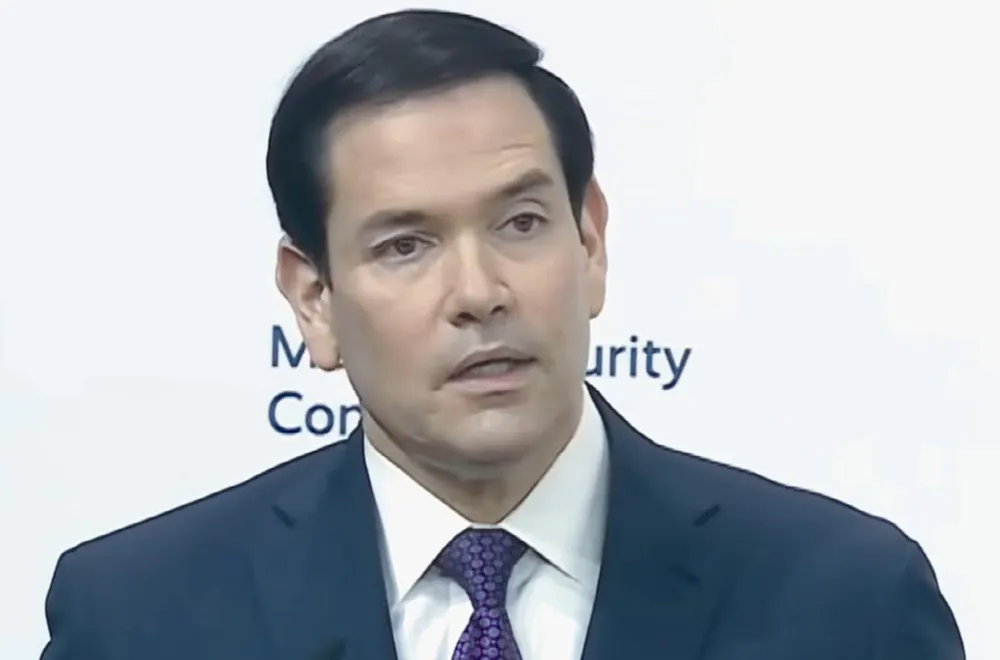
Now, Helga, I know you watched many of the speeches from the Munich Security Conference this past week, including that of U.S. Secretary of State [Marco] Rubio. There is a question from a person in Virginia who asks, “While calling for collaboration, Rubio seemed to be demanding support for a U.S. unipolar order. Was there anything that was said that alters the direction away from the tripwires of confrontation?”
Helga Zepp-LaRouche: I’m afraid not, because, while there was some initial welcoming on the side of the mainstream media and some politicians, saying that the tone of Marco Rubio was much more conciliatory than that of [U.S. Vice President] JD Vance one year ago, if you look at the substance, maybe the tone was less confrontational and there was a lot of confetti about joint Western history and values. In the substance, it was a rather hardened idea of the U.S. position to keep its unipolar dominance in the world, to keep the colonial system intact, and basically telling the Europeans nicely but bluntly in substance, well, either you join us or you will have to suffer the consequences. You have to pay more for your self-protection, defense—but nothing will change in terms of who is running the show, because we will insist on the world order basically under U.S. dominance.
So the amazing thing was, that despite the fact that it was very clearly not a change—not more independence of Europe, not more sovereignty of Europe, but just a hard-nosed announcement of such a policy—some of these Europeans who were sitting in the front rows got up, gave him a standing ovation, and applauded that they had just been given a wake-up slap, a slap on the cheek. They were smiling, taking that in. So that, unfortunately, is the reality of the situation, and I do not think that in substance the situation has become less dangerous. There are some promising tones coming out of Geneva, both in respect to the talks with Iran and also on Ukraine. However, nothing is definitive yet.
The overall strategic situation remains one of extreme worry. If you look at Latin America, if you look at the Pacific, and you look at the situation in respect to the determination to give Russia a defeat, which has not changed on the side of some Europeans at least, we are not out of the danger zone in the slightest.
Schlanger: You pointed out the difference between last year’s and this year’s security conference meeting and past meetings, when Horst Teltschik was in charge. It seems that [British Prime Minister Keir] Starmer, [German Chancellor Friedrich] Merz, and [French President Emmanuel] Macron were quite bellicose, at least at times in their comments. How has this changed? Was it ever really a real dialogue?
Zepp-LaRouche: I have had some very important discussions with some of the people from the earlier period—even into the period of the [German Chancellor Helmut] Kohl era—and several people gave me some insights that there was, when Horst Teltschik [one of Kohl’s closest political advisors] was the leader of the Munich Security Conference, actually something like a strategy discussion. This was obviously in the period of the Cold War, so it was not without problems; but there was a serious discussion about strategy. And with the arrival of [German diplomat] Wolfgang Ischinger [2008], then followed by [German diplomat Christoph] Häusgen [2022], and now [since Feb. 2025] we have [former NATO Secretary General Jens] Stoltenberg, even if Ischinger was running this year’s conference (I don’t know exactly why, but he was basically the moderator, the conductor of the conference), the character of this Munich Security Conference has completely changed insofar as it is now an insider’s club of different factions of the military-industrial complex on both sides of the Atlantic. And it is basically an enormous apparatus; it’s the largest security conference in the world. They have four big halls, they have many little side rooms—so a lot of diplomacy and fine-tuning of their policy aims is occurring in the context of this conference.
A Different Perspective from the Chinese

The only person I know of—and obviously I did not have time to watch all the speeches—who gave a different perspective was [Chinese Foreign Minister] Wang Yi and the Chinese delegation. They brought in the need to have a new world architecture based on [Chinese President] Xi Jinping’s Global Governance Initiative, which would basically be a framework to have a new security architecture—actually pretty much along the lines of what I have been calling for, for the last four years, ever since the start of Russia’s special military operation in Ukraine. I called for an international security and development architecture, which emphatically must take into account the interests of every single country on the planet; and especially in respect to development, because without development, without the chance of countries to overcome their underdevelopment as a result of the colonial period, there can be no peace—because if you leave out one country, you don’t have an indivisible security, which is the only way you can arrive at peace. So, that was Wang Yi, who also delivered a very strong warning against the return of militarism in Japan, but otherwise he had a conciliatory message.
All the other speeches I’m aware of—and please correct me if you know of any other examples—all of them were on rearmament, military strength, winning the strategic game with Russia in particular, but naturally also with China. And there was nobody who said, maybe we should have a different alternative; maybe we should think about a Peace of Westphalia; maybe we should think about some way of addressing the economic crisis; maybe we should not waste all of these resources in a military buildup. Nothing of this sort. So I think that all of our listeners and viewers should consider that—that this is not a security interest conference; it’s a war conference. It’s a war-planning conference, and it should probably not anymore be called the Munich Security Conference, but the Munich War Planning Conference, because that is what it has turned into.
Schlanger: I found it very interesting that Prime Minister Keir Starmer, who’s in trouble now in the United Kingdom, felt it necessary to appear on stage with [European Commission President] Ursula von der Leyen as she was pushing for the massive arms buildup. But do you have any indication of the response from the delegates there to Wang Yi? Because his presentation was quite different, and I wonder if people had a response to that?
Zepp-LaRouche: I have not yet spoken to enough people who participated in the conference or who were privy to his agenda, so I can’t really say. I would hope so, and I’m sure that Wang Yi was speaking for the entire Global South and therefore the Global Majority.
So, whatever these Atlanticists, including the Europeans, were saying, they represent a minority of maybe 12% of the human population. They obviously still control a vast majority of the military complex, but when Starmer, since you mentioned him, said, “And we have to defend our lifestyle”—after he had to kick out Peter Mandelson and his cabinet chief because of their involvement in the [Jeffrey] Epstein affair—to talk about his lifestyle, one wonders, what does he mean by that? Does he mean the Epstein-class lifestyle? I thought it was quite amazing.
But that is being clearly seen by the Global Majority. It may still be ferocious and look terrible, but the idea to re-establish U.S. hegemony at the expense of that Global Majority is clearly a recipe for failure.
Schlanger: Meanwhile, as you mentioned in your opening, the talks are continuing on NATO’s war in Ukraine, and also the potential of a war between the United States, Israel, and Iran. Do you think there’s progress being made toward a compromise in either of those situations? Is progress possible?
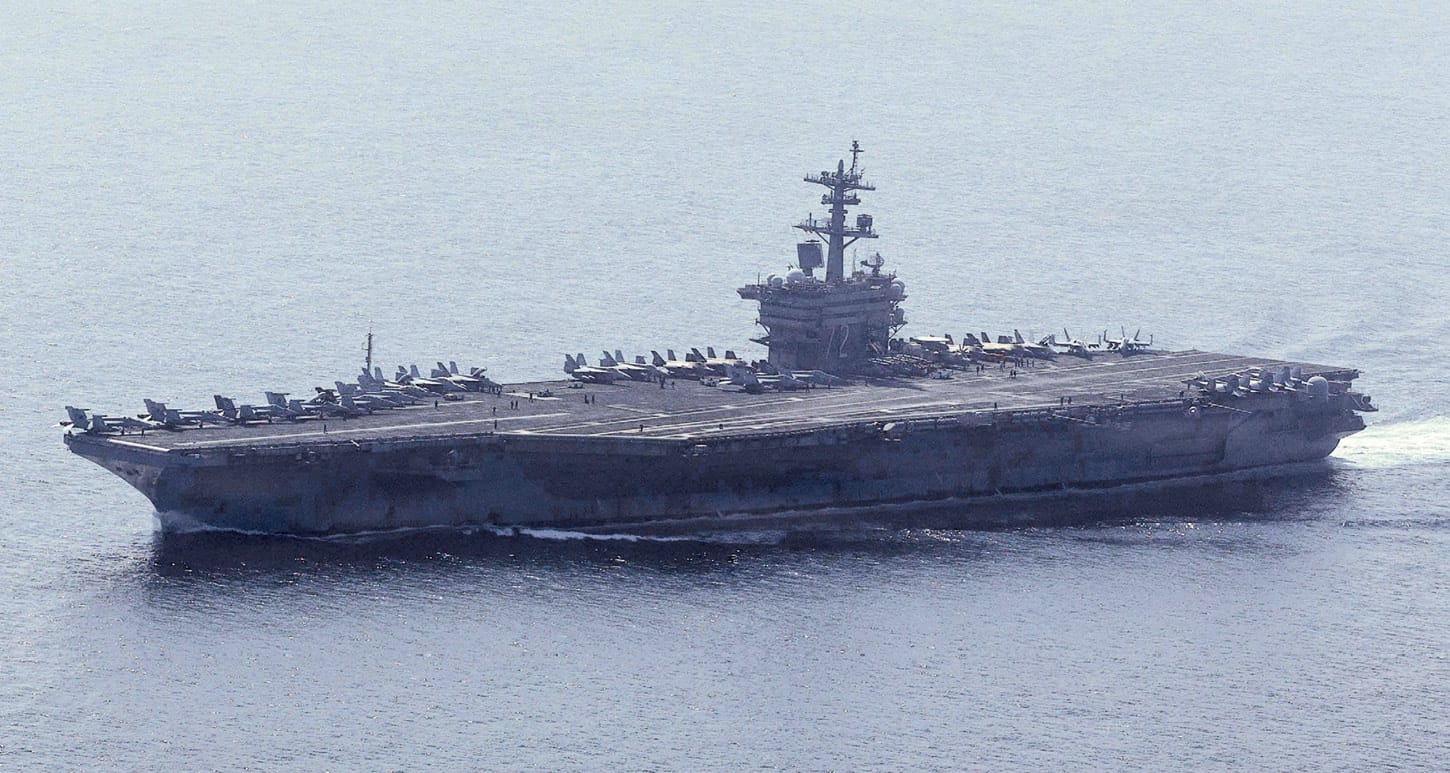
Zepp-LaRouche: It’s very hard to say. All the participants in the Geneva discussions carefully reported some productive outcome without going into any details or saying a lot about it. I think on Iran, it’s very iffy, because, on the one side, you have now the second U.S. aircraft carrier in the region. You have an enormous armada, as [U.S. President Donald] Trump already had mentioned a while ago, ready to go. But on the other side, Iran has been reinforced with defensive systems—I believe by Russia and maybe also China. The Iranian government basically said that if there is an attack on Iran again, they will answer with a devastating blow against Israel and against the U.S. bases in the region. They will close the Strait of Hormuz. They even had a maneuver there for several hours, closing the Strait of Hormuz, which is the route through which 20% of the world’s oil supply goes. If they would close the Strait of Hormuz, it could cause a gigantic oil price crisis, triggering a collapse of the financial system.
The June [2025 U.S. and Israeli] strikes against Iran already showed that the Israeli defense is not as strong as they have pretended. So, we are sitting on a complete powder keg as long as this armada is still there in its current posture. And in the negotiations, it’s very clear: there is no proof that Iran is trying to develop a military nuclear program. They have the right for enrichment like every other country. They will for sure not give up their ballistic missiles, because that would basically make them defenseless. What makes the Iranian defense so credible is that they have these ICBMs which can reach targets very far away. So, I cannot see that Iran would give this up.
U.S. Economic Warfare Against Iran
And one has to see that the whole narrative about this conflict is so— I’m absolutely amazed how the Western media can be so absolutely in unison on the line that this was the terrible regime in Iran killing so many of its own citizens. If you look around on the internet, you have all these American analysts, [such as former CIA analysts Ray McGovern and Larry Johnson] from the VIPS [Veteran Intelligence Professionals for Sanity], Colonel (ret.) [Douglas] Macgregor, [U.S. Army], [former UN weapons inspector and U.S. Marine Corps intelligence officer] Scott Ritter—Alastair Crooke [former British diplomat and 30 year veteran of British Intelligence (MI6)]—many people who are all experienced analysts. And they all give the story that it was Scott Bessent, the U.S. Treasury Secretary, who said in a Senate hearing that it was the U.S. economic statecraft which caused this uprising. I mean, he had the nerve to call this statecraft.
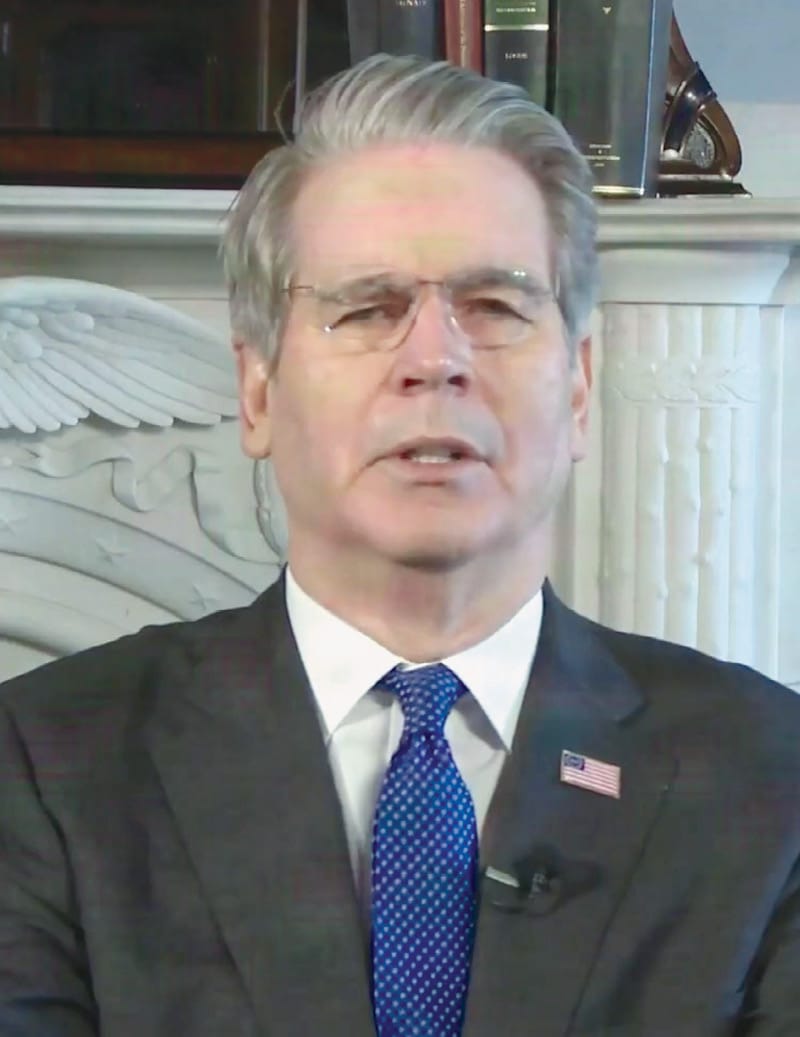
What happened was that the United States basically caused a run on the Iranian banks [late in 2025—ed.]. Then the Iranian government had to put in money to prevent a collapse; that led to inflation. And that naturally was a hardship for the Iranian population, which has already been under the sanctions regime for a long time, making life very hard. That was just too much, so people went to the streets. The Iranian government officials said, we started to talk to the demonstrators to assure them that we would remedy the situation. And then the foreign-supplied agents came and caused a lot of terrorism and killing. But as [former U.S. Secretary of State Mike] Pompeo said in a tweet, “every demonstrator had a Mossad agent by his side.” So, you have the official statements by Pompeo, you have the statements by Scott Bessent saying this was economic statecraft, where the United States would attempt regime change without using a bullet, by simply applying these methods of economic warfare.
Now, these are all things one can find out, not by secret sources, but just reading the official statements you can access everywhere. But nevertheless, the Western narrative is trying to portray a completely different picture. And I think people really have to learn how to look at these things; not to fall for a narrative where the end result can only be World War III.
Schlanger: I have a two-part question for you from viewers in the United Kingdom. They’re talking about the continuing flow of documents from the so-called Epstein files. One writes, “Aside from opening a window on the depravity and outright evil of those identified as the Epstein class, what have you found to be most significant in what’s been released thus far?” The second question is actually from numerous people; I’ve received several emails and messages from viewers who want to know where you think the situation in the United Kingdom is heading. Will the revelations regarding Lord Peter Mandelson bring down the Starmer regime? And is the monarchy itself threatened by what’s coming out?
Zepp-LaRouche: The most promising element of this Epstein-class scandal, as it is now correctly called—because the Epstein class is this incredibly big network of billionaires, millionaires, multi-billionaires, multi-millionaires, who are obviously joined in crime: that is, on the one side, committing crimes against children, young women, girls, who knows what else; and at the same time, being privy to money-making methods which may not be all so kosher in the first place.
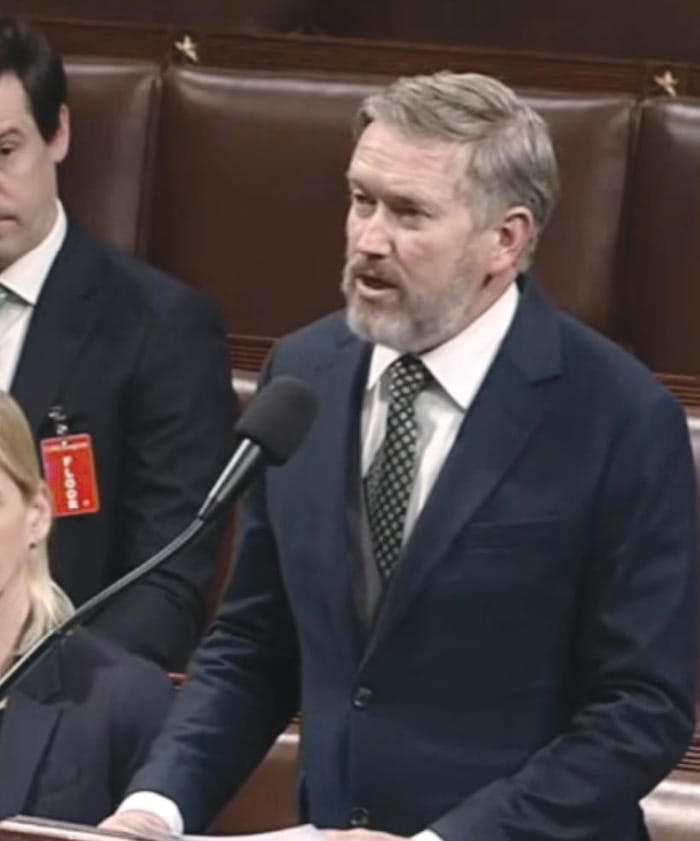
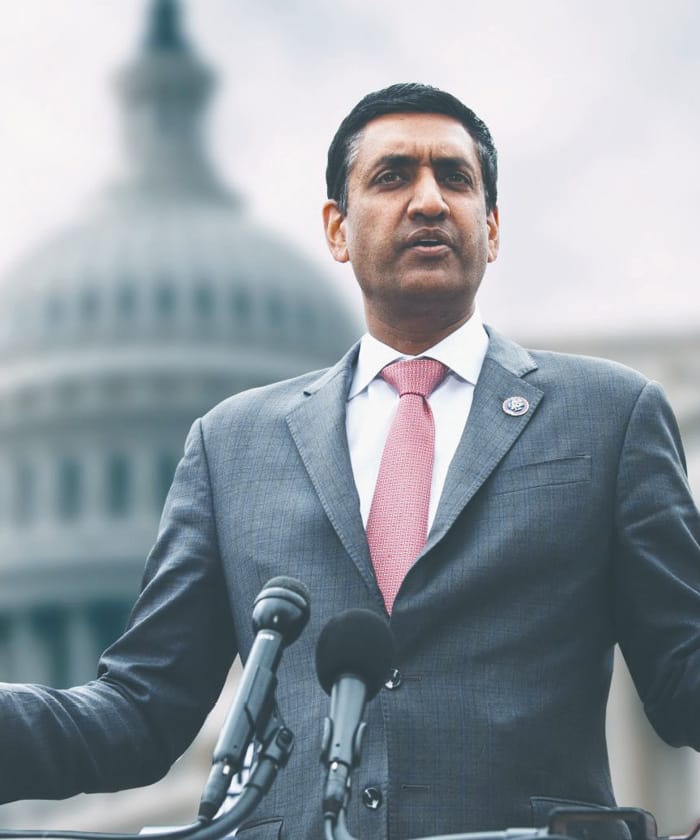
And I think the most promising thing about it is that there seem to be now several Congressmen who are seriously trying to force the publication of unredacted files, maybe as many as six million. Thomas Massie is one of them, Ro Khanna is another one, but there are now some others—and they are giving those people in Congress who are still obviously involved in the cover-up a hard time. [Attorney General] Pam Bondi will come to the Congress to testify, and some others will be forced to testify.
So, this is a huge job, obviously, because the cover-up clearly occurred during the Obama administration, during the Biden administration, during the first Trump administration, and even in the first year of the second Trump administration. But now, basically, the whole thing has developed a dynamic where I think it cannot be pushed under the rug any longer, and it is quite amazing.
A Disgusting Image of Man
I watched several YouTube videos where different people were discussing different aspects, and I found one in particular interesting, from Prof. Adam Tooze, who is an economics professor, I believe, from Columbia University. He made a very insightful comment. He said he personally knows a lot of these people, and what this whole thing reveals is a mindset that these powerful men would sort of en passant, as a not very important thing, molest and rape young women who had no power because they came from poor backgrounds; working-class backgrounds. They were obviously completely bamboozled, being pulled into this crowd, it appears, by models like Naomi Campbell—or [rather] her picture was used, and they would say, if you come here, you can have a modeling career like hers.
So, they entrap these young women with really disgusting means, and then use them like toilet paper, to throw them away afterwards, and then proceed to do their IMF business, their coups, their military operations in Gaza and elsewhere. So, I thought this characterization by Prof. Tooze gives you a picture of what cynicism and what an absolutely disgusting image of man these men have. You know, I wouldn’t even call them beasts, because I don’t know of any beast that is as disgusting as these people. One has to apologize to the animal class, because none of them would ever do a thing as degraded and sordid as these people.
So, I think that this, in my view, will not go away. There will be an attempt to cover it up, but one should remember that we are living in the age of the internet. People can watch these things around the globe, and the image of that class—not only those who were culprits, but also those parts of the establishment that did not investigate it for several decades—is tainted, in my view, beyond repair.
Schlanger: And on the question of Starmer and the monarchy, do you think this is a credible threat to them?
Zepp-LaRouche: Yeah, it seems like it, because it now turns out that not only [the former Prince] Andrew [Mountbatten-Windsor] was involved, but other members of the royals are sort of implicated. And what this raises, naturally, is the appropriateness of even having a monarchy in the 21st Century. Why would anybody believe that some people are born superior to others; that they have sort of blue blood, where others have red blood? And one should always remember the letters of Joseph de Maistre, his letters to a Russian prince, where he described why monarchs are different, why the monarchy is good and all the other people are evil, and that’s why you need a strong state. You have to keep the population in fear, so that the evilness of the population is suppressed; which is the same idea of Thomas Hobbes and John Locke; the idea that you need a Leviathan to keep the population down, a repressive apparatus.
All these ideas are not ancient ideas of the 17th or 18th Century. But if you look at the present policies of ICE [U.S. Immigration and Customs Enforcement] in the United States, for example, of certain repressive mechanisms even in the EU, one can see that these are policy formulas which have not lost their actuality. So, I can imagine that in Great Britain, people start to ask themselves, is it really worth it to keep a monarchy which brings no benefit to the people, but is obviously a tool of imperialism? And one should not forget that the unipolar world conception as it emerged after the end of the Cold War was based on the special relationship between the British and the Americans, using the model of the British Empire as the basis to run the world on a unipolar basis. So, these are all conceptions which I think will be looked at very critically and may lead to a change even in Great Britain. Maybe not tomorrow, but it has an erosive quality to it for sure.
Schlanger: Now we have something from an activist in Hamburg, who asks, “Is anyone going to stand up to stop the deployment on German soil by the United States of nuclear-capable long-range missiles scheduled for this July?” He writes, “I know this first came up under [U.S. President Joe] Biden. Do you know if Trump supports this? To me, this is an example of state-assisted suicide.”
Zepp-LaRouche: I fully agree. Once these missiles are stationed, it will make Germany a prime target. If anything goes wrong, Germany will be annihilated—and several Russians have basically stated that. There has been no public discussion about this in Germany, which shows you the total control, not only of the mass media. We should not forget that there’s all this talk about the U.S. lessening its presence or its influence in Europe. Germany has 40 U.S. military bases. That means we are still a completely occupied country. It is an absolute scandal that ex-Chancellor [Olaf] Scholz agreed to the stationing of these missiles without any discussion in the parliament—in the Bundestag—without any discussion with the public. It is really, unfortunately, due to the peace movement not being unified, that this can go through.
I think the German peace movement is an utter failure, because it’s not organized to stop this. The French have a completely different process. Right now in France, the so-called sovereignists—these are all groups which have different leaderships and maybe even different philosophies, but they all believe in the sovereignty of France in the tradition of de Gaulle in some form—they are uniting right now. I don’t see anything like that in Germany, and that is why we are so incredibly vulnerable to these dangers. Anybody who thinks about it should get on the street and alarm all his friends and neighbors to try to put pressure on the government to reverse this.

Schlanger: We have a similar question from a Japanese contact, who asks, “Did the Japanese voters know that when they cast a vote for [Prime Minister] Sanae Takaichi, that she favors ending the ban on nuclear weapons to be deployed in Japan?”
Zepp-LaRouche: I don’t know if they knew. They should know better, because I think what she is doing is a revival of Japanese militarism, which brought a lot of hardship over Japan in the Second World War. And in a certain sense she is in line with Trump’s strategy for the Western Hemisphere. Because his strategy for the Western Hemisphere obviously includes Latin America, and Trump is fully supporting the perspective of [imposed] dollarization. He wants to force basically all Latin American countries to accept the dollar as their currency. He will have a meeting with seven top leaders of Latin America in the next several weeks, and obviously they [Trump administration—ed.] want to drive the Chinese out of Latin America, out of the Chancay deep water port in Peru. But part of that Western strategy is the dominance in the Pacific, and there the new Prime Minister, Takaichi in Japan fits in completely—and obviously it’s part of a preparation for a world war.
Schlanger: One final question. There were several emails that expressed outrage going back to Rubio at Munich, at Rubio citing the Beatles and the Rolling Stones as part of the shared Classical cultural heritage the United States received from Europe. One of them writes, “I was particularly angry at him for including the British rock bands in the same category as Beethoven.” Your thoughts on this?
Zepp-LaRouche: I don’t know if Rubio wrote the speech himself. If he did, then one can attest to his extremely shallow knowledge of the classics, because for anybody to put two opposites into one category proves you have no knowledge at all of what Classical culture means. If he did not write the speech himself, he should fire his speech writers.
Schlanger: Well, I don’t think Rubio is trying to practice the Coincidence of Opposites with that.
Helga, can you tell us what will be discussed at the International Peace Coalition meeting this Friday?
Zepp-LaRouche: We will discuss, for sure, the ongoing preparations for our big March 2 conference. You remember that on Jan. 12 we had an online conference which was very significant, because it brought together leading individuals from South Africa, China, Russia, the United States, and Europe with the idea that we need a new security and development architecture which must be inclusive. If there is any lesson to be learned from the Peace of Westphalia and the Versailles Treaty as two opposites—one leading to peace, the other leading to the next war—we have to learn from these experiences that you have to have a unified security; not a division where some parts of the world are cut out. Given the condition of the establishments—I wouldn’t call them elites—we definitely need state citizens in every country to uphold an image of man worthy of the dignity and beauty of the human species. For that, we need patriots who are at the same time world citizens.
So, that will be a big part of the discussion, because the organizing for this conference on March 2 is in full swing; we are reaching out to many more institutions and people. So that will be, for sure, a big topic. And we will naturally review what the Geneva discussions resulted in, and what the general condition is of the new plan for this unipolar world. It’s important that people understand that this is not a split between the United States and Europe; it’s a difference in emphasis. It would be quite foolish to think that something fundamental has changed, because they are united in their neocolonial outlook.