

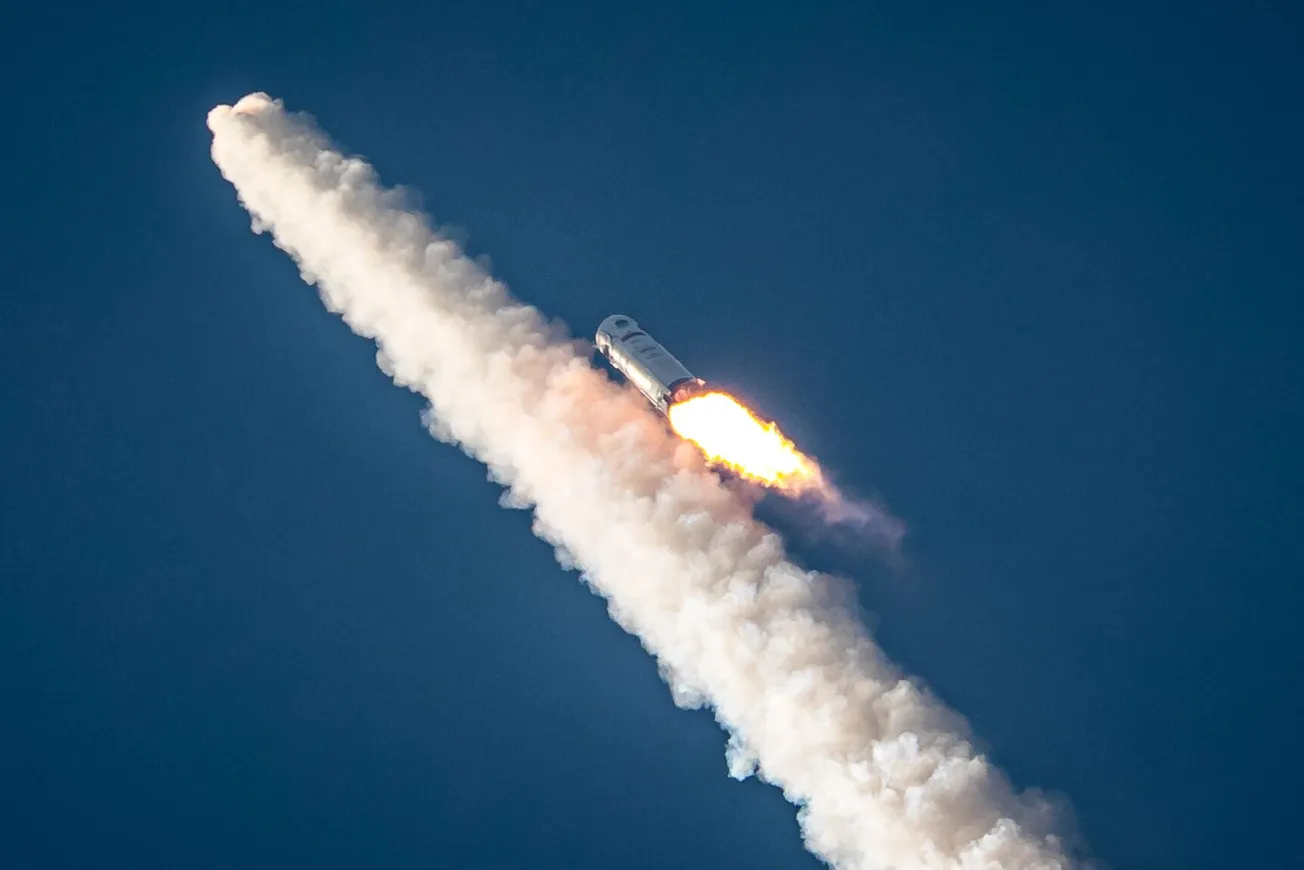
[China on February 11 tested its Long March-10 rocket]( https://www.spacechina.com/n25/n2014789/n2014804/c4543603/content.html), which is designed to take men to the Moon, and its Mengzhou return capsule. The tests involved a low-altitude demonstration and verification of the Long-March-10 and a maximum dynamic pressure escape flight test of the Mengzhou capsule. The test featured many firsts, including a new type of rocket, a new type of spacecraft, a new launch pad, and a new mission for the sea recovery of the rocket and spacecraft. At 11:00 am the rocket ignited and lifted off, reaching the spacecraft’s maximum dynamic pressure escape conditions. The spacecraft received the escape command from the rocket and successfully separated and escaped. The rocket’s first stage and the spacecraft’s return capsule were safely splashed down in the designated sea area according to the established procedures.
It should also be noted that sea rescue is something new for the Chinese space program, since their return vehicles from the Tiangong space station otherwise land in the desert. According to the China Aerospace Science and Technology Corporation (CASC), the test successfully verified the functional performance of the rocket’s first-stage ascent and recovery phases, as well as the maximum dynamic pressure escape and recovery of the spacecraft. It also verified the compatibility of the relevant interfaces of various engineering systems, accumulating valuable flight data and engineering experience for subsequent manned lunar exploration missions.Feb. 11, 2026 (EIRNS)—[China on February 11 tested its Long March-10 rocket]( https://www.spacechina.com/n25/n2014789/n2014804/c4543603/content.html), which is designed to take men to the Moon, and its Mengzhou return capsule. The tests involved a low-altitude demonstration and verification of the Long-March-10 and a maximum dynamic pressure escape flight test of the Mengzhou capsule. The test featured many firsts, including a new type of rocket, a new type of spacecraft, a new launch pad, and a new mission for the sea recovery of the rocket and spacecraft. At 11:00 am the rocket ignited and lifted off, reaching the spacecraft’s maximum dynamic pressure escape conditions. The spacecraft received the escape command from the rocket and successfully separated and escaped. The rocket’s first stage and the spacecraft’s return capsule were safely splashed down in the designated sea area according to the established procedures.