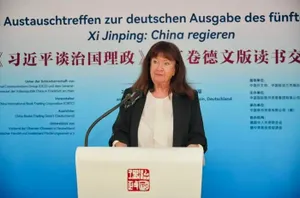
March 29—“This is really the moral test of humanity,” Helga Zepp-LaRouche warned in her webcast of March 25. “Can we, in the face of the danger of a crisis which potentially can lead to World War III, can we change course before it is too late?”
The urgency of her remarks was echoed in a letter issued by an Argentina-based policy group, which sent their statement along with Zepp-LaRouche’s recent open letter to Pope Leo XIV to all of the Catholic Bishops in Argentina. The group’s letter concludes by calling on people of the world to take action and “say with one voice: No to war in the Persian Gulf. Yes to life, sovereignty, and peace…. In solidarity with all the voices of humanity calling out for reason: Let the escalation of war cease; let diplomacy and the will of the people prevail!”
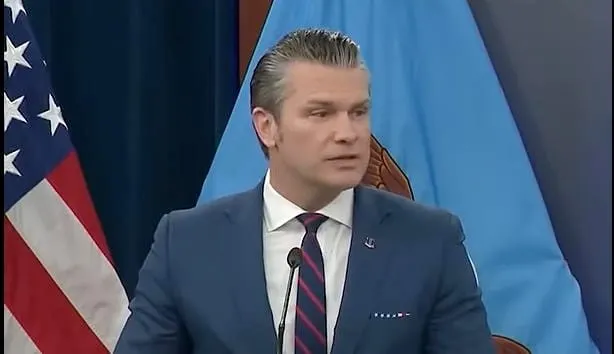
This issue of diplomacy—which, in the age of nuclear weapons, must be the pathway to solve conflicts—is of the utmost urgency to all sane nations and leaders. Whereas lunkheaded beastman “U.S. Secretary of War” Pete Hegseth declared at an Oval Office press conference on Wednesday, March 25, “we negotiate with bombs,” more sane government officials around the world have been working to create the possibility of an early end to the conflict. Russian Foreign Minister Sergey Lavrov is one such example, who has been in constant contact with his counterparts throughout the region. During remarks delivered March 24, Lavrov reiterated Russia’s proposal for a Concept for Collective Security in the Persian Gulf.
Zepp-LaRouche stressed the importance of finding a pathway forward that breaks from the logic of geopolitics and might-makes-right lawlessness: “If you would give up on the possibility of diplomacy and negotiation, you could say goodbye to the entire human species,” she warned. “If [the Iran] conflict continues in any way, it may lead to a complete depression of the world economy. In the worst case, if the threats of bombing each other’s nuclear facilities [happens] … you may have massive radiation fallout in the region, and if this continues anymore, you may have the use of nuclear weapons leading to a global nuclear war…. We should tell people this is a moment to reflect and go back to diplomacy, go back to solving all conflicts through dialogue. Because otherwise, we are in the danger of ending civilization by being completely crazy and blowing the world up.”
Zepp-LaRouche’s warning is extremely timely. As of March 28, U.S.-Israeli strikes have hit the premises of Iran’s Bushehr Nuclear Power Plant three times since the conflict began. In another escalation, Israel began attacking Iranian steel factories, power plants, and nuclear facilities on March 27, despite U.S. President Donald Trump’s announced pause of strikes against these targets. All the while, the disastrous issue of deploying U.S. ground troops into the conflict still hangs ominously in the air. Claims of negotiations by the White House appear to be a cynical joke.
What is really required, if diplomatic efforts are to succeed, is a solution concept that creates a new potential, a way forward to the mutual benefit of all involved. Lyndon LaRouche’s proposal for the Oasis Plan, revived in the recent period by Helga Zepp-LaRouche, can serve as the concrete basis for win-win economic development that will not merely rebuild a region of the world that has suffered as a geopolitical playground for more than a century, but also allow it to serve as a developed, modern keystone among Asia, Africa, and Europe. The recent proposal by Oman’s Foreign Minister for a regional nuclear power development framework is a major step forward in this regard, and can become the basis for an extended Oasis Plan for the entirety of Southwest Asia.
“That approach, economic development, peace through development, that must be put on the table,” Zepp-LaRouche said. “And we are trying right now to say that is the voice of reason where all countries could participate in rebuilding this region…. Peace through development is the only way we can get out of this crisis.”