ANASTASIA BATTLE: Welcome, everyone. This is the International Peace Coalition. This is our 140th consecutive meeting. Thank you to the veterans of this process and welcome to newcomers. My name is Anastasia Battle. I will be your moderator, as well as Dennis Small and Dennis Speed.
I do like to remind people why we created this forum 140 weeks ago. It is to unite the international peace movement. Many people who have been in the peace movement for a long time know that it has been very difficult to bring together people of differing ideas and philosophies. But if we actually intend to defeat evil in the world and create a world of true peace, we have to connect all the people we can, and coordinate our activities. Whatever philosophy, religion, nation, culture you are from, if that is your mission, you are welcome here. We have a dialogue process to discuss our initiatives. Please take a moment to share this invitation with your organization, your friends, or your reasonable enemies.
We do have a line-up of excellent speakers from around the world to discuss a number of important topics, but to start us off, we have Helga Zepp-LaRouche, the founder of the Schiller Institute and the initiator of the International Peace Coalition. Please, go ahead Helga.
HELGA ZEPP-LAROUCHE: Hello to all of you. I think the world is in an extremely precarious situation because as of yesterday, the new START Treaty expired. There are contradictory reports about what is now going on, and whether there are negotiations between the United States and Russia or not. Axios was reporting from three unnamed sources that such discussions would take place, however President Trump had put on his Truth Social account that he was not in favor of picking up on the offer of President Putin to extend the new START Treaty by one year. He said why don’t we have our experts work on a completely new beautiful treaty; so it is very unclear. In any case, the overall situation obviously is that after half a century of the effort to have different kinds of arms control treaties, what we are seeing is more or less a breakdown of all such efforts and the whole international order. We had the infamous admission of Mark Carney at Davos that the rules-based order was a fraud from the beginning; that it was just a cover story to cover up for a double standard. We had the admission of President Trump in his interview with theNew York Times on January 7th that he does not need international law. We have an inconclusive situation in respect to all the different crisis spots like Ukraine. The situation around Iran remains one of extreme uncertainty. On the one side, President Trump has proudly declared that a big armada has been amassing in the Gulf region. Apparently there were forces in the Pentagon who were not so enthusiastic about that because they say it is overstretching the U.S. armed forces; especially the Navy, because some of these carriers should be in the Pacific according to the recent security doctrines. But now they are being sent to the Gulf, and that overstretches the situation. And the expectations of what would happen if there would be a new strike against Iran, that Iran would be in a position to deliver a much stronger counterstrike against not only U.S. forces in the region, but also against Israel with unforeseeable consequences. Then naturally we also have to note the fact that despite the ceasefire in Gaza, the genocide is absolutely continuing. Since the beginning of the “ceasefire,” more than 550 people in Gaza have been killed, and 1500 wounded. The overall living conditions in the winter are absolutely horrifying, as they are in Ukraine as well. So, the situation in the world remains one of absolute desperation and worry about where this all will end.
But I think the most important question is what will happen. You have Chancellor Merz, who is now touring the Gulf states, involved in major arms sales—as if that is something the world needs—in return for trying to diversify his buying of energy of various kinds. But that doesn’t help the German industry, because the German economy is in a freefall, a state of collapse. The German Association of Small and Medium Industries, just put out a letter to Merz, saying that while they had hoped that the enthusiasm of the new government of Merz would bring about a change, now they have to look on in horror as the German economy is completely collapsing. Also, we have the pending Damocles sword of a financial crash of systemic proportions, which was preceded by a mini crash if one can call it that, namely that some of the speculators decided to cause an artificial little crash of precious metals, so called, which collapsed by 11%; silver by 31%, other metals by similar amounts. This wiped out incredibly large amounts of assets. This is important because gold and silver are not just usual commodities; they are normally in the financial system what is supposed to be the guarantee against inflation, against speculation. When they become the object of massive speculation themselves, it shows you where we are. The Bitcoin market is collapsing as well. What is looming is a potential collapse of the entire financial system of more than $2.4 quadrillion in outstanding debt, which in this extreme moment of instability could trigger a chaotic, uncontrollable situation.
This is why the renewed efforts to reestablish international law which we have started to do with our EIR Emergency Roundtable on Jan. 12th, when we gathered important individuals from many different countries all over the world to say we have to fight to reestablish international law based on the UN Charter. The United Nations obviously needs reform, but we cannot replace it, because it’s the only forum in which all the nations of the world are represented. But we have to move on from that and urgently establish a new security and development architecture which must take into account the interests of every single country on the planet, or it will not work.
So the big question is, is humanity capable of giving itself a system of governance which prevents the annihilation of the human species, which would be the certain result if it ever comes to the use of nuclear weapons; that is the big issue. We will organize our initiative by trying to pull together an even larger conference on March 2nd; hopefully involving many top-level government officials, former government officials, think tanks, and universities to seriously discuss the option of a new security and development architecture, a new Global Governance system which is what is required to keep all of these regional conflicts from going out of control and bringing about the end of the world.
There is one big problem in our effort, and that is the recent ongoing, escalating revelations about the so-called Epstein files. The latest batch was 3.5 million documents involving thousands and thousands of individuals from most countries of the world. It brings forward something which has been characterized by Maria Zakharova, the spokeswoman of the Russian Foreign Ministry as a cesspool, a rat-infested corner, a swamp. So many people in top positions in governments and other leading positions have been involved in not only a pedophilia ring and rape and forced prostitution of minors and other women; but obviously this is all linked to dirty business deals, to likely money laundering, weapons smuggling. Obviously it involves a lot of the Anglo-American control of that empire. The recent effort was to say, oh no, this is all Russia, and naturally Putin was involved. This is all ridiculous, because the only Russians who have popped up by name were Khodorkovsky and Ponomarev, and they are people who have fled Russia and were part of the oligarchical faction who were trying to topple Putin. In any case, with this whole swamp which has emerged, it reminds one very much of what happened in Italy with the Operation Clean Hands; where a system of known corruption which dominated the Italian party system in the entire postwar period, the so-called “amici de amici” way of doing things, the Mafia involvement, the corruption, nepotism, all of this was part of how the Italian party system functioned. Then at a certain point, the secret services decided they would blow it all up to totally dismantle the party structure and put in a new party system with new people. One cannot avoid the idea that something like that—which by the way was attempted in Brazil against Lula, and others—one cannot avoid the thought that there may be something like that behind this Epstein operation. So, we should really see if this is going to lead to a real renewal of the system, a clean-out of these practices, or is it just another restructuring for keeping control like the statement by Mark Carney in Davos about the so-called rules-based order being a fraud, where he is now trying to replace it with some other geopolitical arrangement.
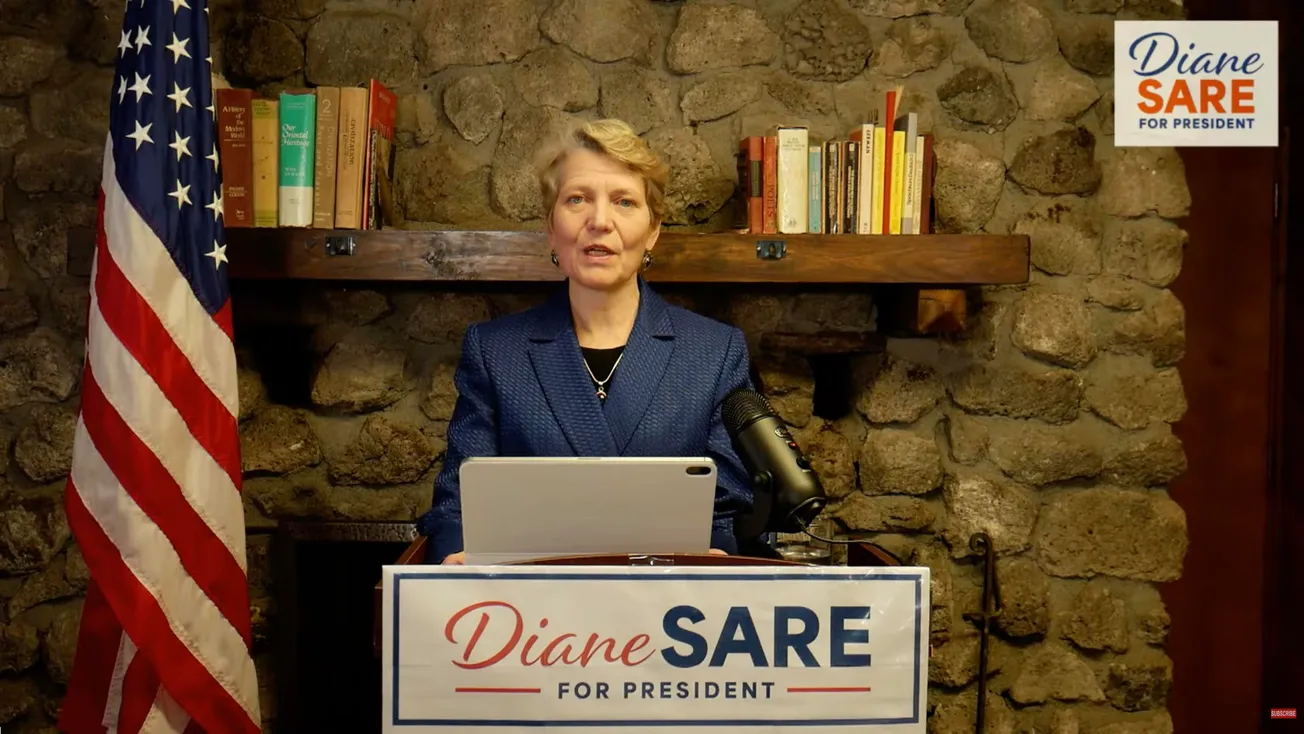
I think we need something much more fundamental; we need a true cultural renaissance. We need to go back to the values where man is not regarded as an animal which has to be controlled by some Leviathan, some dictatorship because man is evil by nature. We have to create a renaissance where we connect the best traditions of each culture with a positive perspective of the future. If we do not do that—especially in the West, where that has been absent; the Asian countries have been doing that by evoking the 5,000 years or more of cultural continuity with an optimistic perspective for the future. In the West there has been only cover-up and pragmatism; and therefore, we are still in the incredible cultural crisis we are facing today. I think maybe we should add to the security and development architecture, a cultural architecture. Because unless we go back to the best traditions of the American Revolution which now has its 250th anniversary and which unfortunately has been forgotten by most Americans living today. And in Europe likewise, we have to go back to the Italian Renaissance, the German Classical period, and the same in other cultures in Africa, Latin America, and Asia, to bring back the best traditions. If we do not have such a cultural renewal, I don’t think we will mobilize the moral forces to get mankind into a better era. That’s what I wanted to say in the beginning, and now let’s hear from other speakers, especially Diane Sare.
Remarks during the Discussion:
We had in Germany a very interesting discussion following the briefing about the Epstein affair. Many of our supporters reacted to this Tenth Principle of my Ten Principles, where I claim man is good by nature, and that all evil is the result of a lack of development and therefore the good news is that it can be overcome by development. They said, “But does that not prove that this principle is wrong; that man is evil? Look at these thousands and thousands of elites who are so degenerate.” But it did not resolve the question in the minds of the people who were discussing this. But the new thing about it is that for the first time, people got out of their shell-shocked attitude and said, no, this is a life and death issue. Where normally people are small; they think these powerful people do whatever they want and there is nothing you can do about it. I think this has sort of catapulted to the top of the agenda the issue of the nature of man. The initiative of Jan. 12th that we have to create a movement of world citizens, which means citizens from all over the world who will take responsibility for the outcome of the destiny of their nation and humanity as a whole. This is an idea whose time has come, in my view, where people grow up and become adults and make America a republic again. A republic is not just the President, a republic is the people. People have to become state citizens. If we do that worldwide and catalyze … out of this discussion came the idea that we have to establish locals all over the place in the United States, but also in European and other countries, where people get together and say, “We want to have a renaissance; we do not agree with this anymore.” We could turn this into a complete opposite; this could be the beginning of a world renaissance where people shrug off oligarchism, because that’s what this is all about….
There is such a thing as free will. Everybody can decide to become a better human being, and you can decide to let the pig out, so to speak. That’s the beauty of the universe, because if we did not have free will, we would not be creative. We would not be in the living image of the Creator; imago viva Dei, the living image of God, as Cusa calls it. So, I think this idea of Leibniz that we are living in the best of all possible worlds implies the idea that every evil has the capacity to generate an even greater good, if we decide to do it. So, I think it’s a very interesting moment in history, where the profound ideas about this can really become a replacement for the non-debate which took place for the last several decades in the public discourse.
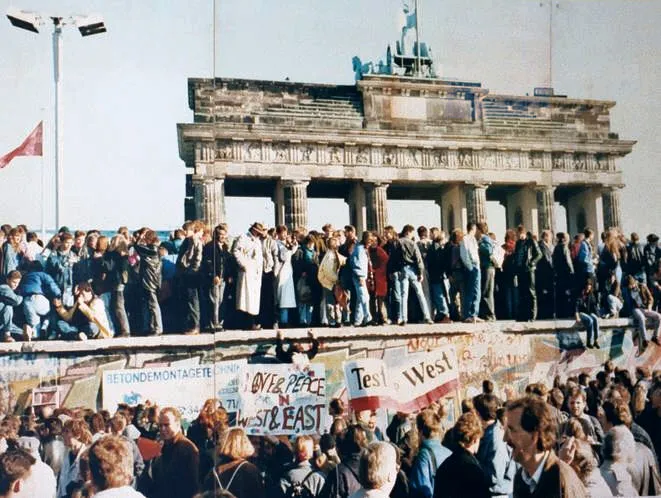
[re AI software being used in intelligence gathering designed by Ghislaine Maxwell’s sister] What this also brings up is what is wrong with the entire system. Very early on, I observed how things were organized, and I came to the conclusion that you do not make a real career in this system if you cannot prove that you have at least two corpses in your closet. Only then are you reliable. That was emphatically confirmed to me, especially in 1990, when I was travelling in several European countries with the idea that there should be a Productive Triangle; this was the predecessor to the Eurasian Land-Bridge. Lyn had anticipated that the Wall would come down and Germany would be unified, and had proposed the idea of connecting the region between Paris, Berlin, and Vienna, with a territory the size of Japan, to expand that highly industrialized development area to the East to Warsaw, Kyiv, Moscow, the Balkans. In any case, we had a plan for what to do at the moment when the COMECON went bankrupt. So, I took this program of the so-called “Productive Triangle” and travelled through many countries. Again and again, people said, “No, what you’re saying is no good, because you need to have corruption.” I said, “No, we want to get rid of corruption.” They said, “No, corruption is extremely important, because only if you have corrupt people, can you rely on them. If there are people who are refusing to be corrupt, they can do anything they want to, and you have no control over them.”
I think if you look at how the political structure is organized, you see that to get a post in the party system in Europe, or in the United States to get a position as a pundit, you need to prove that you are corrupt. That you take this money, and therefore you are part of the system. If you say things which are other than what is the established code of behavior in that particular club, they do not let you in. So, the whole system is based on exactly this kind of corruption. What we see now with the Epstein case is simply that the gutter of the whole system is coming out into the open.
[later in the discussion] I want to thank you, because you poured in so many rich points that I feel tempted to answer all of them, which I think would detonate the framework of this program. I’m very happy you mentioned the Chinese contribution; I also have heard Chinese singers singing beautiful German Classical songs. That is really the dialogue of cultures which is absolutely needed.
I would like to raise something which I don’t think we can discuss fully, but the big discussion right now until very recently was the so-called “democracies vs. the autocracies vs. the dictatorships.” Then if you look at what the characteristics were of those so-called dictatorships, they would refuse the export of liberal values to their countries. They rejected it because they defend their own traditions which are not necessarily liberal. They are Chinese, African, Indian, Persian, all kinds of different traditions. They reject woke-ism. You can say that it’s the right of the Western countries to choose their own system, and if they choose liberal values then that’s their right as well. But, could one not say that once you leave the high standard of the Renaissance, of Classical culture, of humanism—and the word has a different meaning in Europe than in English, and I want to point to that. In Europe, humanism means the highest ideal of mankind, not necessarily some secular idea. In any case, is it not that the so-called introduction of liberal values has been the road to evil? Is it not that once you leave the high standard of the good, the truthful, beautiful, and moral; that once you leave that and you replace it with Romantic ideas of the interesting, more interesting, that you go step by step down the long road to the present complete lack of any moral standard? What is today the whole woke culture has been—woke-ism in the 1930s meant being aware of the plight of the black people in America. But it has undergone a tremendous transformation of meaning, and woke-ism today means the acceptance of all the latest excesses of the liberal value chain up to the point where everything is allowed, everything goes. Is it not that we in the West have to really start with a very critical review of what these liberal values have led to? The road to Hell is made up of many small steps, and you can go from one level of so-called “freedom”—which is not really freedom, but a form of anarchy—to the next level, and the next level to the present time. You can say a lot about the LGBTQ, but you can also say that from the standpoint of the traditional countries, these are sins. Is it not high time that we start to investigate the legitimacy of the notions associated with the Western liberal system as something which may have been a complete illusion? I would like to pose that as a question and food for thought.
[re Q from Alberto Vizcarra re descent of culture] I think that Schiller tried to address the downfall of moral standards in the Aesthetic Letters. He said, when you have a situation in which the governments are degenerate and the masses are immoral and brutal, where should the improvement come from? Then he gives an amazing answer, saying it can only come from beautiful Classical art, because it is with this idea of something which touches both the creative mind and the emotions through beauty, that you can elevate people out of their degenerate condition.
I think that is more true today than ever before. You have the governments, which are either degenerate or at least nowhere close to a Classical standard. I have never heard any of the top leaders of Europe or the European Commission for that matter, talk about the beauty of Classical music. They claim that the Ninth Symphony is the European anthem, but that is sort of a token thing; it does not mean they are promoting any culture. There is a need to have a grassroots movement of people who say they want to be world citizens. As Schiller said, there must not be a contradiction between patriotism and world citizenship. We really need to start to unearth the best traditions of every culture in order to reverse this terrible process. I think if enough people would get that idea, I think we could spark a Renaissance. I’m absolutely sure it could be done, because if it would involve a dialogue among all cultures, it could become a real liberation of mankind from these shackles of hedonism and egotism and all of these things. They are really again an absolute lack of development, and not the final product of mankind.
[re how to establish a system of laws to protect us from any potential evil in every human; is that possible, and how to do it] I think that a lot can be done by establishing principles in relations among peoples. Principles are not paragraphs; there is a big confusion about what a principle is and what a rule is. A principle is something which refers to an active idea in the physical universe; while a rule is something made by bureaucrats. The new security and development architecture must be grounded—probably will have a lot of rules; it will have legislation, it will have all kinds of such things. But I think more fundamentally, it has to be grounded on principles; that’s why I wrote the Ten Principles in such a way that only the seven first ones refer to programmatic changes which are necessary, while the last three are an attempt to think about principles which put the whole thing on a grounding so that the interpretation of a law or rule is anchored in something much more profound.
To take another idea, we have to aim to bring the politics and economics on the planet in increasing cohesion with the lawfulness of the universe. Now, that may sound like a strange idea, but I’m convinced that if we behave as human beings in accordance with this lawfulness, we will progress. And if we violate that lawfulness, the laws of the universe are not such that it strikes down every little thief who pickpockets his neighbor in the marketplace by cutting off his hand. It’s not like that. But if you violate the inherent lawfulness of the laws of the universe over a significant period of time, it comes back to bite you. It expresses itself in the fact that cultures that do that, go under. If you go to a museum, you can find many examples of cultures which did not make it because they obeyed an order which did not allow for their long-term survival.
I gave one example that when you try to gain energy from processes you find in the universe at large, like plasma from the Sun; you are trying to make that fusion energy. Obviously there is a correspondence between what you do in terms of science and economics, and the laws of the universe. Therefore, it does lead to progress. There are many such examples. We have to become much more aware of the physical composition of the universe, and take guidance—like the investigation of what life is; where does life appear? Is life a principle which exists only in the form of planet Earth? Where are traces of life on other planets? What does it mean? The whole idea of what our universe is all about; we have at least 2 trillion galaxies which we have not yet investigated at all. That leads in the direction of what Diane was saying. We have to really think about the universe in which we live, because otherwise we may not be one of those enduring species either.
I think these are all extremely fascinating questions; and once we start to occupy ourselves with those questions again, I think we will have the best motivation not to waste our lives with meaningless pleasure of the flesh. Once you start, as Nicholas of Cusa says, to taste the sweetness of truth, of real discovery, of real creativity, you will not start to go for the goose—even if it’s stuffed with beautiful knuddeln and other delicious things. You will like the sweetness of truth better than the stuffed goose.
[re Q on trans-humanism] I would first say that there is nothing in common between trans-humanism and the noösphere, because the way Vernadsky developed the idea of the noösphere is that the increase of creativity in the universe expressed in the form of scientific and technological discoveries is becoming more dense and more dominant over the biosphere as the evolution of the universe progresses. That does not mean such forms of connecting the brain with computers or any such thing. I think the idea of preserving the body beyond your natural death and then reviving it sometime in the future—these are, in my view, all extremely morbid ideas which have nothing to do with scientific progress in the area of medicine where you eventually conquer defeatable diseases and so forth. I think this is in a certain sense a perversion of what the idea of noösphere is supposed to be. I think it’s a morbid idea; it’s utterly morbid.
[re studying Schillerian approach to beauty more thoroughly] The answer is a whole-hearted “Yes, yes, yes!” The reason why I named the Schiller Institute the Schiller Institute, was because I do not know of any thinker—and that has not changed in the 42 years since the creation of the Schiller Institute—who has a more beautiful conception of man. That has everything to do with the aesthetic education concept; Schiller wrote a lot of his aesthetical writings in reaction to Kant. Kant, in the 1790s, was extremely popular, and many of Schiller’s friends would send him Kant’s works, and ask for his comments. So, Schiller got normally extremely upset and answered them with his own aesthetical writings. This is why certain scholars or students mistakenly think that Schiller is a Kantian, or that Schiller’s whole conception was a reflection of Kant.
It’s the opposite. Schiller rejected Kant because Kant, who is most famous for his categorical imperative, which is essentially that what you do not want to be done to you, do not do to others. Therefore, always behave in such a way that your behavior can be a guiding line in that way. Now, Schiller said that’s OK, because it’s better to have such a reign, so that if you have an evil impulse and if you follow that impulse, you would gallop away and do something absolutely horrible. Schiller says, OK, to prevent you from following such an impulse the categorical imperative may be a useful thing. But, he says, it’s absolutely not meant for us, the beautiful souls. Because we love freedom so much—and what he means by freedom is outer freedom, but especially inner freedom—that we do not even want to watch the procedure with which the Kantian forces himself to be moral. In other words, the Kantian moral person says, “I have to be moral, and therefore I suppress this evil impulse.” That is obviously done with force, because you will not suppress this evil impulse without force. Schiller says I reject that, because that is not the noble idea of inner freedom, where you do the good because it’s second nature. That is why he defines the idea of the beautiful soul as the person who can blindly follow his emotions, because the emotion will never tell him anything different than what reason commands. In order to do that, you have to educate your emotions on the level of reason; on the level of understanding, which is what you are describing. You have a contradiction; you can find many people who are completely rational in their job, they are good engineers or electricians or teachers; and they do their job well. Then they go home and stuff their face with too much bad food, drink too much, beat their spouse. But there is a division between the rational behavior in the profession and the piggish behavior in the private life. That is on the level of understanding.
But Schiller has this absolute demand that you can educate your emotions, being fully aware of them; because if you’re not aware of what they are, then you cannot educate them. You can use the exposure to great art to become more noble. Why is Classical art suited to this endeavor? When you are listening to a beautiful Classical composition, let’s say of Schubert or Beethoven or Verdi, Mozart, Bach, when you progress beyond the level where you just listen to it because it sounds nice, but you are trying to understand the composition; you are trying to understand polyphonic symphonic composition, or you are trying to understand how a double fugue in contrapuntal development actually functions; or you look at the German Lied as the Rosetta Stone which gives you access to the deeper understanding both of the poetry and the music. All of these things require that you at least for that moment of understanding, dive into the mental process of the artist or composer or poet or dramatist. In order to understand what he is doing, you have to absorb the principle which is enacted in that composition, poem, painting, architecture, whatever.
In that way, since the demand is that art is only art when it’s beautiful, you touch something which is both related to the emotions—because obviously beauty is an emotional relation—but it is not just emotion. Schiller also argues that there has to be a notion of beauty which is born out of reason, and which you can arrive at even if you do not have the practical experience of any beautiful object or person in reality. You can find that a person, an object of art in reality, corresponds and confirms the principles which were defined in this notion of reason.
I think this is very important, because you come to the idea of beauty not because you say in nature a flower or something is beautiful, and therefore you derive the idea out of that sensual experience. This would be at best the argument of Locke and the Enlightenment that you have to have the sensuous experience to form the idea. No, Schiller is the exact opposite. He said first is the idea born out of reason, and then there is something which corresponds to that idea in the realm of the senses. Once you study these matters, and increasingly occupy your mind with such beautiful creative developments, you can become more like that which is expressed in great pieces of art. I have told many singers and others who are beautiful human beings when they are performing art, and they are not so beautiful when they behave in between, I say, “Why don’t you sing all the time and reduce the interval when you’re not singing to an absolute minimum, and eventually you will become a beautiful soul simply by cleaning out your computer and throw out all the bad things?” This is sort of a joking way, but it is not completely joking, because it’s true. The more you do beautiful things, the more you have a chance to progress and become close to the idea of the beautiful soul.
I think that is a very scientific idea, and I think Schiller, if you study his aesthetic writings—there are many of them—and especially if you look at how he refutes Kant, it is extremely profitable. You can use it for everything in your whole life on a daily basis.
Closing Remarks:
I would like to ask everyone in this discussion who agrees with it to become active with us. I think the idea of forming a world movement of world citizens is a very appropriate idea. It can take many forms. It can take the form of creating a discussion group among your friends, colleagues, relatives, family, and friends in general. It can mean that you intervene in existing organizations and raise this issue as something which needs to become a reality. It can take the idea of engaging several large organizations in a dialogue of what the principles are of this new architecture. So, it can take different forms. I urge you, if you agree, that we should use the moment of catharsis, because that is in a certain sense what we are experiencing with the Epstein event, to help create new organizations for a cultural renaissance, a new security and development architecture based on a dialogue among the best traditions every civilization and nation has produced. That is, Confucianism in China; Tagore and the Indian Renaissance ideas; it means Platonism; it means the Italian Renaissance; it means many things which need to be discussed and communicated. It rejects all Dark Age symptoms of all kinds. I think everybody knows for their own culture what the progressive beautiful ideas are which brought society forward, and which ones were dragging it down.
The next step should be to take the package of the Jan. 12th event, which was the speeches of all panelists. We have this in English in EIR, I think it was a previous issue. All the speeches in English are in that copy of the EIR. And we have this week in German all the speeches in a newspaper associated with our movement called Neue Solidarität, where you will find all the speeches in German. This is very important, because the speakers were all unique contributions from China, from Russia, from South Africa, from the United States, from Guyana, from Switzerland. Each of these individuals had important ideas which all need to be worked on and reflected on. Also take the Declaration which was signed by the panelists, the press release about it, we have the 3-hour video and the shorter summary video of 40 minutes, which together means a very good package. You can take all of these items in one, and approach as many organizations and individuals as you can and tell them, be part of this idea to reestablish international law. Out of that, we are going to have a Zoom event on March 2nd, but hopefully much bigger and more panels than the Jan. 12th event. Hopefully we will have speakers who are experts on the matter of international law and the new security and development architecture. But hopefully we will also have one panel where think tanks are discussing the same topic with the idea that the working out of a new security and development architecture is actually a big job. If you look at the Peace of Westphalia, that took four years to be worked out. I hope it will not be four years, but I think it will take a lot of actual work by people of good will to put this into effect.
You need first to agree on principles like the fact that every peace order has to take into account the interests of the other; a very important principle which came out of the Peace of Westphalia. But then after you agree on those fundamental principles, you have to get into the nitty gritty of open questions like territorial disputes, historical questions, ethnic tensions, all of these things need to be addressed in great detail. But it only functions if you have established the principles first. If you try to start all the concrete problems first without the principles, you will not get anywhere. This is one of the reasons why many debates in the United Nations which try to focus on the political questions first, did not lead to satisfying results. They lacked the kind of epistemological basis which is the precondition for them to be resolved.
So, please join this effort. Get the information about the initiative around as much as you can. Contact us; we are willing to dialogue with you between the IPC meetings. We can discuss together how we can use this historic moment. I fully agree with Garland Nixon that the idea is not new; but this is the moment whose time has come. We absolutely must not let that go in vain.