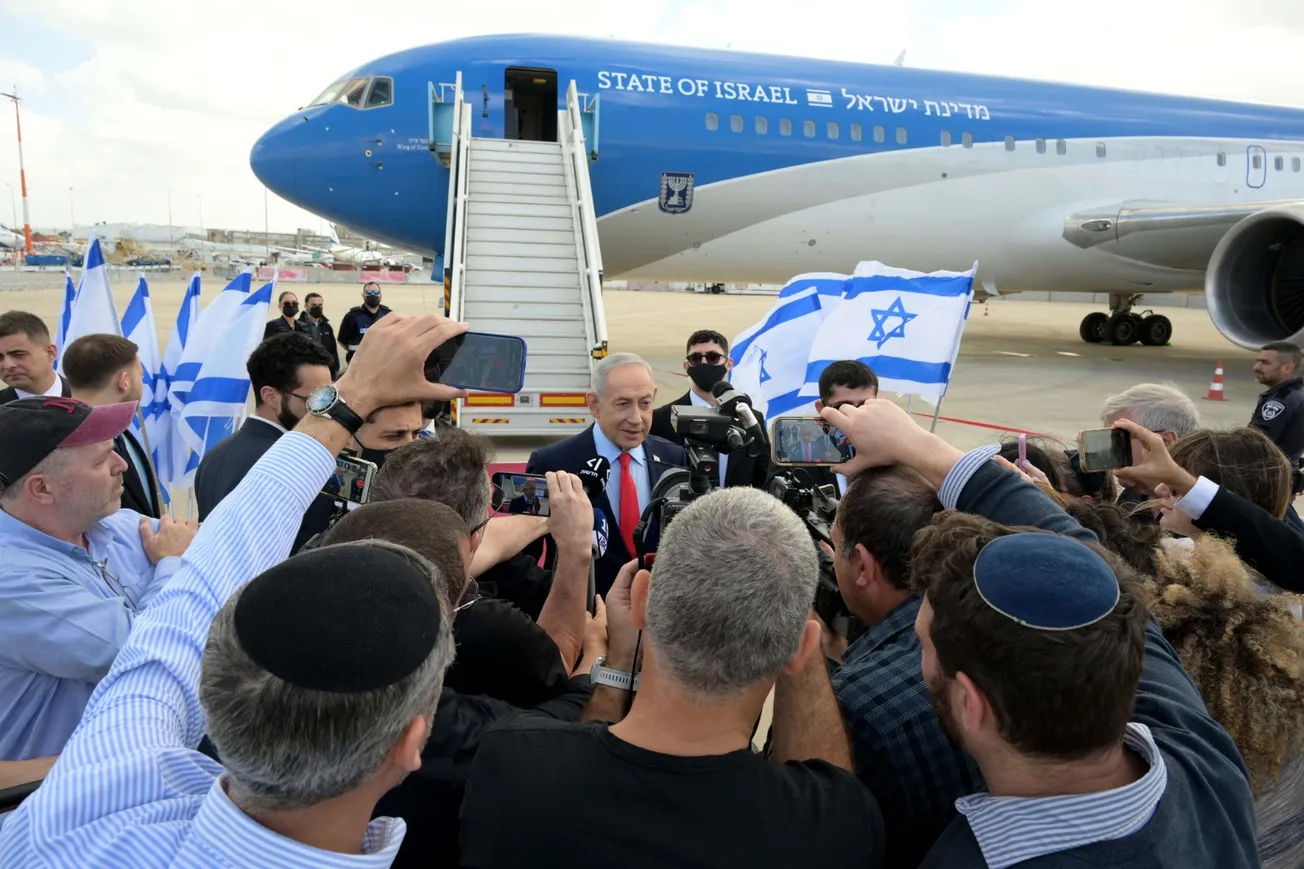
Israeli Prime Minister Benjamin Netanyahu departed for Washington on Feb. 10 for a meeting with U.S. President Donald Trump that had originally been scheduled for later this month but was moved up, reportedly over “unease” about the U.S.-Iran talks. Before boarding his plane, Netanyahu told reporters that he will “present to the President our approach around our principles on the negotiations.” He added that these principles are important not only for Israel but for every country around the world “that wants peace and security.”
An Israeli official told the Times of Israel shortly before the premier took off, that Netanyahu was making the trip “with the aim of influencing the negotiations with Iran.”
“Prime Minister Netanyahu believes that any agreement must not only prevent Iran from attempting to rearm itself with nuclear weapons and eliminate any possibility of uranium enrichment, but also restrict ballistic missiles and ensure the cessation of support and funding for terrorism by the Axis of Evil,” said the official.
The Jerusalem Post, citing sources, described the planned meeting as a “strategy shaping” session, “meaning that it will focus not only on the U.S.-Iran negotiations themselves but also on what could happen if the talks were to fail, including discussions of a potential U.S. military strike.”
Iranian Foreign Ministry Spokesman Esmaeil Baqaei advised the U.S. to make independent foreign policy decisions. One of Washington’s major problems was its compliance with the demands of the Zionist regime, Baqaei said, reported Tasnim News.
Referring to the nuclear issue, Baqaei said it was clear to everyone that the origin of portraying Iran’s peaceful nuclear program as an artificial crisis lay with the Zionist regime, which had continuously promoted the claim that Iran was seeking a nuclear bomb. The Israeli regime has shown itself to be a disruptive actor opposed to any diplomatic process, he added, stressing that it is the responsibility of U.S. officials to ensure that others do not make decisions for U.S. foreign policy.