The New START treaty—the last remaining nuclear arms agreement between the world’s two largest nuclear superpowers—has expired as of today. Russian President Putin’s offer to the United States to adhere to the treaty’s limitations for one year met with no official response from the U.S.—a non-answer answer. “Given the fact that the world is already in this incredible turmoil of realignment,” Schiller Institute founder Helga Zepp-LaRouche said in her Feb. 4 webcast, “complete breakdown of old assumptions like the rules-based order, this is just one additional element which makes the whole situation much more insecure.”
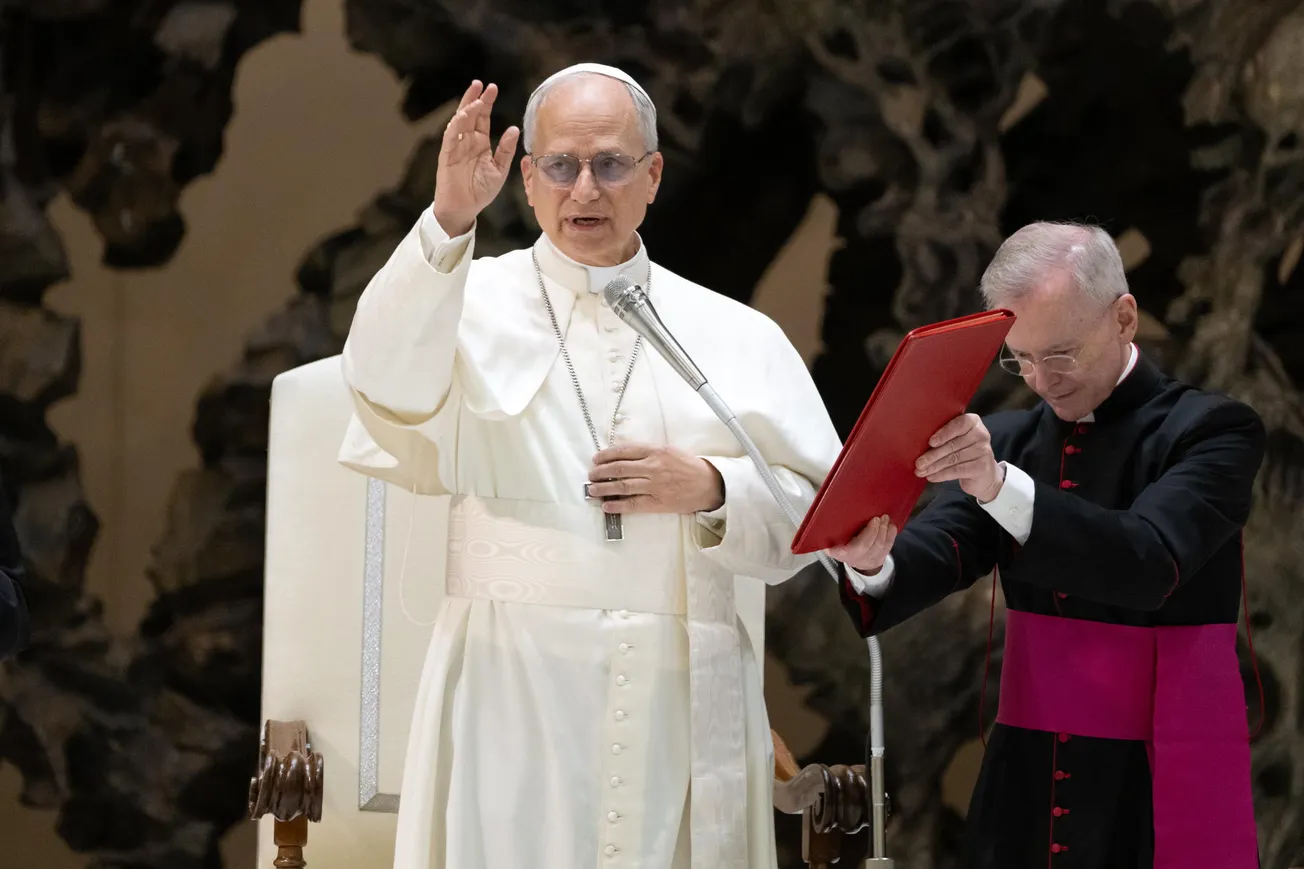
In his Feb. 4 General Audience, Pope Leo XIV also called attention to the danger of the situation. “I issue an urgent appeal that this instrument [New START] not be allowed to lapse without seeking to ensure a concrete and effective follow-up,” he said, calling for “everything possible be done to avert a new arms race that would further threaten peace among nations.”
It is in this increasingly volatile environment that on Wednesday, Presidents Putin of Russia and Xi Jinping of China met via teleconference for 90 minutes, with the importance of the Russia-China relationship for global stability and prosperity chief on the agenda. Not only did the leaders discuss the successes of their nations’ ongoing partnership for cultural, scientific, and economic progress, but also its importance for maintaining peace. “Regarding international affairs, the ties between Moscow and Beijing in foreign policy remain an important stabilizing factor amidst growing turbulence in the world,” Putin told his counterpart. “We are ready to continue the closest coordination on global and regional agendas, both bilaterally and within all the multilateral frameworks: the UN, BRICS, the Shanghai Cooperation Organization, and others, where the Russian-Chinese tandem plays an essential role.”
Later in the day, President Xi spoke with President Trump on the phone in what Trump described as “an excellent telephone conversation,… a long and thorough call, where many important subjects were discussed,” among which he named the war in Ukraine and the situation with Iran. “I believe that there will be many positive results achieved over the next three years of my Presidency having to do with President Xi, and the People’s Republic of China!” Trump wrote. Trump also confirmed that he would be visiting China in April. What effect that phone call will have on the immediate situation is uncertain, but, as Helga Zepp-LaRouche pointed out, it is in Trump’s own interest, as well as that of humanity, to orient in this direction: “I think if Trump wants to win the mid-term elections, he should learn from the Chinese and go back to the real American System of economy, and invest in and rebuild the American economy; and not waste all of that money on the military-industrial complex who just fill their pockets at the expense of the real economy.”
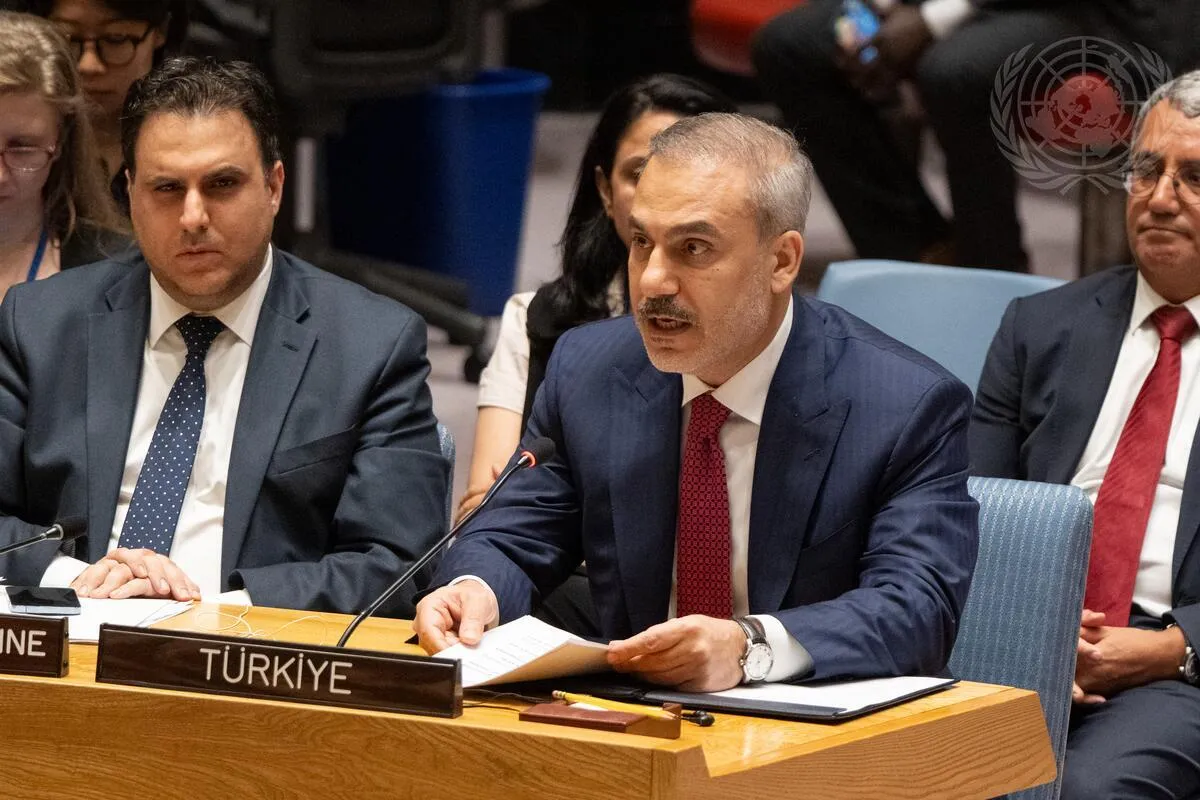
While these discussions between presidents were occurring, the first day of trilateral talks between Russia, Ukraine, and the U.S. was underway in Abu Dhabi, and tenuous negotiations over the conditions and location for a meeting on Friday between the U.S. and Iran continued. Such negotiations are fragile, however, and their outcomes uncertain, especially given the fact that those elites whose control over world affairs is evaporating along with their financial system seem to be determined to sabotage the peace process, even up to the point of nuclear World War III, rather than lose their geopolitical system.
“So, we are obviously sitting on a complete powder keg,” Zepp-LaRouche said, “and that’s why our intervention to return to international law, to establish a new security and development architecture which must take into account all those security concerns—of Ukraine, of Russia, of Iran, of Israel. In other words, there is no such thing as a divisible security; it can only be an indivisible security which takes into account the interests of all, or else it will not work….
“We have to have a movement of people who are patriots, but who are world citizens at the same time. According to the great German poet of freedom Friedrich Schiller, there is no contradiction between being a world citizen and a patriot as long as you put the interests of humanity as a whole in cohesion with your national interests; then there is no contradiction.”
Don’t wait for doomsday! Join that movement. Sign, circulate, and organize with the Schiller Institute’s Declaration of January 12 which calls for immediate action, first and foremost of which is the urgent convening of an international conference for a New International Security and Development Architecture.