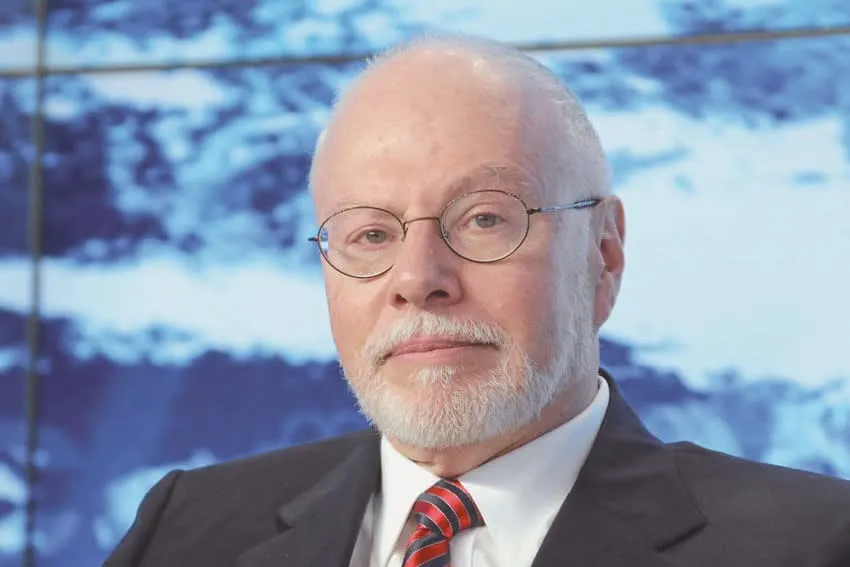
Feb. 4—New York billionaire Paul Singer is within striking distance of carrying out another act of piracy against yet another nation—this time Venezuela, which was militarily attacked, and whose President Nicolás Maduro was kidnapped, by the U.S. government on Jan. 3, 2026. Singer in the 1990s pioneered the “vulture fund” strategic attacks on once-developing nations, making a killing by buying up “distressed” sovereign debt at 10 cents on the dollar, and then suing to collect payment on the full, face value of the debt—plus interest! Today, Singer is poised to receive a multi-billion-dollar windfall from the President Donald Trump administration’s takeover of Venezuela and its national oil industry.
In late November 2025, Delaware Circuit Court Judge Leonard Stark awarded Singer’s Elliott Management firm ownership of CITGO Petroleum Co., the company wholly owned since 1990 by Venezuela’s state oil and gas company, Petróleos de Venezuela (PDVSA). CITGO currently owns and operates three crude oil refineries (in Texas, Louisiana and Illinois) with a combined refining capacity of 800,000 barrels per day; one of the largest networks of pipelines and terminals in the United States; over 4,000 independent retail gas stations; and three lubricant blending and packaging plants. All in all, it is the seventh-largest refining network in the U.S., according to Reuters.
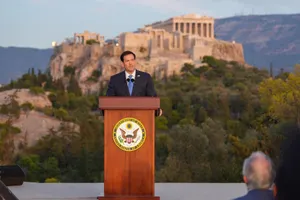
Singer’s circa $8 million in contributions backing Donald Trump’s 2024 election bid, multi-million-dollar contributions to Trump’s transition team, and even longer-time sponsorship of President Trump’s “Henry Kissinger,” Secretary of State and National Security Advisor Marco Rubio, are about to pay off.
Singer’s importance does not lie in his egregious personal greed, however. His greater role is as tactician and ideologue for the Anglo-American financiers in their drive to eradicate the existence of sovereign nation-states and natural law altogether. It is that role which requires that a spotlight be put on his influence on the Trump administration.
In this article, we focus on Singer’s infamous piracy raids against nations. While he applied the same strategies to bottom-feed and restructure countless major private sector companies, it is his attacks on nations that served as strategic bombing raids crafted to eradicate the concept of “sovereign immunity,” and with it, the sovereign nation state itself. Sovereign immunity is the centuries-old customary principle of international and U.S. law, that no nation or national property of one country can be sued in the domestic courts of another nation. As the International Court of Justice rightly argues, the procedural principle of sovereign immunity in international law derives from the fundamental principle of the sovereign equality of states.
The CITGO Grab
The last three decades of U.S. policy towards Venezuela have been a long, sordid story laying the groundwork for U.S. financial interests to seize back Venezuela’s oil industry, including CITGO, among other acts of international piracy. The principal instrument used has been economic sanctions, which began under President Barack Obama. The noose tightened in August 2017, when the first Trump administration issued an executive order which cut the Venezuelan government and PDVSA off from access to U.S. financial markets and prohibited PDVSA’s U.S. subsidiary, CITGO, from transferring any dividend earnings to PDVSA or the Venezuelan government. Starved of capital flows and payments, by November 2017 Venezuela was unable to service its debt, and was declared in default.

In January 2019, the Trump administration (with Mike Pompeo, John Bolton, and Elliott Abrams in the lead) decided the time had come for “regime change” in Venezuela. The United States declared Juan Guaidó, the opposition leader heading the Venezuelan National Assembly, to be the recognized (but unelected) “President” of Venezuela, seized all Venezuelan state monies deposited inside the United States, including those of PDVSA, and transferred them over to the non-existent “Guaidó government.” Since Americans were also prohibited from engaging in any transactions with PDVSA, CITGO could no longer import oil from Venezuela, its major supplier.
Britain was in on the operation, simultaneously seizing 31 tons of Venezuela’s gold reserves deposited in the City of London for the same “Guaidó government.”
The Guaidó gambit failed to bring about regime change, but it did succeed in strangling the Venezuelan economy and the Venezuelan people. That did not bother U.S. officials, but the protests of U.S. creditors of Venezuela that went unpaid under the sanctions, did. In July 2023, the Biden administration gave the green light for CITGO to be sold off at auction to satisfy, at least partially, some of those creditors.
A Billionaires’ Ball
Enter Singer. While busy bankrolling Donald Trump’s campaign and the Republican Party in the 2024 elections—Singer was the seventh-largest single donor in the 2024 elections, pouring in nearly $66.9 million, according to Open Secrets—Singer’s Elliott Management set up a Houston-based special purpose vehicle, Amber Energy, for the express purpose of running CITGO when it got its hands on it. Come auction time in 2025, Elliott placed a $5.9 billion bid for the company. Buttressing its bid with a $2.125 billion agreement to pay off some of CITGO’s largest bondholders, Elliott won the bid.
Court documents assessed CITGO’s value at $11-13 billion (double Elliott’s bid), according to Forbes—but that was before the Trump administration attacked Venezuela on January 3, 2026, kidnapped its President, Nicolás Maduro, and seized U.S. control over Venezuela’s oil and oil industry.
With Venezuelan heavy crude now being sold by the U.S. government, CITGO’s potential value could rise as high as $18 billion, some calculate, because CITGO’s three U.S. refineries had been tailored to handle Venezuela’s heavy crudes, which many refineries cannot. Indeed, according to a Jan. 28 report by Reuters, CITGO was able to purchase oil from Venezuela for the first time since the 2019 sanctions in the U.S. government’s first sale of Venezuelan crude since Jan. 3.
Elliott lined up a consortium of Wall Street big money behind its bid. Apollo Global Management, owned by fellow billionaire Trump-backer Marc Rowan, led the debt financing team; Oaktree Capital Management, the “private wealth” firm led by billionaires Howard Marks and Bruce Karsh; and two hedge funds, Silver Point Capital (run by two former Goldman Sachs Group partners), and Carronade Capital (headed by a former member of the Elliott Management team) were in on the deal also.
Two steps still remain for Singer’s sweetheart deal to be sealed. Judge Stark’s decision to award CITGO to Elliott’s Amber Energy has been appealed. (A group of creditors which had placed a higher bid, charge that the court had a conflict of interest, because the two firms advising the court in its decision had represented Elliott Management in multiple deals over decades, including New York international law firm, Weil, Gotshal and Manges.)
If the Elliott Management award is upheld by the appeals court, the only step left will be for the U.S. Treasury’s Office of Foreign Assets Control (OFAC), which enforces U.S. economic sanctions, to sign off on the sale of CITGO.
Whoever wins, however, none of the proceeds of the CITGO auction will go to Venezuela, only to Venezuela’s foreign creditors.
The Vulture Model
Usurers used to be loathed, along with the practice of usury itself. Today, they are fawned on as “high-yield investors,” managers of “alternative wealth” or of “private equity funds.” Even “activist hedge funds” are treated with respect, as are the growing ranks of the obscenely-rich billionaires aiming at becoming trillionaires.
The aggressive usury of the likes of Paul Singer, specializing in profiteering off bankrupting and picking over the carcass of once-developing nations, however, has earned them a more truthful title, that of “vulture funds.”
Singer’s vulture operation is the exact opposite of bankruptcy reorganization properly codified in U.S. law. In Chapter 11 bankruptcy, for example, the corporate debtor generally remains in possession of the physical assets of the company with its financial debts sequestered, so that the company can continue operating and producing while its debts are sorted out, their terms of payment perhaps extended, or written down or off altogether. But the company’s productive capacity is salvaged.
What Singer pioneered, is the strategy of buying up the debts of poorer nations held by banks or other creditors for next to nothing when they are in default or nearly so, and then suing in court for full payment of the face value of the bonds, plus interest, plus interest on overdue interest payments. Let that sink in: Singer’s firms, Elliott Management and Cayman Islands–based NML Capital Ltd, were not collecting on debts owed to them for any physical asset in which they had invested; they bought “distressed” debt of others for the purpose of suing for full payment.

As part of his strategy, Singer would refuse to participate with other creditors in any debt-restructuring agreement, where unpayable debts were written down or payments stretched out. When other creditors reached such agreements with the target government, he used that as added legal leverage to force the targeted government to pay him first and in full. Since the vast majority of these debts included cross-default clauses, if the government defaulted on the debt purchased by Singer, the rest of the country’s foreign debts would also be declared in default, forcing that nation into bankruptcy.

Singer’s 1995 and 1996 attacks on Panama and Peru set the precedents for the assaults against other African and South American nations which followed. Doing his dirty work in these cases was the law firm, Weil, Gotshal & Manges—the same firm which advised the Delaware court on behalf of Singer’s CITGO bid.
In the case of Panama, Elliott Management bought $28.7 million-worth of Panamanian sovereign bonds on the secondary market in 1995 for only $17.5 million—a 40% discount from face value. When Panama then worked out a restructuring agreement with the vast majority of its creditors, Elliot filed a lawsuit in a New York district court, seeking payment of the full $28.7 million—plus interest, interest-on-interest, and fees. By the time Elliott won all his appeals in 2000, Panama was forced to pay Elliott over $57 million—more than three times Elliott’s original investment!—plus another $14 million for other creditors.
This was “a groundbreaking moment in the modern history of finance,” as Foreign Policy magazine wrote in August of 2014. “Elliott broke with long-standing international law and custom, according to which sovereign governments are not sued in regular courts meant to deal with questions internal to a nation-state. Further, the presiding judge accepted the case,” setting another precedent. Singer’s Panama gambit “set the stage for two decades of such cases…. Following Elliott’s victory, other funds emerged trying the same strategy.”
‘It’s Wall Street or Mankind: Your Choice’
Singer is most famous for his 15-year-long battle to strangle the nation of Argentina.
At the height of the battle, from 2013-2015, the international LaRouche movement was in the forefront of mobilizing other nations around the world to defeat such vultures by joining together to found a new international credit system directed to building up the physical economy of all nations. EIR’s founder, American statesman and economist Lyndon LaRouche, was well known as the authority for how to do just that, going back to his 1975 proposal for the creation of an International Development Bank to replace the usurious International Monetary Fund system.
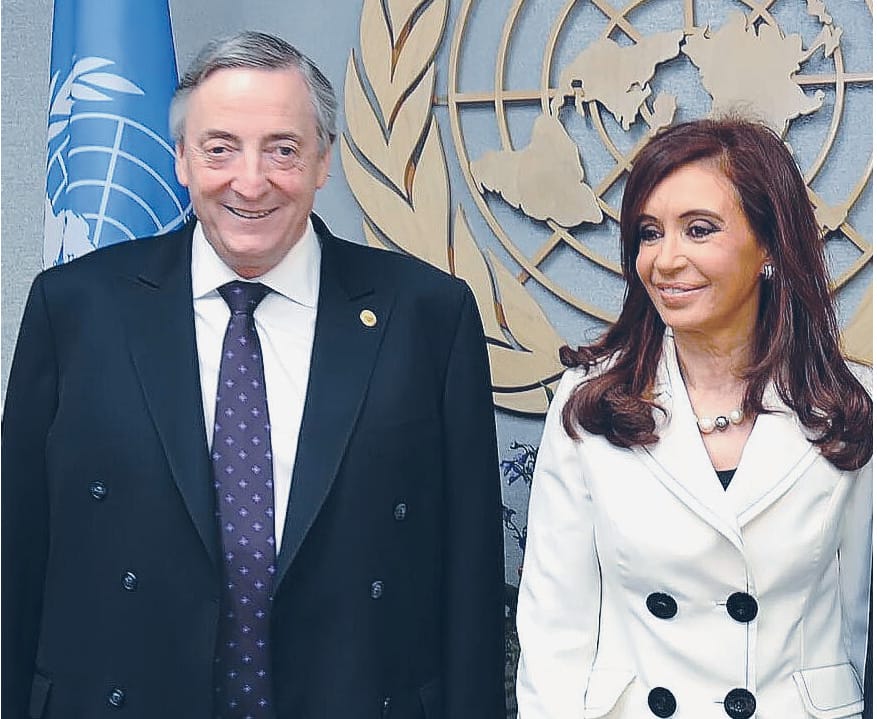
In July 2013, EIR held an international webcast on the subject, “Glass-Steagall: How To Stop the Global Financial Meltdown Over a Weekend; Who Is Out To Topple the Kirchner Government in Argentina, and Why.” The webcast warned Europeans and Americans, of both north and south, that the vulture funds’ assault on Argentina was part and parcel of an overall strategy by Western financiers to attempt to save their bankrupt system, derivatives and all, by simply stealing assets wholesale from nations and peoples. This was just another form of the “bail-in” policy which had been test run in Cyprus in March 2013, when one fine day all “unsecured creditors” and depositors in the banks of Cyprus were informed that their deposits had just been expropriated, in order to have the funds to “bailout” Europe’s bankrupt larger creditor banks.
The first Argentine asset seized was the Argentine Navy’s Libertad training ship, seized in Oct. 2012 when it docked in Ghana. Singer’s team had found a Ghanaian judge to issue the order. That was the start of a campaign by Singer’s NML Capital and an allied vulture fund, Aurelius Capital Management, to get U.S. courts to order companies and banks to disclose to Singer and allies where Argentine assets—whether financial, oil, or other properties—were held outside the country, so that they could seize them for their coffers.
In June 2014, U.S. Supreme Court Justice Antonin Scalia ruled that Singer et al. indeed had the “right” to seize Argentine assets anywhere in the world to get their pound of flesh. Argentine President Cristina Fernández de Kirchner understood the action for what it was. In a national television broadcast, she told Argentines that the U.S. Supreme Court had just defended “a form of global domination of financial derivatives intended to bring nations to their knees.” If allowed to stand, she warned, it will “produce unimaginable tragedies,” as it is fed by the “blood, hunger, and exclusion of millions of youth worldwide who are jobless, with no access to education.”
The Argentine Presidency took out full-page advertisements in the New York Times and the Washington Post to restate the anti-usury principle which ought to govern such matters: “The fundamental principle of all negotiations conducted with creditors was always the same: in order to be able to pay, Argentina must first grow, so as to generate the resources that will enable it to honor its commitments.”
Lyndon LaRouche responded immediately, asserting that there is no property right which has any validity over the rights of human beings to exist. He reminded that the U.S. Constitution provides no security for speculation, declaring that the whole discussion was a fraud. He summed up the strategic situation bluntly: “It’s Wall Street or mankind: your choice.”
The Arc Is Long, but…
On July 3, 2014, Argentina called an emergency meeting of the Organization of American States’ foreign ministers in Washington, D.C. to discuss the vultures’ assault on Argentina. Of the many speeches in support of Argentina, two still provide key lessons for today.
In a statement also applicable to the U.S. armada enforcing the great PDVSA/CITGO theft upon Venezuela today, then-Venezuelan Foreign Minister Elías Jaua Milano invoked the Drago Doctrine in defense of Argentina. That doctrine was elaborated in 1902 by Argentina’s Foreign Minister Luis María Drago in defense of Venezuela, then blockaded by European gunships demanding debt payments. The Drago Doctrine argues that creditors cannot use force to collect the debts owed by sovereign nations, lest it “result in the ruin of the weakest nations and their absorption by the powerful of the Earth,” Jaua reminded the OAS gathering.
Jaua cited the case of Congo-Brazzaville to illustrate the killings made by Singer’s Elliott Management, a company with over $30 billion in assets at the time, he pointed out. Elliott was demanding that Congo-Brazzaville pay $400 million on a debt for which it had paid only $10 million.
“How many lives could be saved with $400 million? How many people could eat with that amount of money?” Venezuela’s Foreign Minister asked. He reported how many doses of anti-malaria, pediatric hepatitis A, oral polio, or pediatric pneumonia vaccines could be purchased with $400 million. He cited how many tons of powdered milk, rice, or beef might also be purchased with that amount “to feed the people of the world,” and asked, “Who thinks they have the right to deprive people of the right to food, health, full development—to life itself?”
For his part, Guyana’s Robeson Benn, in his position as Acting Foreign Minister, proposed to the meeting that the power of the vulture funds could be crushed by reinstating Franklin Delano Roosevelt’s 1933 Glass-Steagall law, “which set up firewalls between the activities of the banks, and on the questions of speculation in the financial system,” but had been repealed in 1999. Benn recommended that the governments of the region call upon U.S. legislators to restore “this type of regulation in the banking system which would prevent vulture funds … this form which I call modern-day piracy … which has serious implications for the world economy.”
In 2016, under the Argentine government of the certified crook, President Maurico Macri, Singer did finally get his pound of flesh from Argentina, a payout of $2.4 billion on bonds for which he had paid $117 million, when they had a face value of $617 million. Singer pirated a 20-to-1 return in less than a decade!
Yet, has the system in which Singer serves won the battle? Two weeks after the OAS meeting, in the midst of the raging Argentine fight with the vultures, the heads of state of the then-five member BRICS group met in Brazil on July 15, 2014, and then met the next day with the other heads of states from South America, Argentina’s Cristina Fernández de Kirchner included.
It was at that summit that the BRICS’s New Development Bank (NDB) was born, with its mandate to mobilize resources for infrastructure and development projects in the developing countries, no IMF conditionalities attached. Today, the now 20-nation BRICS group (including both full and partner members) and their NDB are looked to as a potential seed crystal for the urgently needed new, long-term credit system yet to be built.
A Coda: Watch Out for Singer’s Manhattan Institute
There are two other flanks in Singer’s war against the nation state which bear further attention. One is Singer’s notorious activism on behalf of a racist Zionism which ranges from his organizing to suppress all opposition to the genocide in Gaza being committed by Prime Minister Bibi Netanyahu’s Israel, to his deep ties to Israel’s business tech community. EIR leaves the details on this front for a later article, which is in preparation.
Singer is equally hell-bent on overturning the U.S. Constitution, in particular its mandate that the role of government is to protect the common good. For more than two decades, Singer has played a leading role in the Manhattan Institute for Policy Research (MIPR), first as a trustee from 2004-2008, then as its chairman for 17 years until he resigned the post in 2025, and now as its chairman emeritus. He is credited with pumping nearly $200 million into the institute over the last 10 years.
The influence of this institute on and within the Trump administration and its base needs to be put under a microscope and exposed for the American people to judge.
The MIPR was co-founded in 1978 by British ideologue Sir Antony Fisher and the later CIA director William Casey. It was modeled on London’s Institute for Economics Affairs (IEA), best known as a premier think tank for British Prime Minister Margaret Thatcher’s murderous neoliberal economics.
Fisher funded the founding of the IEA in 1955 for the purpose of applying and propagating the philosophy of the Mont Pelerin Society. The latter, often referred to as “the Austrian school of economics,” is, in fact, a tool of British intelligence, founded by London School of Economics Professor Friedrich von Hayek in 1947 to promote the free-trade “liberalism” of 18th- and 19th-Century Britain as a bludgeon against nation states. Von Hayek, like his follower Fisher, based those ideas on the work and philosophy of the so-called “father of British liberalism,” Bernard de Mandeville (1670-1733), an acclaimed Satanist in his day, who founded the self-described “Hellfire Clubs” in Britain.
This is a philosophy right up Singer’s ally. Mandeville argued that human beings are driven only by their contending passions. Therefore, he proclaimed, economic growth and societal happiness results from allowing the free play of “private vices,” the sickening theory expounded in Mandeville’s most famous work, “The Fable of the Bees: Private Vices, Public Benefits.”
So much for the Manhattan Institute’s self-promotion as a “pragmatic and practical” force for the intelligentsia in the United States!
If there is one thing the Manhattan Institute despises as much as government regulations, it is ordinary people, especially the poor and those of darker skins who, unlike the Singers of our day, are unable to get rich killing other people. Ending government assistance for “the dysfunctional underclass” with its urine-smelling homeless has been a prominent theme for decades in its quarterly, the City Journal. Of a piece with that disdain is its campaign to pass laws allowing only those with “sufficient financial means” entry into the United States.
MIPR staff draft legislation, and lobby for handing over government health programs to private interests for their looting; Medicare and the Veterans Health Administration head their target list. Privatizing Social Security has been a project of theirs for decades, going back to when the Institute provided office space for Chilean dictator Gen. Pinochet’s former Labor Minister, José Piñera, when he was called in to lobby for George W. Bush’s failed attempt to privatize Social Security.
Today, MIPR’s City Journal claims to be “the nation’s premier urban-policy magazine, ‘the Bible of the new urbanism,’ as London’s Daily Telegraph puts it … a national, not just a local, force,” read by millions across the United States.
Singer aims higher, according to a June 25, 2024 exposé in the Buenos Aires Times. His intent is to repeat in the business and economics schools of the United States what his allies in the neoconservative Federalist Society have done in seizing dominance over the legal profession and the nation’s judiciary by focusing on its law schools. “Under Singer’s chairmanship,” the Bueno Aires Times reports, the Manhattan Institute “is spreading its message to a new generation of business leaders. Like [Singer’s friend Leonard] Leo’s Federalist Society, which has planted chapters at top law schools, the Manhattan Institute has established its own student network, the Adam Smith Society, at leading business schools.”
Better to stop the vulture funds now, before they succeed in picking over the carcass of the United States as well.