The following is an edited transcript of the Jan. 28, 2025, weekly Schiller Institute dialogue with Schiller Institute founder and leader Helga Zepp-LaRouche. Subheads have been added. The video is available here.
Harley Schlanger: Hello, and welcome to our weekly dialogue with Helga Zepp-LaRouche, founder of the Schiller Institute and convener of the weekly International Peace Coalition. Today is Jan. 28, 2026. I’m Harley Schlanger, and I will be your host.
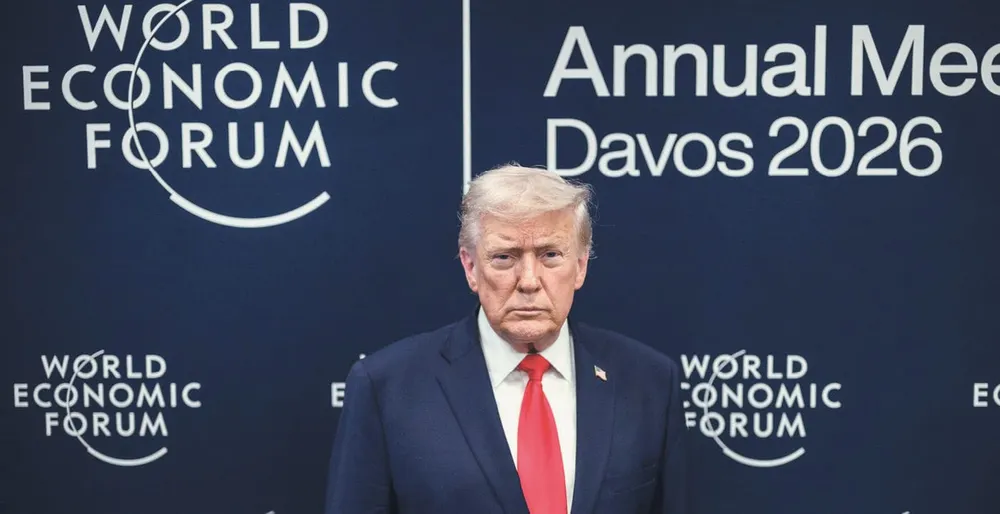
Helga, the slippery slope leading downward to war and fascism became more slippery this week. As should have been expected, the establishment’s big shindig at Davos [Switzerland, World Economic Forum 2026] offered no solutions, but showed again that the leaders of the trans-Atlantic establishment have no solutions. After asserting that the system is ruptured, as hypocrite [Canadian Prime Minister and former Governor of the Bank of Canada (2008-2013), Governor of the Bank of England (2013-2020)] Mark Carney declared, they remained insistent that we must stick with the axioms responsible for that rupture. Adding to the chaos over the weekend was the collapse of the Japanese bond market.
I’ll start with a question which is not so simple. What are these axioms which are driving humanity toward extinction? How can they be replaced, and what should replace them?
Helga Zepp-LaRouche: It’s not the axioms of humanity, because if you remember, we had a conference in Berlin in July 2025 which was titled, “Man Is .” This was a deliberate refutation of Thomas Hobbes’s idea that man is a wolf to man. Lo and behold, I was reading an article in one of the alternative media where the headline was “Man Is a Wolf to Man.” I don’t know if the author attended our conference or watched it, but in any case, the conclusion the author was drawing from the recent developments at Davos, and from [U.S. President Donald] Trump and Mark Carney and so forth, was exactly this idea that man is a wolf to man. This is a fundamental mistake.
Just because the system is dominated by different forms of oligarchs, and oligarchical establishments, that does not mean that the nature of man is evil. As a matter of fact, I absolutely passionately want to oppose this idea, because I believe that the nature of man is good, and that all evil is the result of a lack of development. The good news about that, is that therefore it can be overcome by development.
Empires Are Like Slime Molds
The fact is that the political system has been ruled by empires. My late husband, Lyndon LaRouche, always said that if you go back to the old empires—the Persian Empire, the Roman Empire, the Byzantine Empire, the Venetian Empire, and then finally the Dutch-British Empire—he said these empires are like a slime mold. They may change their color, their form, their personalities, but they remain in essence a slime mold.
That is what we are seeing right now. It is admittedly a new phenomenon that now the world supposedly is being ruled, at least in large part, by multi-billionaires who aim to become trillionaires. This is really a completely perverse idea, given that billions of people are starving in the world; they don’t have enough shelter, food, medicine. But there are some people who unashamedly say it’s not a problem to show off your wealth; it’s perfectly okay. Peter Thiel from Palantir is one of the people saying that.
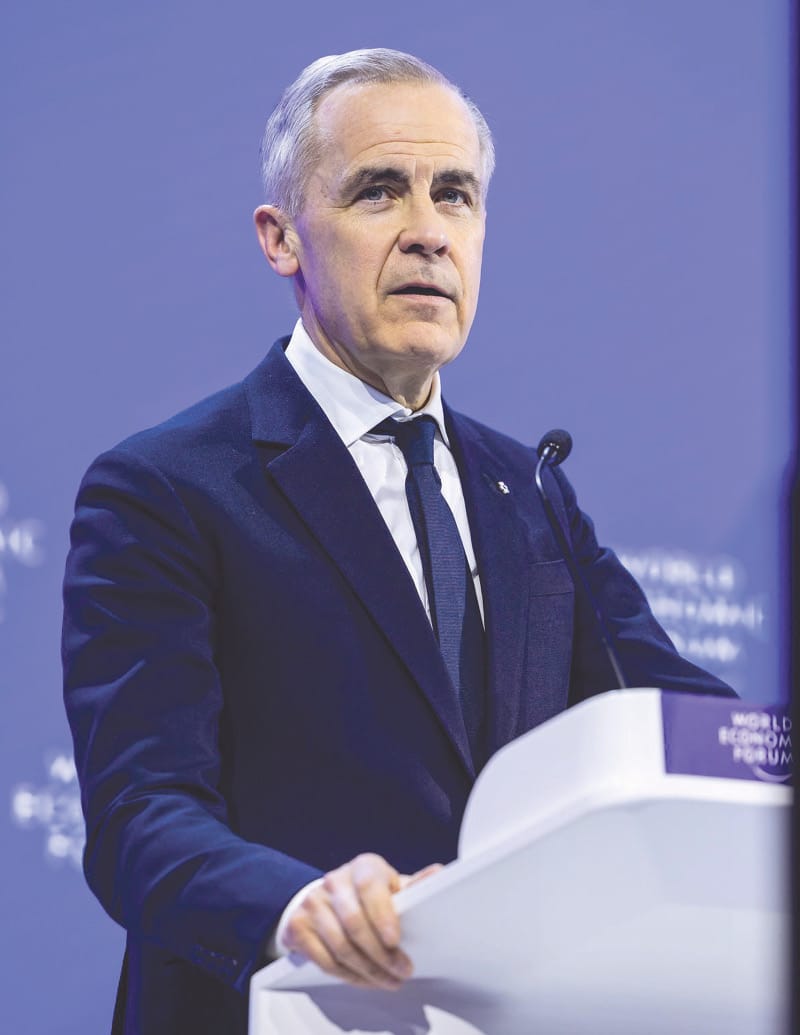
You now have, one could say, an imperial rivalry, exemplified at Davos by the Trump speech, which left many people rubbing their eyes that this was possible. What Trump portrayed there was the uninhibited lust to own more; in this case, he wanted to own Greenland. Then you had Mark Carney, the Prime Minister of Canada, saying this should not happen; we should have an alliance of the mid-sized powers—meaning Canada and the Europeans—and they should all rearm and even acquire nuclear weapons to counter this American power.
That, for sure, is not the alternative, and just because the establishments are imperial and trying to maintain a system which is based on colonialism does not mean that the average person is evil. The problem with the average person—at least in Europe to a very large extent, and also, unfortunately, in the United States—is an induced sense of smallness, of thinking there is nothing to be done about it, because the people up there are so powerful that you have absolutely no way to intervene. But that is obviously not true, because if enough citizens act like state citizens and take responsibility for the outcome of history, for the well-being of their country, then these oligarchical elites could not do what they are doing.
So, the blame is not on the axioms of the nature of man. The blame is that not enough people develop the civil courage and the passion to acquire the knowledge to stand up and act like citizens.
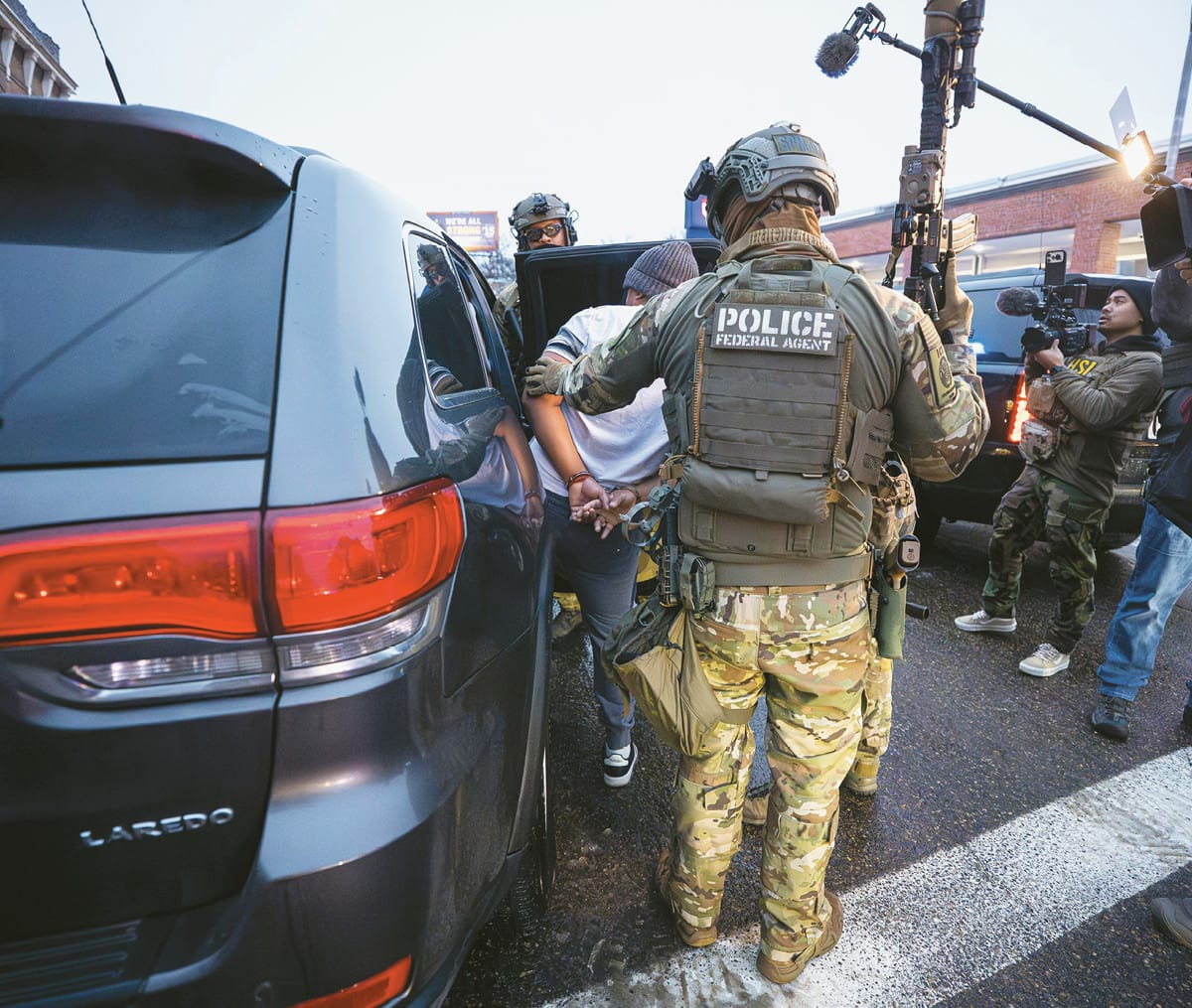
Schlanger: Let’s go to the first question that came in. Someone writes, “One of the areas of concern is the escalation of violence around the Trump administration’s handling of immigration, especially following the two murders in Minneapolis committed by employees of ICE (U.S. Immigration and Customs Enforcement). These two deaths have resulted in a dramatic drop in the polls for the President and his team and their handling of immigration, including among Republicans.” Several people have written in asking what your thoughts are about this. Is the U.S. Department of Homeland Security out of control?
Zepp-LaRouche: This is obviously an extreme dehumanization and desensitization with which these ICE agents are moving against the demonstrators. There are several American writers who have started to ask the question, “Is this a new Gestapo? Is this an American form of fascism?” This is a very serious question, because you are not lightly throwing around notions like Hitler and Nazis and fascism and so forth….
Schlanger: The next question comes from a contact in Poland, who writes, “There seem to be mixed signals from the negotiations involving the United States, Russia, and Ukraine, following the meeting in Abu Dhabi [United Arab Emirates]. Is there progress?” And a question from someone in Germany on the same issue asks, “Are the Europeans responsible for the failure to get this concluded?”
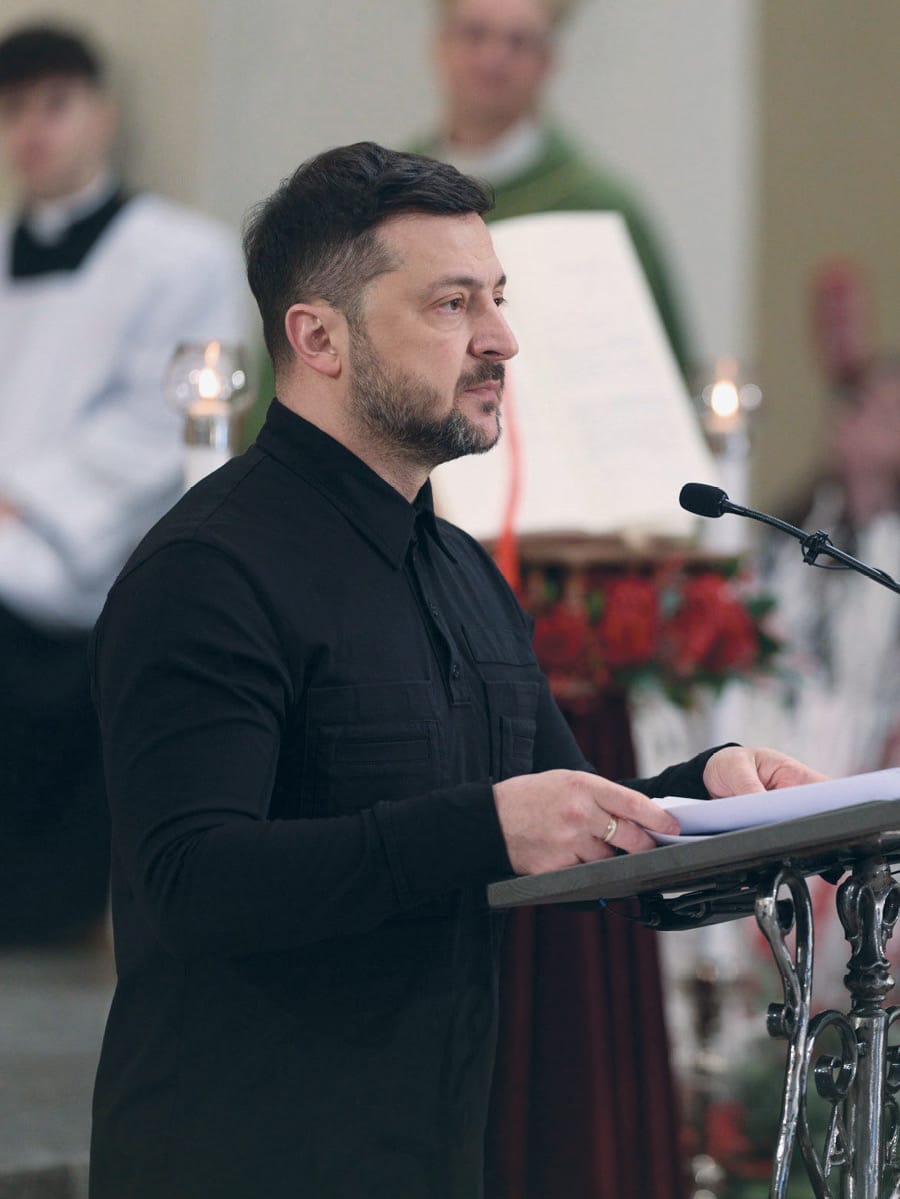
Zepp-LaRouche: I can only say that today, again, there is a tripartite meeting among Russia, Ukraine, and United States representatives. Apparently, the last sticking point is that the U.S. only wants to give security guarantees to Ukraine if the Ukrainians give up those parts of the Donbas which have not yet been taken militarily by Russia. Apparently, Zelensky is digging in his heels opposing that, being encouraged by the Europeans to do so. It seems to be that there is still no real change in the attitude of the Coalition of the Willing. You will remember that [French President Emmanuel] Macron, [Italian Prime Minister Giorgia] Meloni, and [German Chancellor Friedrich] Merz had all said there must be a more balanced approach; that the Europeans should also talk to Russia. But as of now, there has been no communication yet with Moscow.
Storm Clouds Over Ukraine
So, we are absolutely still in this extremely dangerous zone. In any case, some other commentators have pointed to the fact that, even if there would be an agreement among those three parties—Ukraine, Russia, and the United States—in order to have an actual treaty settling a peace agreement with Ukraine, it would probably take a long time, because it would have to go through the [U.S.] Congress and the Senate. And there, a lot of obstacles could still be waiting. I would say there is a little bit of hope, but the clouds of a dangerous escalation are still there, in my view.
Schlanger: There’s another question that just came in. Following your answer on Ukraine, someone asks the question of whether the Trump administration is distracted. It seems to be functioning not so clearly. Different voices, as we see with the situations in Minneapolis, Venezuela, Ukraine; are they distracted? Are they able to keep focused?
Zepp-LaRouche: I’m very convinced that they are focused, because there are now also a lot of analyses about not only the 2025 U.S. National Security Strategy paper, but also the new 2026 U.S. National Defense Strategy paper. These analyses come to the conclusion that what has changed is maybe the verbiage about human rights, about humanitarian interventionist wars, about the rules-based order, or any pretext of such nice reasons for these military interventions. However, if you take this verbiage out of the picture, what remains is a hard-core insistence on the maintenance of U.S. dominance in the world.
The only difference now is [a primary focus] on the Western Hemisphere—Latin America as a backyard of the United States—and also the Asia-Pacific. The emphasis is less on Europe, and the Europeans are in a state of shock, because the Atlanticist order of all the previous administrations—[U.S. Presidents Barack] Obama, [Joe] Biden, and so forth—is somewhat now out of the window. They are being told very bluntly that they have to take care of their own security.
Happy Vassals Become Unhappy Slaves
So, there is a kind of limbo, because the Europeans were dependent on being the “happy vassals,” as one of them [Prime Minister of Belgium Bart De Wever] put it, for such a long time. Now that the vassals are treated badly, they are unhappy slaves; they have not yet adjusted to it, because they have now cut off Russian relations and, therefore, the cheap energy from Russia. They have not in any sense a foreign policy of their own. The Mercosur treaty did not come through, so [European Commission President] Ursula von der Leyen went to India and made a big trade agreement between the European Union and India. But according to some people in India, that is not so easy, because many of the Indian export products are not up to European standards; neither [are they] up to environmental nor labor standards.
So, I could really characterize the present situation as the absolute determination of “might makes right” on the side of the Americans; swimming around in circles and not having a clear idea of where the future is, for the Europeans. Russia is drawing its own conclusions out of all of this and marching forward militarily, because they do not trust anybody in the West. Maybe they will keep the negotiations with the Trump administration—that is at least what leading Russians are saying—on the model of the Anchorage [Alaska] discussions [ on Aug. 15, 2025, between President Trump and Russian President Vladimir Putin]. But I think the real orientation of Russia and China is their strategic partnership, the BRICS, the SCO [Shanghai Cooperation Organization], continuing to strengthen their own affairs—and not trusting the West anymore at all.
Schlanger: This theme seems to be quite popular with our viewers: Here’s one from an activist in Texas. She writes, “We’re not hearing much about Venezuela now. Have the U.S. troops left? Is this done? What’s been accomplished?”
Zepp-LaRouche: No, the demand from the United States that the interim government of [acting President Delcy] Rodríguez should simply obey American orders, including on any possible deal concerning the oil, remains. But I saw a statement by President Rodríguez that they are tired of taking orders from Washington, so there is still a potential crisis ready to erupt. The only lessening of it is maybe the fact that one aircraft carrier of the United States is already in the region of the Mediterranean and Iran, and two others are on their way. It seems that what Trump is calling an armada bigger than that used to confront Venezuela a while ago, is now the main focus of attention. But I would not stop the warning signs that the Venezuela crisis could still erupt at any moment as well.
Schlanger: Someone just wrote in, reminding us of the presentation of a speech by [President] George W. Bush on an aircraft carrier when he declared [May 1, 2003], “Mission accomplished!” in Iraq. And of course, the war continued there for another eight years.
Here’s a question for you, Helga. “What does the world do if Trump ignores the New START nuclear arms control treaty?”
Zepp-LaRouche: With the New START Treaty expiring on Feb. 5, from Feb. 6 onward there is not a single arms control agreement anymore between anybody. This puts the world into an even more volatile situation. However, it’s just the last step in a long chain of such steps of dismantling any kind of security architecture. So, it’s definitely an escalation, but I don’t think it’s a qualitative one. It’s just one more step, even if obviously the most crucial.
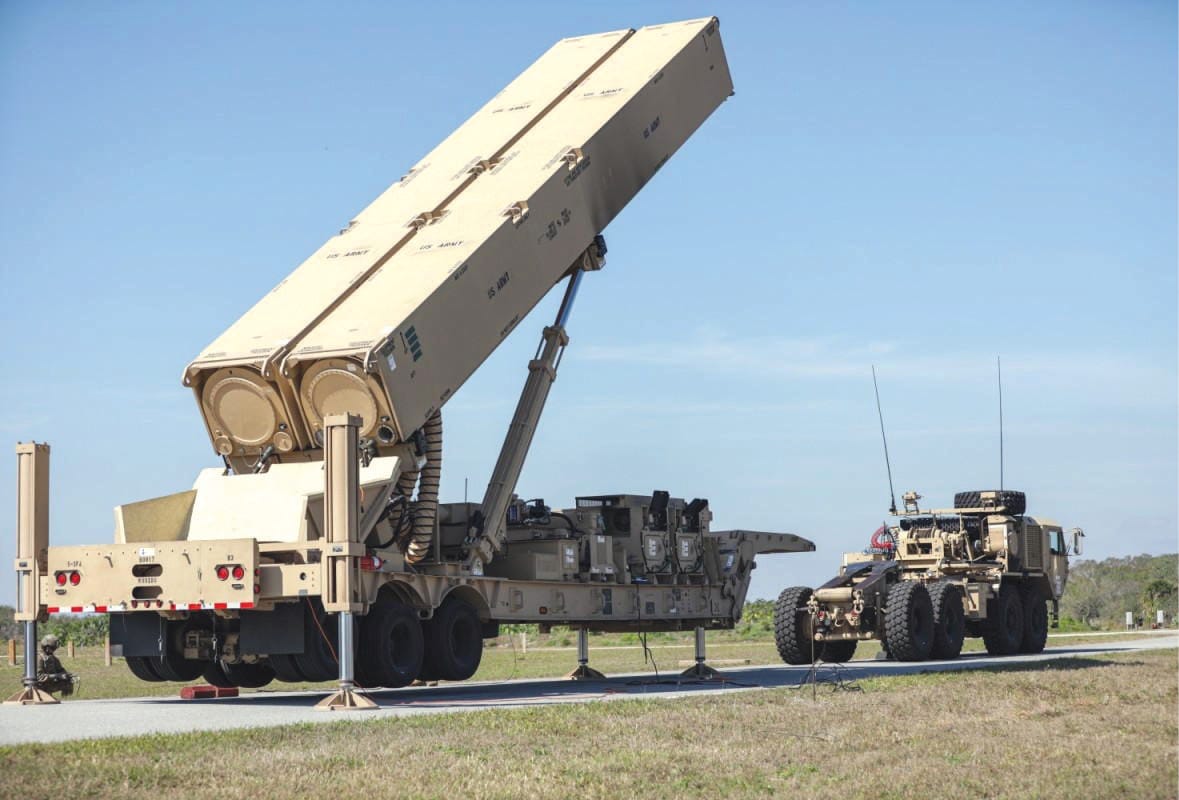
And there is still the looming danger of the deployment of U.S. medium-range missiles in Germany, which could happen at any moment. These are the Dark Eagle [hypersonic] missiles, which have a range of 2,700 km; that means they can reach very far into the territory of Russia. Russia has already said that this makes Germany a prime target in the case of any conflict. I think the recent deployment of [Russian hypersonic] Oreshnik missiles into Ukraine should be seen as a message. But it seems that the European politicians—especially in Germany—are quite deaf and blind and not reading any of the signals.
So, I can only say we must mobilize against these missiles, and, as we have said many times, it remains extremely urgent to re-establish a new security and development architecture. Because if you have a situation of complete chaos, and no diplomatic connection, no back channels, no diplomatic treaties, we are sitting on a complete powder keg. Even the accidental launch of nuclear war is not out of the question.
Schlanger: You mentioned before the visit of Ursula von der Leyen from the European Commission to India. We have a question from a reporter in Pakistan. “Are the threats of sanctions against India over the purchase of Russian oil and gas causing a shift in India’s foreign policy? Is it likely that India could move out of the BRICS?”
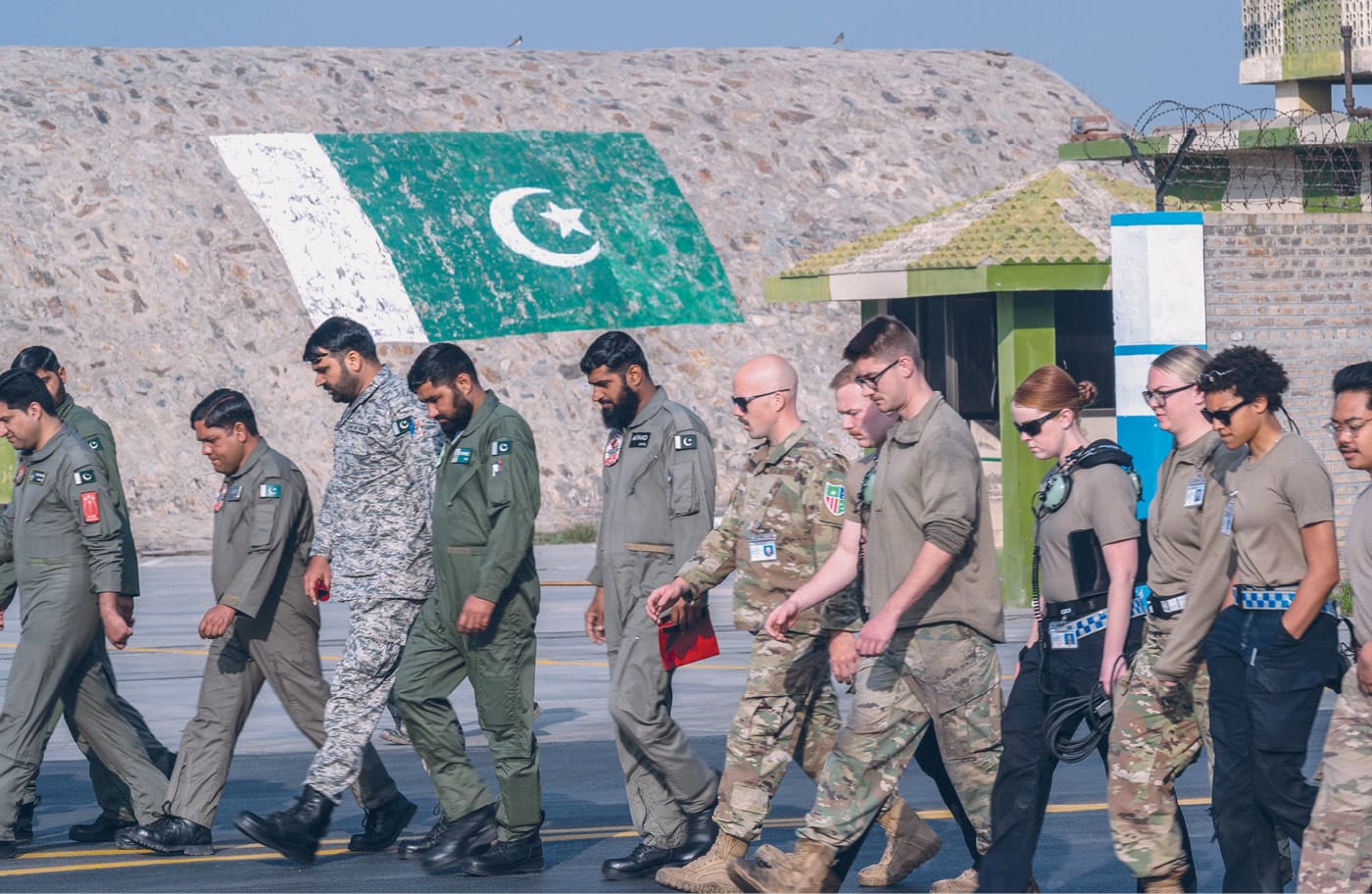
Zepp-LaRouche: I don’t think so. India will probably keep a policy of non-alignment. That means they are not that secure, or not that firm, in the BRICS, because they will keep their policy of relations with everybody. They are extremely unhappy with the U.S. sanctions. They are also unhappy about certain intelligence; they have been publishing in various Indian newspapers that the U.S. bases in Pakistan have nuclear weapons and, given the fact that the tensions between Pakistan and India still remain significant, the Indians are extremely unhappy about what the United States is doing in Pakistan.
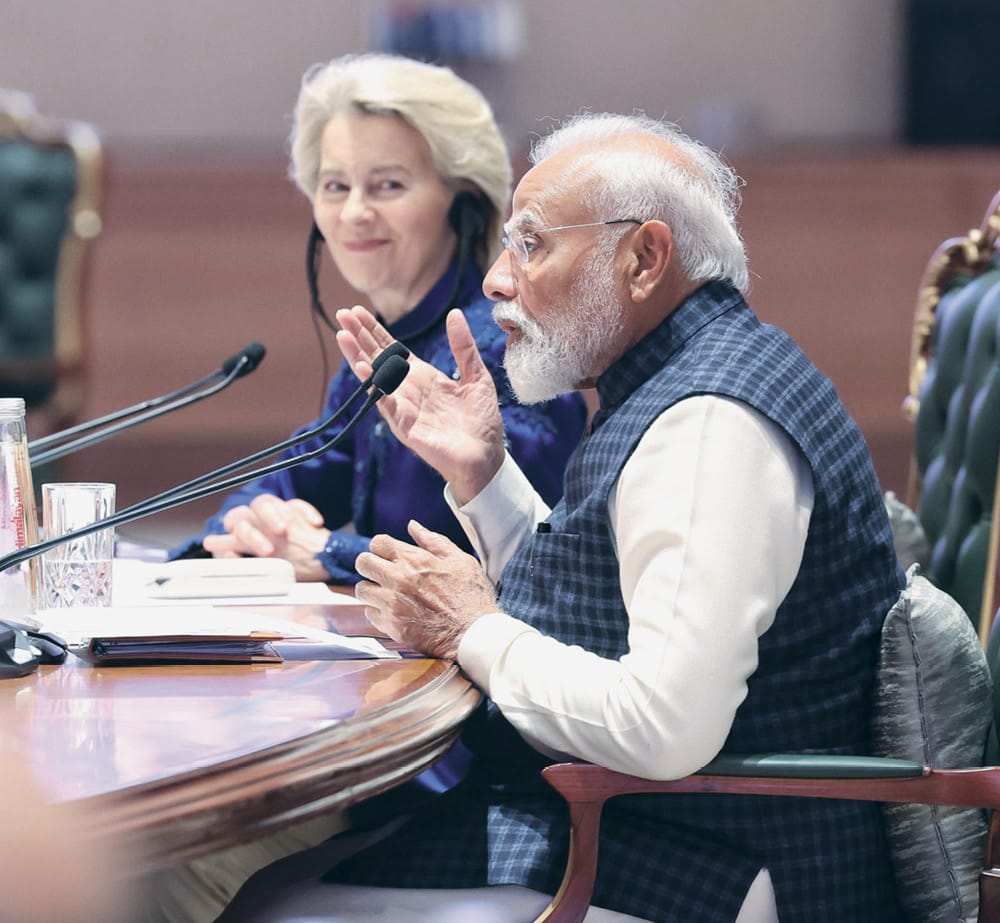
India Discovers the EU
So, now they have started to discover the European Union. [Indian] Prime Minister [Narendra] Modi gave a big welcome to von der Leyen at the national holiday of India. They signed a trade agreement, which is a significant thing. Therefore, I think India is trying to keep a balanced view. [Brazilian] President [Luiz Inácio] Lula da Silva will arrive soon in India; I don’t know exactly when, but fairly soon. That will be important, because Brazil and India also are two very significant factors in the BRICS. Lula and Modi get along quite well. It’s a complicated situation, but the BRICS and the SCO are the foundation of the attempt to build a new economic system based on equality and win-win cooperation. This is all taking place in a very stormy period. I don’t think it’s cut in stone yet as to where this will go.
Schlanger: Similarly, there’s a question about the ongoing effort to break the Russia-China relationship. Someone asks, “Several European leaders have been to China recently. Is there an effort from the EU/NATO countries to do what the United States couldn’t do—break the Russia-China relationship? How foolish do they think the Chinese and Russians are?”
Zepp-LaRouche: These efforts have the chance [of succeeding] of a snowball in Hell, because both Russia and China long ago buried their previous differences. They are fully aware of the fact that [Zbigniew] Brzezinski and others were always trying to cause disunity. [China’s Foreign Minister] Wang Yi famously said, when he was in Ukraine last year, that China is fully aware that if the attitude of certain Western countries is to cause a strategic defeat to Russia, then China would be next. This was a big surprise to the reporter who asked the question. So, they know perfectly well that it is their unity, especially the combined military and economic power of Russia and China, which is the bulwark against which nobody else can win any confrontation.
Schlanger: Here’s a question from a young person, I think from Ghana. “I’ve been very excited by your discussion of the potential for youth. It seems as though after talking about the youth of the previous generation”—I think she’s talking about Gen X—“being apolitical and only focused on pleasure, that today the young people do want to play a role. How can you work with them to bring them into a position where they can be qualified to play a role in making policy?”
Zepp-LaRouche: We have had now a number of conferences—both in person in Paris and several Zoom conferences—where young people from all continents except Australia were represented. I think there is a growing awareness of the fact that especially the young people from the Global South have to raise their voices and they have to get better informed on all these topics—economics, science, cultural issues, philosophy, history. The good thing is, when you are talking to people in Africa, the chance that you are talking to young people is extremely high. If you take a country like Ethiopia, 80% of the population is under 25; likewise in other African countries. That is why it is absolutely correct to say that the future belongs to Africa. If you have any interest, contact us and get in touch with these groups. We are encouraging local organizations in different African, Latin American, and Asian nations. We keep in touch via the internet. We have study groups, classes on different topics.
Young People Must Demand a New Paradigm
I’ve been convinced for a very long time that if the young people from the Global South organize themselves in powerful groupings, hanging together in an overall organization, and demand that a new paradigm must be one of equality of all nations; of absolute respect of sovereignty of each; of non-interference in internal affairs; of the right to development to have enough food, education, health care; to develop your own industry, agriculture; to stop being a raw materials exporter, developing your own value chain in your own country; and that nobody has the right to deny any of that—I think this is a voice which could not be silenced. It would be in the interest of the countries of the West; they may not recognize that yet, but it is in the fundamental interest of the Western countries to help the countries of the Global South to become fully developed countries themselves.
I can only encourage any effort to create such an organization in Ghana or any other country in the Global South.
Schlanger: One of the things they can do is to join you for the International Peace Coalition Zoom call which takes place every single Friday. We’ll be having one again this Friday. What will be the topics for that, Helga?
Zepp-LaRouche: We will for sure continue the process we started on Jan. 12, when we had an Executive Intelligence Review Emergency Roundtable at which very important individuals from China, Russia, the United States, Europe, and Africa participated. The topic was the complete collapse of international law after the interview President Trump had given to the New York Times on Jan. 7, in which he stated that he only regards his own mind and his own morality as guiding principles, and he does not need international law. That really was an extremely alarming message, so these individuals got together to discuss what is required to re-establish a UN which functions. This means it has to be reformed, because the Global South is not represented proportionally in the present structure, and the ability of the UN Security Council to veto anything, obviously needs to be looked at, because you cannot have a situation where the entire international apparatus of the United Nations doesn’t function anymore because one country vetoes all the time.
That was a big part of the discussion, but also, that we absolutely have to put solutions on the table in light of the pending financial crash. The need for a new global Glass-Steagall [banking]law, to have a national bank in every country, to have a new credit system providing countries with cheap, long-term credit for development, to build a Eurasian Land-Bridge into a World Land-Bridge connecting all continents through infrastructure and tunnels and bridges. All of these things need to be discussed in a new security and development architecture conference, which we are aiming to organize. So, you can go to the Schiller website to find the proceedings there. There is a three-hour video of the entire conference, and a 40-minute short version. In the recent EIR [magazine] are all the speeches in written form, which are absolutely an historical document, because it is the highest level of discussion on what is required to re-establish international law you will find in the present debates.
People Are the Sovereigns
And get that around; contact people with it; contact think tanks, universities, civil institutions. Because we plan to continue this process. We plan to have another big conference at the beginning of March, where the idea to absolutely have a new security and development architecture will be the topic, with even more institutions and speakers. So, become part of this movement, because if the governments don’t function, then citizens have to take responsibility. They are in any case the sovereigns of the Constitution. It is not the President and the government who are the boss, so to speak; they are servants of the people. In a time of crisis, the sovereign—that is, the people—have to take responsibility. If the institutions don’t function, they have to create new ones.
This is the absolute message of the Declaration of Independence of the United States. It’s the 250th anniversary of the American Revolution. And the Declaration of Independence is the charter of the Schiller Institute. When I founded the Schiller Institute 42 years ago in 1984, I wrote a charter. I looked around to see what were the best documents, and I came to the conclusion that the American Declaration of Independence is the best short document expressing what needs to be done. I only changed maybe six or seven words. Where it says American colonies, I say countries of the Global South; so I changed it in such a way that the Declaration of Independence is now applicable for every country on the planet. That is what should guide our activity.
So, contact us; become part of this movement of world citizens.