Feb. 19—Not yet three weeks after U.S. President Donald Trump’s Jan. 29 Executive Order declared that any country which “directly or indirectly sells or otherwise provides any oil to Cuba” will face economic retaliation, the effects inside the island country—already subjected to 60 years of a U.S. embargo—are unbearable. Hospitals are reducing all but emergency services; families are using wood and coal for cooking and heating, as the island is hit with the coldest temperatures in its history, and food shortages are widespread. Public transportation in Havana and many other cities has come to a standstill, while inter-provincial transportation has been suspended or drastically cut back, and the government has suspended refueling for any international flights for the next month.
On Feb. 12, three United Nations Special Rapporteurs and one independent expert charged in a joint press release that, if continued, U.S. obstruction of Cuba’s fuel imports will constitute “collective punishment of civilians”—i.e., a war crime—and that it “raises serious concerns under international human rights law.” They dismiss Washington’s claim that Cuba presents an “extraordinary threat” to U.S. national security.
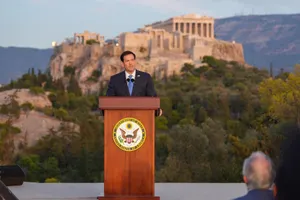
Do not make the mistake, however, of dismissing this criminal policy as the personal campaign of Donald Trump’s Secretary of State, little Marco Rubio. Yes, Rubio is one of those Cuban-Americans who long for the “economic freedom” enjoyed by American corporations in the gambling dens back in the day of President Fulgencio Batista. But a much bigger strategy is now underway, the full contours of which are now emerging.
Under the banner of the so-called “Trump Corollary” of the Monroe Doctrine, asserted in the December 2025 National Security Strategy, the Anglo-American financiers—the “Epstein class”—intend to treat the peoples, natural resources, and militaries of the Western Hemisphere nations as a giant strategic reserve for their intended war against China, including, as is now being discussed, replacing all currencies in the region with the U.S. dollar.
That is not an easy proposition. The first step in the strategy to break these sovereign nations was the deployment of military “shock and awe” against Venezuela—a “message” for the whole region. Cuba, viewed in Washington as “low-hanging fruit,” has been chosen to receive Treasury Secretary Scott Bessent’s so-called “economic statecraft,” which he brags created mass protests against the Iranian government.
Nations are beginning to recognize the stakes behind this assault on Cuba, which has been a BRICS partner nation since January 2025. Mexico, for example, had been supplying almost half (44%) of Cuba’s oil imports until Washington’s Jan. 29 order. Selling 80% of its exports to the United States and itself fending off constant explicit threats of U.S. military intervention (under the pretext of “fighting drugs”), Mexico suspended oil shipments to Cuba, but had the Mexican Navy deliver over 800 tons of humanitarian and food aid on Feb. 12. Vietnam delivered 250 tons of rice to Cuba the next day.
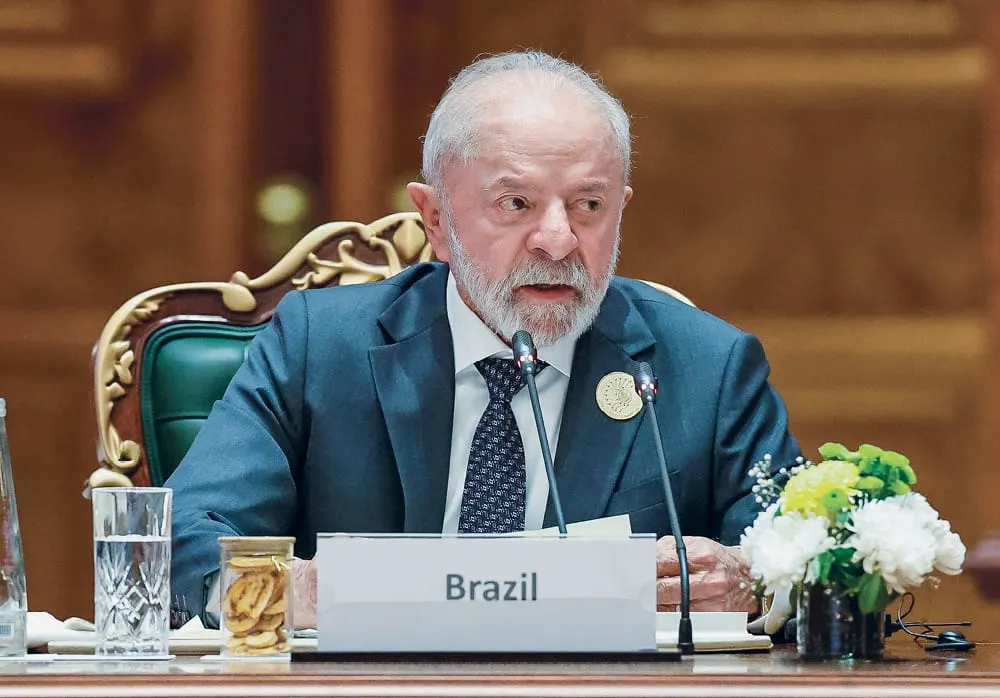
President Luiz Inácio Lula da Silva has stated that Brazil “must find a way to help,” and charged that Cuba is a “victim of a massacre fueled by speculation from the U.S.” The question of how much aid Russia and China will deliver to Cuba remains on the table.