The following is an edited transcript of the March 11, 2026, weekly Schiller Institute dialogue with Schiller Institute founder and leader Helga Zepp-LaRouche. Subheads have been added. The video is available here.
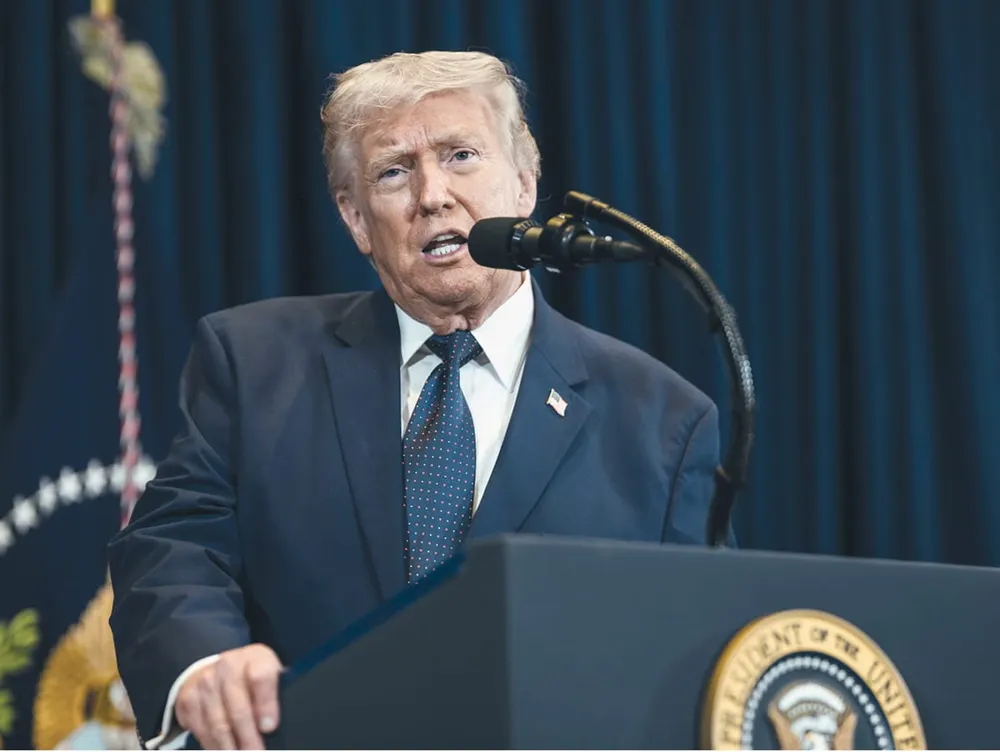
Harley Schlanger: Is U.S. President Donald Trump looking for an exit strategy from the war with Iran? Hello, and welcome to our weekly dialogue with Helga Zepp-LaRouche. She’s the founder of the Schiller Institute and the initiator of the International Peace Coalition, which meets via Zoom every Friday at 11 a.m. Eastern Time. Today is March 11, 2026. I’m Harley Schlanger, and I’ll be your host.
Now Helga, the confusing and contradictory statements of the last days from officials of the Trump administration about the war have made it clear that their assumption that they could effect a regime-change through massive bombing and the murder of officials of the government was a major miscalculation. Some are interpreting Trump’s statements that the war could soon be over as an indication that he is looking for an exit ramp from that war.
You drafted an open letter to Pope Leo XIV, urging him to “arouse the consciousness of the world,” by convening a conference of religious leaders, as Cardinal Nicholas of Cusa did in the late 1430s, organizing the Council of Florence. What did Cusa do, and do you think it’s possible that the Pope could revive that quality of spiritual commitment for peace among religious leaders today?
Helga Zepp-LaRouche: The short answer to that is absolutely yes. But let me first go into the reasons why I issued this call, and why it would be very simple-minded to think that merely because President Trump said he thinks the war will end soon, that that is actually a guaranteed perspective—because there are so many factors which could mean that we end up, in a very short period of time, in a hopeless escalation.
I will give you some of the elements. First of all, we are clearly in a new phase of history whereby international law is officially declared non-existent anymore. That was Trump in an interview with the New York Times on Jan. 7, where he said he doesn’t need it. In Europe, there is a very dangerous and stupid debate where everybody says, well, international law is a nice thing, but let’s be pragmatic, it doesn’t really help in all situations. So basically, from the Western countries, it’s more or less declared dead on all sides.
Furthermore, because the United States cheated several times, pretending to negotiate while preparing a military attack, diplomacy is out. Who should trust anybody? I think for sure the Iranians are not going to trust the United States a third time, and they are convinced that even if there would be a pause right now, by Trump saying the war has ended, that would end nothing in terms of the ongoing threat. So they, I believe, are preparing for the long haul, and they are prepared for the war to go on for quite some time. Furthermore, on the Israeli side, they don’t want to end the war.
And unfortunately, also in the United States, it seems now that the religious element in military affairs is becoming a very dominant factor, which I think is the most scary of all, because when you are talking about the potential elimination of the human species driven by religious motives like Armageddon and the idea that this will then lead to the second coming of Christ—which seems to inform some of the military people, at least if you listen to what the so-called “[U.S.] Secretary of War” [Pete Hegseth] is saying, and view the pictures of Trump praying in the White House being surrounded by religious people—the idea that you have an end-game scenario fulfilled right now should scare the pants off everybody in the whole world. Because if you have such an element of irrationality, things could go wrong at a moment’s notice.
Atlantic Council Goon Calls for Nuking Iran

Then, as if it was needed on top of that, you have an article in The Hill—that’s this newspaper which is distributed to all the U.S. Congressmen and Senators—where a person with the name of Harlan Ullman, who is supposedly an advisor to the Atlantic Council, and who co-authored a book with the former defense minister of Great Britain [General The Lord David Richards]—so he’s not in an unimportant position—argues in this article that [conventional] strategic bombing is not effective. In other words, in Iran it’s not working; it did not work in Vietnam, it did not work in Afghanistan or Iraq. And, he says, the only time there was effective strategic bombing was—now hold your breath—in Hiroshima and Nagasaki. So, he’s openly proposing to use a nuclear bomb to knock out the Iranian government.
That could have consequences of an escalation spiral in no time. For many decades, everybody who discussed the situation in the Middle East always warned of the potential of an attack on Iran becoming a global war; a nuclear war which would end all civilization. And because you have no rational players on the side of the collective West, where should the solution come from?
The danger that we may end up with the extinction of humankind has never been as great as right now. And that is why, also in discussions with other participants of the International Peace Coalition, the idea was that we should renew the call I had made some years earlier to the Holy Father to intervene, because you need a force of high moral integrity, and I cannot really think of anybody who is left in the period of the “[Jeffrey] Epstein class” and similar phenomena, other than the Holy Father.
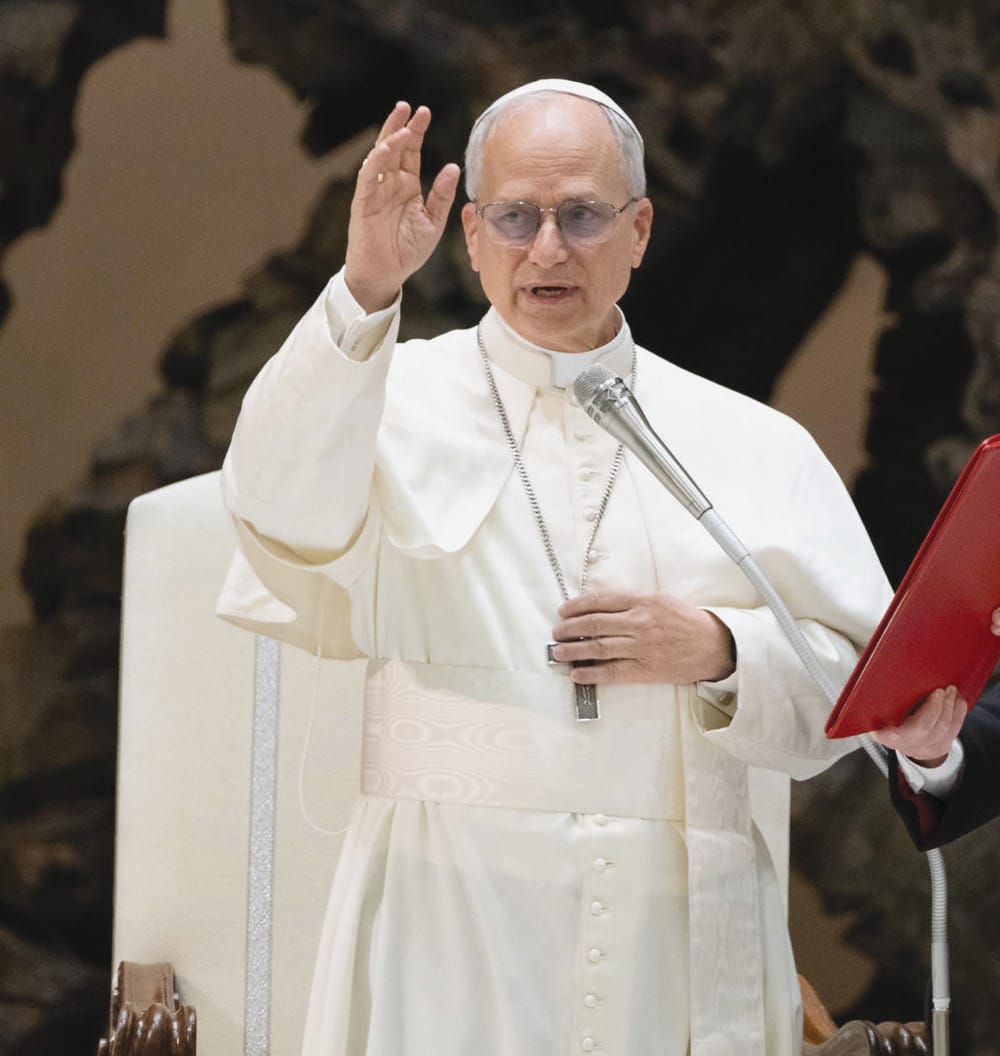
The reference to the method of thinking of Nicholas of Cusa is extremely important, because Pope Leo XIV himself referenced the writings of Nicholas of Cusa in his Angelus Sermon on Oct. 25 last year, where he said that the method of the Coincidence of Opposites—which Nicholas of Cusa was first to develop, and [which] was a complete breakthrough in the method of thinking—is a way of binding things together which cannot otherwise be bound together. So, he applied that method to the actual political situation.
And in that same spirit, Nicholas of Cusa had proposed the idea that you have to have peace and faith. After the fall of Constantinople in 1453, he wrote this incredibly beautiful Socratic dialogue, De Pace Fidei, about peace and faith, which is a way of finding a dialogue among religions, leading to the idea that there is only one God and one truth. So, I hope that the Holy Father, first of all, has received this open letter by now, and that by talking to a lot of religious leaders all over the world, that the message may actually get through, and hopefully he will respond.

Schlanger: On this question of the crazy religious side, a former leading American official at NATO, while defending the decision to attack Iran, in a conversation yesterday said he believes that “Secretary of War” Hegseth is making a mistake by trying to frame the war as a spiritual war against barbarians. He referred to reports from the Military Religious Freedom Foundation that some military commanders are briefing soldiers that this war is “all part of God’s plan to bring about the Battle of Armageddon.” He said this is misguided.
Now, one of our regular correspondents wrote of her concern that Hegseth is fostering a climate of permanent war by defining it in Biblical terms. And she added that this echoes the belief of the Zionist religious fundamentalists, who also believe that they may have a mandate from the Bible to rebuild the Temple of Solomon and seize most of the land from the Nile to the Tigris and Euphrates Rivers as Greater Israel—the which, by the way, was also supported by U.S. Ambassador to Israel Michael Huckabee.
EIR has written several reports about how this interpretation of the Bible is part of a psychological warfare doctrine spawned by the British imperial strategists as a geopolitical strategy precisely for provoking permanent warfare. What are your thoughts about this?
Zepp-LaRouche: It’s very hard to figure out: Is this religious factor a pretext to implement an imperial strategy, or do these people actually believe what they are saying, and is the military doctrine the result of their belief? I really have not come to a conclusion, because, on the one side, I have met people in the United States who are really—you can’t talk to them. They are guided by voices, by raptures. They go through weekly experiences, which I think require a psychiatrist more than a priest or a rabbi or whatever.
But on the other side, the idea of greater Israel is being implemented right now. You have the clear signs of a ground invasion by Israel in Lebanon. It seems that they want to occupy Lebanon up to the Litani River. They clearly have the idea of owning part of Syria. And so it is, as I said, an amalgam of military doctrine and religious belief.
Will Religious Delirium Annihilate Mankind?
In any case, there is a reason why the Founding Fathers and many other people writing constitutions always insisted on the separation of church and state. Because one is the realm of religious feelings and religious beliefs, and the other is calculated military thinking. If you mix the two, it can only end in a catastrophe, because when you are a military commander or strategic staff, like the Joint Chiefs of Staff or some other high military command, you have to think through all options in absolutely clear-minded terms; you have to go through all potential options; you have to think about the worst-case scenario; you have to think what you do to prevent that from ever happening. These are all extremely cold-blooded, scientific procedures, and if you start to mix that with a religious Schwärmerei, where you all of a sudden feel anointed and you’re talking about religious experiences, this is the most dangerous amalgam I can possibly think of. It’s like taking drugs and being delirious—LSD and the MK-Ultra project. It totally blurs the difference between reality and imagination, while you’re playing with a nuclear arsenal which eventually could eliminate all of mankind.
Then you have such so-called advisors like this Harlan Ullman, who is in an official position writing in a paper which is being distributed to all Congressmen and Senators every day. So this takes on a form, I can only say, that the rest of the world, and Americans, naturally, should study and really start to absolutely protest and put an end to it, because this is a prescription for complete disaster and the end of civilization.
Schlanger: The day before yesterday, President Trump and [Russian] President [Vladimir] Putin spoke for an hour on the phone. Trump said he thought it was a productive call. So presumably, they discussed the continuing war in Ukraine and the danger from the ongoing war in Iran.
We have a question for you, about whether you know anything more about the call; and a viewer from Seattle asks, “Is the spirit of Alaska”—referring to the last summit meeting Trump and Putin had [in Anchorage, Alaska on Aug. 15, 2025]—“Is the spirit of the Alaska summit dead, on life support, or is it still possible to revive it around the joint commitment to major infrastructure projects?”
Zepp-LaRouche: I would like to be hopeful, but I must admit my hopes have gone down massively, because if I were sitting in Moscow and thinking in terms of the military dimension of this whole thing, having seen the United States two times pretending to negotiate, talking to the Iranians, and the non-elected negotiators on the U.S. side—[Trump’s Special Envoy Steve] Witkoff and [the president’s son-in-law Jared] Kushner—telling the Iranian Foreign Minister [Abbas] Araghchi that progress was being made, and then at the same time preparing the attack—I would tend to believe that it’s very foolish to still think that the Alaska spirit is alive. I think that to revive it, it would require President Trump to do something very, very convincing: like, for example, replacing some of the warhawks in his Cabinet with others opposed to such an aggressive policy.
Still Some Sanity in the Military Ranks
Remember that even in the military, there were many high-level, high-ranking military officers who opposed war. Several even resigned from their posts. This happened in the case of the so-called drug boats in the Caribbean, where one top military leader resigned in protest. And reportedly, even the Chairman of the Joint Chiefs of Staff, General [Daniel] Caine, advised against the Iran operation, but then he went along. And the fact that these reports are coming out, raising objections to military briefings with religious connotations, is an indicator that in the military, there are still a lot of very rational people.
And I can only say, if you want to restore confidence at this stage, it would require some action by President Trump to convince the rest of the world that he is in control of his government. Remember that he had won—a little bit more than a year ago—his second term, with the promise that he would be a peace President; that he would end all wars; that he would not start new ones. And look where we are a little bit more than one year later. He has become a war President.
And obviously, forces in his administration have taken over who are of the same kind as we had at the end of the [President Joe] Biden administration. Back then, there was a Pentagon report that found there was a 50% chance there would be a nuclear war with Russia over Ukraine. And that was regarded as acceptable! So, it seems that this apparatus, the so-called permanent bureaucracy, has completely taken control. And President Trump is now voicing the same thing, the same policies he pretended to be against. So, how can you trust such a situation?
Schlanger: You’re listening to Helga Zepp-LaRouche, the founder of the Schiller Institute, and we’re discussing the broader strategic implications of this continuing war in Southwest Asia.
The war is causing a sharp increase in the cost of oil and gas. And that’s threatening to crash what is already a fragile global economic situation. One correspondent writes that he believes this may be the goal of strategists working for the City of London, using the City of London’s financial and energy cartels to use the coming crash to force governments to adopt sustainable energy sources such as solar and wind. And then he refers to the recent electoral breakthroughs of the Green Party in a special election in a district in Manchester in the United Kingdom, and the Baden-Württemberg election in Germany just this last Sunday. What do you think of that?
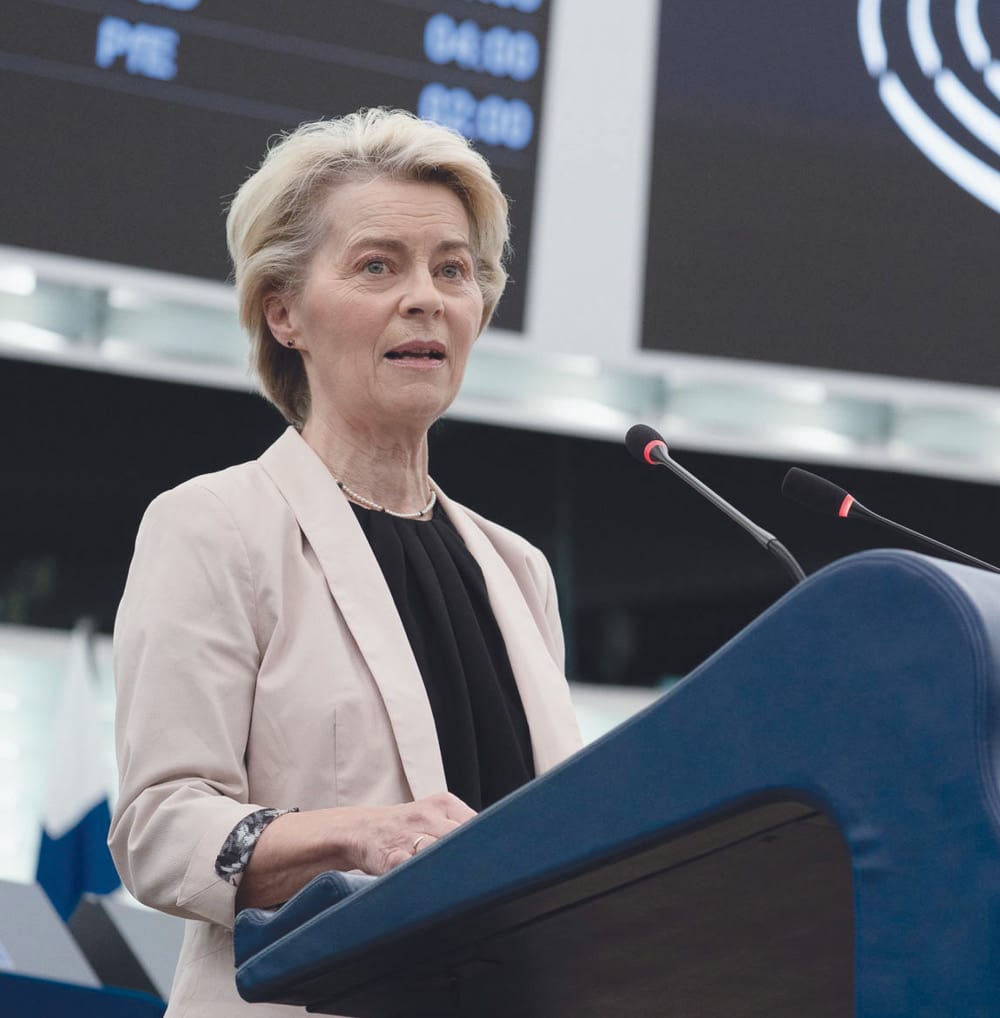
Zepp-LaRouche: I think the reason the Greens won in Baden-Württemberg has more to do with the long-term brainwashing of the German population. More interesting is the perspective that the dangers to the world economic and financial system have obviously arrived even to the minds of people like Ursula von der Leyen, the EU Commission President, who just participated in a conference on nuclear energy in Paris. And surprisingly, she said that the exit from nuclear energy was a strategic mistake, and that Europe has to go back to nuclear energy—and that they want to invest in small nuclear reactors. I welcome that. Obviously, she should be presented with a bill for the damage that exiting nuclear energy has had on the German and European economies, although she was not the only one responsible for that. But if people correct mistakes, I’m always in favor of endorsing that.
Unfortunately, Chancellor [Friedrich] Merz immediately said, the exit from nuclear energy in Germany is irreversible; I regret it, but that’s what it is. Now, fortunately, Merz is not irreversible; he can be ousted. And I think that the coalition in Berlin is in bad shape. The SPD [Social Democrats] in that Baden-Württemberg election had a historic low of only 5.5%, barely making it into the parliament. So, the once-proud workers’ party, which used to get majorities, is now basically scrambling to even make it into the parliament.
Growing Awareness of a Looming Crash
And I think this is foreboding massive instability in the Berlin government, because now the CDU [Christian Democrats] is smelling springtime; so, they want to increase their position with respect to their coalition partner, the Social Democrats, who, they argue, is now much weakened and therefore should have less of a voice. So, you can expect more socially unacceptable demands coming from the Merz part of the government, which will diminish the SPD in the coming elections. There are the formal state elections this year, and it could very well be that the SPD vanishes as a parliamentary party altogether, which would also be the end of Merz.
Now, unfortunately, the entire spectrum of political parties in Germany right now is not very rich in terms of real alternatives. This is why we have to have the idea of an international approach, because if you count on elections in any country, it is not going to work. I think that the Malthusians, for sure, would like to use the coming crash for the purposes of what the questioner is asking. But the likelihood that this present situation is leading to a repeat of the 2007-2008 systemic crash is very, very high. And that is why the European Union and also some European governments have just announced that they want to free up the strategic oil and gas reserves to lower the price, because they are aware of just how fragile the whole situation is.
Schlanger: It was just announced, speaking of the German economy, that Volkswagen is going to lay off 50,000 employees. And it’s clear that the overall situation in the German economy is continuing to deteriorate, regardless of what Merz thinks he’s doing. At the same time, you have, as you mentioned, von der Leyen talking about a revival of nuclear power. Is that possible? I mean, given the destruction of the steel industry, the low availability of oil and gas, what would it take to get the German economy back on its feet?
Zepp-LaRouche: As of now, I think the collaboration with China is the only hope. Because of the Green Deal, because of the policies which were initiated by such people as [Canadian Prime Minister] Mark Carney when he was head of the Bank of Canada [2008-2013], the Bank of England [2013-2020] and head of the Financial Stability Board of the BIS [2011-2018]; the whole Green paradigm, the whole idea of monetarism, has led to such— Germany used to be a leader in terms of nuclear energy, maglev trains, many other vanguard technologies, and it has fallen behind by several years, five, six years, or ten years, or even more in some areas.
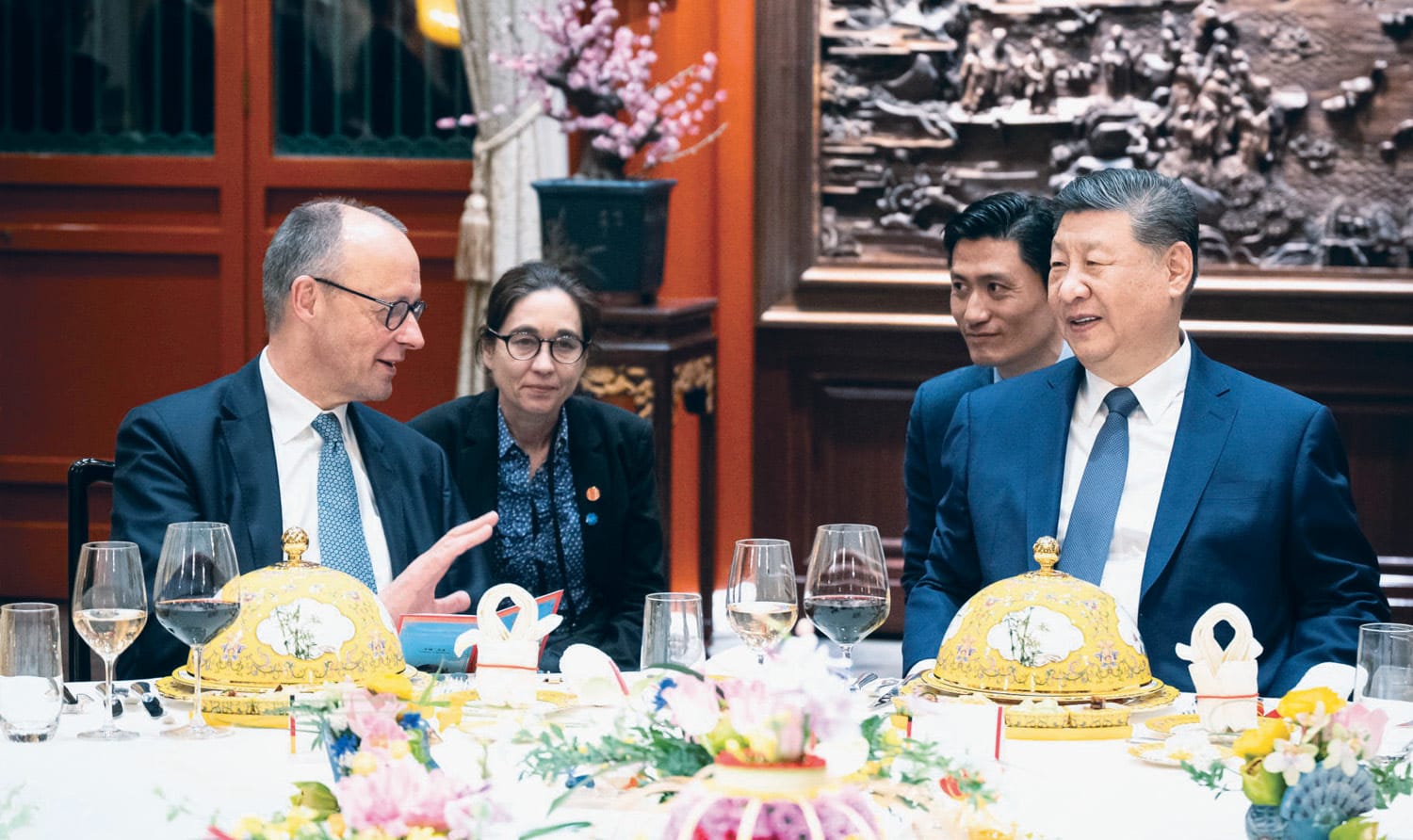
The only way Germany could catch up is to partner with countries like China, which was expressed by the recent trip of Merz to China, where he had a delegation of 30 CEOs of all the top companies who were with him, including some leaders of the “hidden champions” [mid-sized companies, largely unknown to the public, characterized by high innovation—ed.]. China offered a joint run [enhanced strategic cooperation—ed.]; this means Germany could relearn from China the advances China has made in the meantime. And I think, in the short term, this is the only way you can reverse Germany’s decline.
But it would also require a real change in the education system, a change in the entire mentality; getting back to Humboldt, the idea of character formation in education as a goal. I mean, it would require a lot of changes. The Western European and American education systems have undermined the creativity of the populations to such an extent that I don’t think it could be done with just a few changes in economic policies; you would have to really revamp the entire approach.
Schlanger: I received several emails stating disappointment that Russia and China seem to be doing little to help Iran in the war. The first question I have is—is it true? And the second question is, if this war is seen as an attack on the BRICS, since Iran is a BRICS member, what should Russia and China do?
Zepp-LaRouche: It is obviously due to the patience of people like [Russian President Vladimir] Putin and [Chinese President] Xi Jinping that the war has not yet escalated. It’s very easy to say they should have acted, but what would be the consequences if they would? I think that there are signs—and I had a very important interview with [nuclear weapons expert Dr.] Ted Postol [Professor Emeritus of Science, Technology and National Security at the Massachusetts Institute of Technology], which we are publishing today, where he basically made the argument that there are clear signs that Russia did provide Iran with targeting technologies and possibly other means. So, there is apparently some cooperation.
But if Russia or China were to openly intervene, you would have an escalation to a global war very, very fast. So, I’m pretty sure that the idea of not allowing key members of the BRICS and the Shanghai Cooperation Organization to be knocked out is high on the agenda. But I’m pretty sure that the leaders of these countries are thinking in terms of flanks; in terms of not going to a global nuclear war, which they know perfectly well nobody would survive, because they are more rational than the Western side.
So, I can only imagine that they are thinking in terms of strengthening the countries as much as they can and thinking about flanks.
Schlanger: Finally, I have an email from Australia, someone who’s obviously a skeptic. He writes, “I keep hearing the LaRouche movement blame the British and the City of London for all the ills in the world, including the Ukraine war and the present war against Iran. Am I wrong to think you’re stuck in the view of history that’s at least 75 years old? The only empires I see are the American Empire and the emerging Chinese Empire. The British Empire disappeared in the 1950s.” Helga?
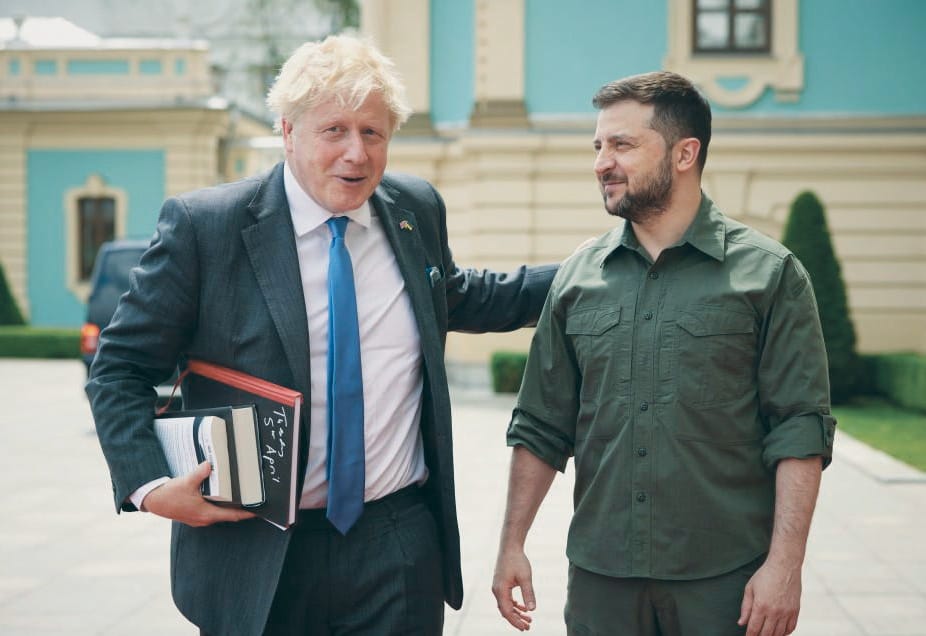
Zepp-LaRouche: Well, I think you are stuck; I mean, the questioner, you are stuck in the propaganda. The propaganda is that the British Empire vanished. But if you look at the instigation of every step of escalation, you always find a British source. Look at the Ukraine war. Who stopped the potential to have peace immediately after three, four weeks into the war in March, April [2022]? It was [then British Prime Minister] Boris Johnson who flew to Kiev and convinced [Ukrainian President Volodymyr] Zelensky to keep the war going when Zelensky had already basically agreed to a deal.
There’s absolutely no truth to it. China is a civilizational state which has existed continuously for more than 3,000 years. If you look at the number of wars China has been engaged in, it’s a tiny, tiny number as compared to hundreds of United States wars: of regime change, of military intervention, of coups, of all kinds of things. So, China has explicitly a completely different philosophy, which is based on Confucian thinking, on harmony, on win-win cooperation. And the reason why China is winning this competition, if you want, is because the partners of China have a benefit, while the partners of the United States can only submit in fear. And which model is more attractive?