
April 7—The Arabic word “Nakba,” which is literally translated to mean “the catastrophe,” evokes profound emotions which transcend the events it was meant to describe, namely, the tragedy of the defeat of the Palestinian Muslims and Christians by the Zionists in Israel’s War of Independence in 1948. It refers to the brutal expulsion of more than 700,000 Palestinians from their homes, fleeing massacres and the destruction of their villages. Add to this the long-standing shock which accompanied the dispossession of a homeland by the rejection of their “right to return,” despite repeated passage of United Nations resolutions, beginning with Resolution 194 in December 1948, which confirmed the right to return for refugees who had lost their homes, due to war and conflicts.
The decision of the new government of Israel in 1948 to block the intent of UN Resolution 194 continues to be enforced to the present. It is part of a persistent administrative effort to make the humiliation of defeat permanent for the Palestinians, leading long-term Palestinian rights advocate Hanan Ashrawi to coin the term “ongoing Nakba” to describe Israel’s intent to permanently remove the Palestinian population. In 1972, for example, Prime Minister Golda Meir justified the policy, saying it was necessary to “avoid setting a precedent.”
British Origins of the Nakba
The background history of the Nakba predates the modern Zionist political movement, which was founded in 1897 in Basel, Switzerland, by Theodor Herzl (1860-1904). Though the closing prayer of the Passover Seder includes the phrase, “Next Year in Jerusalem,” this served more as an expression of faith and hope than as a plan of action for the Jewish population in the diaspora. More than half a century earlier, in the 1830s, a movement was launched in England by John Nelson Darby (1800-1882), a member of the Church of England, whose teaching promoted an eschatological theory of “pre-tribulation Rapture,” which was disseminated by the Plymouth Brethren movement, which he created. This was the religious root of “Christian Zionist” teaching, which identifies its adherents as the key figures in the “End Times” theology, whose uncompromising faith will hasten the return of Jesus as the Messiah.[1]
A more serious plan of action was hatched by British aristocrats under the patronage of Queen Victoria, with the establishment of the Palestine Exploration Fund (PEF) in 1865. Her son, the future King Edward VII, toured the region in 1862 with Arthur Stanley, the Dean of Westminster Abbey, who was a founder in 1865 of the PEF, as an advocate for the movement of the British Israelites. The PEF was based on the cultish belief that the people of Great Britain were direct descendants of the Ten Lost Tribes of Israel. Its members included aristocrats and backers of the British Empire, such as Lord Herbert Kitchener (1850-1916), a British field marshal who became high commissioner for Egypt.
From 1874 to 1878, Kitchener conducted surveys of Palestine on behalf of the PEF. At the annual PEF convention in 1875, the Earl of Shaftesbury enthused that in Palestine, then under Ottoman sovereignty, “We have there a land teeming with fertility and rich in history, but almost without an inhabitant—a country without a people, and look! scattered over the world, a people without a country.” This was adopted as a slogan of the Zionists, who described Palestine as a “Land without a people for a people without a land,” ignoring the more than half a million Palestinian Muslims and Christians living there. Another famous member of PEF was T.E. Lawrence, the British operative who served as an advisor to Hussein bin Ali al-Hashimi, the Sharif and Emir of Mecca, in the 1918 revolt against the Ottomans.
This aristocratic imperial network in the British Israelite movement created the Quatuor Coronati Freemasonic Lodge, consecrated as the United Grand Lodge of England in 1884. Investigators from the Executive Intelligence Review have shown that this lodge remains directly involved in operations against Palestinians through its role in fostering the Messianic terrorism of the Temple Mount Faithful.[2]
Herzl’s Demographic Challenge
The Jewish population in Ottoman Palestine before the First Aliyah—the migration sponsored by early Zionist organizations, beginning in 1882—totaled an estimated 26,000 residents. Between 1882 and 1903, an additional 26,000 Jewish immigrants arrived, establishing 28 settlements, mostly on land purchased by the Lovers of Zion movement, largely funded by Baron Abraham Edmond de Rothschild of the French Rothschild banking family.[3]
The idea of establishing a Jewish homeland in Palestine took off with the publication of a pamphlet, Der Judenstaat, by Theodor Herzl in 1896. The First Zionist Congress was convened the following year in Basel, Switzerland. It was attended by 200 delegates from seventeen countries. The first order of business was to adopt the goal of creating “for the Jewish people a home in Eretz Israel,” and “to promote settlement [there] of Jewish farmers, artisans and manufacturers.”
That Herzl was aware of the demographic challenge facing the Zionists was evident in an entry written in 1895 in his diary, about how to address the minority status facing the Jewish colonizers. He proposed what is now euphemistically called “transfer” of the non-Jewish residents: “We shall try to spirit the penniless population across the border by procuring employment for it in transit countries, while denying it any employment in our own country … expropriation and the removal must be carried out discretely and circumspectly.”
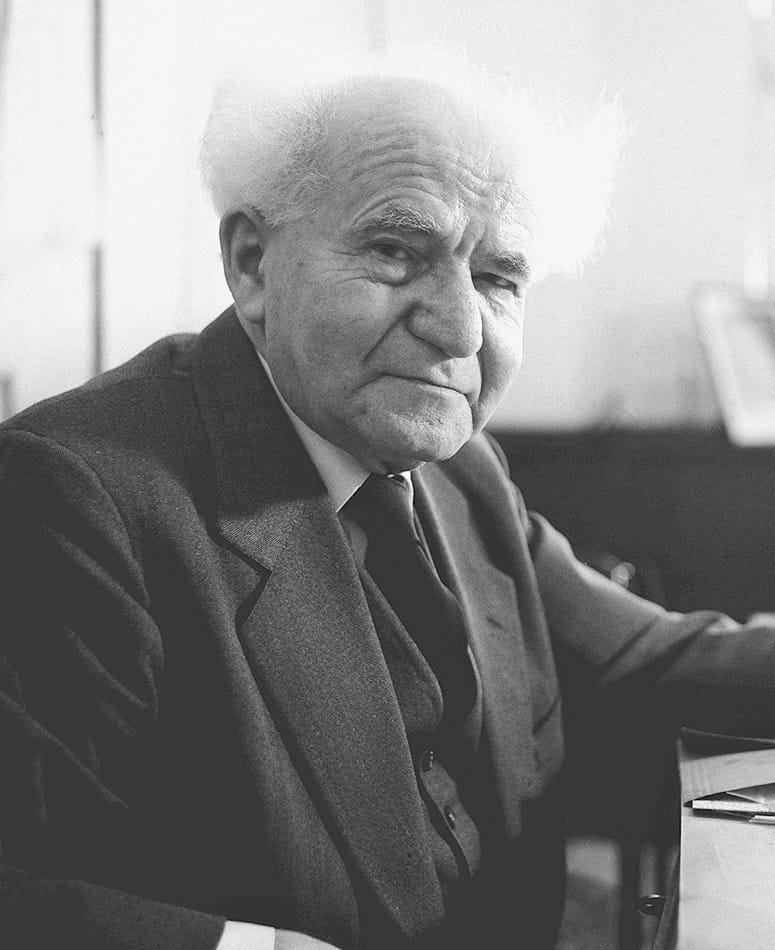
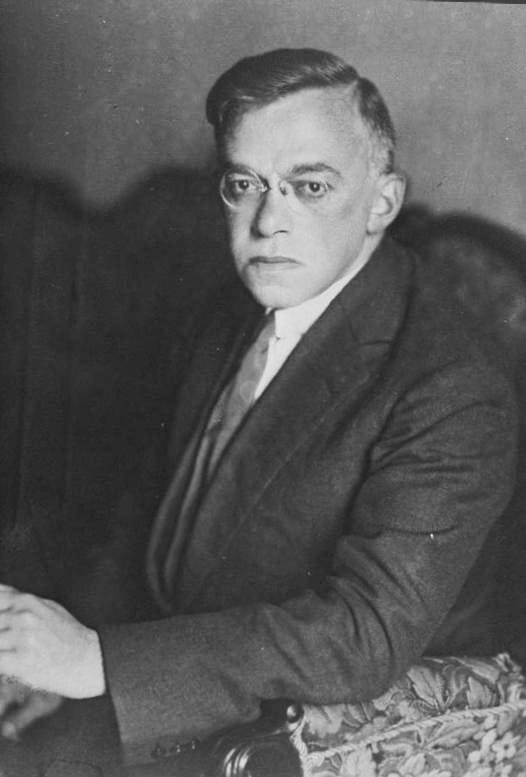
Vladimir Ze’ev Jabotinsky (1880-1940) addressed the same challenge nearly thirty years later, though hardly discreetly. As a leader of the Revisionists, he espoused a muscular Zionism based on the right of the Jews to settle the whole of Eretz Yisrael, in opposition to the “practical” Zionism of David Ben-Gurion (1886-1973), a political leader. Jabotinsky’s essay, “The Iron Wall,” written in 1923, advocates the application of force to crush the hopes of Palestinians for a just share in their homeland. He opened “The Iron Wall” by stating, “There can be no voluntary agreement between ourselves and the Palestinian Arabs.” Given the lack of a precedent for “any colonization being carried on with the consent of the native population,” he concluded that either Zionist colonization must stop, “or else proceed regardless of the native population. Which means that it can proceed and develop only under the protection of a power that is independent of the native population—behind an iron wall, which the native population cannot breach.”[4]
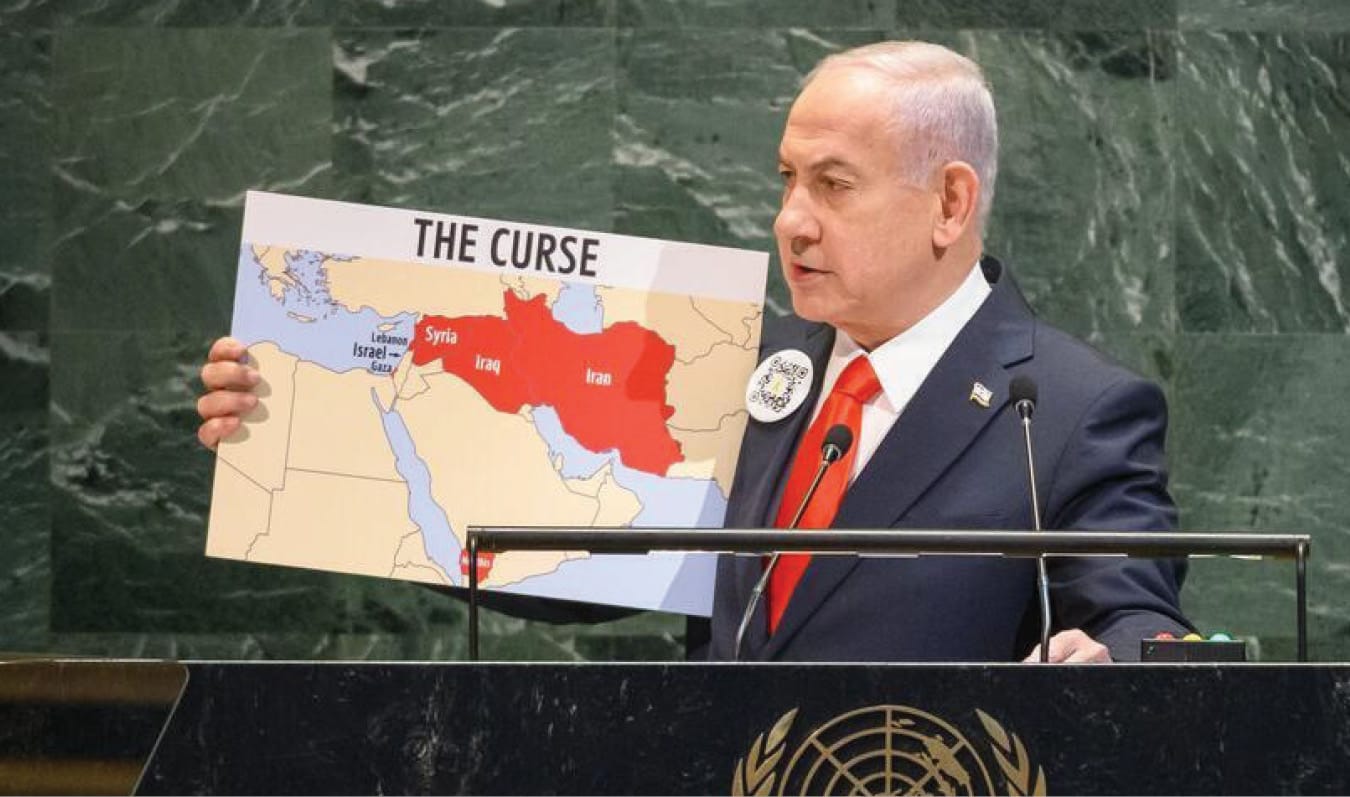
He was fully aware of the implications of his proposal, of imposing a choice on the Palestinians, to leave or face the consequences. He wrote in 1940, “…the world has become accustomed to the idea of mass migrations and has become fond of them…. Hitler—as odious as he is to us—has given this idea a good name in the world.” His solution to the demographic problem, that Palestinians must be exposed to violent suppression or “freely” choose to leave, has been adopted by most Israeli governments, and is embraced in full today by Benjamin Netanyahu and his Greater Israel allies. Netanyahu was steeped in Revisionism from an early age, as his father, Benzion Netanyahu, was the American secretary to Jabotinsky.
Building Consensus for ‘Transfer/Ethnic Cleansing’
While Jabotinsky was known for his hardline approach to the Palestinian question, his leading factional opponent in the Zionist movement, David Ben-Gurion, had carefully crafted an identity as a moderate, who was open to negotiations with the Palestinians. Ben-Gurion was a leader of the Labor Zionists after World War I, and became the head of the Jewish Agency in 1935, and later the first Prime Minister of Israel. According to [former journalist and academic] Jeremy Salt, despite what Ben-Gurion said for propaganda purposes, “he always knew what he wanted, which was the removal of the Palestinians from the land which belonged to them, according to all logical legal, historical and moral criteria but to which Ben-Gurion believed only Jews had a moral and historic right.” On this basis, he set the Zionist state on the course it has followed to the present day, with the devastating consequences it has had for the Palestinians, the surrounding Arab world, and the Jewish communities who lived in that world for thousands of years until deliberately uprooted by the Zionist movement’s “ingathering of the exiles.”[5]
With the Arab Revolt (1936-1939) against the British Mandate for Palestine, the issue of the partitioning of Palestine between the Arabs and Zionists became increasingly thorny. (The Mandate was granted by the League of Nations to Great Britain in 1922 and lasted until 1948.) In August 1937, for example, the issue of transfer was a major concern for delegates at the Twentieth Zionist Congress in Zurich. At that time, Ben-Gurion openly endorsed transfer, saying, “You are no doubt aware of the [Jewish National Fund’s] activity in this respect. Now a transfer of a completely different scope will have to be carried out. In many parts of the country new settlement will not be possible without transferring the Arab fellahin [peasants].” This will be possible, he concluded, due to the growth of Jewish power in Palestine, which “will also increase our possibilities to carry out this transfer on a large scale.”
In June 1938, he was again unequivocal, telling a meeting of the Jewish Agency, “I support compulsory transfer. I don’t see anything immoral in it” (emphasis added). This view was forcefully endorsed by the director of the Jewish National Fund’s Lands Department, Joseph Weitz, in December 1940. Weitz was responsible for acquiring land in Palestine for settlement. He said, “There is no way besides transferring the Arabs from here to the neighboring countries, and to transfer all of them, save perhaps [the Arabs of] Bethlehem, Nazareth and Old Jerusalem. Not one village must be left, not one tribe. And only after this transfer will the country be able to absorb millions of our brothers and the Jewish problem will cease to exist. There is no other solution.”
War Plan D
As we have seen, by 1937 Ben-Gurion was openly advocating transfer. In the Summer of that year, after the release of the Peel Report in July, by the Peel Commission of Britain, which proposed the partition of Palestine into a Jewish state and an Arab state following the end of the British Mandate, Ben-Gurion asked Elimelech Sikowitz, the commander of Zionist defense forces in the Tel Aviv area, to prepare a plan for the military conquest of Palestine as a whole. Under the nickname Avnir, Sikowitz proposed a sequence of steps, culminating in Plan Dalet, or Plan D. This represented a shift from a defensive strategy to protect the Jewish population, to an offensive strategy to secure a Jewish majority, in expectation of an Arab attack once the partition plan was adopted, as the Arab countries in the region—Lebanon, Syria, Transjordan, Egypt, and Iraq—had stated they would not accept the terms of the UN partition agreement.
The passing of UN Resolution 181 on November 29, 1947, marked the beginning of a new phase of a “civil war” in Palestine, between Zionist forces and Palestinians. Plan D was adopted on March 10, 1948, before the invasion by Arab forces. The Haganah—the Israeli army—coordinated attacks throughout the country, as specified in Plan D. These included an offensive to open the road from Tel Aviv to Jerusalem on April 1, 1948; the Deir Yassin massacre on April 9, in which the irregular forces of the Irgun and Lehi, led by future Prime Ministers Menachem Begin and Yitzhak Shamir, killed more than 100 Palestinians; the assault on Haifa on April 21-22, which resulted in the panicked flight of the majority of Palestinians from the city. Such actions continued until Israel’s Independence Day on May 14, 1948, when the Arab alliance launched its invasion, and the next phase of the war began.
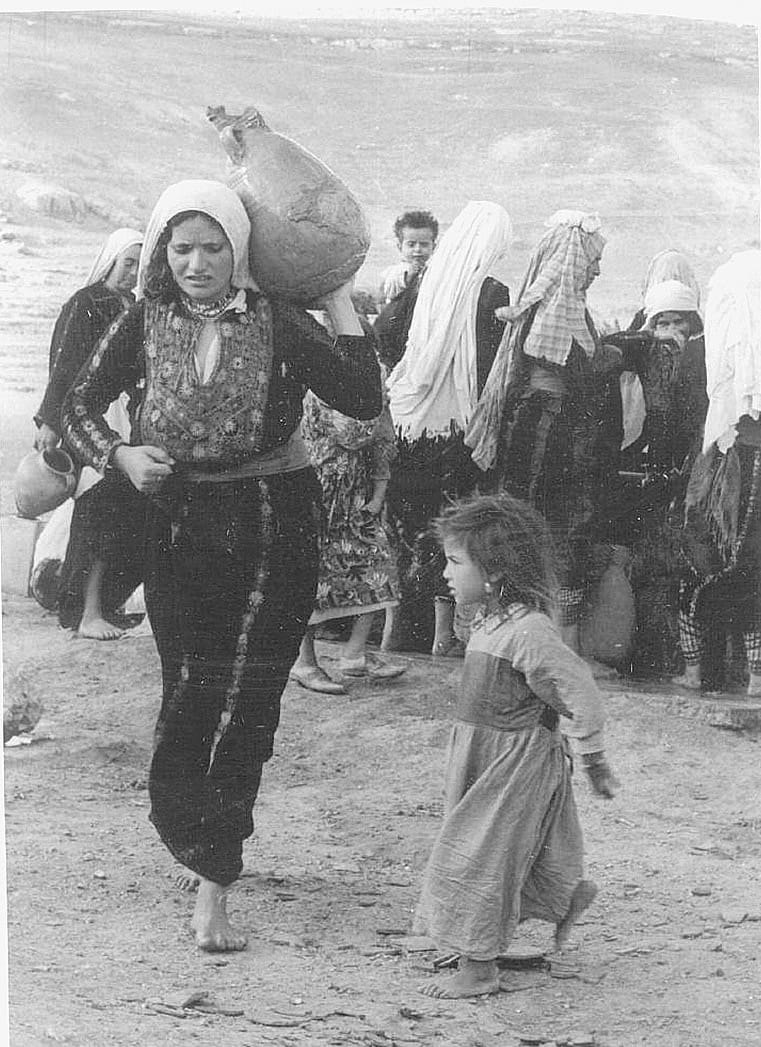
Plan D had been a success. It pre-empted the offensive of the Arab invasion, by striking fear in the Palestinian population inside the borders of Israel, limiting the ability of the native population to provide support for the invaders. It worked on a deeper level, as well, accelerating the mass transfer of Palestinians. Its text called for the “[D]estruction of villages (setting fire to, blowing up and planting mines in the debris), especially those population centers which are difficult to control continuously…. Mounting search and control operations according to the following guidelines: encirclement of the village and conducting a search inside it. In the event of resistance, the armed force must be destroyed and the population expelled outside the borders of the state.”
By the time the war ended, on July 20, 1949, the possibility of a Palestinian state existing alongside a Zionist state had been obliterated. The resulting Nakba included turning two-thirds of the pre-war Palestinian people into refugees, a total estimated at 750,000 people; 62,000 homes had been demolished; 530 villages destroyed; and 13,000 Palestinians killed. Historian Avi Shlaim writes that this was in line with the ultimate aim of Zionism as a “settler-colonial movement,” which was “to build an independent Jewish state in Palestine on as much of the land as possible, and as few Arabs within its borders as possible.” This goal, he argues, had been achieved—to “supplant” the native Arab population, with eviction and expulsion, while calling it “transfer.”[6]
Drawing a ‘Hebrew Map’
One of the more perverse yet oh-so-clever efforts to justify the takeover of the land by Zionists was exposed in a book written by a former vice mayor of Jerusalem, Meron Benvenisti. He writes of a special team—headed by his father, David Benvenisti—deployed by the government after the war “to draw a Hebrew map of the land,” to serve as “a renewed title deed” of Jewish possession of Palestine.
The new maps gave Hebrew names to the Arab villages depopulated by the 1948 war. The effect of this operation, Benvenisti writes, was to “successfully erase the old landscape, which had been dotted by more than 200 Arab villages.” This had been developed as a tactic by the British to impose “colonial domination.” Benvenisti writes that removing, by map-making, the evidence of previous Palestinian connection to the land, the tactic creates an awareness of “how close we are to the point when the vanished Arab landscape will be considered just a piece of Arab propaganda, a fabrication aimed at the destruction of Israel through incitement of ‘The Return.’ ”
In addition to blotting out the real history of the Palestinian presence in the Occupied Territories, the goal was to inculcate “his children and countless other young Israelis with the Zionist ethos of ‘moledet’ (homeland): knowledge of its glorious Jewish past, intimate communication with its nature, and personal commitment to pioneering in collective agricultural settlements.”[7]
The ‘Ongoing Nakba’
While citizens worldwide have been focused on the present U.S.-Israel assault on Iran, the Netanyahu regime is escalating the ethnic cleansing of Palestinians on a number of fronts, as Israeli governments have done repeatedly since occupying land seized in the Six-Day War of 1967. In southern Lebanon, the Israel Defense Forces (IDF) are pushing Hezbollah north to the Litani River, leaving behind a swathe of death and destruction, a campaign serving the call by Israeli Finance Minister Bezalel Smotrich for Israel’s annexation of southern Lebanon.
The IDF is simultaneously conducting a mop-up in Gaza, in the face of fierce resistance by Hamas, is continuing strikes into Syria, and is targeting the Houthis in Yemen. The short-term goal in each of these operations is to inflict damage on forces defending Palestinians. While the forces under attack are identified by the U.S.-Israeli alliance as “proxies of Iran,” these are primarily local militias organized to defend Palestinians, which have received logistical and financial support and training from Iran, to bolster their effectiveness. Many of the combatants are refugees from previous “cleansing” assaults by Zionist forces, who have lived for three or four generations in refugee camps.
Some analysts argue that Netanyahu’s obsessive hatred for Iran is due to that nation’s refusal to turn its back on the Palestinians. While most Arab and Islamic nations pay lip service to standing for justice for Palestinians, they offer nothing tangible to actually support the establishment of a Palestinian state—which would represent a minimal commitment to defending their legitimate rights.
Some of the most brutal assaults against the Palestinian populations underway are those in the West Bank, where gangs of “settlers” have been turned loose on the residents of the area occupied by Israel in the 1967 war, unleashing a torrent of violence against those who have refused to leave. There are daily encounters, as settlers drive through the shrinking lands still in Palestinian hands, often wearing IDF uniforms, beating the shepherds and farmers, stealing their flocks and produce, and murdering those who resist. Some of the thugs parade through West Bank villages as an “informal” militia, called the “Hilltop Youth.” They have become better organized, more lethal, and seemingly above the law.
Haaretz columnist Gideon Levy has been covering the rampages by settlers, and has accused the authorities of protecting them. Typical is the story he wrote of the recent murder of four members of the Bani Odeh family. The father, mother, and two children, five and seven years old, were shot. In a March 23 editorial, Haaretz wrote that there had been no investigation of this murder, attributing that to the “spirit of the commander of National Security,” Itamar Ben-Gvir. The editors define that “spirit” as one in which the “killing of Arabs, any killing of any Arab, is not a crime and doesn’t merit an investigation.”
According to UN statistics, from the October 7, 2023 Hamas attack until November 2025, there had been 1,017 West Bank Palestinians killed, including 221 children. At the same time, 11 new settlements have been authorized to be built, with eight others given legal status—this, despite the fact that new settlements violate both international law and Israeli law.
Parallel to this, there are large-scale evacuations from West Bank refugee camps, with reports identifying tens of thousands displaced. A spokesman for the Palestinian Authority accused the government of doing this to “alter the geographic and demographic reality” of the area.
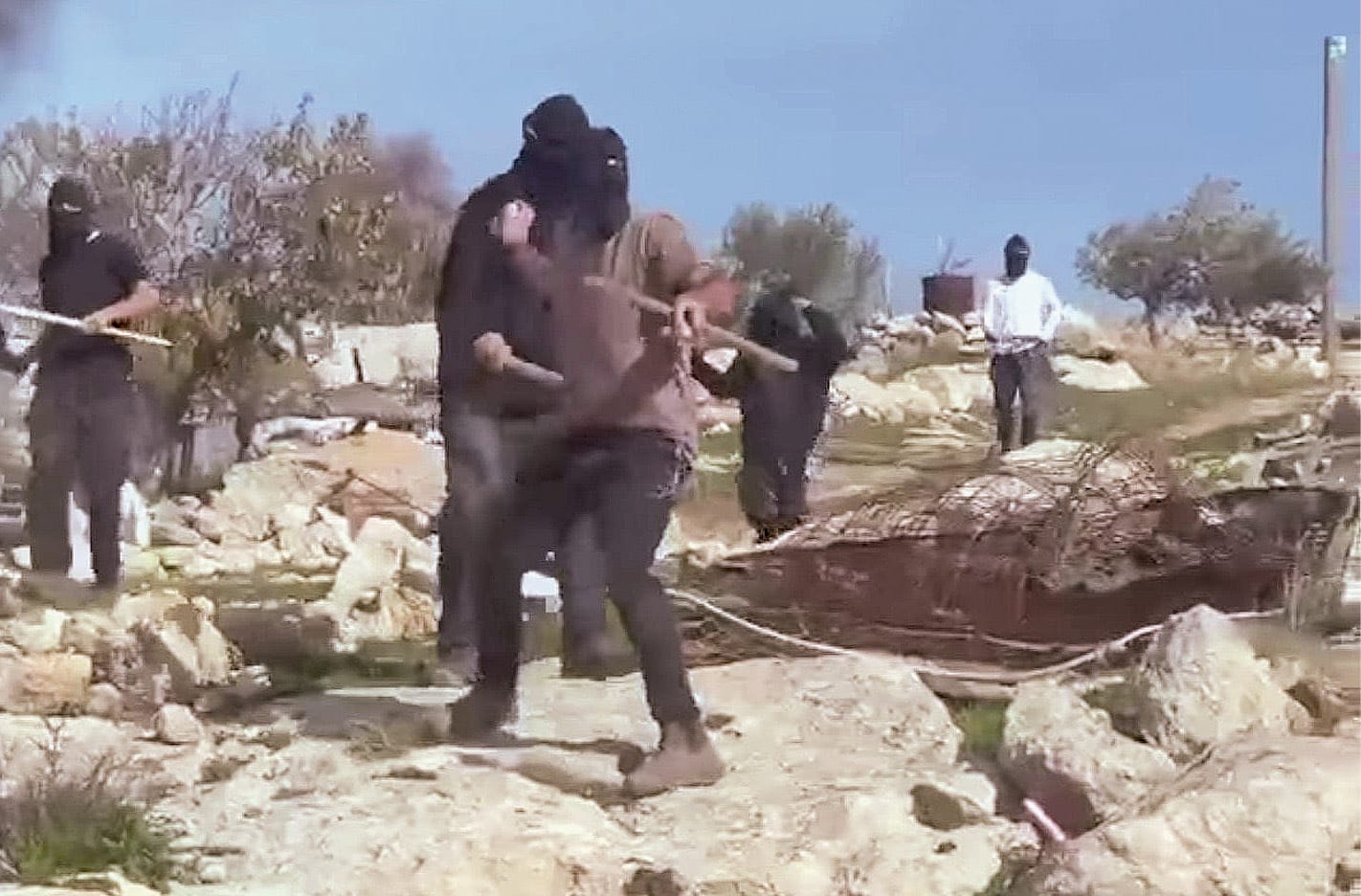
This effort is overseen by Finance Minister Smotrich, who is coordinating the removal of Palestinians from the West Bank and Gaza. In Gaza, he is working with Daniella Weiss, a settler extremist engaged with the government to make sure that “no Arab will remain in Gaza.” Gideon Levy and Alex Levac wrote on March 1 that Smotrich’s goal is the “Gaza-fication of the West Bank.” To accomplish this, Smotrich said, “We must occupy Gaza, maintain a military presence there, and establish settlements.”
Smotrich, who lives in a settlement and is one of the most zealous fighters for Greater Israel, is committed to the annexation by Israel of increasing segments of West Bank land, to make a Palestinian state impossible. At a rally on August 14, 2025, promoting the construction of a large illegal settlement, Maale Adumim, which will break up the possibility of a direct route between the cities of Ramallah and Bethlehem, he declared, “Whoever in the world is trying to recognize a Palestinian state today will receive our answer on the ground.” This is a restatement of a Zionist theme, consistent since 1948, of resettling the land once occupied by Palestinians to establish “new facts on the ground.” In a statement headlined, “Burying the idea of a Palestinian state,” Smotrich’s spokesman said the minister had approved the plan to build 3,401 houses for Israeli settlers connecting with another existing settlement in the West Bank.
At a conference in December 2023 organizing for the “Victory of Israel,” Ben-Gvir asserted with the smugness of one steeped in the Messianic interpretation of the Bible, “We are the owners of the land,” followed by Weiss, who promised that the Palestinians will “disappear.” Such brazen statements as these, backed by major wars of the IDF and rampages by settlers, protected by the IDF, have been a defining characteristic of 78 years of the “ongoing Nakba.” Those such as Netayahu, Smotrich, and Ben-Gvir, who are responsible for continuing these war crimes today, and those Americans who have joined with them, must be held accountable.
Addendum: The Evil, Duplicitous Role of Perfidious Albion
No truthful account of the Nakba would be complete without a reference to the role of the British Empire. As Lyndon LaRouche often insisted, when it comes to crises and wars in Southwest Asia, “all roads lead to London.” From the cultish delusions of the “British Israelites,” to the more material concerns of the British East India Company, to the control of transport corridors and oil in the present day, City of London predators have been involved at each crucial moment.
The most conspicuous of these interventions was the public launch of the doctrine of geopolitics by Halford Mackinder (1861-1947), with his “Geographical Pivot of History” speech to a gathering of the Royal Geographical Society of London in 1904. With the backing of the liberal imperialist network of the British Fabian Society, Mackinder’s work formed the backbone of imperial strategy which not only shaped conflicts in Southwest Asia, but dominated the Twentieth Century, in the inter-imperial battle between Britain’s sea-based empire and the land-based alliances which drew central Europe and Russia to a Eurasian perspective.
Mackinder’s outline is visible in the secret treaty between Britain and France in 1916, negotiated by their respective diplomatic operatives, Sir Mark Sykes and François Georges-Picot. Notable is Sykes’s role in launching the Arab Bureau in Cairo in 1916, to extend British influence during the last gasp of the Ottoman Empire; and as the backdrop for the Balfour Declaration of November 2, 1917, in which British Foreign Secretary Arthur Balfour promised support for “establishment of a Jewish national home in Palestine” in a letter to the leading figure in the Anglo-Zionist community, Lord Lionel Walter Rothschild. At the time, the Jewish population of Palestine was roughly 60,000 people, compared to a non-Jewish Arab population of approximately 600,000, governed by the Ottomans.
3,000 Jewish Leaders Demand an End to Israeli Settler Violence in the West Bank
by Steve Carr
April 4—An open letter to Israeli President Isaac Herzog signed by over 3,000 Jewish leaders from around the world was issued April 2, calling on Israel to stop “attacks by Jewish extremists” on Palestinians in the West Bank. Signers include diplomats, philanthropists, rabbis, and academics from Europe, Canada, the United States, South Africa, and Australia. The open letter was facilitated by The London Initiative (TLI), which is considered to be a liberal Zionist organization.
The letter states: “Mr. President, the terror, death and destruction inflicted by Jewish-Israeli extremists against innocent Palestinians across the West Bank is an abomination. It is not only morally shameful but a strategic threat to the future of Israel. It damages world Jewry and the relationship of future generations with Israel…. Sadly, based on events and on the statements of the most extreme coalition partners it can be concluded that the violence now engulfing the West Bank is not only condoned by the government but is in fact policy.”
Herzog’s office posted on X, “I share your conviction that these acts of violence stand in stark contradiction to the values upon which Israel was founded and to the enduring ethical tradition of the Jewish people.” Herzog added that these “shameful crimes against innocents” are interfering with the response to real terror threats.
Historian Avi Shlaim points out that while apologists for the empire argue that the declaration resulted from “the biblical romanticism of some British officials and their sympathy for the plight of the Jews in Eastern Europe,” the real motive “was cold calculation of British imperial interests,” based on the belief that those interests would best be served by an alliance with the Zionist movement. The goal was to “supplant” the native Arab population through eviction and expulsion, while calling it “transfer.”
A second motive Shlaim identifies was to enlist the support of world Jewry for the war against Germany and the Ottomans.
A letter from Balfour, written on August 11, 1919, offers a glimpse of his intent. He wrote, “Zionism … is rooted in age-long traditions, in present needs, in future hopes, of far profounder import than the desires and prejudices of the 700,000 Arabs who now inhabit that ancient land.” Shlaim adds that the granting to the British of the League of Nations’ Mandate over Palestine “were little more than a cover for neocolonialism.”[8]
Notes
- The history of Christian Zionism and its intertwined relationship with the Messianism of Israel’s fundamentalist extremists today is explored by Dr. Clifford Kiracofe in his book, Dark Crusade: The Israel Lobby and Christian Zionism (Commonwealth House Publishing, 2024).
- EIR, November 3, 2000, “Temple Mount Fanatics Foment a New Thirty Years’ War.”
- The total number of Jewish immigrants from Russia and Eastern Europe between 1880 and 1914 is estimated at 2.5 million. This wave, called the First Aliyah, began with the Kiev Pogroms of 1881, and continued in spurts, largely driven by outbursts of anti-Semitism. Of the 2.5 million, 2 million went to the U.S., 350,000 to Western Europe, and 25,000 to Palestine—the latter figure is a net figure, as it is estimated that approximately 40% of those who went there did not settle there permanently.
- See “Before There Was the Iron Dome, There Was the Iron Wall: The Deadly Flaw Underlying Israel’s National Security Doctrine,” by Harley Schlanger (Executive Intelligence Review, April 11, 2025).
- Dr. Jeremy Salt, “From ‘Virtuous Boy’ to Murderous Fanatic: David Ben-Gurion and the Palestinians” (a review of historian Tom Segev’s book, A State at Any Cost: The Life of David Ben-Gurion, published in the Journal of the Holy Land and Palestinian Studies, Vol. 22, Issue 1, April 17, 2023.)
- Avi Shlaim, “Britain and the Nakba: A History of Betrayal,” published in Middle East Eye on May 10, 2023.
- Quotes from Meron Benvenisti, Sacred Landscape: The Buried History of the Holy Land Since 1948 (Berkeley, California: University of California Press, March 2000); and from a review of Benvenisti’s book by Harley Schlanger, “Untying the Palestinian ‘Right of Return’ Knot,” Executive Intelligence Review, January 1, 2001.
- Avi Shlaim provides a fuller history of the British role under the Mandate, leading to Britain’s abdication of its responsibilities for just treatment of the Palestinians up to the end of the Mandate on 14 May 1948, in his article “Britain and the Nakba: A History of Betrayal,” supporting his conclusion that the Nakba “is not an isolated event but a continuous historical process.”