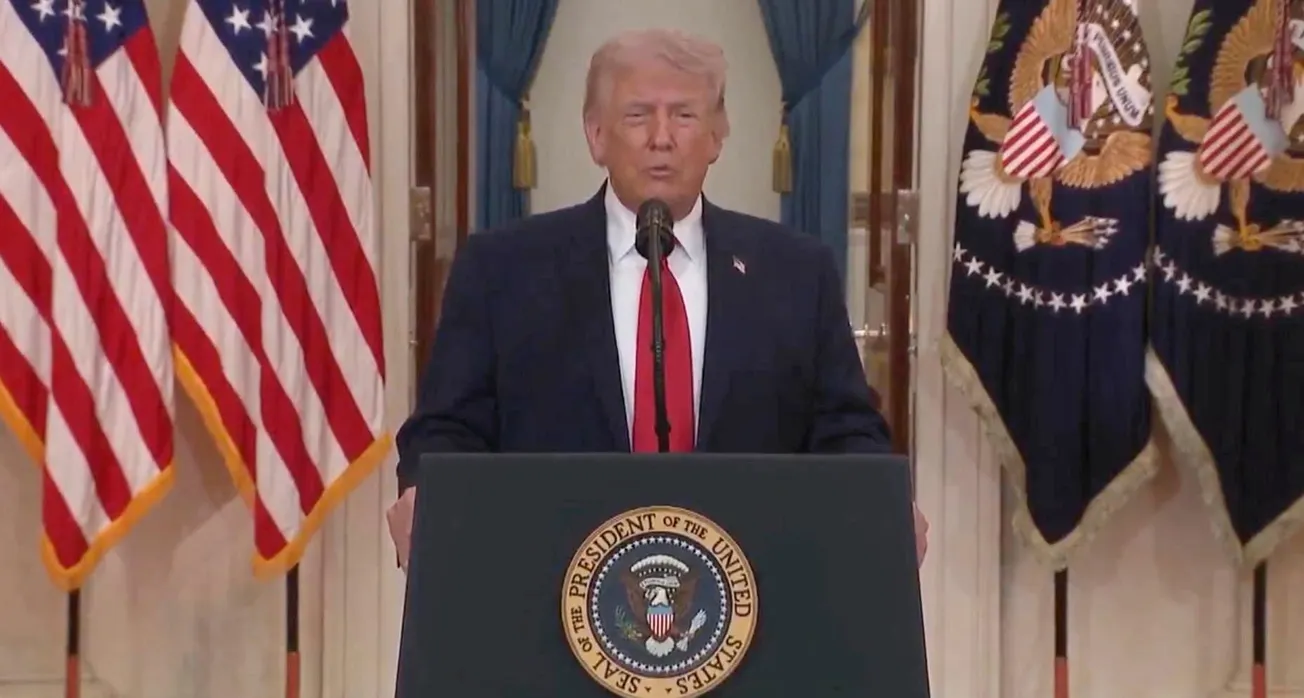
President Donald Trump’s April 1 nationwide address about the Iran war featured his much-reported blood-curdling promise to bomb Iran “back to the Stone Ages, where they belong.” Whether Trump understands it or not, this is little more than a re-statement and reflection of the overall British global policy for the last half-century or more: reduce the world’s population to one billion or less, by various means including deliberately destroying the physical economy on which that population depends for survival.
If your neighbors or co-workers doubt that’s the actual policy being implemented, they should think through what we might call the “Nord Stream gambit.” The supply of cheap energy to the industrial heartland of Europe via Nord Stream was deliberately destroyed, which led to the implosion of the productive economy across the region—with the full support of the governments of the victim nations!
We are now witnessing a dramatic, forced reshaping of the world’s physical economy, with even greater impact than Nord Stream. The Strait of Hormuz is de facto closed—not by Iran, but by the U.S.-Israeli war of aggression against that country—with a very low probability of it being opened anytime soon. Trump announced that he could care less if it remained shut, telling the Europeans and the rest of the world to fend for themselves. Both British Prime Minister Keir Starmer and French President Emmanuel Macron yesterday stated that they thought the Strait would in fact remain closed for a long time.
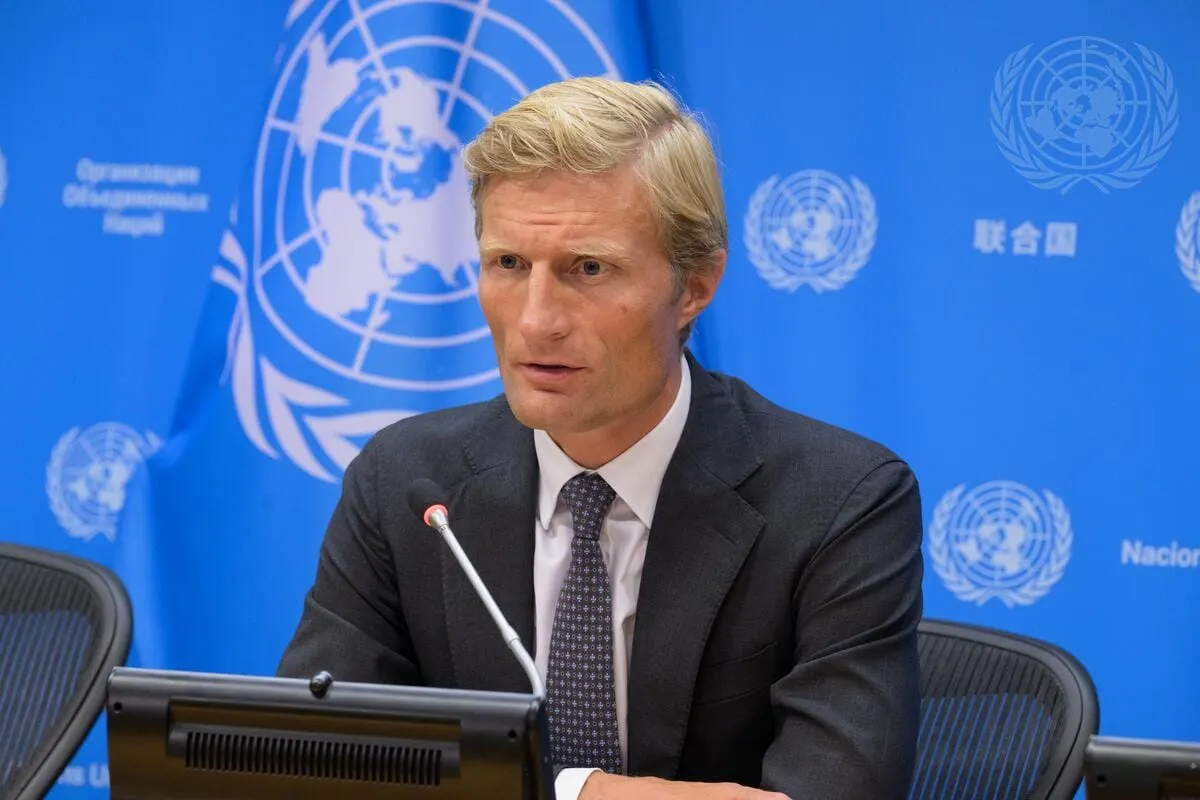
Meanwhile, top officials of the United Nations Food and Agriculture Organization (FAO) and the World Food Program are pointing out that the one-month closure of the Strait of Hormuz is already having devastating effects on world oil, gas, and fertilizer prices and physical flows, with consequent threats of global energy blackouts, food shortages, and mass hunger. The Deputy Executive Director of the WFP, Carl Skau, reported that the number of people worldwide suffering acute hunger is about to rise by 45 million, from 319 to 364 million people—a 14% rise—an all-time record.
Máximo Torero, the chief economist of the FAO, explained that if the closure of the Strait of Hormuz and the shortages are extended to three months, there will be a ratchet-like collapse, not just a linear extension of the decline that has happened so far. Torero is right. As Lyndon LaRouche repeatedly explained, the laws of physical economy dictate that, just like anti-entropic advances in society occur in a non-linear fashion through technological leaps, so too with an entropic collapsing system: At a given point it will plummet down to a dramatically lower level, as the potential relative population-density of the entire world system declines.
Add to this picture the massive destruction of oil and gas export facilities that is taking place in Russia’s Ust-Luga port region, through London-directed Ukrainian drones. Likewise, consider the impact that Trump’s promised razing of Iran—a nation of more than 90 million people located at the crossroads of Eurasia and Southwest Asia, and a key member of the BRICS and the SCO—will have on the Belt and Road Initiative and the International North South Transport Corridor, and through that on global potential relative population-density.
This intentional devolution of the global physical economy at the same time is intersecting an exponentially growing speculative financial bubble of $2.4 quadrillion or more. If that combination sounds to you like a formula for a financial blowout to end all blowouts, which could happen at any time, you are right. You now understand the basics of LaRouche’s science of physical economy—so it’s time to act on that knowledge.
Recall Lyndon LaRouche’s prescient analysis in 2006:
“The significance of Iran as a targeted locality within the broader, global scheme, is principally two-fold: to trigger a collapse of the present world economy, by creating a devastating, global petroleum crisis within the general region of Southwest Asia, while spreading the forces of chaos, through the Caucasus and Central Asia and Ukraine, to wreck that current revival of Russia’s influence with which the government of President Putin is currently associated. Hence, the efforts by Russia’s government, to stabilize the situation in and around Iran, are the target of desperate energies currently being deployed globally by the forces of chaos, the Blair government and its accomplices in the U.S. Bush-Cheney government.”
Today, two decades later, LaRouche’s flagship publication Executive Intelligence Review will hold an emergency roundtable dialogue on April 6 to address the question: Is There Still Time to Prevent the War Against Iran from Escalating into a Global Nuclear Conflict? At that conference, as the invitation states, “leading international strategic thinkers and representatives from Iran, the United States, Europe, China and various nations of the Global South will engage in a frank dialogue on the nature and origins of the current war against Iran—and its underlying historical and policy origins—and will seek solutions based on organizing a new security and development architecture to meet the legitimate needs of each and every nation in the region and across the planet.”