
Editor’s Note: This article was first published in The New Federalist, the newspaper of the LaRouche movement, Vol. 4, No. 2, January 5, 1990.
What follows is the text of Lyndon LaRouche’s message to the Nov. 4-5, 1989 Chicago International Food for Peace conference, titled, “The World Food Crisis Is Here: Will War Follow?” He refers to the death of his friend Dr. Robert J. Moon (1911-1989), physicist, and veteran of the Manhattan Project. LaRouche’s presentation was made by audiotape, because he was in prison, wrongfully charged, and jailed from January 1989 to January 1994.
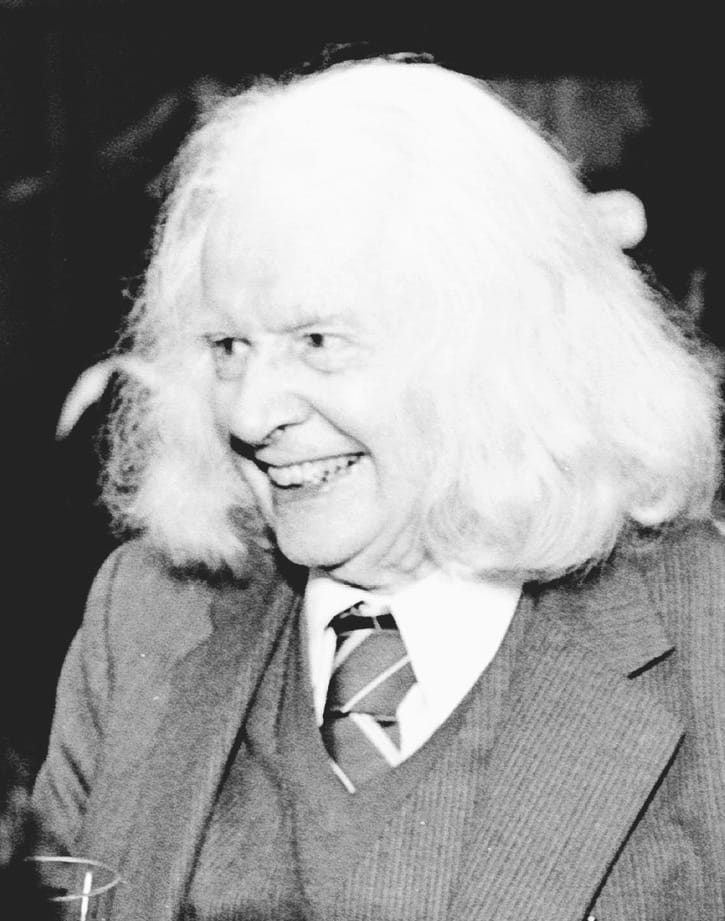
The opening of this conference is surrounded with a moment of sadness, in the passing of a revered collaborator and noted scientist and dear friend, Professor Robert Moon. I think this is not the occasion for me to state my memorial message on Dr. Moon, but rather simply to address one feature of his work, which bears on the subject immediately before us.
I’ve always believed, as far back as I can remember, and certainly to the time I began the study of philosophy in a formal way, at the age of 12 or 13, that with a couple of exceptions, there is nothing which we as human beings have a right to say that we know, which cannot be given a scientific demonstration in the sense that Leibniz, or scientists such as Riemann later, defined this.
Dr. Moon has been significant for me, during the collaboration which developed over the past 15 to 16 years, in that he typified scientists who contribute to man not only important discoveries, but, of more lasting importance, who emphasize methods of inquiry by which we reach true knowledge, that is, knowledge which is not merely assertion—something we think we’ve observed—but knowledge which we can state to be knowledge because we can construct it, we know how to construct a demonstration of it.
We are in the period of time in which the behavior of governments, and others, is directly contrary to that principle. We are in a time of insanity, when with mass death from hunger and related conditions around the world, not only governments, but the majority of populations, assert environmentalist and other kinds of nonsense, nonsense which is rightly called nonsense because it is anti-scientific, is contrary to what an intelligent representation of nature would show us, and is at the same time intelligibly mass murderous in its effects.
We, for various reasons, seem to be a people which no longer believes in the fundamental distinction which sets human individual life apart from and above the life of animals. We no longer therefore understand, nor do we respect in the majority, the sacredness of the individual human life. We no longer understand that human life is set apart from the animals, by human capacity for reason, that kind of reason which is typified by valid scientific discovery. Reason through which the individual human being is enabled to discover less imperfectly the lawful ordering of the universe, to discover how to bring our behavior, less imperfectly and more successfully, into conformity with the laws of the universe, to an effect for the good of the human species as a whole.
We’ve lost that. Irrationalism dominates, and thus, when 450 million people in Black Africa are threatened with extermination through combinations of famine and disease, people say, “Yes, I guess so, but isn’t it true that Black Africa is overpopulated? Perhaps disease will help reduce the population. Perhaps this is the inevitable. Perhaps we should not try to prevent it, because the continent is overpopulated,” and similar kinds of things all over the world.
In the nature of things, as Bob [Moon] would emphasize and I’d agree, if it is the human species which acts to shape policies in such a way that our policies of practice are in direct defiance of the laws of the universe, one would have to expect that, like the person who jumps over a cliff, saying “I don’t believe in gravity,” that our own folly, our own defiance of the laws of the universe, may bring about the destruction of our nations. That’s the problem that concerns me today. And that’s the problem that I think we should address here.
Not only must we be concerned with hunger, starvation, and the moral issues, we must realize that unless we can force changes in the way policies of our own and other governments are made, to address this issue effectively, not only will many people die, but as we can clearly see, the effect of hunger around the world is causing desperation of powerful and weak nations alike, which can unleash in humanity those forms of expressed desperation, which lead to the virtual extinction, if not of our species, at least of our civilization.
Therefore, the question before us today, and the question before us in this period, is, can we once again be what we used to call rational. Can we put aside unscientific nostrums? Can we brush aside the hysteria of belief in unscientific environmentalist and other concerns, the unscientific belief in economic theories which have led us to destruction over the past twenty-odd years, the unsound beliefs of other kinds? And can we go back to what we used to call rational common sense?
And on this issue, realize that if we mobilize the production of a sufficient supply of food to meet the human species’ needs, that that supply of food and our determination to provide it, will mobilize humanity in such a way that we might avoid an otherwise growing threat of general world war and other calamities before us.
More important perhaps, in the long run, than avoiding war in the short run, is that if we mobilize ourselves to say there is no reason why we should not produce sufficient food to meet the human need, then our mobilization to that purpose will bring back reason to the behavior of our nation, and if we become reasonable again, then perhaps we can be assured that our nation, our civilization, will survive.