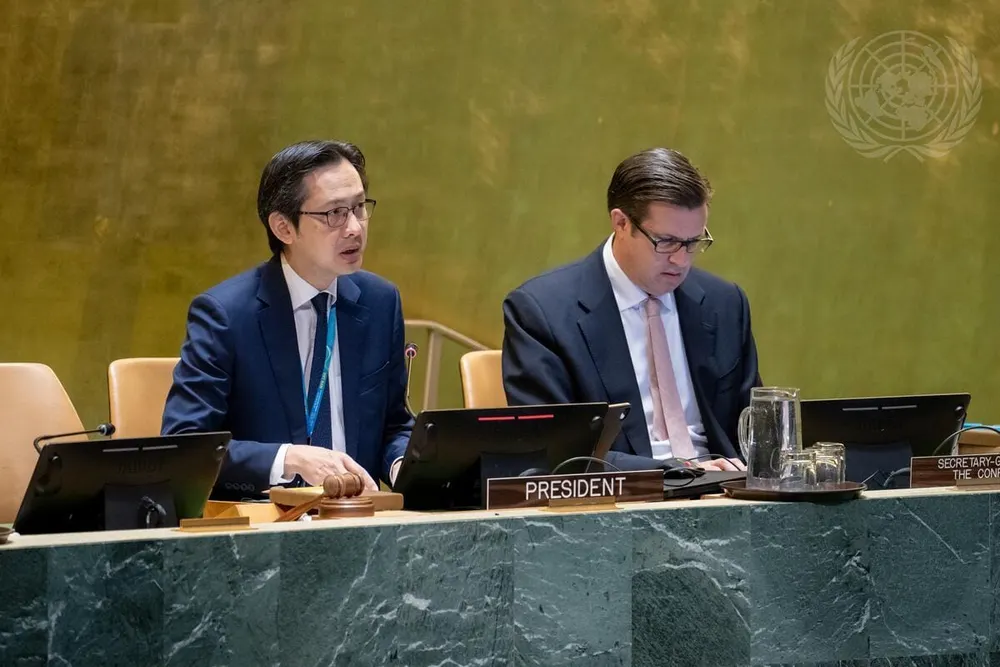
The Holy See has warned that renewed reliance on nuclear deterrence, the modernization of arsenals, and the growing integration of artificial intelligence into military systems are placing the world on an increasingly perilous path, [reported Vatican News](https://www.vaticannews.va/en/vatican-city/news/2026-04/holy-see-mission-united-nations-treaty-non-proliferation-nuclear.html). Addressing the General Debate of the Eleventh Review Conference of the Treaty on the Non-Proliferation of Nuclear Weapons at the United Nations in New York on Wednesday, April 29, Msgr. Robert D. Murphy, Chargé d’Affaires at the Permanent Observer Mission of the Holy See to the United Nations, described the moment as one of “profound gravity.”
Quoting Pope Leo XIV, he lamented a growing shift away from multilateral diplomacy. A diplomacy rooted in dialogue and consensus is being replaced by one “based on force.” He also highlighted recent attacks on nuclear facilities as a sign of the erosion of long-standing norms safeguarding global security.
Monsignor Murphy expressed the Holy See’s particular concern over the increasing role of artificial intelligence in nuclear decision-making, warning that such systems reduce the time for human deliberation in moments of crisis, increasing “the risk of miscalculation,” and obscuring the moral weight of life-and-death choices.
He also expressed the Holy See’s strong defense of the Nuclear Non-Proliferation Treaty, as its three pillars—disarmament, non-proliferation, and the peaceful use of nuclear energy—remain essential to international peace and security. Of note, the Holy See emphasizes, as well, the particular importance of establishing a Nuclear-Weapon Free Zone in the Middle East.
At the same time, the Holy See “reaffirms the inalienable right of all States to develop the peaceful use of nuclear energy, in full compliance with their non-proliferation obligations. When pursued responsibly, nuclear technologies can contribute in meaningful ways to human wellbeing in medicine, agriculture, food security, water management, and environmental protection, demonstrating how scientific progress can be placed at the service of life and human dignity,” Monsignor Murphy specified.
Concluding, he recalled Pope Leo XIV’s appeal for “a peace that is disarmed and disarming.” Authentic peace, it said, cannot rest on fear. It must be built instead on “trust, dialogue, and the recognition of our shared humanity.”
The full statement of the Holy See Mission is available here.

